
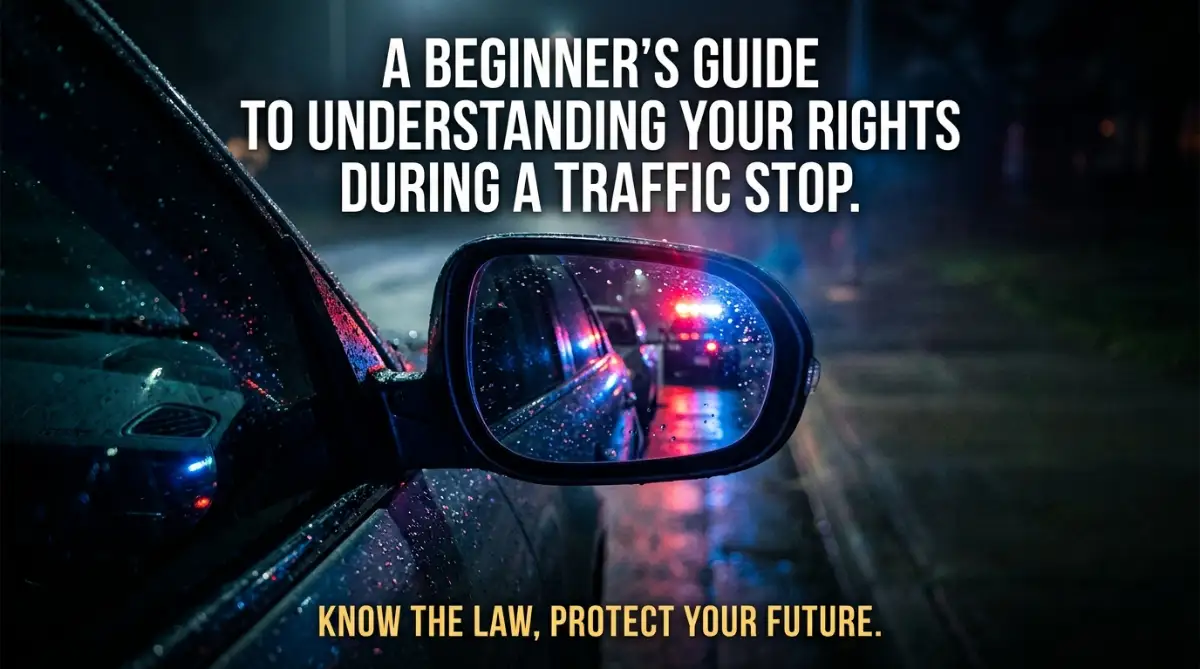
Quick Roadside Checklist
-
Stay Visible: Keep your hands on the wheel so the officer feels safe.
-
Keep it Brief: You are required to provide ID, but not to explain your life story.
-
Understand Consent: You have the right to say "no" to a vehicle search—always do so politely.
-
Record Smartly: Use your phone to record if it helps you feel secure, provided you don't block the officer.
When the Red and Blue Lights Flash Behind You
Getting pulled over is easily one of the most stressful things that can happen during your daily commute. Your heart starts pounding, your mind races with "what-ifs," and suddenly, you feel like you have forgotten every rule of the road. It doesn't matter how careful you are; seeing those flashing lights in your mirror can turn a calm afternoon into a source of pure anxiety. Instead of guessing your way through the encounter, let’s talk about how to keep your cool and handle the situation with total clarity.
I had no idea what I was allowed to do, what I had to say, or where I should keep my hands. I felt vulnerable, sitting there in my small sedan while a uniformed officer approached my window. That moment of uncertainty is something almost every driver faces at least once. It ruins your entire mood and leaves you feeling anxious for days, questioning every move you made. You start wondering if you were too polite, too quiet, or if you accidentally gave up your rights without even knowing it.
It is a common struggle. The pressure of a traffic stop can make even the most law-abiding person feel like a criminal. You want to be respectful, but you also want to protect your privacy and your legal standing. The reality is that many of us hit the road every single day without ever preparing for this specific interaction. We assume we will just "wing it," but in high-stress situations, our judgment is often clouded by nerves.
Understanding the law isn't about being confrontational. It is about maintaining your dignity and safety. It is about knowing that you have boundaries, even when you are behind the wheel. I spent a lot of time researching what actually happens during these stops so I would never feel that powerless again. Today, I want to share that clarity with you, so you can drive with peace of mind.
Taking Control: Your Essential Roadmap for Traffic Stops
Navigating a traffic stop requires a mix of common sense and legal awareness. You do not need a law degree to protect yourself. You just need to follow a few simple, actionable steps that keep the situation professional and safe for everyone involved.
 Keep Your Movements Predictable and Calm
The moment you see the lights, your primary goal is to show the officer that you are not a threat. Pull over to a safe spot as soon as you can. Do not make sudden movements. Turn off your engine, turn on your interior light if it is dark, and place your hands on the steering wheel where they are clearly visible.
I made the mistake once of reaching for my glove box before the officer even got to my window. I saw the look on his face, and I realized I had accidentally made him nervous. Now, I keep my hands on the wheel and wait for them to ask for my documents. It makes a world of difference in how the rest of the conversation goes.
Pro Tip: If you need to reach for your wallet or registration, tell the officer before you move. Something as simple as saying, "My registration is in the glove box, may I reach for it?" shows that you are being transparent and respectful. This simple communication helps de-escalate tension immediately.
 Understanding Your Right to Remain Silent
During a traffic stop, an officer may ask to see your driver's license, vehicle registration, and proof of insurance, depending on local law. They may also ask questions about where you're going or where you've been. It's natural to feel nervous and start explaining yourself, but you don't have to volunteer unnecessary personal details.
Your rights depend on where you live and the circumstances of the stop. If an officer asks questions you're uncomfortable answering, stay calm and respectful. In some jurisdictions, you may be able to decline to answer certain questions, while other situations may involve specific legal obligations. If you're unsure, you can politely ask whether you're required to answer.
Keep your responses clear and avoid guessing or offering explanations you aren't sure about. You can cooperate with lawful requests while remaining mindful of your rights. Knowing the rules in your area before you find yourself in this situation can help you respond more confidently and avoid unnecessary misunderstandings.
Handling Requests to Search Your Vehicle
This is a critical area where many drivers get confused. If an officer asks, "Do you mind if I take a look inside your car?" they are asking for your consent. You have the constitutional right to say no. You can politely say, "I do not consent to a search."
If they have probable cause, they may search your vehicle regardless of your consent, but you have still established your legal standing by clearly stating your refusal. Never get physical or argue if they choose to proceed, but always be clear that you are not giving permission. For more information on how to handle other legal complexities, you can review this guide on small business liability to see how personal protection works in other areas of life.
The Power of Recording
In many places, you have the legal right to record your interaction with the police. If you have a passenger, they can record the encounter. If you are alone, you can inform the officer that you are turning on a recording device for your own peace of mind.
Always keep your phone in a secure place and do not interfere with the officer's duties. Recording provides a neutral account of what was said and done, which is a great way to ensure accountability on both sides. Remember, the goal is always to de-escalate, never to provoke.
Understanding your broader legal rights is a powerful tool for any citizen. Whether you are dealing with traffic stops, wills and trusts, or even your first family law meeting, the strategy is always the same: stay informed, stay calm, and know the basics.
Knowing your rights can turn a nerve-wracking police encounter into a professional and quick interaction, helping you stay in control while ensuring you remain safe on the road.
Keeping Your Cool Under Pressure
| Situation | Your Best Action |