The Moment of Doubt: Is My Hard Work Visible?
I remember the day I finished my final assignment for my online program. I was staring at my laptop screen, feeling a strange mix of pride and anxiety. I had put in hours of research, late nights, and intense study sessions just like any other student. Yet, a nagging thought kept popping into my head.
I wondered if the hiring manager at my dream company would toss my resume aside the moment they saw "online" written next to my degree. I felt like I had to prove myself twice as hard. I worried that my effort, my time, and my money were somehow less valid than someone who walked into a physical lecture hall.
It is a heavy feeling to carry, isn't it? You spend months or even years working toward a goal, only to fear that the label on your diploma might hold you back. You find yourself checking job boards, scanning requirements, and searching for any hint that your path is "lesser."
This anxiety doesn't just stay on your resume. It bleeds into your interviews and your confidence. You start apologizing for your degree before you even get the job. You feel the need to explain why you chose the online route, almost like you have to defend a decision that was actually smart and proactive.
Many people face this same barrier. They scroll through forums, reading conflicting advice that only increases their stress. It keeps them up at night, questioning their choices and feeling stuck. You deserve to know the truth about how the world actually views your education.
You need clarity to move forward. You need to stop worrying about the "label" and start focusing on the "value." Let’s look at why this fear exists and why it is rapidly becoming a thing of the past.
Rethinking the Value of Your Digital Diploma
The world of work is shifting, and the way we value education is changing right along with it. We used to believe that physical presence was the only way to prove you learned something. Today, we know better.
Why Your Skills Are The New Reputation
Most employers are no longer looking for a fancy building name on your paper. They are looking for results. They want to know what you can actually do.
When you complete an online program, you are proving something that is incredibly valuable to any manager. You are showing that you have self-discipline. You are showing that you can manage your own time without a professor standing over your shoulder.
The Role of Accreditation
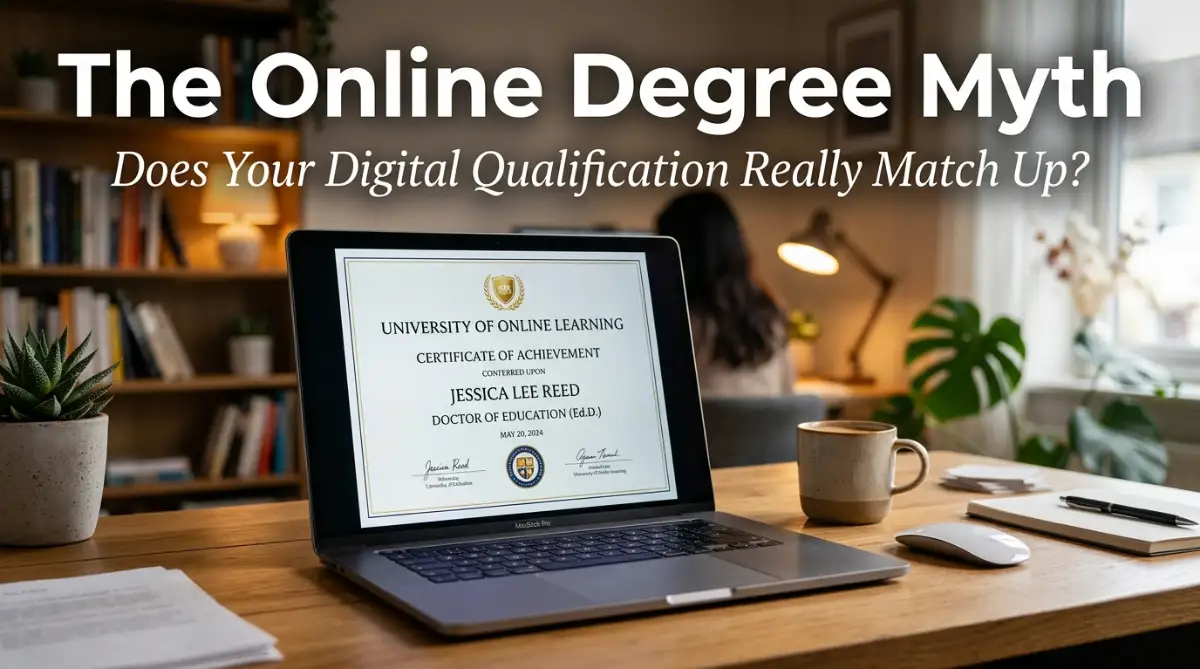
This is the one thing that truly matters. If you are worried about the "weight" of your degree, check the accreditation first. If your school is properly accredited, your degree holds the same legal and professional weight as one from a local campus.
Don't spend your energy worrying about whether the degree is "online." Spend your energy ensuring the institution you chose is recognized. When the accreditation is there, the bias disappears. It is that simple.
Why Employers Are Changing Their Perspective
Hiring managers are busy people. They want the best person for the job, period. They have realized that top-tier talent is everywhere, not just in cities with big universities.
In fact, many employers now view online degrees as a sign of adaptability. It shows you are comfortable with digital tools and remote collaboration. These are the exact skills that are in high demand right now.
[Pro Tip]: I used to make the mistake of listing my degree as "Online Degree in Marketing" on my resume. I realized that the word "online" wasn't necessary unless they asked. Instead, I just list the degree name and the university. It looks cleaner and focuses on the qualification, not the delivery method. My success rate for getting interviews went up almost immediately when I made that small change.
The Power of Your Portfolio
If you are still nervous about your degree, build a portfolio. Your portfolio is your secret weapon. It shows your work, your projects, and your problem-solving abilities.
A portfolio provides the "proof" that a degree only promises. When you can show a potential employer a real-world project you completed, the question of how you learned it becomes irrelevant. They will be too busy looking at your actual output to care about where you sat while doing it.
Learning Through Doing vs. Learning Through Lectures
Physical campuses offer a great social experience. But online learning offers a great professional experience. When you study online, you are often working with people from all over the world.
You learn to communicate across time zones. You learn to use project management software. You learn to collaborate without meeting in person. These are not "extra" skills; they are the core skills of the modern workforce.
Addressing the "Prestige" Myth
There is a lingering myth that only Ivy League or massive state schools hold value. While big names have their place, they do not guarantee you a job. Your success depends on your networking and your ability to sell your value.
An online degree from a respected institution often carries more weight than a generic degree from a low-tier physical college. Focus on the reputation of the program rather than the building. That is where the real value is hidden.
Building Your Narrative
In interviews, you might get asked about your education. Do not get defensive. Own it.
Tell them why you chose the online path. Did you balance a job while studying? Did you learn to be a better communicator because of it? Frame your education as an achievement, not a concession.
The Reality of Remote Work
Think about the modern office. More teams are working remotely than ever before. Why would an employer want someone who only knows how to work in a physical office?
Your online degree is essentially a certificate that says, "I know how to work effectively in a digital environment." That is a massive advantage in today's hiring environment. Wear it like a badge of honor.
Focusing on Networking
The biggest downside to online learning is not the quality of education; it is the lack of automatic networking. But you can fix this. You just have to be more intentional about it.
Join online groups, participate in forums, and reach out to alumni. Reach out to professionals on LinkedIn. Your network is what you make of it, regardless of where your classes were held.
Continuous Growth
The days of getting one degree and being done are over. Now, we are in an era of continuous learning. Your online degree is just the beginning.
Keep taking short courses, certifications, and workshops. When you show that you are a lifelong learner, your initial degree becomes just one part of a bigger, more impressive story. Employers love people who never stop growing.
Staying Updated with Tech
Online programs force you to stay current with technology. You use updated software, digital platforms, and collaborative tools every single day. This keeps you ahead of people who are still relying on outdated teaching methods.
Use this to your advantage. Mention your tech proficiency in your cover letters. It is a subtle way of highlighting your edge over other candidates.
The Financial Advantage
Let’s talk about the practical side. Online degrees are often more affordable and flexible. This allowed you to save money or continue working while you studied.
This is a win. Being able to graduate without crushing debt or a massive gap in your work history is a huge professional advantage. You start your career with more freedom and more stability.
The Shift in Hiring Standards
Hiring standards are dictated by what companies need, not by tradition. Companies need problem solvers. They need self-starters. They need people who can handle technology.
When you look at a job description, see if they ask for "in-person education" or "degree from a specific campus." They rarely do. They ask for "relevant experience" and "demonstrated skills." That is your opening.
Taking Control of Your Story
You have the power to define what your degree means. If you treat it like it is "less than," others will too. If you treat it like a strategic achievement that prepared you for the future, others will see it that way too.
Confidence is magnetic. When you speak about your education, keep your head high. You did the work, you earned the credits, and you have the knowledge. That is all that matters.
Embracing the Future
The stigma surrounding online education is fading fast. Every year, more and more people from all walks of life are choosing digital pathways. You are part of a growing movement of professionals who value efficiency, flexibility, and practical knowledge.
Be proud of your choice. You chose a path that fits the modern world. That is a smart decision, and it will pay off if you keep playing your cards right.
Moving Forward with Confidence
The next time you apply for a job, do it with full belief in your qualifications. You have exactly what is needed to succeed. You have the degree, the skills, and the mindset to back it up.
Don't let doubt hold you back from applying to roles that excite you. You have a unique set of skills, and the right employer will see that clearly. Keep building, keep learning, and keep moving forward.
A Final Note on Your Path
Your education is a tool, not a limit. It is meant to open doors, not close them. Use it, promote it, and let it lead you to the next chapter of your life. You are ready.
Understanding the Hiring Process
It is helpful to see how hiring managers actually process applications to understand why your online degree is perfectly fine.
If you want to understand how hiring managers really react to online resumes, watch this video:
How to Leverage Your Experience
You have learned so much more than just the curriculum during your time studying online. You have developed soft skills that are incredibly important.
Let’s look at how you can highlight these specific benefits on your resume to impress potential employers.
1. Highlight Your Self-Management
You proved that you could manage your time without a boss. This is a huge selling point. Use words like "self-motivated," "independent learner," and "efficient time manager" in your resume.
2. Showcase Your Tech Proficiency
You navigated online learning platforms, digital libraries, and virtual collaboration tools. Make sure you list these technical skills. It shows you are ready for a digital-first workplace.
3. Emphasize Communication Skills
Writing online requires different skills than talking in person. You had to be clear, concise, and professional in emails and discussion boards. That is a valuable skill in any remote or hybrid team.
4. The "Growth Mindset" Angle
Studying online often requires you to troubleshoot your own issues. This shows a "growth mindset" and problem-solving abilities. It shows that you don't give up when things get tricky.
5. Be Ready for Questions
If an interviewer asks, "Why did you choose an online program?", have a positive answer ready. Say something like, "I wanted the flexibility to continue working while I developed my skills," or "I chose this program because of its specific focus on [Subject]."
6. Focus on the Project Work
If you had to work in groups, highlight that experience. It shows you can collaborate with people you may have never met in person. That is the reality of many modern global teams.
7. Keep Your Portfolio Ready
Never go into an interview empty-handed if you can help it. Bring examples of your best work. If your degree involved a capstone project or a major report, have it ready to share.
8. Confidence is Key
If you sound like you are apologizing for your degree, they will think it is a weak point. If you sound like you are proud of it, they will see it as a legitimate achievement. Your attitude sets the tone for the entire conversation.
9. Connect the Dots
Show them how your online degree prepared you for their specific problems. Connect your coursework to their business goals. When you make it about them and their problems, your education becomes the solution.
10. Stay Informed
Stay on top of industry trends. Your online degree was a foundation, but your continued interest in the field will show that you are serious. Keep reading, keep learning, and keep up with the latest news.
Turning the Tables
You might worry about what they think, but think about what you need. You need a job that values your output. You need a team that respects your ability to deliver.
If a company is stuck on old-fashioned views about degrees, are they the kind of place you want to work? You want a forward-thinking company. A company that values online degrees is usually a company that is ready for the future.
The Big Picture
Education is just one part of your professional life. Your character, your work ethic, and your ability to learn are far more important. Don't let a myth about "online vs. in-person" dictate your career path.
You are the one who determines the value of your education. By performing well and showing your skills, you make your degree valuable. You define your own worth, not the building where you (theoretically) attended class.
Taking Action for Your Career
Start by auditing your LinkedIn profile. Does it highlight your skills? Does it show your portfolio? Make sure it tells a story of someone who is active, capable, and ready to work.
Then, start applying. Don't wait until you feel "perfect." Apply, interview, and learn from each interaction. The more you do, the more comfortable you will become.
Believing in Yourself
I want you to walk away from this feeling confident. Your online degree is a real achievement. It is a sign of your discipline and your commitment to your future.
Believe in it. Talk about it with pride. You have worked for it, and you deserve every success that comes your way. Now, go out there and show them what you are capable of.
Frequently Asked Questions
Does the "Online" label appear on my diploma?
In most cases, no. Your diploma usually just lists the university name and the degree earned. It is a standard credential, just like any other.
How do I handle recruiters who prefer physical degrees?
Most recruiters don't actually prefer physical degrees; they prefer qualified candidates. If you encounter one who is biased, simply pivot the conversation back to your skills and what you can do for the company. Focus on the results you can deliver.
Are online degrees harder?
Many students find them just as challenging, if not more so, because of the level of self-motivation required. You don't have the external pressure of a schedule, so you have to provide it yourself. That is a skill, not a weakness.
Should I include my coursework on my resume?
Yes, if it is relevant. If your degree was in a technical field, listing key modules or projects can help employers understand exactly what you are capable of doing.
Is there a stigma against online degrees in big companies?
The stigma is fading rapidly. Most major tech and business firms are now very comfortable with online degrees, especially from reputable, accredited institutions. They prioritize skills and proven experience above all else.
Maximizing Your Market Value with a Digital Education
The debate regarding whether online degrees carry the same weight as traditional ones is largely outdated. Yet, I understand why you might still worry. The real question isn't whether the degree holds weight, but whether you know how to wield it as a powerful asset in your career search.
Strategies to Make Your Remote Degree Stand Out
You have to realize that employers are not just buying a piece of paper. They are buying the set of skills you developed to get that paper. If you want to outperform candidates with traditional degrees, you must frame your education through the lens of outcomes and results.
One of the most effective ways to do this is to showcase the specific tools you mastered during your program. If you are struggling to communicate your technical worth, learning how to bridge the professional skill gap by mastering basic automation tools can give you a significant advantage. It shows that you didn't just study theory; you applied practical solutions to real problems.
You should also look into verifying the credentials of your institution through official resources like the U.S. Department of Education’s database. When you can confidently state that your school is regionally accredited, you shift the conversation from "is this degree real" to "how can I use this degree to help your company."
Pro Tip: I once realized that I was downplaying my online degree because I felt like I needed to explain why I didn't go to a physical campus. I stopped doing that. Now, I frame it as a strategic choice that allowed me to work while learning, which shows I have drive and time-management skills. That simple shift in tone completely changed how interviewers responded to me.
Building Professional Credibility From Your Desk
Networking is often cited as the biggest benefit of a physical campus, but you can build a massive network online if you are proactive. You do not need to be in a lecture hall to connect with industry leaders. Use professional platforms to find alumni from your program who are now working in roles you admire.
Send a simple, polite message asking for a brief conversation about their career path. Most people are happy to share advice if you show you have done your homework. This kind of networking is arguably more impressive than just meeting people in a cafeteria because it shows initiative.
Furthermore, do not ignore the power of creating your own projects while you study. If you are learning marketing, start a blog. If you are learning coding, build an app. Understanding how your brain absorbs information matters, and active project work is often a better way to retain knowledge than passive reading.
This also prevents you from falling into traps like the passive income fallacy where your online revenue is stalled because you are waiting for external validation. Take control of your professional development. When you have a body of work to show, the method of your instruction becomes a secondary detail.
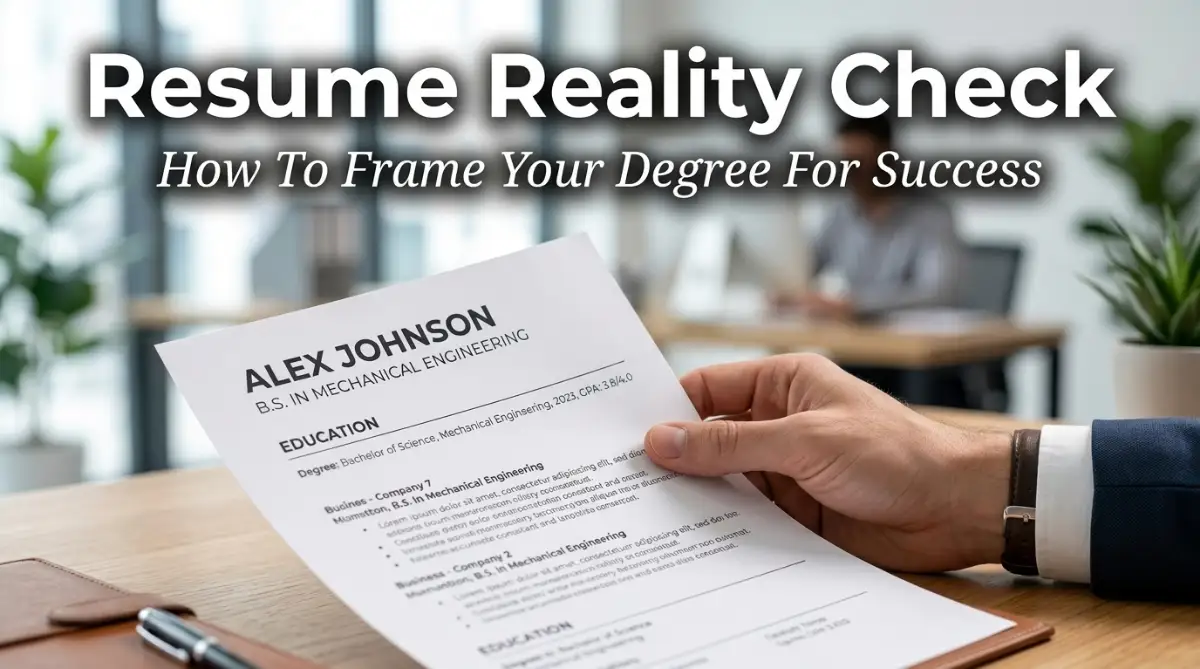
Avoiding the Traps That Diminish Your Credentials
It is easy to get in your own way when you are trying to prove your worth. Sometimes, the way we present our education actually hurts our chances more than the degree itself. You need to be aware of the common pitfalls that can make you look less qualified than you actually are.
The "Apology" Trap
The biggest mistake you can make is acting like your online degree is something to be sorry for. If you walk into an interview and start by explaining, "Well, it is an online degree, but...," you have already lost the upper hand. You are telling the employer that you agree it is inferior.
Stop apologizing. If they ask about your degree, state the name of your university, your major, and one key project you completed. Keep it professional, confident, and forward-looking. Your goal is to show them you are the person who can solve their problems, not a student who is defending a life choice.
Neglecting the Power of Soft Skills
Many online students get so focused on the technical requirements of their coursework that they forget to highlight their soft skills. You have been managing your own schedule, communicating via digital tools, and self-motivating for years. These are the traits that companies crave.
If you don't mention these, you are leaving money on the table. You are more than a GPA. You are a self-starter who didn't need a professor to ring a bell to get you to sit down and work. That is a trait that is highly prized in modern, remote-friendly work environments.
The Resume Bloat
Do not try to hide your online degree by cluttering your resume with irrelevant information. Some candidates think that if they list every single micro-course, certificate, and seminar, they will look "more educated." In reality, this makes your resume hard to read.
Keep it simple. Highlight the degree, the key skills, and the specific projects that are relevant to the job you want. If the employer wants more, they will ask. Quality and clarity always beat quantity.
Ignoring Your Mental Wellbeing
The pressure to "prove" yourself can lead to burnout. It is tempting to work 16-hour days to overcompensate for your insecurities about your degree. This is a dangerous game.
You must remember that why mental health check-ups are just as essential as physical screenings is a lesson that applies to your career longevity too. If you are stressed, tired, and burning out, you won't perform well in interviews. Take care of yourself so you can perform at your best.
Getting Rattled by Rejection
You will get rejected. It happens to everyone, regardless of where they earned their degree. Don't assume every "no" is because of your online qualification.
Most of the time, it is just a mismatch of timing or requirements. Stay steady. Learn to stay calm and invest wisely during market volatility in your own personal life, and apply that same emotional intelligence to your career hunt. Persistence is what eventually lands the role, not the prestige of the building where you studied.
Owning Your Academic Journey
The value of your degree is ultimately defined by what you choose to do with it. You are the architect of your own career path, and no piece of paper—online or otherwise—can determine your ceiling unless you let it. Modern employers are hungry for talent, drive, and the ability to adapt.
When you show up with confidence, a strong portfolio, and a clear understanding of the industry, your educational background becomes a footnote to your success. Stop looking for permission to succeed from recruiters. Instead, look for opportunities where your unique set of skills will be genuinely valued and utilized.
You are not defined by the medium of your instruction. You are defined by your actions, your growth, and your willingness to keep learning long after your last assignment is submitted. Keep focusing on building your skills and your network, and the rest will follow.
My journey taught me that nobody cares as much about your degree as you do. When I finally stopped worrying about the label and started focusing entirely on how I could help the companies I applied to, everything changed for me. Take that step today and watch how the doors start to open for you.
Addressing Your Burning Questions
Does the "Online" label show up on my transcripts?
Most universities do not indicate the delivery method of your courses on your final transcript or diploma. It is treated as a standard degree from the institution, and it should be listed on your resume exactly the same way a traditional degree is.
Can I include my online degree in my "Education" section normally?
Absolutely, you should. There is no need to create a separate section or highlight that it was online unless the application specifically asks for it. Just list the university, the degree, and the years attended.
Will employers view my degree as "easier"?
That perception is fading, but if you encounter it, the best way to fight it is by demonstrating your expertise. You can do this by being well-prepared for technical interviews and having a strong portfolio of work to show.
How do I explain gaps in my employment if I studied full-time?
Don't apologize for gaps; frame them as a dedicated period of professional development. You didn't just have a gap; you were intentionally upskilling to prepare for a new level of responsibility in your career.
Disclaimer: This content is for educational purposes only and does not constitute professional career or legal advice. Hiring practices vary by company and industry, and accreditation standards may differ. Always research specific company policies and verify your educational credentials through official channels to ensure they meet your professional goals.