
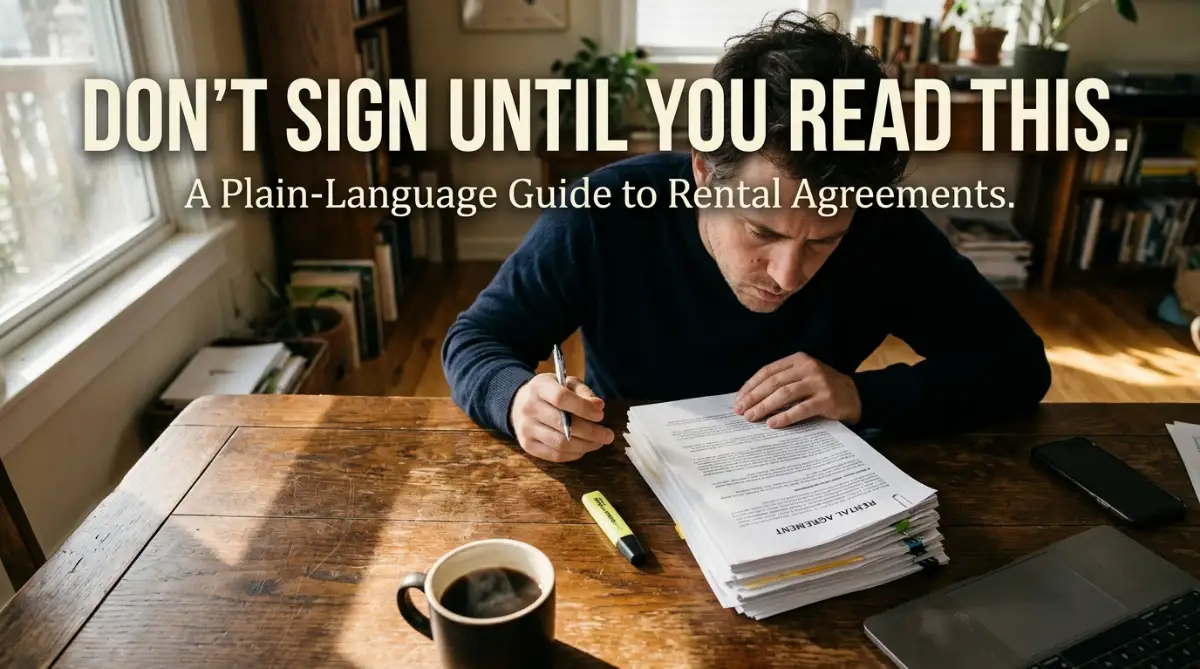
The Moment of Regret: Why Rushing to Sign Your Lease Hurts
You just found the perfect apartment. The excitement is real, and the move-in date is set. But before you get too comfortable, there is one document standing between you and your peace of mind: the lease. Signing it without a second glance isn't just a missed step; it's an open invitation for unexpected costs, privacy issues, and maintenance nightmares. Let’s make sure your next signature doesn't cost you more than your monthly rent.
Six months later, I had a broken water heater in the middle of winter, and the landlord refused to fix it quickly. I pulled out my copy of the lease to prove that maintenance was their responsibility. That’s when I saw it. There, buried in section nine of the fine print, was a clause stating that all minor repairs under a certain amount were my responsibility as the tenant.
My heart sank. I had signed away my right to a comfortable home because I was too lazy—or perhaps too intimidated—to read the documents in front of me. The frustration of paying for repairs that weren't mine was bad enough. But the real pain was knowing I had done this to myself. It wasn't the landlord's fault for including the clause; it was my fault for not checking.
Have you ever felt that sinking feeling? You sign your name on a dotted line, feeling good, only to find yourself stuck later with unexpected costs, unfair rules, or a situation you can’t escape. It ruins your peace of mind. It makes your home feel like a battleground instead of a sanctuary.
We often think that legal documents are meant to be confusing. We assume that if we don't understand them, that’s just how the world works. But that mindset is exactly what keeps us stuck in bad deals. You deserve to know exactly what you are agreeing to before you hand over that first check. This isn't just about ink on paper; it is about your daily life, your hard-earned money, and your stress levels.
Quick Summary: What You Need to Do Today
Negotiate Before Signing: Remember, a lease is a two-way agreement; ask for changes to unfair clauses.
Create a Paper Trail: Email is your best friend—keep all requests and agreements in written form.
Audit the Unit: Use your phone to record the condition of the apartment the moment you get the keys.
Check for Exit Clauses: Always verify the termination policy so you aren't trapped if life changes
Decoding the Lease: What You Need to Know Before Signing
Many people assume a lease is just a standard form. They think, "The landlord uses this for everyone, so it must be fair." That is a dangerous assumption. Every lease is a negotiation, even if the terms seem set in stone. The goal of a lease is to protect the property owner, not necessarily the tenant. When you read it, you are looking for the balance of power.
 Understanding the Financial Fine Print
| Common Lease Trap | What to Do Instead |
| Automatic Lease Renewal | Set a reminder 60 days before your lease ends to send notice. |
| "As-Is" Condition | Write a list of repairs needed and get it signed as an addendum. |
| Hidden Utility Caps | Ask for a copy of the last 3 months' utility bills to check usage. |
| Guest Policies | Ask for written clarification on the definition of "long-term guests." |
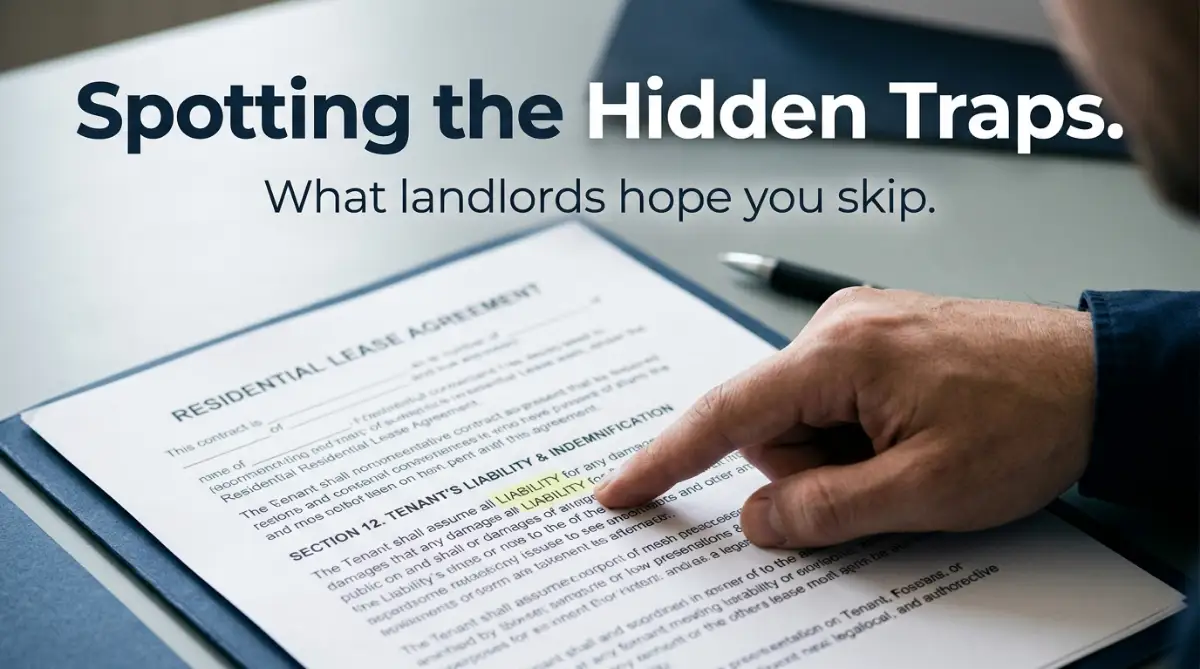
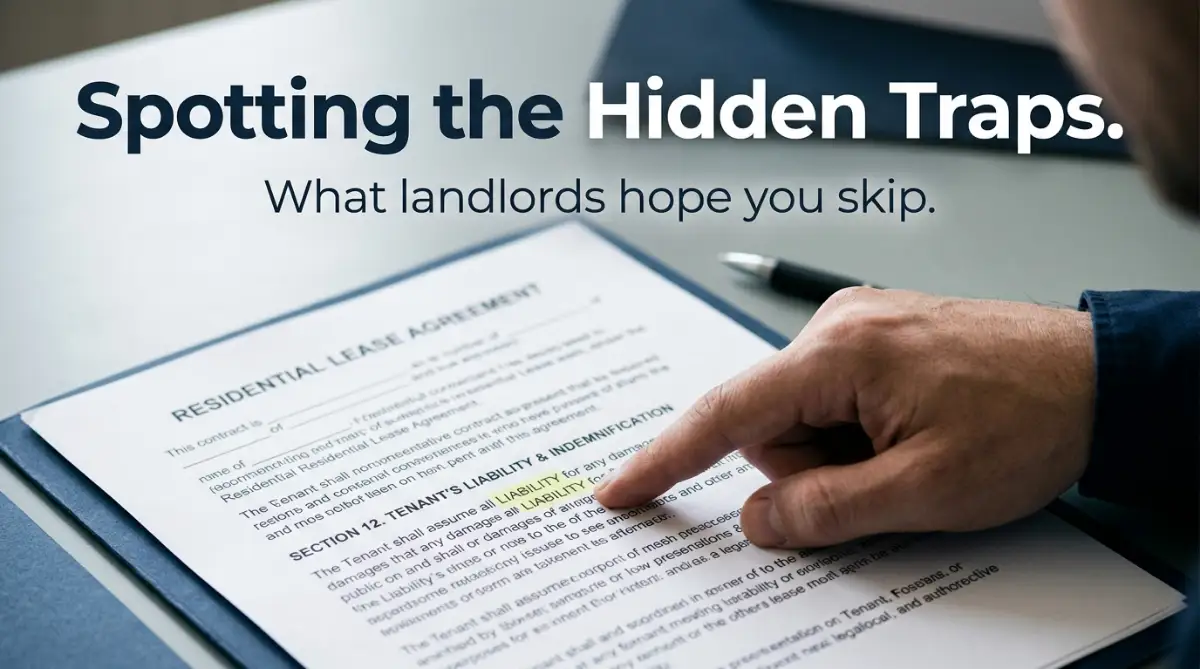
The most common area where renters get tripped up is the money section. You likely know your monthly rent, but do you know about the "hidden" costs? Look closely for clauses regarding utility payments, late fees, and automatic renewals. Some leases have language that allows the landlord to change the terms if they give you written notice.
Ask yourself these questions while reading: Is there a fee if I pay rent one day late? How much is that fee, and is it a flat rate or a percentage? If utilities are included, is there a cap on usage? If I go over that cap, who pays the difference? These might seem like small numbers, but they add up quickly.
 The Maintenance and Repair Responsibilities
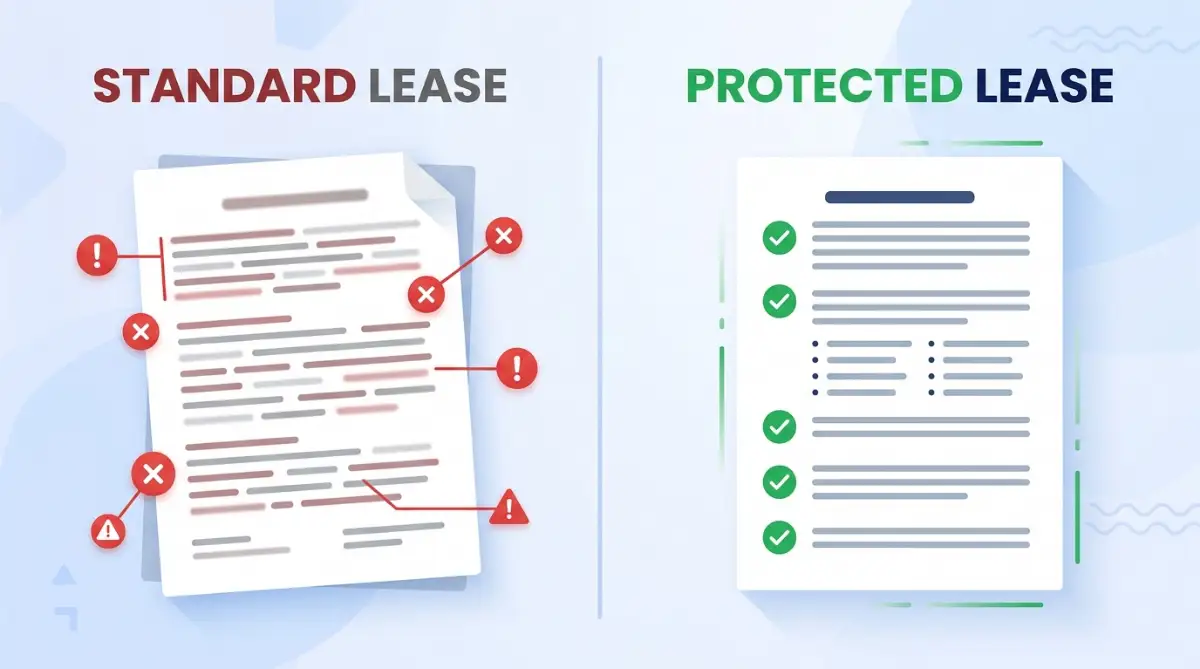
This is where my own mistake cost me dearly. You must clearly identify who is responsible for which types of repairs. A "standard" lease often puts the burden of small, day-to-day maintenance on the tenant. This might include changing lightbulbs, clearing drains, or even minor plumbing work.
Look for a section often titled "Tenant Obligations" or "Maintenance." If it says you are responsible for "all repairs," that is a red flag. You should negotiate this. Ask for specific language that limits your responsibility to "damage caused by tenant negligence" rather than general wear and tear.
The "Early Termination" Clause
Life is unpredictable. You might get a new job, face a family emergency, or simply need to move. What happens if you leave before your lease expires? Most standard leases will charge you an early termination fee. This could be one or two months' rent, or even the cost of the remaining lease.
Check if there is a "buyout" option. Some landlords are willing to include a clause that lets you break the lease if you pay a specific penalty, such as one month's rent. Knowing this in advance gives you an exit strategy if things go wrong.
The "Right of Entry" Privacy Rules
Your home is your private space. However, many leases include a clause allowing the landlord to enter the property. You need to know when and how they can do this. Does the lease require 24 hours of notice? Does it specify that they can only enter for emergencies?
Never sign a lease that allows the landlord to enter "at any time" or "without notice." You have a right to privacy. If the lease is too broad, ask to add a simple sentence that requires 24 to 48 hours of notice for non-emergency visits.
Pro Tip: The Paper Trail Habit
I once had a landlord try to charge me for carpet stains that were already there when I moved in. Because I didn't have proof, I had to fight hard to get my deposit back. My advice? The moment you get your keys, walk through the unit with your phone camera. Record a video of every wall, every carpet, and every appliance. Email that video to your landlord immediately with a note saying, "Just confirming the condition of the unit upon move-in." Having that timestamped email saved my security deposit more than once.
Understanding Liability Beyond Renting
While we are talking about protecting yourself, it is worth noting that understan