
The Panic of the Legal Document
Seeing a thick envelope in your mailbox is enough to make anyone’s heart skip a beat. Your mind instantly races through disaster movies—lawsuits, jail, or losing your home. I’ve been there, staring at the return address with shaking hands, feeling like I needed a law degree just to open the paper. Let’s pull back the curtain on these documents so you can stop guessing and start breathing easier.
It turned out to be a simple dispute over a property line with a neighbor. It was a civil matter, not a criminal one. But in that moment of panic, I realized how little I actually knew about how the legal system works. Most of us go about our lives assuming that "court" is just one big, scary place where people go when they are in trouble. We rarely stop to think about the massive divide between being sued for money and being charged with a crime.
We see courtroom dramas on television where everything is fast and high-stakes, but the reality is much more nuanced. When you don't know the difference between a civil case and a criminal case, every legal document feels like a threat to your freedom. It creates a level of anxiety that is completely unnecessary once you know the basics.
You might be reading this because you are worried about a situation in your own life. Maybe you are dealing with a contract issue, or perhaps you are confused by a notification you received. Whatever the reason, please take a deep breath. You are not alone, and you are not expected to be a lawyer. By understanding these simple categories, you can navigate your situation with a lot more confidence.
Once you learn the specific "rules of the game" for each type of case, the mystery fades away. Let’s break this down into plain English so you can stop worrying and start understanding what is actually happening in your life.
TL;DR: The Essentials
-
Civil vs. Criminal: Civil law is about money/disputes (you vs. person/company); Criminal law is about society/safety (State vs. you).
-
The "Who" Test: If a government agency sends the mail, it’s likely criminal. If it’s a company or individual, it’s civil.
-
Don't Panic: Never reply to legal threats out of anger. Take 24 hours to cool down and gather facts.
-
Silence is Golden: If law enforcement is involved, you have the right to remain silent until you speak to a lawyer.
The World of Private Disputes: Understanding Civil Law
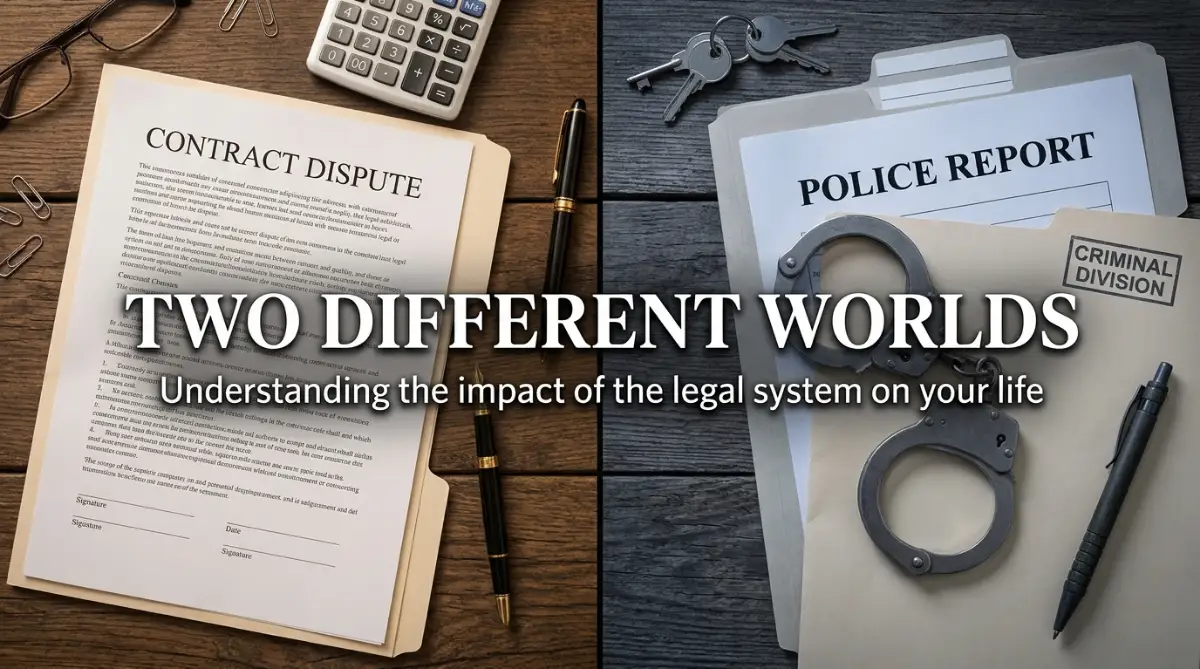
Civil law is the category for disputes between individuals or organizations. Think of it as a disagreement where someone feels they have been wronged and wants to be made "whole" again, usually through money. The government is rarely the one starting the fight here; it is usually two private parties working out their differences in front of a judge.
Examples of Civil Matters
If you hire someone to paint your house and they do a terrible job, that is a civil matter. If you have a disagreement with a contractor, you often look to your written contract to see where the responsibilities lie. In this case, you are suing for damages because they didn't hold up their end of the deal.
-
Family Law: Divorces, child custody, or property division.
-
Contract Disputes: When an agreement is broken between two people or businesses.
-
Personal Injury: If you slip and fall in a store because of a spill, you might sue for medical bills.
-
Property Issues: Landlord-tenant disagreements or boundary lines.
The goal in a civil case is not to punish the other person in a way that affects their freedom. The goal is to settle a debt or a duty. The person who brings the case to court is called the "plaintiff," and the person being sued is the "defendant."
The World of Public Offenses: Criminal Law
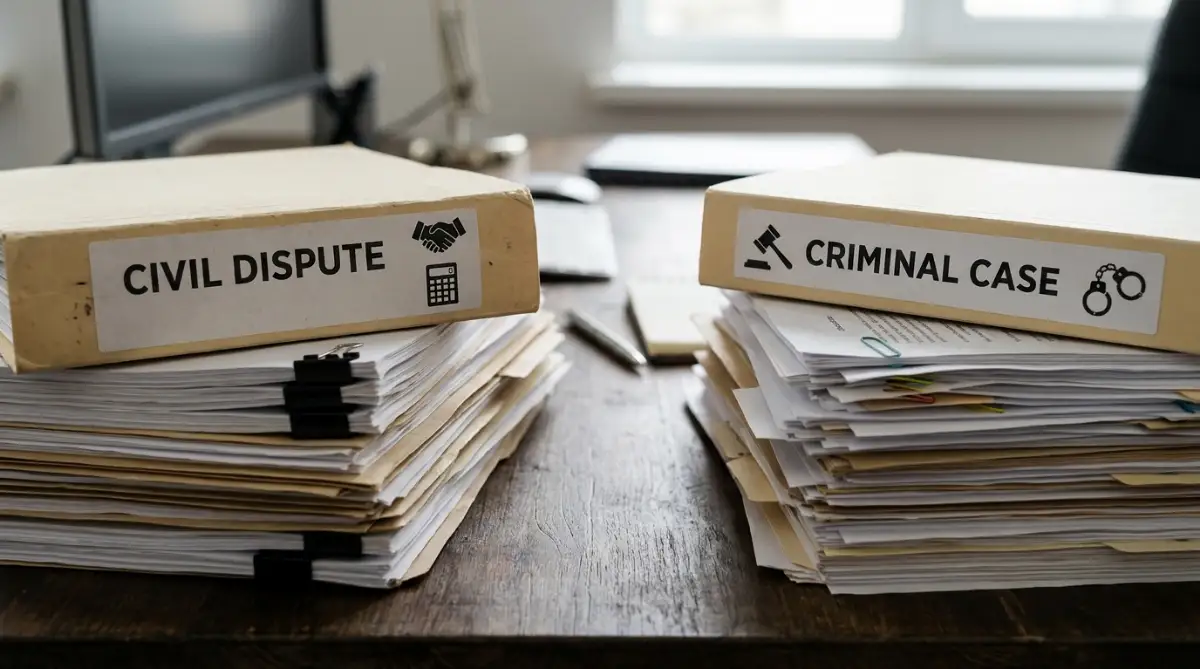
Criminal law is entirely different. It exists to protect society as a whole. When a law is broken that threatens the safety or order of the public, the government steps in to prosecute. This is why you will see case names like "The State vs. John Doe."
Examples of Criminal Matters
Criminal cases involve actions that are considered harmful to the public, such as theft, assault, or fraud. The consequences here are much more serious because they can involve jail time, probation, or heavy fines paid to the state rather than a private individual.
-
Theft: Stealing property or money.
-
Assault: Causing physical harm to someone else.
-
Traffic Offenses: Reckless driving or driving under the influence.
-
Fraud: Deceiving others for financial gain.
The person bringing the case is the government, often represented by a prosecutor. The defendant is the person accused of the crime. The stakes are much higher here because the outcome can strip away your rights and your liberty.