The Frustration of the "Collector’s Fallacy"
I spent years acting like a professional hoarder of information. I would find an interesting article online, save it to a reading list, and tell myself, "I'll read that later." Later became never. I would watch a life-changing video, nod along with every point, and feel inspired. Then, two days later, if you asked me what that video was about, I would draw a total blank.
It is a painful cycle. You spend hours consuming content—podcasts, articles, newsletters, tweets—thinking that simply having the information in your field of vision means you are learning. I felt smart in the moment, but the moment I stepped away from the screen, that knowledge seemed to vanish into thin air. I was collecting, not learning.
My struggle was the "Collector’s Fallacy." I thought the act of saving or bookmarking was the same as knowing. I was so wrong. My brain was feeling heavy, cluttered, and exhausted, yet I had nothing to show for it. I wasn't retaining, and I certainly wasn't applying any of that "valuable" data to my actual life.
You might feel the same way right now. You have thousands of saved posts and bookmarks, but your actual output is stagnant. You feel like you are constantly running just to stand in place. It is not a lack of intelligence; it is a lack of a system.
We are not wired to store everything in our heads. Trying to do so is like trying to carry a gallon of water in a mesh bag—it all slips through the cracks. The mental fatigue of trying to remember every detail is real. It drains your willpower and leaves you feeling like you are constantly behind, even when you are working hard.
You deserve a better way to handle the flood of data hitting you every day. You don't need a bigger brain; you need a better bucket. Let’s talk about how to stop the leaking and start actually owning the information you consume.
How to Build Your Knowledge Retrieval System
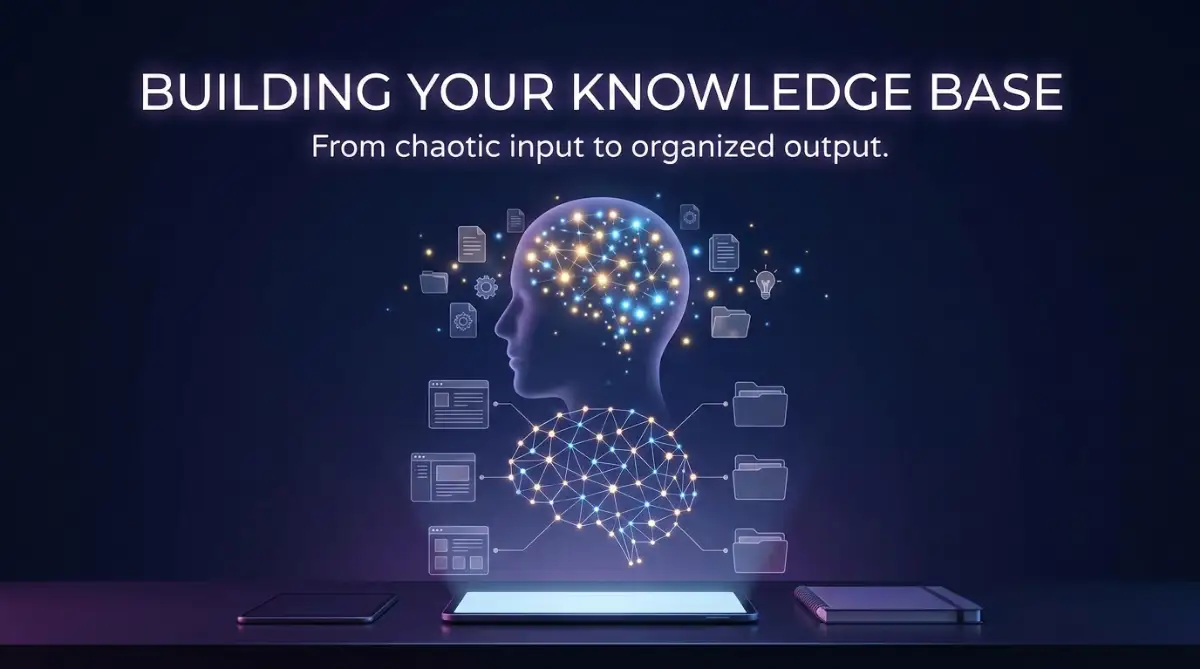
To fix this, we need to stop being passive consumers. We need to become active curators of our own minds. This is not about being a robot; it is about building a structure that does the heavy lifting for you.
Step 1: The "Inbox" Strategy
Everything you consume needs to go somewhere immediately. Stop leaving tabs open in your browser; they are just ghosts of work you haven't done. Create a dedicated "Inbox" where every article, note, or idea lands.
This could be a simple app like Notion, Evernote, or even just a text file. The goal is to get it out of your head and into a safe place. Once it is captured, you can close the tab. You are now free to focus on what is right in front of you.
Step 2: Clarification and Filtering
Once a day, or even once a week, go through your Inbox. Ask yourself: "Do I actually need this?" Most of the time, the answer will be no. Delete the fluff without a second thought.
For the stuff that remains, label it. Don't worry about perfect categories; just add a tag that makes sense to you. If you are saving a recipe, tag it #cooking. If it is a business strategy, tag it #business.
Step 3: The Active Recall Method
This is where the magic happens. You cannot learn by just reading. You have to engage. Write a summary of what you read in your own words. If you can’t explain it simply, you don’t understand it.
Try to explain the concept to a friend or write it down as if you are teaching it. This is called the "Feynman Technique." It forces your brain to process the info, not just absorb it.
Step 4: Spaced Repetition
Our brains are designed to forget things we don't use. To fight this, you need to revisit your notes at specific intervals. Look at your notes from a week ago, then a month ago.
This "spaced repetition" moves information from your short-term memory to your long-term memory. It sounds like work, but it is the only way to actually keep what you learn. You aren't just filing it away; you are embedding it into your thought process.
Pro Tip: I used to think I needed to write perfect notes. I would spend forever formatting them, and I would get bored before I finished. My realization was simple: Messy notes that I actually write are better than perfect notes that I never finish. Now, I just write as fast as I can, focusing on my own takeaway. It doesn't look pretty, but I remember it, and that’s all that matters.
Watch this video to see how you can set up a simple system that organizes your notes without becoming a full-time job:
If you are tired of losing track of your best ideas, watch this short guide to learn a workflow that actually saves you time and brainpower.
This video shows you how to use tools you already have to build a system that works. Most people overcomplicate it, but this guide keeps it down to basics. Once you see the process, you will realize you have been working harder than you needed to.
Myth vs. Reality: The Truth About Note-Taking
The Science of Why You Forget
We suffer from the "Forgetting Curve." It is a scientifically proven fact that we lose information rapidly after we encounter it. If you don't reinforce it, it is gone within days.
This is why "saving for later" almost never works. You are saving it, but you are not reinforcing it. The system I described above is designed to hack this curve. By capturing, clarifying, and reviewing, you are essentially telling your brain, "Hey, this matters! Keep this one!"
Think of your brain like a path in the woods. If you walk it once, the grass grows back over it. If you walk it every day, you create a clear, defined trail. Your notes are just a way to make sure you keep walking that path until the knowledge becomes part of your instinct.
Why Systems Beat Willpower
You will never have enough willpower to remember everything you want to learn. Willpower is a limited resource. Systems, however, are reliable.
A system doesn't get tired. It doesn't get distracted. When you build a system for your knowledge, you are outsourcing your memory to your tools. This frees up your brain to do what it is actually good at: thinking, creating, and solving problems.
Stop asking your brain to be a storage unit. It is much better at being a processing unit. Let the folders and the apps hold the data. You provide the insight.
Dealing with the Fear of Deleting
I know the feeling. You are worried that if you delete that article or note, you might need it one day. This is a fear of scarcity.
Here is the truth: If you haven't looked at a note in two years, you don't need it. And if you really need it again, you can find it online in five seconds. Don't clutter your life with "just in case" information.
The most valuable knowledge is the knowledge you actually use. If it isn't serving you, let it go. Your system will become much more powerful when it contains only what is genuinely helpful to you.
Building Your Knowledge Stack
You don't need to be an expert to start this. You just need to be a little bit more organized than you were yesterday. Start small.
If you try to build a massive library overnight, you will quit. Build it one note at a time. Each note is a brick. Over a few months, you will have a wall. Over a year, you will have a foundation.
Trust the process. You are building a resource that will serve you for the rest of your life. It is an investment in your own mind, and it pays dividends in clarity, confidence, and wisdom.
Why Knowledge Application is the End Goal
Remember, knowledge is useless if it stays in a folder. The ultimate goal of your information retention system is to help you do things.
When you learn a new idea, ask yourself: "How can I use this today?" Maybe it’s a better way to structure your emails. Maybe it’s a new perspective on a problem you are facing.
When you apply the knowledge, it sticks. It becomes yours. You are no longer just a collector of links; you are a builder of skills. And that is the biggest win you can get.
A Final Word on the "Perfect System"
There is no such thing as a perfect system. There is only the system that you actually use. If an app is too complicated, get rid of it. If a notebook is too heavy to carry, use a smaller one.
Your system should bend to your life, not the other way around. Be willing to experiment. Change it up until it feels like a natural part of your routine.
You have the power to organize your thoughts and build a life where you feel on top of your information rather than drowning in it. Start today, start simply, and enjoy the process of becoming a more thoughtful learner.
How to Handle Information Overload
We are bombarded with more data in a single day than our ancestors saw in a lifetime. It is natural to feel overwhelmed. But you can protect your peace of mind by being a gatekeeper.
Be selective about what you let in. If a source isn't adding value, cut it off. You have the right to curate your own inputs. Your mental health depends on it.
By being mindful of what you consume, you reduce the pressure on your retention system. Less junk in, less junk to manage. Focus on quality, not quantity.
Making Learning a Daily Habit
Turn your knowledge system into a daily ritual. Spend ten minutes in the morning reviewing your notes or capturing your thoughts. It is a quiet, meditative practice that sets the tone for your day.
You don't need an hour for this. Ten minutes is plenty. It is about consistency, not intensity. The simple act of checking in with your own thoughts will do more for your memory than any app could ever do.
You are training your brain to notice, to think, and to keep what matters. It is a powerful practice, and it is entirely yours to shape. Enjoy the clarity that comes with it.
Common Questions About Knowledge Management
Is it better to take digital or handwritten notes?
It depends on your goal. Handwritten notes are great for memory because the physical act of writing helps you focus. Digital notes are better for searchability and long-term storage. Many people use both: handwritten for the initial spark, digital for the permanent record.
How do I know if a note is worth keeping?
Ask yourself: "Will this help me in six months?" If the answer is no, delete it. Your future self will thank you for keeping your system lean and easy to navigate.
How much time should I spend organizing?
Keep it to the "two-minute rule." If it takes more than two minutes to capture or organize a note, you are overthinking it. Keep it fast, keep it simple, and get back to your work.
Do I need to be tech-savvy to do this?
Not at all. You can do this with index cards and a filing cabinet if you want. The tool is secondary; the habit of capturing and reviewing is what actually matters. Use whatever tool feels comfortable to you.
What if I fall behind on my reviews?
Don't worry about it. It happens. Just start again today. You don't need to "catch up" on old notes. Just pick up where you are and keep moving forward. Consistency is better than perfection.
Beyond Note-Taking: Linking Your Thoughts for Real Insight
Most people believe that organizing information is just about putting things into folders. That is a mistake. Real knowledge retention happens when you start connecting your new information with what you already know.
When you read something new, don't just copy it down. Ask yourself how it relates to a topic you studied last month or a problem you are trying to solve today. This creates a web of ideas in your mind rather than a pile of disconnected facts.
Scientists often discuss the importance of cognitive architecture when it comes to learning new skills. You can read more about how memory encodes information through this study on cognitive load and learning to understand why creating links is better than simple memorization. By linking ideas, you essentially build a map of your knowledge.
The Power of "Evergreen" Notes
An evergreen note is a thought that stays relevant no matter when you review it. Instead of writing "Article about X," write a note that explains the concept in your own voice. This makes the information yours.
If you are a student or a professional, you probably know that why traditional study habits often fail to retain complex information is because they are too passive. When you write an evergreen note, you are forced to process the information, which makes it stick. Your system should be a collection of these insights, not just a dumping ground for links.
Refining Your Retrieval Process
Having a system is good, but having a fast retrieval system is better. I use a simple tagging method to keep my thoughts accessible. I don't use complex filing trees because they take too long to navigate.
Instead, I use a "search-first" approach. When I save something, I add two or three descriptive keywords. This way, my system works like a private version of a search engine.
You can find more on the science of efficient information processing at Psychology Today, where they break down how we retrieve facts. Keep your tags simple, and you will find your information in seconds.
The "Review-to-Apply" Technique
Most of us store info and never look at it again. Once a month, try to review your notes with a specific question in mind. Ask, "What can I do with this info this week?"
If you can't find an application, that is okay. But often, you will find a way to use that knowledge to fix a problem or improve a process. This keeps your system alive and useful, rather than letting it become a digital graveyard.
Managing Your Internal Knowledge Assets
Think of your notes as assets, much like you would manage your money. You wouldn't throw your savings into a random box, so don't throw your best ideas into a random app without a plan. Just as you learn about how to stay calm and invest wisely during market volatility, you should invest your time in organizing your thoughts wisely.
The goal is to increase the value of your knowledge over time. When your notes are organized, you make better decisions. You start to see patterns in your life that you missed before.

The Traps That Weaken Your Memory and Workflow
We have all been there. You spend hours organizing your notes, finding the perfect app, and tweaking your folders. Then, you realize you haven't actually learned a single thing.
The "Collector’s Fallacy" Trap
This is the biggest pitfall for most of us. We collect articles, bookmark pages, and save videos, thinking we are making progress. But saving is not learning.
When you only collect, you get a rush of satisfaction that tricks your brain into thinking you are productive. It is a fake sense of accomplishment. If you don't process the information, you are just hoarding data that will never help you.
Perfectionism in Organization
Some people stop working because their system isn't "perfect" yet. They spend all their time looking for the perfect app. They waste days setting up folders and colors.
This is just another form of procrastination. The best system is the one you actually use, not the one that looks the best. Do not let your need for order get in the way of your actual growth.
Ignoring the "Why" Behind the Data
If you are saving info without a purpose, you are wasting your storage space. Always ask yourself what you want to achieve with this data. Are you trying to write a book? Fix your finances? Build a business?
If your system isn't aligned with your goals, it will fall apart. People often run into this when they deal with the passive income fallacy: why your online revenue is stalled. They focus on the tools rather than the result, and that is why they fail.
Over-Reliance on Digital Tools
Sometimes, we forget that our brains are the best tool we have. We rely on apps to do the thinking for us. This leads to a state where we can't remember anything without a screen.
Balance your digital system with a bit of analog thinking. Talk through ideas, use a whiteboard, or just think while you walk. NPR’s research on learning science highlights how our digital habits can actually dull our natural memory. Keep your brain sharp by doing some of the processing internally.
The Mistake of Not Updating Your Data
Knowledge changes. If you keep notes that are outdated, you are poisoning your own well of information. Review your old notes once in a while and delete what is no longer true.
Your system is only as good as the information inside it. If you keep bad data, you will make bad decisions. Treat your notes like a living library, not a static pile of papers.
Your Path to Smarter Recall and Better Results
Building an information system is one of the most rewarding things you can do for your personal growth. It changes how you see the world. You go from being a consumer of information to a master of it.
You are not just storing data; you are building a library of your own ideas. This gives you a competitive edge in everything you do. Whether you are studying, working, or managing your personal life, having your knowledge at your fingertips is a massive advantage.
Action Plan for Tomorrow
- Audit your current storage: Delete apps or folders you haven't opened in six months.
- Start capturing: Pick one simple tool and stick with it for a month.
- Engage: Don't just save it; summarize it in your own words.
- Connect: Look for one link between two different topics you have studied.
You might feel like you don't have time for this, but you actually save time. Think about how much you lose searching for lost thoughts. This system pays for itself by giving you back those lost hours.
If you feel like your tech is getting in the way, remember that the real truth about ev battery life: what owners need to know is a perfect metaphor for systems. Systems, like batteries, need maintenance to stay effective. If you neglect them, they fail you.
I know it feels like a lot to take on, but you don't have to do it all at once. Just start today. Take one note, organize it, and see how it feels. You will find that the more you do it, the easier it becomes.
My own journey started with a simple notebook. I made plenty of mistakes, and my early systems were a mess. But I kept going. I am so glad I did because now, I feel in control of what I know. You can have that same feeling. Just start.
Common Questions About Information Systems
What is the best app for organizing knowledge?
There is no "best" app. The best app is the one you will actually open and use every day. Whether it is Notion, Obsidian, Evernote, or a simple paper notebook, the tool matters less than the habit.
How do I know if I'm over-organizing?
If you spend more time setting up your folders than you do reading or writing, you are over-organizing. Simplify your setup until you feel like you are actually making progress on your goals.
Can I use this for creative projects?
Absolutely. Creative projects require a lot of diverse inputs. An information system helps you connect those inputs in new and interesting ways, which is the heart of creativity.
How do I keep my digital files secure?
Always use a password manager and enable two-factor authentication on any cloud storage you use. If you want to dive deeper into digital safety, check out the guide on the home network security guide to protect your privacy at home for a strong foundation.
Does this work for students?
Yes, it is perfect for students. Students have to deal with a high volume of information, and having a system to retain that knowledge is a huge benefit for exam prep and long-term learning.
What if I lose my data?
Always have a backup. If you use a digital tool, make sure it syncs to the cloud and that you have a local copy on your computer. Don't rely on one single place to keep your life's work.
Disclaimer: The information provided in this article is for educational purposes only and does not constitute professional advice. Knowledge management is a personal process, and what works for one individual may not suit another. Always adapt these suggestions to fit your specific needs and goals. By implementing these practices, you accept full responsibility for your own learning outcomes and data management decisions.