

Renovation Checklist: Key Takeaways
-
Never rely on handshakes: Always convert every verbal promise into a signed document.
-
Control the payments: Never pay the full balance before the work is inspected and approved.
-
Define everything: Include specific brands, model numbers, and finish details in the scope of work.
-
Plan for surprises: Ensure a "change order" process is in writing before any extra work begins.
The Hidden Cost of a Verbal Promise
Renovating your home is exciting, but it can quickly turn into a financial headache if you rely on a simple handshake. Misunderstandings about materials, timelines, or costs are the main reasons projects spiral out of control. This guide helps you shift from a casual agreement to a professional, written contract that protects your home and your bank account.
I was wrong. That mistake cost me thousands of dollars and months of stress that I simply did not need in my life. Every morning started with a call to a contractor who wouldn't answer, followed by a day of worrying if the work done so far was actually up to code. My home felt less like a sanctuary and more like a never-ending source of anxiety.
You see, when you rely on word-of-mouth agreements, you are leaving your peace of mind to chance. It is not that all contractors are dishonest, but even the best ones can be forgetful or disorganized. When things go wrong, a handshake does not hold up in court, and it certainly does not fix a leaking pipe or a crooked wall.
If you are currently planning a renovation, I want you to avoid the path I took. You deserve to feel excited about your new space, not worried about the next "surprise" cost. The difference between a dream project and a nightmare often comes down to one simple thing: what is written on paper.
It is time to take charge of your renovation journey. You have the right to know exactly what you are paying for, how long it will take, and what happens if something goes off-track. Let’s look at how you can secure your interests before the first hammer swings.
Defining the Scope: The Foundation of Your Contract
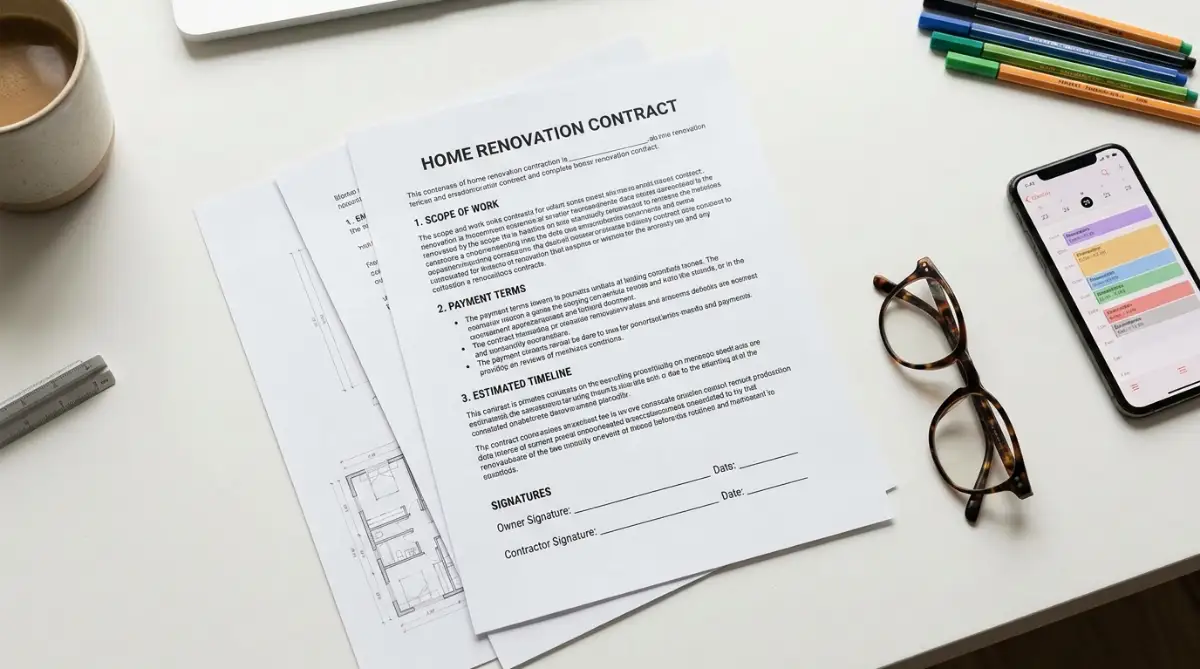
You need a document that covers every detail of the work. If it is not written down, it effectively does not exist in the eyes of the law. Your contract should be the roadmap for your entire project, leaving no room for assumptions.
 Detailed Scope of Work
Start by listing every single task. If you want new tile in the bathroom, specify the brand, the color, and the installation method. Do not just write "bathroom remodel." Ambiguity is where your money disappears.
| Feature | Verbal Agreement | Written Contract |
| Legal Standing | Very Weak | Strong & Binding |
| Budget Control | High Risk of Creep | Fixed & Agreed |
| Dispute Handling | "He said/She said" | Documented Terms |
Include the materials, the labor, and the finish work. If the contractor suggests a change later, make sure that change is documented in a signed amendment. This prevents "scope creep," where the project grows beyond your budget without your explicit approval.
 Firm Timelines and Deadlines
Delays are the most common complaint in home improvement. Your contract should have a clear start date and an estimated completion date. You can even include a clause about what happens if the project is delayed significantly without a valid reason.
This keeps the contractor accountable. It ensures they are not starting your kitchen while they are still working on three other jobs across town. Respect for your time is a professional obligation, and your contract should reflect that.
Payment Schedules
Never pay the full amount upfront. A standard practice is to pay a deposit, followed by milestone payments. This means you pay for work only after it is completed and inspected.
Pro Tip: I once made the mistake of paying for the "entire cabinet installation" before the doors were actually hung. The contractor finished the boxes, got his money, and then disappeared for two weeks. I learned the hard way that you should hold back the final payment until you are completely satisfied with the walk-through.
Handling Unexpected Costs
Renovations often uncover hidden issues, like water damage behind a wall. Your contract should specify how these "change orders" are handled. Every change order must be in writing and signed by both of you.
This protects you from surprise invoices at the end of the project. It forces the contractor to discuss the extra cost with you before they start the extra work. This simple habit keeps your budget predictable and helps you manage small business liability if you are working with smaller, independent crews.