

The Heavy Envelope That Changed My Morning
Opening a medical bill often feels like a punch to the gut, especially when you’re already stressed about your health. You look at that total and your first instinct is to panic—but before you pay a cent, know this: that number is just a starting point. Let’s walk through how you can take control, challenge the charges, and negotiate a price that actually fits your life.
I kept thinking about how one medical event could snowball into a financial disaster that would follow me for years. It felt like I was being punished for simply needing care, and the sheer size of the debt made me feel helpless. I wanted to pay my fair share, but the number just didn't seem right.
Have you ever felt that sinking sensation? It is the feeling of being trapped between wanting to be responsible and not knowing how to survive the cost. You aren't alone in this. Many people live with this constant, low-level anxiety, wondering if their credit score will take a hit or if they will get those dreaded collection calls.
The truth is, many people assume the price on that paper is final. We treat it like a bus ticket—you pay what is printed, or you don't ride. But medical billing is not like a grocery store receipt; it is more like a starting point for a conversation. I realized that if I didn't speak up, I would be paying for errors and inflated costs that I didn't need to shoulder.
I want to show you that you have more power than you think. You don't have to just accept the debt and watch your peace of mind disappear. There are specific, calm, and effective ways to tackle these bills head-on. By taking a few calculated steps, you can often significantly lower what you owe, or at least set up a payment plan that lets you breathe again. Let’s get into the process of taking control.
Medical Bill Survival Guide
-
Request an Itemized Bill: Never pay a summary bill; you might be paying for mistakes.
-
Stay Calm: Treat the bill as a negotiation starting point, not a final demand.
-
Get it in Writing: Any agreement made over the phone must be confirmed via email or letter.
-
Ask for Charity Care: If you are struggling, check if the hospital has financial assistance programs.
The First Step: Don't Panic and Do Your Homework
Immediate Actions for Your First 24 Hours
-
Don't Pay Yet: Paying the full amount signals that you accept the price.
-
Save Everything: Start a dedicated folder for all letters, statements, and call notes.
-
Mark the Date: Note the "due date" on your calendar; don't let it sneak up on you.
-
Request the Itemized Bill: Do this before talking about money. You cannot negotiate what you cannot see.
Before you pick up the phone, you need to understand exactly what you are looking at. Many people make the mistake of calling the hospital in a panic, and they end up agreeing to things they don't fully understand. Your first goal is to be informed.
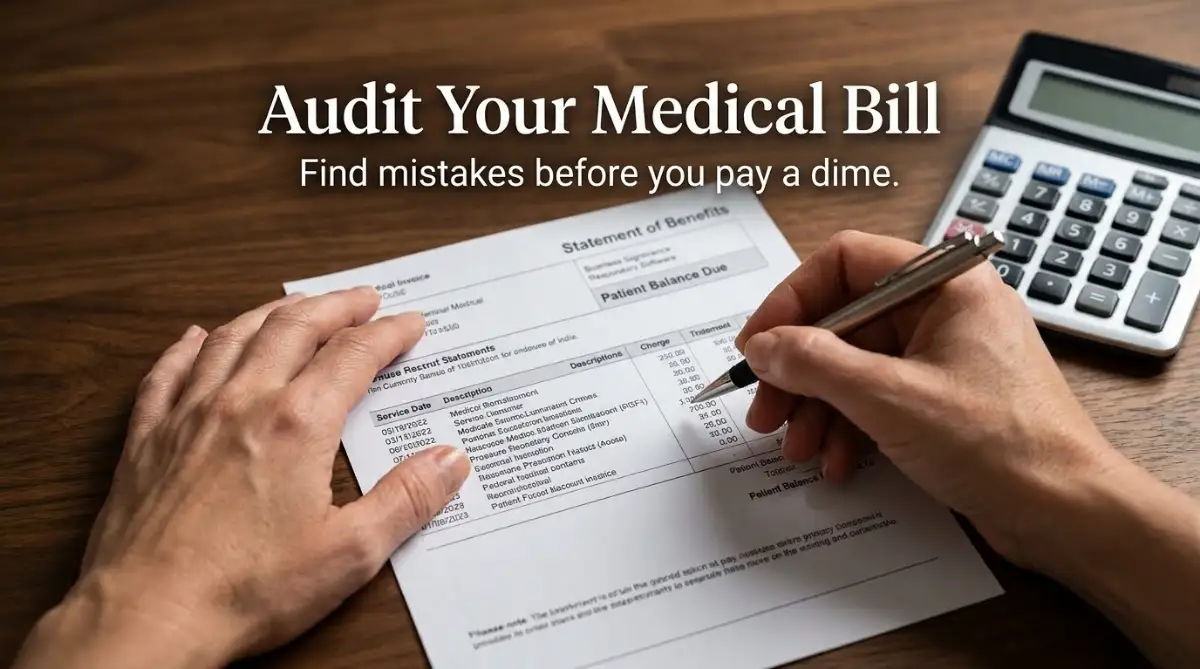
Audit the Bill for Errors
You would be surprised by how often medical bills contain simple mistakes. Sometimes it is a double charge for a service, or a code that was entered incorrectly. Always request an itemized bill.
A standard summary bill just gives you the total. An itemized bill lists every single pill, bandage, and minute of room time. Go through this line by line. If something looks weird, write it down.
 Know Your Rights
You have the right to ask questions. You have the right to understand every charge. When you have an itemized bill, you can easily spot if you were charged for something you didn't receive. This is your foundation for the conversation to come.
The Myth vs. Reality of Medical Debt
Preparing for the "Big Call"
Once you have your itemized bill and you have noted the errors, it is time to call. Many people get nervous here, but remember: you are a customer, and they are a business. They want to get paid, and they would rather have a settlement with you than send your account to a third-party agency.
Find the Right Person
Do not just call the main hospital number. Look for the "Billing" or "Patient Accounts" department. When you reach someone, ask for their name and a reference number for the call. This adds a layer of accountability to the conversation.
Use the "Hardship" Approach
If the bill is truly more than you can afford, ask about "Charity Care" or "Financial Assistance" policies. By law, many non-profit hospitals must have these programs. They aren't just for people with zero income; they often help those with high medical debt relative to their earnings.
Keep It Professional
Stay calm, even if the person on the other end is blunt or dismissive. You are looking for a resolution, not a fight. If you feel like the conversation is going nowhere, it is perfectly okay to politely ask to speak with a supervisor or a patient advocate.
Pro Tip: In my own experience, I used to get angry when they told me "no." I realized my anger made them defensive. Now, I use a softer approach: "I want to pay this, but the total is just not possible for my budget. What can we do to make this manageable?" It turns the tension into a problem-solving session.
Focus on the “Self-Pay” Rate
Medical billing can be confusing, especially when the amount you owe seems much higher than expected. In some healthcare systems, providers may have different rates for uninsured or self-pay patients compared with the rates negotiated with insurance companies.
If you have a large medical bill, it may be worth asking the billing department whether a self-pay, cash, or discounted rate is available and whether you qualify for it. The answer will depend on the provider, your insurance arrangement, and local billing rules, so there is no guarantee that the rate can be applied to an insured account.
Still, asking about available discounts, payment assistance, or alternative billing rates can help you understand your options before simply accepting the amount on the bill.
Avoid the "Collections Trap"
The most important thing is to keep the conversation moving before the deadline hits. If you just ignore the bill, it will go to collections. Once it is in the hands of a third-party agency, your power to negotiate with the hospital evaporates. Keep communicating, even if it is just to ask for more time to review the bill.
Are you wondering how to structure your conversation with the billing department? Watch this video to see how to handle the phone call like a pro:
This short guide will help you prepare the right words to say so you can feel confident when you dial that number.