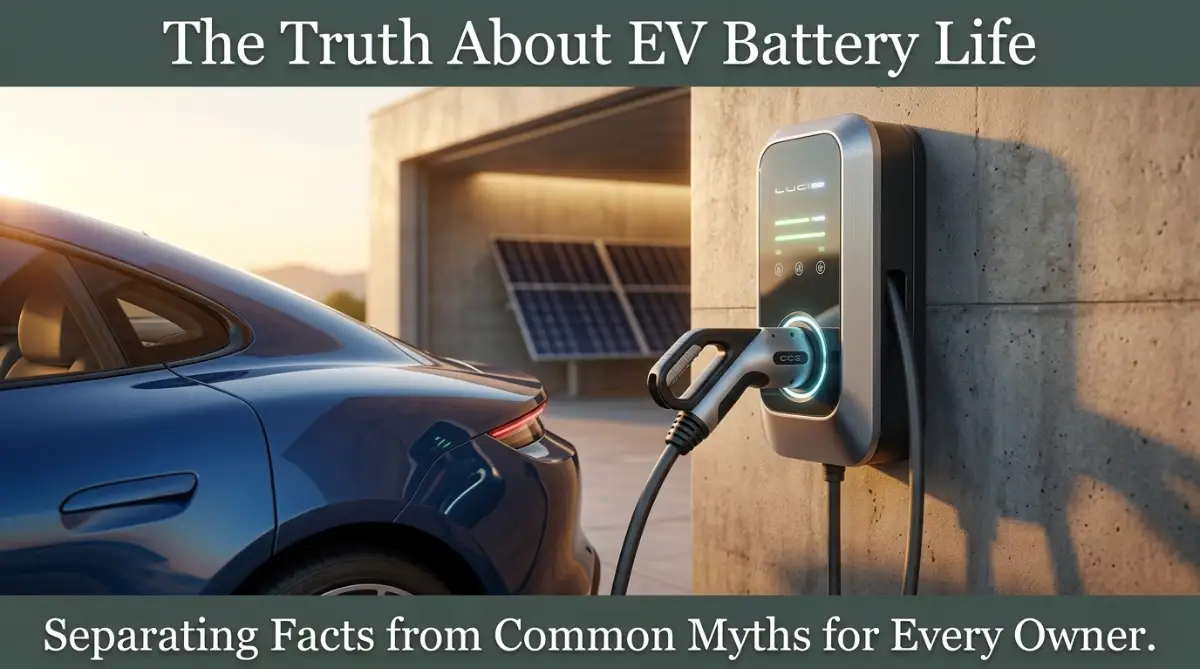
The Silent Anxiety: Why We Worry About Our Batteries
I remember the exact moment it hit me. I was sitting in my driveway, just days after bringing home my first electric car. The silence of the car was peaceful, but my mind was loud. I kept staring at the battery percentage on the dashboard, wondering if I was doing something wrong. Was plugging it in every night secretly killing the cells? Would I be stuck with a car that couldn't travel past the grocery store in a few short years? I spent hours that night buried in online forums, reading terrifying stories about battery health. Every little drop in range felt like a personal failure. I felt trapped by this invisible ticking clock, convinced that my shiny new vehicle was destined to become a paperweight.
It is a heavy feeling, isn't it? That constant, nagging doubt that you might be ruining your investment just by using it. I have talked to so many other drivers who feel the exact same way. We see the numbers on our screens, we read conflicting advice online, and it creates a sense of helplessness. It takes the joy out of the drive. Instead of enjoying the smooth acceleration and the quiet ride, we become hyper-focused on the chemistry happening under our seats. This anxiety ruins the experience of owning a car that is supposed to make life easier, not more complicated.
The reality is that this worry usually stems from outdated information. We apply the logic of old laptop batteries or early-generation electric cars to modern machines that are much smarter than we give them credit for. You are not alone in this confusion, but you also do not have to live with this stress. The truth is much more comforting than the myths suggest. Let me help you clear the air and show you how these batteries actually work.
Getting to Know Your Battery: The Science Behind the Scenes
To stop worrying, you have to understand what is actually happening under the hood. Think of your EV battery not as a simple fuel tank, but as a complex living thing that prefers moderation. It does not like to be completely empty, and it does not like to be stuffed to the brim for long periods. Modern electric cars are equipped with something called a Battery Management System, or BMS. This is the brain of the operation. It works silently to protect the battery from your bad habits.
The Role of the Battery Management System (BMS)
The BMS is your best friend. It acts like a gatekeeper. When you plug your car in to charge, the BMS decides how much power to let in. It balances the individual cells within the pack to make sure one part is not working harder than another. Even if you make a mistake, the BMS is there to prevent damage. You cannot "overcharge" a modern car because the car simply won't let you. It stops the flow of energy long before it reaches a point that could harm the chemistry.
Why Heat is the Real Enemy
If you want to know what actually causes degradation, look at temperature. Extreme heat is the enemy of lithium-ion batteries. When the pack gets too hot, it stresses the internal components. This is why many cars have active liquid cooling systems. Your biggest job as an owner is simple: just avoid leaving the car parked in direct, blistering sun for weeks on end if you can help it. If you park in a garage or under some shade, you are already doing better than most.
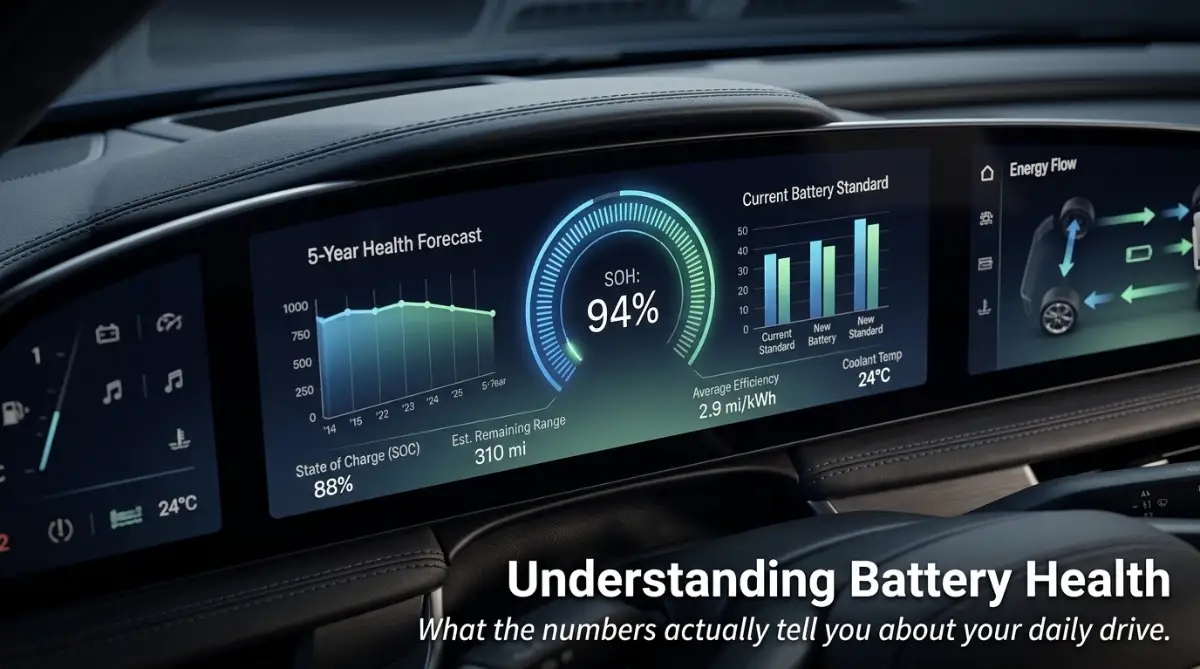
Practical Habits for a Long Battery Life
You do not need to be a scientist to take care of your car. It really comes down to a few simple daily habits. I have shifted my own routine, and the results have been great. It does not take much effort to keep your battery in top shape for the long haul.
The 80/20 Rule: A Simple Guide
You have likely heard people talk about keeping the charge between 20% and 80%. This is not just a random tip. It is the "sweet spot" for battery chemistry. If you keep the battery in this range, you avoid the stress of extreme voltage. Think of it like a rubber band. If you stretch it to the absolute limit every single day, it will eventually lose its snap. But if you keep it stretched to a comfortable middle point, it stays flexible for much longer.
Pro Tip: I learned this the hard way. I used to charge to 100% every single night because I thought it was "full." I realized later that I was barely using 30% of that range on my daily commute. Now, I set my car to stop at 80% during the week. My battery is happier, and I never actually run out of power.
Slow Charging is Your Friend
Fast charging is convenient, especially on road trips. However, using it for every single charge adds heat to the battery. Think of "Slow Charging" (at home) as a calm, steady meal, and "Fast Charging" as a rushed gulp of water. Your battery prefers the calm approach. Use the fast chargers when you need them for a long trip, but stick to a slower, home-based charger for your daily needs. This small change makes a massive difference over time.
Busting the Big Myths
There is so much noise out there. Let's silence the rumors and stick to what we know.
Myth 1: "The Battery Will Die in Five Years"
This is perhaps the biggest myth of them all. Most modern electric vehicle batteries are designed to outlast the car itself. When a battery "degrades," it does not just fall off a cliff and stop working. It slowly loses a tiny bit of capacity over time. A car that once got 300 miles might get 285 miles after many years of heavy use. That is not a dead battery; that is just a slight reduction in range.
Myth 2: "Replacing the Battery Costs More Than the Car"
This sounds scary, but it is rarely the reality. Because the battery is designed to last so long, most people will never have to replace the entire pack. Even in the rare cases where a battery needs service, you can often replace specific modules rather than the whole unit. It is getting cheaper and easier to maintain these systems every year.
Watch This: Real-World Battery Performance
Sometimes, seeing the data in action is the only way to believe it. Many experts have put cars through thousands of miles of intense testing to see how the battery holds up. This video breaks down exactly what happens to the range after years of real-world use, and it might just surprise you.
If you are still nervous about your battery health, take a look at this video. It clearly shows the difference between fear and reality.
Myth 3: "Cold Weather Destroys the Battery Forever"
It is true that cold weather temporarily reduces range. You might notice your car doesn't go as far in the winter. However, this is temporary. Once the weather warms up, your range usually bounces right back. It is not permanent damage. It is just the chemistry reacting to the cold. It is similar to how your smartphone battery dies faster when you are skiing. Just warm it up, and it works fine again.
Creating a Stress-Free Ownership Experience
Taking care of your electric car should not be a chore. It is an upgrade in technology, and like any upgrade, it comes with a tiny learning curve. Once you stop looking at the battery as a ticking time bomb, you will realize it is actually a reliable piece of hardware.
Does Climate Really Matter?
If you live in a very hot area, you might be worried. While heat is a factor, cars are built to handle it. The software in the car monitors the temperature constantly. Even when the car is turned off, it may pull a little bit of power to run the cooling system if the temperature spikes. Trust the car to take care of itself. If you are really worried, just try to park in the shade. That is the single most effective thing you can do.
How Driving Style Impacts the Battery
Believe it or not, your driving style matters more than the charger you use. Aggressive acceleration and hard braking generate a lot of power spikes. This creates heat inside the battery pack. If you drive smoothly, you are not just saving energy, you are also being gentle on the battery cells. Think of it as "hypermiling." It is fun to try and squeeze the most efficiency out of every kilowatt. You might find that you actually enjoy the challenge of smooth, efficient driving.
Should You Worry About Long-Term Storage?
If you are going on a long trip and leaving your car behind, what should you do? Do not leave it at 100% or 0%. The ideal state for storage is around 50%. This puts the least amount of stress on the battery while it sits idle. If you leave it plugged in at 50% (if your charger allows that setting), even better. The car can manage itself perfectly fine.
Putting It All Together
We have covered a lot of ground. The takeaway here is simple: stop obsessing over the battery. Modern electric cars are built to be robust. They are designed for the real world, and they have the brains (the BMS) to handle the daily grind.
If you stick to these simple rules—keep it in the 20% to 80% range, charge slowly when you can, and park in the shade—you are doing everything right. You do not need to stress about the future. You are already ahead of the game.
The transition to electric driving is about freedom. It is about not having to stop at gas stations, not having to change oil, and enjoying a quiet, powerful ride. Don't let myths about battery degradation steal that joy from you. Your car is built to last, and it will be ready for the road as long as you are.
So, go out and drive. Enjoy the technology. You are part of a new way of moving through the world, and you are doing it the right way. Your battery will thank you, and you will have peace of mind knowing you are treating your vehicle with the care it deserves. Remember, the best way to maintain your battery is simply to drive and enjoy your car. It is smart enough to handle the rest.
Pro-Level Secrets: Maximizing Your Battery’s Potential
You already know the basics, but there is a layer of understanding that separates the casual driver from the expert. Owning an electric vehicle is not just about moving from point A to point B; it is about managing a sophisticated piece of technology that adapts to your behavior. When you start to view your car as a high-performance device rather than just a traditional vehicle, you unlock a level of peace of mind that most people never reach. This is about working with your car’s design, not against it.
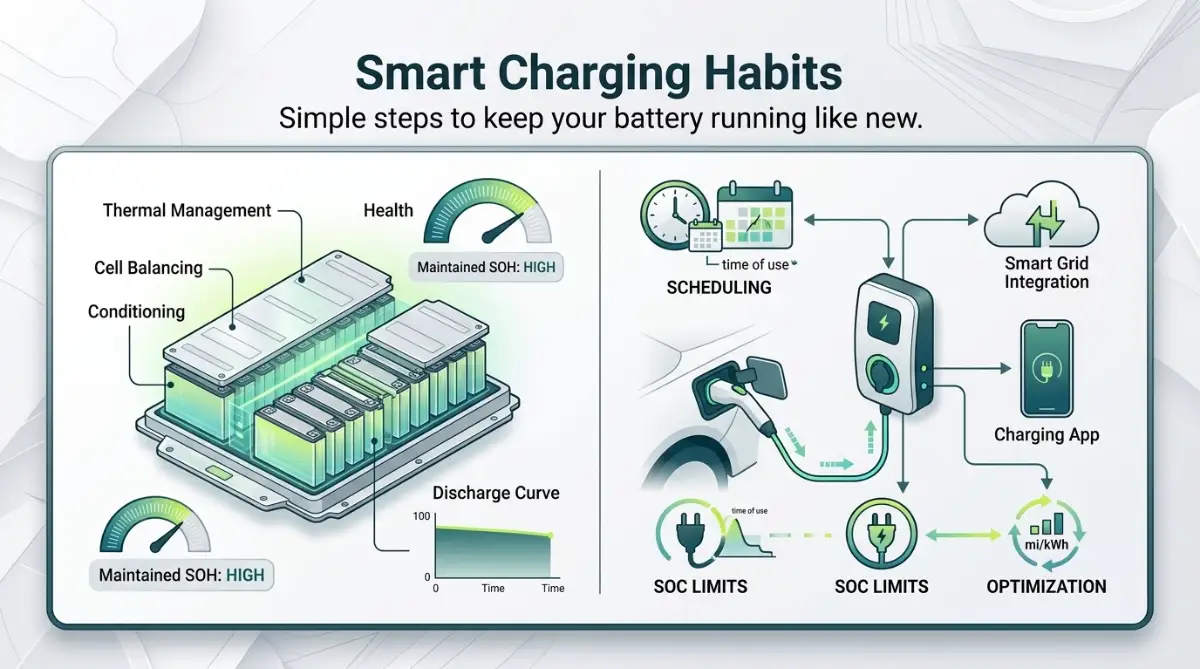
One of the most effective habits you can adopt is understanding how to manage your charging speed. While it is easy to assume that all electricity is the same, how that power enters your battery pack makes a big difference. Think of it like drinking water; you can sip it slowly or try to gulp it all down at once. Both get the job done, but one is much harder on your system. Whenever possible, rely on Level 1 or Level 2 home charging. This provides a steady, gentle flow of energy that prevents internal heat buildup.
According to research from the U.S. Department of Energy, steady charging temperatures and rates are better for long-term health than constantly exposing the cells to the stress of rapid power delivery. This does not mean you should never use public fast chargers. It simply means they should be your occasional tool, not your daily go-to. By keeping your daily routine relaxed, you ensure the internal chemistry remains stable for many years.
Another pro-level secret lies in how you handle regenerative braking. Most electric cars allow you to adjust the settings for this feature. When you let off the pedal, the motor turns into a generator and puts power back into the battery. It is a fantastic feature, but it also creates small bursts of power. If you are someone who likes to drive with aggressive, heavy regen settings, you might be cycling your battery more than necessary during stop-and-go traffic.
Finding the balance between saving your brake pads and managing the battery input is part of the fun. I personally found that setting my regen to a "medium" or "standard" level makes the ride much smoother and reduces the constant on-off stress for the battery cells. It creates a more predictable driving experience, and I honestly felt more in control once I stopped trying to force the car to be something it wasn't. Just like when you stay calm and invest wisely during market volatility, managing your car requires a level head and a focus on long-term stability rather than short-term gains.
You should also pay close attention to your car's software updates. Unlike a gas car that stays the same from the day you buy it, your electric vehicle is constantly evolving. Manufacturers frequently send out "over-the-air" updates that refine how the Battery Management System (BMS) operates. These updates can optimize charging curves, improve thermal management, and even unlock a little extra range. Skipping these updates is like ignoring a doctor's advice on your health.
If you are worried about the tech side of things, remember that your car is basically a computer on wheels. Just as you might access android developer mode to speed up your phone, taking a little time to learn your car’s settings menu can pay off. Check your manual or the manufacturer’s app to see if there are any specific "battery conservation modes" you should toggle on. These simple settings are often pre-programmed by engineers who know exactly how to keep the pack healthy for the longest time possible.
The Common Traps: Why Your Battery Might Struggle
It is easy to fall into bad habits because we are so used to how gas cars work. We have been conditioned for a century to think in terms of "empty" or "full." With an electric battery, that binary way of thinking is exactly what gets people into trouble. Let’s talk about the pitfalls that trip up even the most enthusiastic owners.
The biggest mistake is the "all or nothing" approach. We feel a psychological need to keep the tank, or in this case the battery, at 100% at all times. We think, "What if I have an emergency? I need every mile of range." This mindset is understandable, but it is actually the fastest way to accelerate wear on your lithium-ion cells. Keeping a battery pinned at 100% capacity creates high-voltage stress that slowly damages the internal chemistry over time.
Think about your smartphone. Do you remember how it held a charge beautifully when you first bought it, but after a few years of overnight, 100% charging, it started dying by mid-afternoon? Electric car batteries work on similar principles. You do not need to be at 100% every morning unless you are leaving for a massive road trip. Charging to 80% or 90% for daily errands is perfectly fine and keeps your battery cells in their "comfort zone."
Another trap is letting the battery sit at a very low state of charge for too long. Imagine you come home, you are tired, and your car says 5%. You think, "I'll just plug it in tomorrow." If that car sits in your driveway for three days at 5%, you are subjecting the battery to a different kind of stress called "deep discharge." While the car’s system has a buffer to prevent it from truly hitting zero, leaving it in that drained state is not ideal for the long-term health of the chemistry. It is much better to arrive home, plug in immediately, and let the car rest at a stable, healthy 50% or 60% overnight.
We also see people ignoring the impact of environmental factors. We tend to focus so much on the charging habits that we forget the car is exposed to the elements. If you live in a region that experiences harsh winters, you might notice your range dropping significantly. That is not the battery dying; that is the battery trying to warm itself up. Some owners try to fight this by blasting the heater or using every power-hungry feature to "force" the car to be comfortable, but that just creates more load.
When your car is very cold, the battery needs time to warm up before it can accept a fast charge efficiently. If you plug a freezing cold car into a high-speed charger, the system will often throttle the speed down to protect itself. This isn't a failure; it is your car protecting your investment. If you are worried about how these systems function, it is worth looking into how to build wealth through smart dividend investing as a metaphor for your car maintenance; the goal is to protect your principal (the battery) while enjoying the dividends (the driving range) without depleting the source.
Ignoring small warnings or error messages is another significant pitfall. Sometimes, the car will display a message about "limited power" or "charging restricted." Instead of searching online forums for hours, take it to the service center. Often, these are minor software glitches that can be fixed with a simple reset. By ignoring them, you might be letting a small issue grow into a larger one. Treat your car’s warning lights with the same seriousness as a check engine light in a gas car. You would not ignore that, so do not ignore this.
Finally, do not get caught up in the "range anxiety" culture. There is an entire community of people who obsess over every single mile of lost range. They compare their battery degradation stats with people who live in entirely different climates and have different driving styles. This creates unnecessary stress. Your battery is not an investment account that you need to track daily. It is a tool for transport. If you notice your range has dropped by a few percentage points over several years, that is entirely normal behavior for the technology. It does not mean your car is broken.
A Fresh Perspective on Driving Electric
You have everything you need to be a confident and smart electric vehicle owner. When I first started this journey, I was constantly worried about every single charge cycle and every degree of temperature change. I was looking for problems that did not exist. I realized that my obsession was keeping me from enjoying the actual car. The quiet ride, the instant torque, the ability to skip the gas station—these are the reasons we choose electric in the first place.
When you start to trust the technology, the ownership experience changes completely. You stop seeing the battery as a fragile glass ornament and start seeing it as the robust, well-engineered power source that it is. It is built to endure, and with just a little common sense, it will serve you faithfully for many years. You are not just driving a car; you are participating in a major shift in how we move. That is something to be proud of.
There is a certain freedom that comes with knowing how to care for your machine. You do not need to be a mechanic or an engineer. You just need to be a conscious owner who pays attention to the basics. Take it easy on the extreme charging cycles, respect the temperature limitations, and enjoy the drive. You are doing a great job, and the road ahead looks bright and full of potential. I hope you find as much joy in your electric vehicle as I have in mine. Now, stop worrying about the numbers and start enjoying the quiet, smooth power of your next drive.
Common Questions About Your EV Battery
Does rapid charging really damage the battery permanently?
Rapid charging creates heat, which is the main factor in battery stress. While modern cars have advanced cooling systems to manage this, using it for every charge can accelerate wear. Using it on long trips is perfectly fine, but stick to slower charging at home for your daily needs to keep the cells in top condition.
How do I know if my battery is actually degrading?
Most cars have a built-in battery health monitor in the menu settings. It is normal to see a small drop in maximum range over the first few years as the battery settles into its lifecycle. If you notice a sudden, massive drop, it is worth a quick check with the dealer, but minor fluctuations are just part of the process.
Is it okay to leave my car plugged in all the time?
Modern cars are smart enough to stop charging once they hit your set limit. If you have a garage charger, leaving it plugged in while at home is actually a great habit. It allows the car to run its battery maintenance and conditioning tasks without draining the pack, keeping it ready to go whenever you are. You can learn more about why home insurance companies deny claims and how to stay protected if you are thinking about setting up home equipment; just make sure your installation is safe and compliant.
Does cold weather ruin the battery pack?
Cold weather impacts the range, but it does not cause permanent damage to the cells. The reduction in distance you see in winter is temporary because the battery cannot output energy as efficiently when it is cold. Once the weather warms up, you will see your range return to normal levels without any special intervention.
Can I do anything to "fix" a degraded battery?
Battery degradation is a natural chemical process, and it cannot be fully reversed. However, you can slow down the rate of further loss by following good charging habits and avoiding extreme heat. For more complex tech questions, you might find blockchain explained: a beginner's guide to understanding digital assets an interesting way to understand how complex, decentralized data works, though it is a different field entirely!
Disclaimer: This content is for informational and educational purposes only. It does not constitute professional automotive, financial, or legal advice. Battery performance can vary based on the manufacturer, model, and individual driving conditions. Always refer to your vehicle’s official owner’s manual for specific instructions regarding your car. The author and publisher are not responsible for any damage or loss resulting from the application of the information provided in this article.