
The Silence After the Crash: My Wake-Up Call
You are standing on the side of the road, hands shaking, heart hammering against your ribs. You know you need to do something, but the shock makes your mind go blank. Most people freeze up in these moments, wasting the few minutes that could save their entire legal case. Before you start panicking or calling your family, you need to collect the right proof. Here is how you can take control of the situation right now.
The other driver got out, looking just as shaken as I was. We exchanged a few words, checked for visible injuries, and then… I stood there. I had my phone in my hand, but I didn't know what to do with it. Should I call my mom? Should I call the police? Should I just drive away because the cars were still moving?
I didn't take a single photo. I didn't ask for a phone number from the person walking their dog who saw the whole thing. I just wanted to go home and forget the incident ever happened.
Three days later, when the insurance adjuster called and asked for my version of events, I realized my mistake. My memory was fuzzy. The other driver had told a different story. Because I hadn't gathered any proof, I was left without a leg to stand on.
and your brain isn't thinking about legal strategy. But the next ten minutes are the most meaningful ones you will have.
In a Rush? Here Is Your "After-Crash" Plan:
Stay Calm & Safe: Check for injuries first, then move to a safe spot.
Document Everything: Photos of the car, the road signs, and the other driver's license are non-negotiable.
Don't Admit Fault: Avoid saying "I'm sorry" or blaming yourself—let the facts speak later.
Create a Timeline: Write down your memory of the event within 24 hours while it is fresh.
Gathering the Story: Why Your Phone is Your Best Tool
| Documentation Type | Why You Need It | Pro-Tip |
| Wide-Angle Photos | Establishes the scene and position. | Back up from the cars to get the road signs. |
| Driver Details | Identifies who was actually driving. | Ask to see the license, don't just take their word. |
| Weather/Light | Explains environmental factors. | If it's raining or dark, note that in your notes. |
| Damage Close-ups | Proves the impact point. | Use a coin or key next to the dent for scale. |
You might think that gathering evidence is the job of the police. While they do file a report, their main goal is to clear the road and ensure safety. They aren't there to build your personal injury or insurance case for you.
The Power of Visual Proof
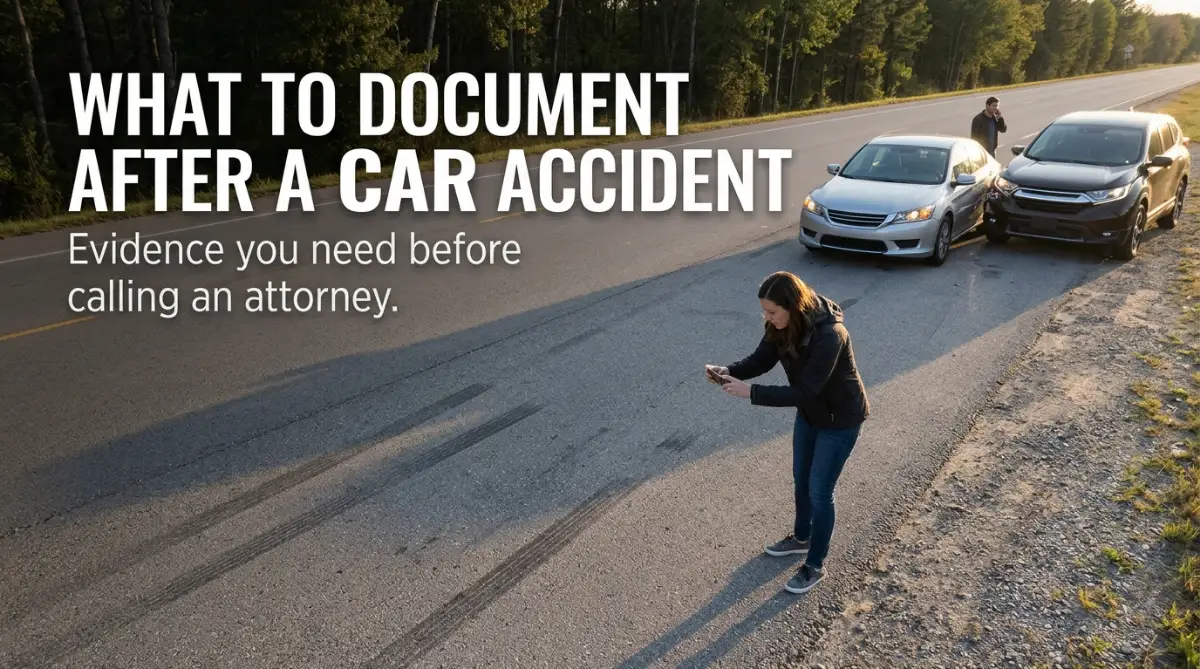
Your first instinct should be to get your phone camera ready. Don't just take one picture of the dented bumper. Take wide shots that show the position of the cars on the road.
Capture the traffic lights, the street signs, and even the weather conditions. If there are skid marks on the pavement, shoot a video of them. These photos act as a permanent record when your memory begins to fade.
The Written Account of the Chaos
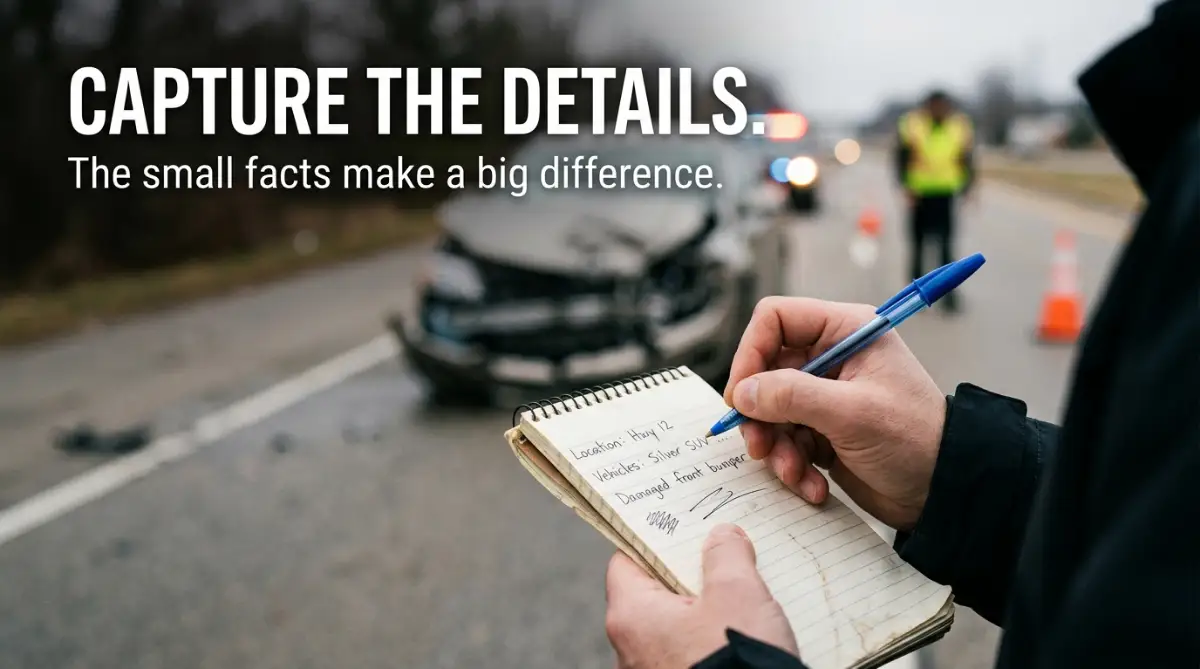
After you have photos, use your notes app. Write down exactly what you remember while the adrenaline is still fading. Mention the time of day, the direction you were traveling, and the speed you were going.
Don't worry about being fancy. Just get the facts down in real-time. If you wait until you get home, you will lose the small details. Those details are exactly what an attorney needs to build a strong argument.
 Beyond the Obvious: Details That Matter Most
Most people stop at taking pictures of the damage. But that is only the beginning of a solid case. You need to look for the things that others might ignore.
 The Witness Puzzle
If anyone stops to see if you are okay, they are a potential witness. Don't be afraid to ask for their name and a quick phone number. You don't need a formal statement right there on the street.
Just a simple, "I’m sorry to bother you, but would you mind if I called you later if the insurance company has questions?" is enough. Most people are happy to help a stranger in distress.
The Other Driver’s Details
Get more than just an insurance card photo. Ask for their driver’s license and their phone number. Check if the name on the insurance policy matches the person driving the car.
If the person driving isn't the owner, note that down too. These inconsistencies can become the center of a legal dispute later. Keeping a calm, professional attitude while you do this helps you get the information you need without causing a confrontation.