
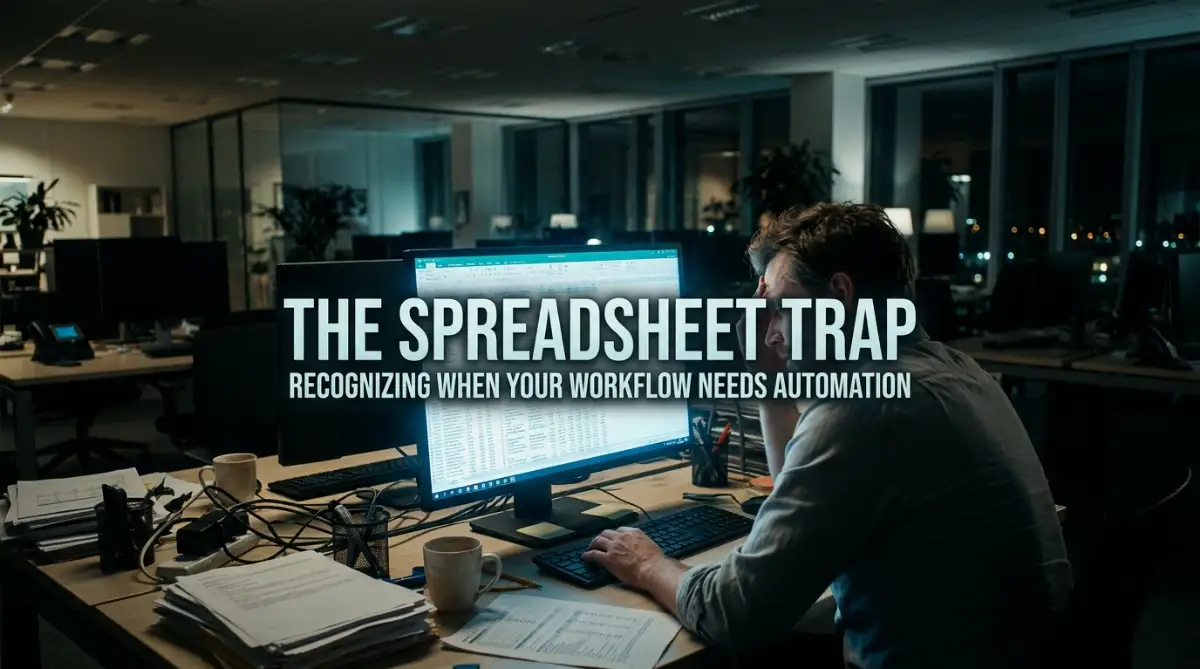
The Moment the Cells Stopped Adding Up
We’ve all been there: a simple spreadsheet that used to help you track orders is now causing more problems than it solves. If you’re spending your evenings fixing broken formulas instead of growing your business, it’s not because you’re doing something wrong—it’s because your business has outgrown your tools. Let’s look at how to leave the grid behind and build a system that actually works for you.
My team had been using this same spreadsheet for months to track our customer orders. It started as a simple, helpful tool. But as we grew, we kept adding columns, then more tabs, and eventually, complex formulas that only I understood. That night, I wasn't just fixing a calculation error. I was looking at the reality that our business had outgrown the very tool we used to run it.
I felt a sense of panic. My team was relying on me to provide accurate reports, but the data felt fragile and ready to break at any moment. I was spending more time "managing the document" than actually doing the work that brought value to our clients. I realized then that my commitment to the spreadsheet was actually holding my business back.
Maybe you are in that same position right now. Perhaps you find yourself spending hours every week manually copying and pasting data. You might be terrified of closing your file without saving, or worried that a teammate might change something they shouldn't. The frustration of these manual tasks isn't just about the time wasted; it is about the constant, underlying anxiety that something will go wrong.
It is time to be honest about where you are. You are not a failure because your spreadsheet isn't working anymore; you are simply growing. It is a sign that your business has reached a new level of maturity. Today, we are going to talk about how to recognize these moments, why they happen, and how you can reclaim your time and sanity by moving to smarter ways of working.
Stop the Spreadsheet Chaos: Key Takeaways
-
Identify the Ceiling: If you are "managing the document" more than the business, you have outgrown your tools.
-
One Source of Truth: Your data needs to live in one place, not in dozens of emailed files.
-
Automation is Simple: Automation isn't rocket science; it's just "if this, then that" logic applied to your boring tasks.
-
Start Small: Don't overhaul everything. Pick one broken process (like onboarding) and fix that first.
Is Your Workflow Out of Control? The Hidden Signs
The Spreadsheet Stress Test: When to Move On

It happens slowly. First, you add a column for a new project status. Then, you add a conditional formatting rule to highlight overdue tasks. Eventually, your spreadsheet becomes a labyrinth that only you can navigate. Here are the clear signals that your team is ready for something better than a static file.
The Version Control Nightmare
Do you have files named "Project_Final_v2," "Project_Final_v3_REAL," and "Project_Final_Final_Use_This_One"? This is a classic symptom of outgrowing manual systems. When you find yourself emailing files back and forth, you lose the ability to track changes. You also risk working off outdated data, which is a massive liability.
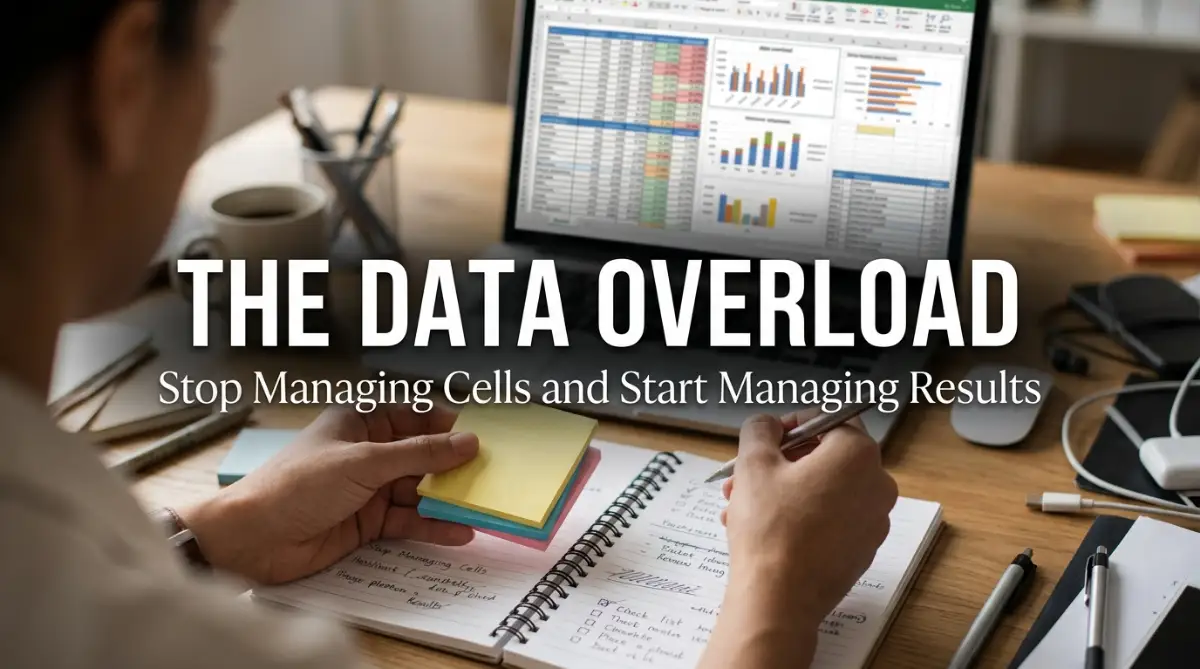 Data Silos and Communication Gaps
When the information lives in a file on your hard drive, it isn't accessible to your team. You become the bottleneck. Every time a colleague needs an update, they have to interrupt you to ask for it. This creates a culture where "asking" becomes a daily workflow, which stops everyone from getting real work done.
The "One-Person Expert" Trap
If you are the only person who knows how the formulas work, you are effectively chained to your desk. If you go on vacation or get sick, the entire process grinds to a halt. A healthy workflow should be easy enough for anyone on your team to understand and use. If your spreadsheet requires a "secret knowledge" to operate, it has become a liability.
Errors That Cost Money or Reputation
Have you ever sent a report to a client only to find out later that the math was wrong because of a broken link? Human error is inevitable when you rely on manual data entry. Spreadsheets are excellent for quick calculations, but they are not designed to be robust database systems. If you are catching errors constantly, your current tool is simply not up to the task anymore.