When My Car Decided to Take Control
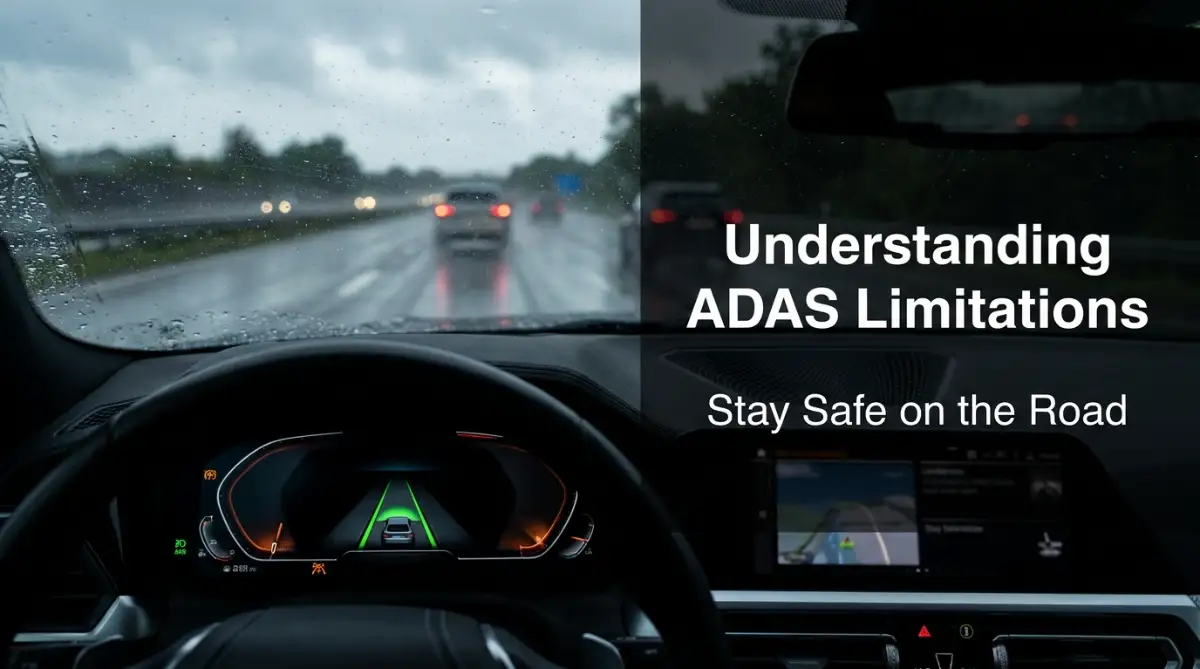
I was cruising down the highway, music playing, feeling completely relaxed. I had my adaptive cruise control on, and the car was handling the steering and speed adjustments perfectly. Then, without any warning, the system jerked the steering wheel toward the shoulder because it mistook a shadow for a lane marker. My heart jumped into my throat as I grabbed the wheel and slammed on the brakes.
I spent the next ten miles gripping the steering wheel so hard my knuckles turned white. It was a stark reminder that while the tech is impressive, it is not a human being. It doesn't "see" the world the way I do. It interprets raw data from sensors, and sometimes, that data is just plain wrong.
That day changed how I drive. I realized I had become a passenger in my own vehicle, trusting a machine to handle safety-related tasks while my mind drifted. I felt a mix of anger and relief. I was angry that I had put my life in the hands of code, but relieved that I was still here to tell the story.
The struggle is that these systems are marketed as "self-driving" or "safety features" that make us invincible. We see the commercials and think we can take our eyes off the road for a few seconds. We feel like the car is looking out for us, so we stop looking out for ourselves. This mindset is dangerous. It kills our natural alertness and makes us slow to react when the machine finally gets confused.
You might have felt this same jolt of fear. You might have had a car hit the brakes for no reason, or fail to notice a stop sign because the sun was hitting the camera lens just right. It’s an unsettling feeling. It makes you realize that the shiny screen on your dashboard is not a replacement for a focused brain.
The reality is that these systems are meant to assist, not replace. They are tools, and like any tool, they have limits. When we ignore those limits, we are inviting trouble. It is time we talked about what these systems can actually do, and more importantly, what they cannot.
How Your Car Actually "Sees" the World
To understand why your car gets confused, you have to understand how it collects data. It doesn't have eyes. It has a mix of cameras, radar, and ultrasonic sensors. Each one has a specific job, and each one has a major weakness.
The Camera: High Definition but Light-Sensitive
Most lane-keeping systems rely on cameras mounted behind your windshield. They are great at reading road lines and detecting signs. But think about how you see when you drive into a blinding sunset. You squint, right?
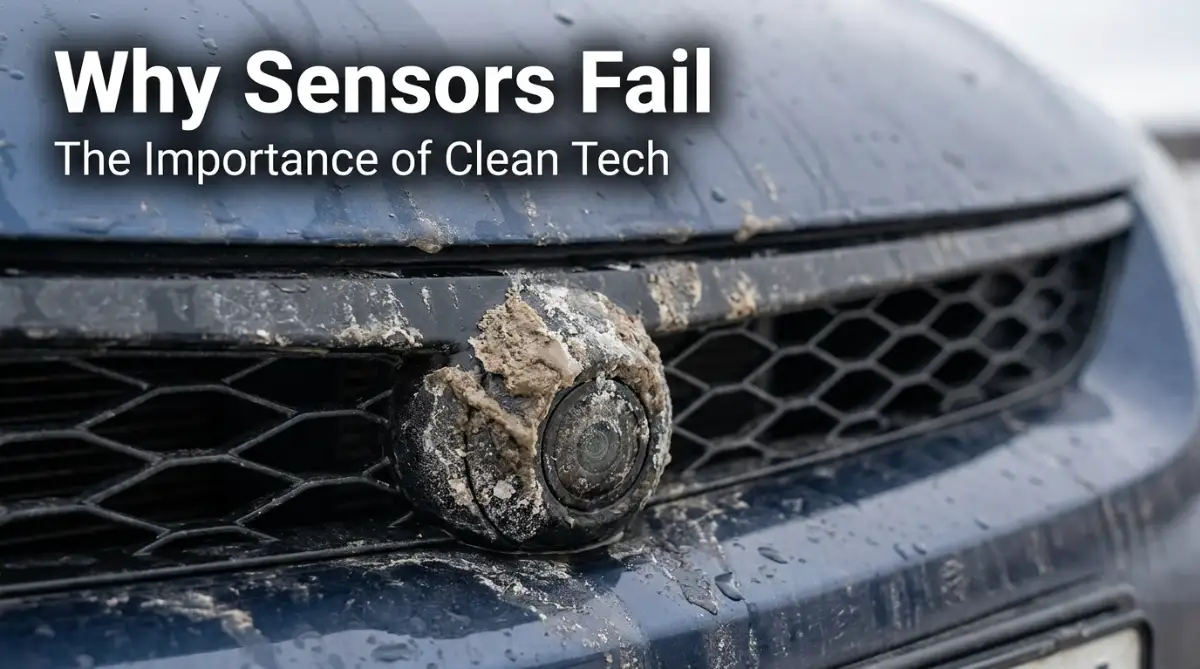
Your car’s camera is the same. When the sun is low on the horizon, it creates a glare that completely washes out the camera’s view. It loses the road lines. It doesn't know where the lane is, so it might drift. If the camera gets foggy from condensation or blocked by a bug, it becomes effectively blind.
Radar: Great for Distance, Bad for Detail
Radar is the heavy lifter. It sends out radio waves to bounce off objects and tell the car how far away they are and how fast they are moving. It is brilliant for adaptive cruise control. It works well in rain, snow, and fog because radio waves pass right through that stuff.
However, radar is not very good at identifying what an object actually is. It knows there is a metal box in front of you. But it struggles to tell if that metal box is a stopped car or a metal sign hanging over the road. This is why some cars have trouble with "phantom braking." They see a large object, get confused about what it is, and panic by hitting the brakes.
Ultrasonic Sensors: The Short-Range Feelers
These are the little round dots you see on your bumpers. They act like bat sonar. They are perfect for parking and detecting objects within a few feet. But they have a very short range.
If you are moving at highway speeds, these sensors are useless. They cannot see far enough ahead to warn you of a hazard coming up in the distance. They are the "bump sensors" meant for low-speed maneuvers. Relying on them for highway safety is a misunderstanding of their design.
Why Bad Weather Blinds Your Car
We often think that if our car has safety tech, we can drive just as fast in a storm as we do on a sunny day. This is a massive error. When it rains heavily, the water droplets on your windshield act like thousands of tiny prisms.
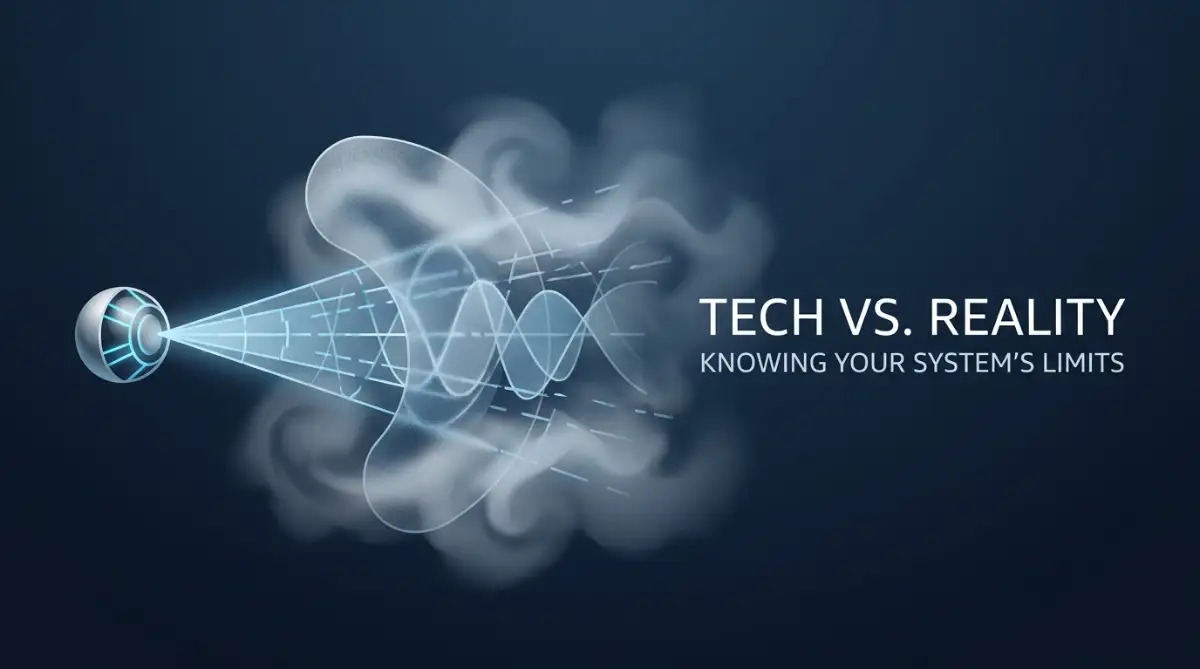
They scatter the light, confusing the camera. At the same time, the spray from the tires of the car in front of you creates a screen of mist that the radar waves have to fight through. The system is getting "noise" instead of a clear signal. The car will often shut itself off and tell you that the features are unavailable. This is actually the system being honest with you—it knows it can't see, so it asks you to take over.
Pro Tip: The Sensor Hygiene Habit
I used to think my car just kept itself clean. I was wrong. My pro tip is this: Every time you stop for gas or a charging session, spend thirty seconds wiping down your camera lens and your sensors. A simple microfiber cloth can remove the road film, dried salt, and bugs that build up over a few hundred miles. This habit alone makes the system much more reliable.
The Danger of Lane Marking Dependence
Many lane-keeping systems are addicted to white lines. They need those lines to be bright, clear, and continuous. But look at the roads in many areas. The paint is faded, chipped, or completely covered in dirt.
When the car loses the line, it might vibrate the wheel, or it might just give up. If you are not paying attention, that moment of "giving up" is when you drift into the next lane. You have to assume the car is always on the verge of losing the lines. Treat the lines as a suggestion, not a guide you can sleep behind.
When the System Gets "Confused" by Infrastructure
Think about how complicated a highway on-ramp is. You have merging traffic, exit signs, changing pavement colors, and concrete barriers. To you, it is a normal road. To your car’s computer, it is a chaotic mess of visual data.
The system is trying to process thousands of inputs per second. When the geometry of the road changes, or when construction cones appear in a pattern it hasn't been programmed for, it might hesitate. This hesitation is where human reaction time is better than a computer. Never assume the car understands the road geometry as well as you do.
A Quick Look at the Technology
The actual science of how your car interprets visual data is a complex field. Here is a quick video that explains why these sensors fail and why your input is still the most important part of the safety equation.
Staying Alert in the Age of Automation
You might wonder why we even use these systems if they have so many flaws. The truth is, they are still better than nothing. They can react to a sudden stop faster than a distracted human can. But they are a backup, not the main pilot.
If you use these systems, you must stay engaged. Don't look at your phone. Don't stare at the radio. Keep your eyes on the road. The car is helping you, but you are the one responsible for the final safety call.
Understanding the Limitations of "Autopilot" Style Tech
There is a lot of marketing fluff around features that sound like they can drive the car for you. But even the best tech on the market right now is technically classified as "Level 2" automation. This means you must have your hands on the wheel and your attention on the road at all times.
The system is constantly monitoring your steering input to see if you are awake. If you don't nudge the wheel for a while, it starts to get angry. It’s not just being annoying; it’s checking if you are still alive and conscious. Don't try to "trick" the car into thinking you are driving when you aren't. That is a shortcut to an accident.
Being Mindful of Software Updates
Your car is now a computer on wheels. It gets updates over the air, just like your phone. Sometimes, an update improves the system. Other times, it changes how the system reacts to certain stimuli.
You might notice that after an update, the car brakes a little differently or the lane-keeping feels more aggressive. Pay attention to how your vehicle behaves after it says "update complete." Don't assume it behaves exactly the same way it did yesterday. Take a moment to get used to the "new" version of your car.
Keeping Your Eyes on the Horizon
The best way to stay safe is to use these systems to reduce your fatigue, not to remove your effort. Use adaptive cruise control to maintain a steady speed on a long, boring stretch of road. Use the lane-keeping as a safety net if you momentarily lose focus.
But don't use them to zone out. Keep scanning the horizon. Look for cars that are braking far ahead of the one right in front of you. Look for debris in the road that the radar might miss. If you drive with the expectation that the car will fail, you will be prepared when it eventually does.
The Human-Machine Relationship
You are the master of the machine. The machine is a sophisticated tool that can make your drive more comfortable, but it doesn't have a soul, and it doesn't have a sense of self-preservation. It is just math.
You have the experience, the intuition, and the ability to predict human behavior in other drivers. The car can't predict that the driver in the next lane is about to cut you off because they missed their exit. Only you can see that. That is your unique value as a driver.
Embracing the Responsibility
Owning a modern vehicle is a privilege. You have access to technology that was science fiction a few decades ago. It makes long trips easier and makes us safer in many scenarios. But it comes with a contract.
The contract is this: the car handles the boring stuff, and you handle the safety. If you keep your end of the bargain, you will get the most out of these systems. Stay alert, stay involved, and enjoy the ride, knowing you are in charge of the machine, not the other way around.
Common Questions About Driving Safety Tech
Why does my car brake when there is nothing in front of me?
This is often called "phantom braking." It usually happens because the radar detected a large object—like a metal sign, a bridge, or even a shadow—and the computer got confused, thinking it was a collision risk.
Can I trust my lane keeping in heavy snow?
No. Heavy snow blocks the camera and covers the lane lines. Most systems are smart enough to turn themselves off in these conditions, but if they don't, you should turn them off manually.
Why do some cars struggle with bright sun glare?
Cameras are light-sensitive. When the sun shines directly into the lens, the sensor becomes "blinded," just like a human eye. It cannot see the contrast of the road lines, so it shuts down the assistance features.
Are all car sensors the same?
No. Some manufacturers rely heavily on cameras, while others use a mix of cameras, radar, and LiDAR. This is why some systems feel very smooth while others feel a bit "jerky."
Should I get my sensors calibrated after a fender bender?
Yes, absolutely. Even a small bump can knock a camera or radar unit out of alignment by a few millimeters. That small shift can cause the system to miscalculate distance or lane position, making it dangerous to use.
Becoming a Master of Your Machine
You have started to understand the basics of what your car can see, but now it is time to move from "user" to "manager." Most people think that once they engage the system, their work is done. That is like putting your car in gear and then taking a nap; you would never do that with the throttle, so why do it with the steering?
To really master your Driver Assistance Systems, you need to practice what I call "Active Supervision." This means your eyes are constantly scanning the road ahead of what the car is seeing. If the radar sees a car stopping 50 feet away, your eyes should be looking 200 feet ahead to see if the road is clear or if there is a surprise pothole. You are the final judge of the environment.
I have found that the best way to keep these systems working well is to be proactive about "sensor hygiene." It is not just about wiping them off. It is about understanding the environment where they fail. For instance, if you live in an area that gets heavy frost, don't just rely on the defroster. Use a dedicated glass cleaner that prevents fogging on the outside. Small details like this prevent the "System Unavailable" warning from popping up when you need the safety features the most.
You should also look into how you interpret "haptic feedback." If your steering wheel vibrates, do not just push back against it. Ask yourself why it is vibrating. Is it because you drifted, or is it because the system is confused by the road markings? When you understand how to bridge the professional skill gap by mastering basic automation tools, you start to see that driving is just another form of automation management. You are the supervisor, and the car is the technician.
Finally, think about your long-term relationship with the vehicle. Software updates happen all the time. Don't just click "install" and walk away. Read the release notes if you can, or at least take the car for a short, cautious drive on a quiet road after an update. You need to feel how the braking logic or the lane-centering has changed. Being aware of these updates is just as important as the real truth about ev battery life - what owners need to know, because software dictates behavior.
- Pro Tip: I keep a small, soft cloth in my center console. Every time I park the car in a garage or at a charging station, I spend ten seconds walking around and checking the sensors. It sounds like a chore, but it turns into a habit that ensures I never have to worry about a "camera blocked" message on the highway.
The Trap of Overconfidence and the "Ghost Brake"
I remember a day when I let my guard down entirely. I was on a familiar road, listening to a podcast, completely trusting that my car knew where the exit was. The car suddenly decided that a perfectly clear road was actually a collision risk and slammed on the brakes. I was lucky that the person behind me was paying attention, or it would have been a disaster.
That was my "Ghost Brake" moment. It happens when the radar sees a metallic object—like a guardrail or a large sign—and interprets it as a stopped vehicle. The car reacts before you can explain that it’s a mistake. If you are distracted, you won't have the time to override that brake signal before the car behind you hits your bumper.
This brings us to the biggest pitfall: assuming the system is smarter than you. It is not. It is just faster at calculating distance. It has zero common sense. It doesn't know that a ball rolling into the street might be followed by a child. It doesn't know that a person standing on the side of the road with their hand raised is a police officer directing traffic. It only knows patterns.
When you rely on these patterns too much, you stop predicting human behavior. You stop looking for the "cues" that experienced drivers see—the look on someone’s face in the next lane, the way a car is leaning into a turn, or the flicker of a brake light far ahead. These are the things that save lives. If you outsource your awareness to a machine, you lose your ability to spot danger.
Another massive mistake is ignoring the state of your car’s physical health. I have spoken to people who drive with worn-out tires and bad brakes, thinking their advanced safety systems will compensate for the poor maintenance. This is illogical. If your tires don't have enough tread, the most advanced electronic braking system in the world won't be able to stop you in time. You can learn more about how equipment failure leads to accidents by reviewing why home insurance companies deny claims and how to stay protected. The principle is the same: if you don't maintain your gear, you can't expect the safety net to work.
Also, be wary of "driving while distracted" just because the car has "lane-centering." I see people checking their emails because the wheel is keeping them in the lane. This is a recipe for a tragedy. If the lines vanish—which they do every time there is a construction zone—the car will just keep going straight, right into a barrel. If you are not holding the wheel, you won't be able to correct it in time.
Finally, do not get angry at the technology. When it fails, stay calm. Take control immediately. If you start to panic or blame the system, you waste valuable milliseconds. Being able to how to stay calm and invest wisely during market volatility is a skill that applies to driving, too. When the system makes an error, treat it like an unexpected market dip: take a breath, assess the situation, and take the manual control you need to stay safe.
A Balanced Approach to Modern Driving
You don't have to fear your car's safety technology, but you should treat it with a healthy dose of skepticism. It is a powerful partner, but it is not the captain of the ship. You are.
By understanding the limits of your sensors and staying mentally engaged, you can use these tools to make your drives less draining. You can arrive at your destination feeling fresher because the car helped you with the repetitive tasks. But you get there safely because you were the one actually driving.
I have spent a lot of time learning how to balance this. I use the features, but I never depend on them for my life. I think of them as an extra pair of eyes that might be nearsighted, or a very fast assistant who sometimes gets confused. I am always ready to step in.
I encourage you to do the same. Spend time in a safe, empty parking lot and see what your car can—and cannot—do. Test how it handles a fake object or how it reacts when the lane lines disappear. The more you know, the less likely you are to be surprised on the highway.
You have the best safety equipment on the planet right between your ears. Use the technology to support your brain, not to replace it. Stay sharp, stay focused, and enjoy the convenience of modern driving without losing your edge as a capable pilot.
Common Questions About Safety Tech
Is it okay to use lane assist while I'm eating?
No, never. You should be fully focused on the road at all times. Eating is a distraction, and even with the best systems, you need to be ready to react if the car makes an error.
Why does my lane assist fight me when I change lanes?
It thinks you are drifting out of your lane because you didn't use your turn signal. Most systems are programmed to assume that if you aren't signaling, you shouldn't be changing lanes. Always use your blinker, and the car will play nice.
Do these sensors work in heavy fog?
Radar and ultrasonic sensors usually work okay in fog, but cameras struggle. If the fog is thick, the camera will likely shut down. You should slow down and take manual control immediately.
Should I trust a car that claims "Full Self-Driving"?
Right now, there is no such thing as a car that can safely drive itself without your constant attention. Even if a company calls a feature "Full Self-Driving," they legally require you to monitor the car at all times. Don't believe the marketing over the reality.
Can I turn these systems off?
Yes, you can usually turn off most assistance features in your vehicle’s settings menu. If you ever feel like the technology is being more dangerous than helpful, you are well within your rights to disable it and drive manually.
Is it more expensive to repair a car with these sensors?
Yes. If you have a minor crash that hits a sensor, the repair cost is much higher than a standard bumper repair. You are paying for the advanced technology, and that includes the cost of replacing or recalibrating the sensors if they get damaged.
Disclaimer: This content is for educational purposes only and does not constitute professional driving advice or automotive engineering guidance. Modern driver assistance systems are advanced tools that require human oversight, and they are not a substitute for safe, attentive driving. Always follow the specific safety protocols and guidelines outlined in your vehicle manufacturer's manual. By utilizing these features, you acknowledge that you are responsible for maintaining safe control of your vehicle at all times.