The Quiet Weight of Being Alone
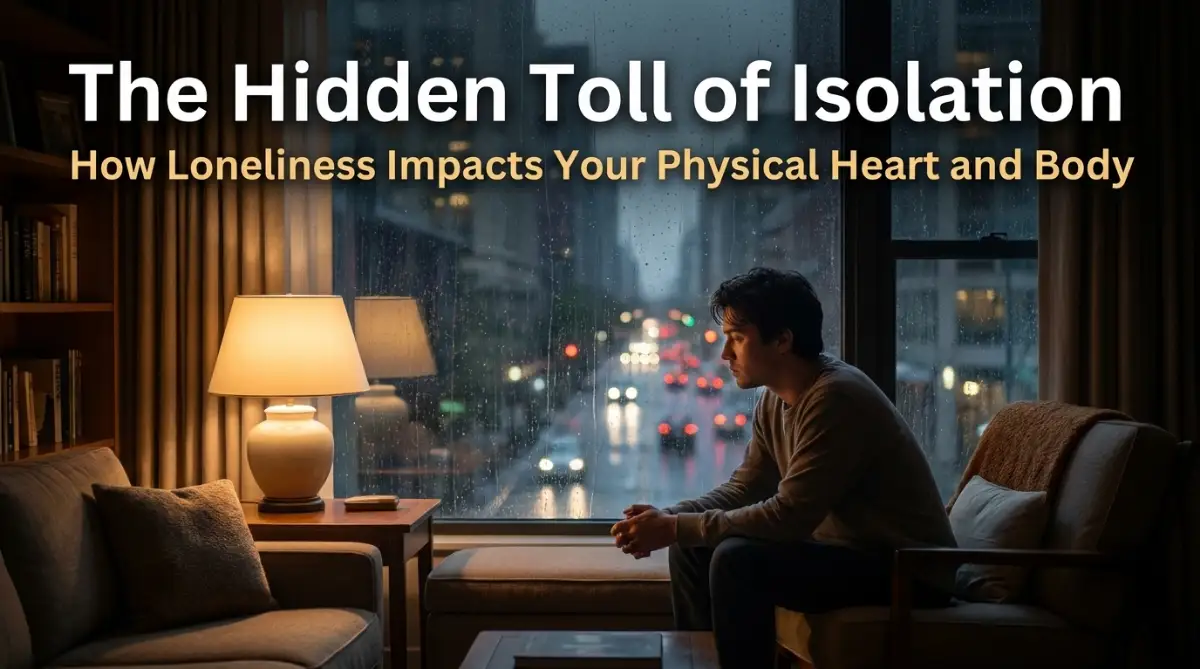
I remember sitting in my apartment on a Tuesday night, realizing I hadn’t spoken to another human being for three days. The silence wasn't peaceful; it felt heavy, almost physical, like a blanket pressing down on my chest. I thought I was just busy with work, but as the weeks went on, I started feeling tired in a way that sleep couldn't fix. My body ached, my sleep patterns were a mess, and I felt like I was catching every cold that went around. I blamed the weather, my workload, and my age, not realizing that the lack of connection was the actual culprit.
It’s easy to dismiss loneliness as just a "sad mood" or a temporary feeling. We think it’s something we can just shake off if we get outside or find a hobby. But deep down, I knew something was wrong. My heart would race when I had to deal with minor stress, and I felt an constant, underlying tension in my muscles. I wasn't just lonely; I was becoming unwell, and I had no idea that my social life—or lack thereof—was the reason behind my physical decline.
Most of us don't see the link between our social calendar and our blood pressure. We go to the gym, we eat our vegetables, and we take our vitamins, thinking we are doing everything right. Yet, we ignore the fact that humans are hardwired to be around other people. When we pull away from our social groups, our bodies react. They go into a state of high alert, and over time, that state of emergency causes real, measurable damage to our physical systems.
The struggle is that when you are isolated, you often don't have the energy to fix it. It becomes a loop. You feel tired and sick because you are alone, so you stay alone to "rest," which only makes you feel worse. This isn't just about feeling sad; it’s about your body literally struggling to keep up. The inflammation, the stress hormones, and the lack of restful sleep all pile up, making you wonder why you can't just get back to your normal, healthy self.
The Biological Toll of Disconnection
Our bodies and our social lives are not separate things. They are deeply linked. When you lack meaningful social contact, your body changes its chemistry. You might feel it as a simple ache or a bad mood, but there is a complex biological reaction happening under the surface.
The Cortisol Spike
When humans feel isolated, our bodies often interpret it as a survival threat. Back in the day, being alone meant being vulnerable to predators. That instinct is still in us. As a result, your brain releases higher levels of cortisol, which is your main stress hormone.
High cortisol over a long time is not good for your physical health. It can lead to sleep problems, digestive issues, and high blood pressure. Your body thinks it needs to be ready to run or fight, even when you are just sitting on your couch watching a show. This constant stress wears out your systems, leaving you prone to getting sick more often.
Inflammation and the Immune System
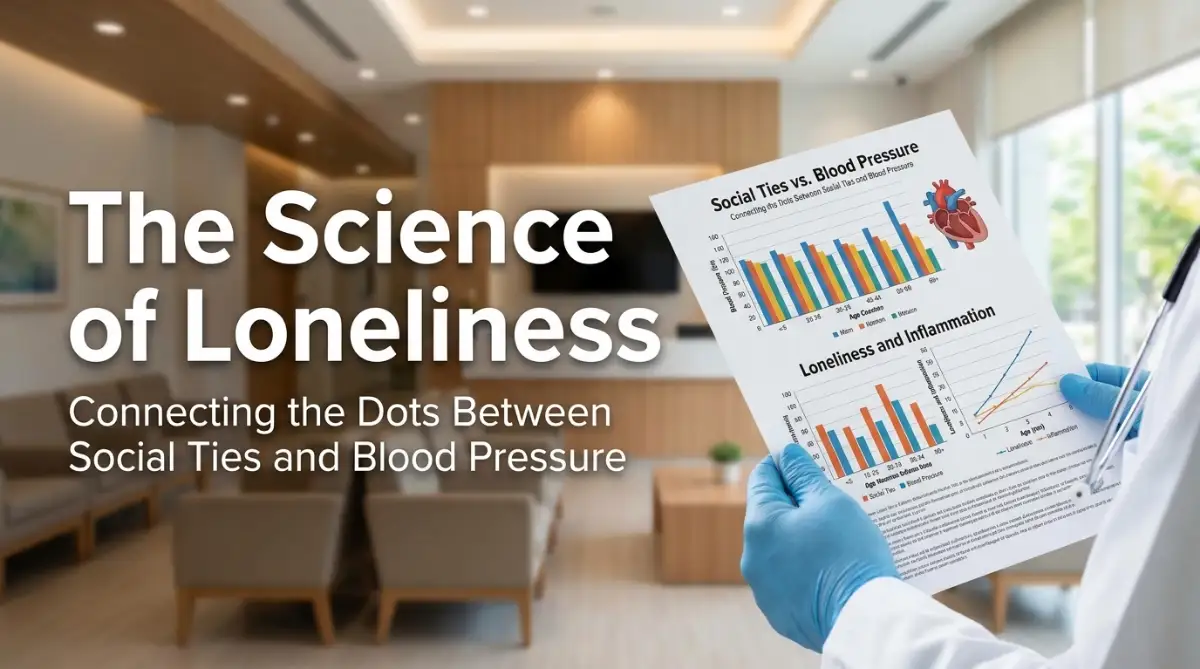
There is strong evidence that loneliness is linked to higher levels of inflammation in the body. Inflammation is your immune system’s way of fighting off illness, but when it stays high for too long, it turns against you. It can damage your arteries, affect your joint health, and make it harder for your body to recover from injuries.
Think of it like an alarm system that won't turn off. It keeps ringing and ringing, and eventually, the system starts to break down. People who are chronically isolated often show higher markers of inflammation in their blood tests compared to those who have strong social support. Your immune system literally gets tired and less effective at doing its job.
Sleep Quality and Your Heart
Isolation often creates a cycle of poor sleep. When you feel lonely, your brain stays in a light, hyper-vigilant state of rest because it doesn't feel "safe." You might wake up feeling like you haven't slept at all, even if you spent eight hours in bed.
Poor sleep is directly tied to heart health. Your heart needs that deep, restorative rest to repair and regulate. When you miss out on it, your blood pressure stays elevated, and your heart has to work harder than it should. Over years, this puts a strain on your cardiovascular system that is just as dangerous as smoking or lack of exercise.
[Pro Tip: A Small Habit for Change]
I realized that I didn't need to join a massive club to fix my isolation. I started with a simple rule: call one person, just for five minutes, on my walk home from work. That small effort changed my mindset and eventually helped me sleep better. My mistake was thinking I needed "big" social events, when really, I just needed consistent, small moments of connection.
The Science of "Social Hunger"
Researchers have compared the feeling of loneliness to the feeling of hunger. Just as your body creates an urge to eat when it is low on fuel, it creates an urge to connect when it is low on social interaction. If you ignore that hunger, you don't get the nutrients you need.
In the same way, if you ignore your need for people, your physical systems start to starve for the hormones of connection, like oxytocin. Oxytocin is a chemical that lowers stress and helps your heart stay healthy. Without it, you miss out on the natural, internal medicine that social bonds provide to your body.
Recognizing the Warning Signs
You might not notice the impact of isolation right away. It is often a slow process. Look for the signs: are you getting sick more often? Is your heart racing for no reason? Do you find that you have zero energy even after a day of doing nothing?
These are your body’s way of asking for help. It is telling you that the lack of social "fuel" is causing an internal drain. Paying attention to these physical cues is the first step toward getting your health back on track. Your body is talking to you; you just need to learn how to listen.
Check out this video to see exactly how your brain reacts to being alone and why your body follows suit.
How to Bridge the Gap
You don't have to overhaul your entire life overnight. Start by acknowledging that your physical health depends on your social health. Look for one or two areas where you can safely increase your interaction. It could be something as simple as chatting with a neighbor, joining a small group at a library, or volunteering for an hour a week.
Consistency is better than intensity. Don't worry about being the life of the party. Focus on finding one or two people you can trust and talk to regularly. Your goal is to move from a state of isolation to a state of being "connected enough," which is enough to help your cortisol levels drop and your immune system recover.
The Role of Physical Activity in Connection
Often, when we talk about exercise, we talk about the gym. But try to find movement that connects you to others. Walking groups, local sports clubs, or even gardening with a group can double your benefits. You get the physical health boost of exercise, and you get the stress-reducing benefit of being with people.
This dual approach is incredibly powerful. It hits two birds with one stone. It keeps your heart healthy and your mind stable. Plus, having a regular time to meet others creates a sense of routine, which is another great way to lower stress and improve your physical recovery.
When to Seek Professional Support
If you feel like your isolation is tied to anxiety or deep sadness, don't be afraid to talk to a therapist or a doctor. They can give you tools to help you manage the physical symptoms of stress and guide you in finding ways to connect. It is not a sign of weakness; it is a smart health decision.
Taking care of your social life is just as medical as taking care of your cholesterol. Doctors are increasingly recognizing that "social prescribing"—prescribing social activities—is a valid treatment for many physical health conditions. Your health team can support you in building a life that feels both healthy and connected.
Listening to Your Body’s Needs
At the end of the day, your body knows what it needs. It needs rest, nutrition, movement, and it needs people. Don't fight your own biology. Accept that you are a social creature and that your health outcomes are tied to your ability to reach out.
Start today. Make a small choice to break the silence. Whether it is a text, a call, or a quick visit, every step you take is a step toward a healthier, stronger physical state. You have the power to change how you feel by changing who you interact with.
Strategic Habits for Sustained Social Wellbeing
You have already taken the first step by acknowledging that your physical health and your social environment are linked. Now, you need to shift from passive awareness to active maintenance. It is not just about making one phone call; it is about building a daily structure that keeps you connected even when life gets busy. Think of your social network as a garden—if you don't water it, it will eventually dry out.
One of the most effective methods to stay connected is to prioritize quality over quantity. You do not need to attend every party or have a calendar full of events to avoid isolation. Instead, pick two or three meaningful relationships and invest time in them consistently. Research from the National Institute on Aging shows that even simple, high-quality interactions can have a measurable impact on stress reduction.
Automating Your Social Calendar
It sounds odd to "automate" your social life, but life gets in the way of our best intentions. We all have busy schedules, and sometimes days pass by without us realizing how little we have talked to anyone. Using basic automation tools can actually help you set reminders to reach out to a friend or family member once a week.
It isn't about being robotic; it’s about making connection a priority in your planner, just like a meeting or a doctor’s appointment. When you have a dedicated "check-in" time, you remove the mental burden of trying to find the perfect moment. This small shift ensures that your social maintenance happens, regardless of how chaotic your week feels.
Managing Financial Stress to Free Up Mental Space
Often, social isolation happens because financial stress keeps us locked away. If you are constantly worried about money, you might avoid going out for coffee or lunch because you are watching every penny. This financial anxiety creates a barrier between you and the people who care about you.
If you find yourself stuck in this loop, learning how to stay calm and invest wisely during market volatility can provide you with the financial peace of mind needed to re-engage with your community. When you have a clear plan for your money, you stop letting financial fear dictate your social boundaries. You become free to say "yes" to a walk in the park or a coffee date without guilt.
[Pro Tip: My Realization]
I used to think that being "too busy" was a valid excuse for ignoring my friends for months. I learned that my brain was simply treating social interaction like an extra task instead of a basic human need. Once I started treating social time as "recharging my battery" rather than "spending time," I stopped feeling guilty and started feeling energized.
Creating Low-Stakes Social Routines
You don't need a formal event to keep isolation at bay. You need routines that happen naturally. Maybe it’s taking the same route for your evening walk where you often see the same people. Or maybe it’s visiting the same shop at the same time every week.
These "weak ties"—casual interactions with acquaintances—are remarkably good for your physical health. They make you feel like part of a community without requiring the deep emotional energy of a long conversation. According to findings from the CDC on social isolation, even brief interactions with service workers or neighbors contribute to a lower sense of loneliness.
Security in Your Digital World
When you are trying to stay connected online, security matters. If you are worried about your privacy, you might avoid using digital tools altogether. Taking a moment to learn about home network security can help you feel more confident in using technology to reach out to loved ones. When you know your connections are secure, you can focus on the people on the other side of the screen rather than the risks of the platform.
Pitfalls That Keep You Trapped in Isolation
The road to better social health is filled with traps that feel like "self-care" but are actually just hiding places for isolation. One of the biggest mistakes is the "Comparison Trap" on social media. We scroll through our feeds and see everyone else’s highlight reel, convincing ourselves that everyone is more connected and happier than we are.
This makes us withdraw further because we feel embarrassed or inadequate. You start to believe the lie that your life doesn't measure up to the digital version of other people's lives. This is a mental block that keeps you from making real, authentic connections. Remember, what you see on a screen is rarely a full picture of someone else’s social health.
The "All-or-Nothing" Fallacy
Another major error is believing that if you can't have a deep, two-hour conversation, then the interaction isn't worth it. This perfectionism keeps you lonely. You skip the five-minute phone call because you think it’s "not enough."
In reality, five minutes of laughter is better than zero minutes of connection. When you adopt an "all-or-nothing" approach, you end up with "nothing" most of the time. Small, messy, imperfect interactions are the glue that holds our physical and mental health together. Embrace the brief, the unplanned, and the simple chats.
Ignoring the Physical Signals
Sometimes we are physically exhausted because we are lonely, but we treat it like a purely medical issue. We see a doctor for the headache, but we don't mention the fact that we haven't seen a friend in weeks. This disconnect is a classic pitfall.
Your brain might be trying to tell you that your environment is the problem, not your biology. If you treat only the symptoms without addressing the isolation, you will just keep returning to the doctor. Always check in on your social temperature when you check in on your physical symptoms.
The Myth of Independence
We live in a culture that prizes self-sufficiency, but that pride can be a trap. Believing that you "should" be able to handle being alone 24/7 is not a badge of honor; it is a biological misunderstanding. Even the most independent people thrive with support.
Ignoring your need for others doesn't make you strong; it makes you vulnerable to stress-related health issues. Allow yourself the grace to admit that you need people. It is a sign of self-awareness, not a sign of neediness.
Falling Into the "Study Habit" of Isolation
Sometimes we use work or learning as a shield. We might think that spending all our time reading or studying is productive, but it can be a form of avoidance. Even for those trying to learn new things, traditional study habits often fail if they are done in total isolation.
We learn better when we can bounce ideas off others. If you are hiding in your books or your screen to avoid the complexity of human relationships, you are doing your brain—and your body—a disservice. Reach out, collaborate, and bring others into your process.
A Path to a More Connected Life
Improving your social health is not about changing who you are. It is about honoring the fact that you are a human being who needs other human beings. The evidence is clear: when you invest in your relationships, you are investing in your long-term physical durability.
Your heart, your immune system, and your stress levels will thank you for every extra moment of authentic connection. You don't have to be perfect at this. You don't have to be the most popular person in the room. You just have to be present and willing to show up, even when it feels like a small effort.
I know firsthand that starting to reach out feels scary. I remember the hesitation before my first few calls, wondering if people would even care. But the truth is, most people are waiting for someone else to make the first move, just like you. My journey taught me that when I became the one to initiate, I not only helped myself but often helped the other person feel less alone, too. I want you to take that first step today, even if it is just sending a quick note to an old friend. You deserve to feel the physical relief that comes with being truly connected.
Common Questions About Loneliness and Health
How do I know if I am clinically isolated?
There is no single "test," but if you find that you feel lonely most of the time, or if you don't have anyone you can rely on for support, that is a strong sign. Look for physical symptoms like constant fatigue, unexplained stress, or trouble sleeping, as these are often physical manifestations of a lack of social contact.
Can social isolation lead to actual disease?
Yes, research from the American Heart Association suggests that social isolation and loneliness are linked to a higher risk of heart disease and stroke. The chronic stress of being alone affects the body in ways similar to other major health risk factors.
Is introversion the same thing as social isolation?
Absolutely not. Introversion is a personality trait about how you recharge your energy, while social isolation is about a lack of contact. Many introverts have very healthy, satisfying social lives with a few close friends and do not feel lonely at all.
Does talking online count as social connection?
It can, but it is often less effective than face-to-face interaction for lowering stress hormones like cortisol. If you use digital tools, try to use them for video calls rather than just text, as seeing a face and hearing a voice provides a stronger sense of connection.
How quickly can I feel the benefits of social connection?
Some benefits, like a reduction in immediate stress, can be felt almost instantly after a good conversation. The long-term physical health benefits, like improved immune function and lower blood pressure, happen as you consistently maintain those social habits over weeks and months.
Disclaimer: This article is provided for informational and educational purposes only and is not intended to be a substitute for professional medical advice, diagnosis, or treatment. If you are experiencing symptoms of physical or mental health distress, please consult a qualified healthcare provider or a mental health professional in your area.