

The Moment the Excitement Fades
Watching a dealership offer you thousands less than you expected is a total gut punch. You poured your hard-earned money into that car, treated it well, and now you’re being told it’s just another piece of metal losing value by the day. But here is the secret most drivers miss: you actually have way more control over your car’s resale value than you think. Let’s stop the bleeding and keep more cash in your pocket when it’s finally time to sell.
But six months later, reality set in like a cold bucket of water. I needed to trade it in for a different model because my commute changed, and I went to get an appraisal. The number the dealer gave me made my stomach turn. It was thousands of dollars less than what I had paid, even though the car looked identical to the day I bought it.
I thought, "How can a car lose so much value in just a few months?" I was frustrated. I felt like I had thrown money into a fire. I started obsessing over every scratch, every speck of dust, and every mile I drove. It wasn't just about the money anymore; it was the realization that I was losing control over my own asset.
My friends told me that cars always lose value, and that was just the game. But I refused to accept that. I started digging into the specifics. I realized that while market trends play a part, there are so many things I was doing—or not doing—that were actively killing my car's worth.
That initial frustration turned into a mission. I wanted to understand why some cars hold their value like gold, while others drop like a rock. I learned that depreciation isn't just a random number. It is a reflection of how the owner treats the vehicle.
If you have ever felt that same sinking feeling when looking at your car's trade-in value, you are not alone. It is a common struggle. People often work hard to buy a nice vehicle, only to accidentally sabotage its future worth without even knowing it. It keeps us up at night, wondering if we made the wrong choice.
TL;DR: How to Keep Your Car’s Value High
-
Document Everything: A folder full of receipts is worth more than a clean dashboard.
-
Avoid "Over-Modification": Keep your car as close to the factory "stock" condition as possible.
-
Consistent Driving: Don't let the car sit; drive it regularly to keep fluids and seals healthy.
-
Be Honest: Don't mask problems; fixing small issues early saves you big money later.
The Silent Value Killers You Can Control
We often think that depreciation is something that happens to us, but that is not entirely true. While you cannot stop the clock, you can definitely slow down the speed at which your car loses money. Many people make small, avoidable mistakes that turn a reliable vehicle into a "lemon" in the eyes of a dealer.
Let’s break down the factors that actually matter. These are the things that make or break your deal when you try to sell or trade in your car later.
The Paper Trail: Why Records Matter More Than You Think
The "Resale-Ready" Service Binder Checklist:
-
Receipts: Keep every single oil change and tire rotation invoice.
-
Notes: Write down the date and mileage for any DIY repairs you do.
-
Organize: Put these in a simple zip-folder inside your glove box.
-
Verify: If you have digital records from a dealer, print a copy and add it to the folder.
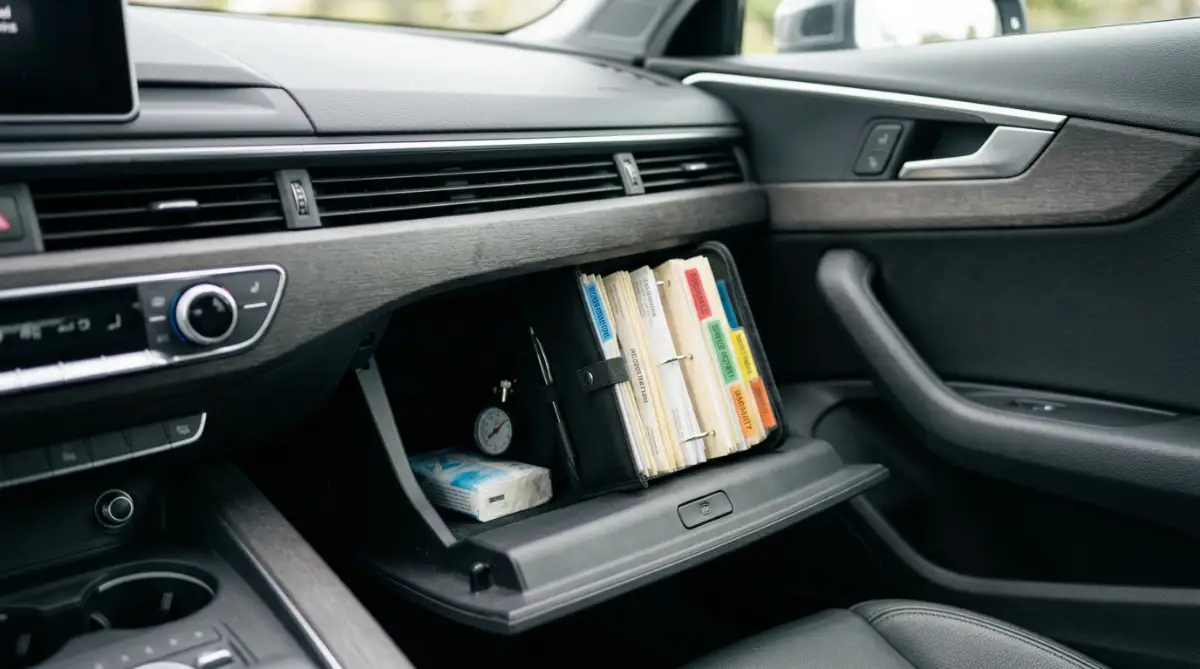
Imagine you are looking at two identical cars. One has a folder full of service receipts, stamped booklets, and notes about every oil change. The other has nothing but a "trust me" from the owner. Which one would you buy?
The first one, every single time. It is human nature to want proof of care. When you skip maintenance or forget to keep your receipts, you are telling the next buyer that the car might have been neglected. Even if you did the work yourself, without proof, it didn't happen in the eyes of the market.
Pro Tip: This is a mistake I made early on. I did all my own oil changes but never saved a single invoice. When I went to sell, I had no proof of maintenance, and the dealer treated the car as if it had never been serviced. Now, I keep a dedicated binder in my glove box. Every time I get an oil change, a new tire, or even a basic inspection, the receipt goes straight into that folder. It builds instant trust.
The Odometer Paradox
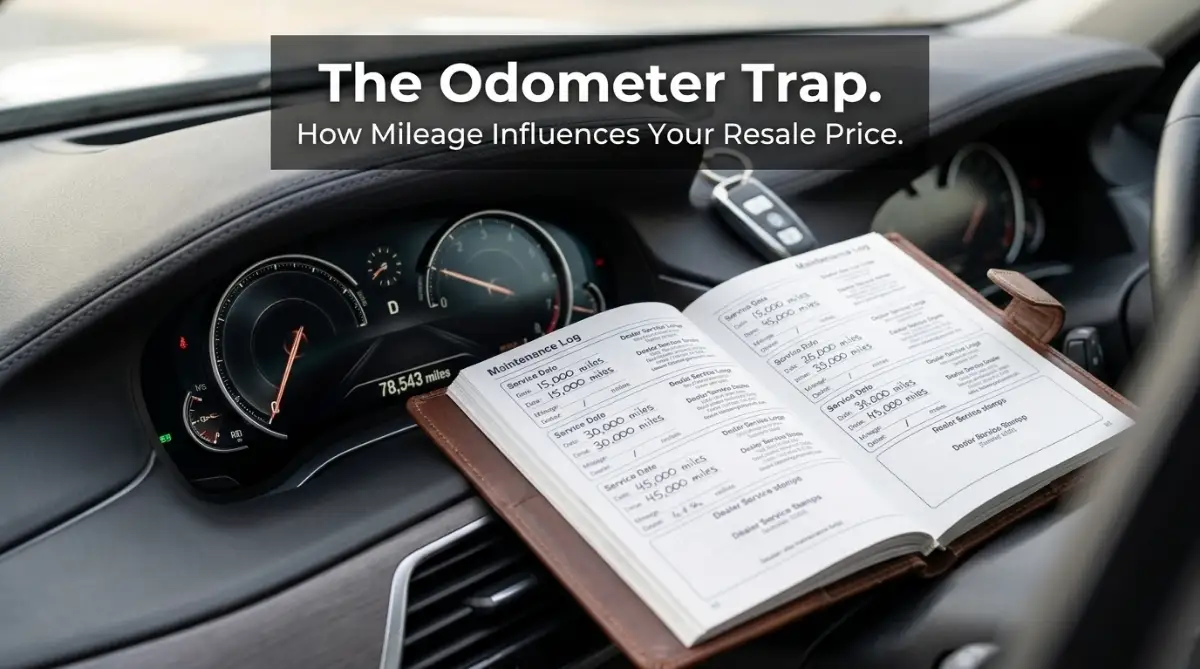
We all know that high mileage can reduce a vehicle's resale value. But surprisingly, extremely low mileage isn't always an automatic advantage.
Imagine a five-year-old car with only 5,000 miles on the odometer. At first glance, that sounds like a great deal. But very low usage can raise questions about how the car was stored and maintained. A vehicle that spends most of its life sitting unused may develop issues that have little to do with mileage, such as aging tires, a weakened battery, deteriorated rubber components, or fluids that haven't been serviced regularly.
That's why mileage is only one part of the resale equation. A car with moderate, consistent use and a well-documented maintenance history can sometimes be more reassuring to a buyer than a very low-mileage vehicle with an unclear history.
If you want to protect your car's long-term value, focus on regular maintenance, proper storage, and good records, rather than simply trying to keep the odometer as low as possible. A low number can look impressive, but condition and maintenance history usually tell a much bigger story.
The Smoking and Pet Scent Issue
Quick Myth-Buster: What Actually Kills Value?
This is one of the most powerful depreciators that people ignore. You might not notice the smell of cigarette smoke or your dog in your car because you live with it every day. But a buyer? They will smell it the second they open the door.
Odors settle deep into the headliner, the carpets, and the fabric of the seats. Once that scent is embedded, it is incredibly hard and expensive to remove. Some dealers will outright refuse to accept a trade-in that smells like smoke, or they will subtract a massive chunk from the value to pay for a deep cleaning.
The "Color" Factor
We all love to express ourselves. Maybe you want a bright lime green or a bold, custom wrap on your car. That is fine if you plan to keep the car forever. But from a resale standpoint, this is a major value killer.
The vast majority of car buyers want neutral colors: white, black, silver, or gray. A bright, custom color limits your pool of potential buyers significantly. When there are fewer people interested in your specific car, the dealer or the buyer knows they can offer you less money. Neutral sells, and it sells fast.
The Danger of Aftermarket Modifications
I love customizing things. I have spent thousands on rims, spoilers, and audio systems in my younger years. I thought it made my car better. The truth? It usually makes it worth less.
Most buyers want a car that is "stock" and reliable. When they see aftermarket parts, they assume the car was driven hard, raced, or not properly cared for. They worry that the engine or transmission was stressed by these modifications.
If you must modify your car, keep the original parts. When it comes time to sell, put the factory parts back on. It is an extra step, but it usually puts more money back in your pocket.
Interior Wear and Tear: The Little Details
Think about how often you touch the steering wheel, the gear shifter, and the seat adjustment buttons. These points show wear faster than anywhere else. Using high-quality interior cleaners and being gentle with these buttons helps keep the car looking "new."
Also, consider the floor mats. Cheap floor mats that let dirt grind into the carpet are a silent enemy. Spending a little extra on all-weather liners keeps the value of your vehicle's carpet high. It is a small investment that pays off when you see the pristine floor underneath them during a trade-in.
To get the best price for your vehicle, you need to see it through the eyes of a dealer. This short guide shows you exactly what they look for during an appraisal.
The Power of Routine Cleaning
A clean car is a happy car. Regular car washes are not just about vanity. Mud, salt, and road grime are corrosive. If you leave these on the paint, it will eventually cause rust and dull the finish.
I make it a habit to wash my car every two weeks, regardless of how it looks. It helps me spot issues early, like small paint chips or tire wear, before they become expensive problems. A car that has clearly been taken care of on the outside gives the impression of a car that has been taken care of on the inside.
Want to see exactly how a few simple cleaning habits can add hundreds of dollars to your car's resale value? Watch this quick breakdown to master the art of a professional-grade maintenance routine.
Tires and Alignment
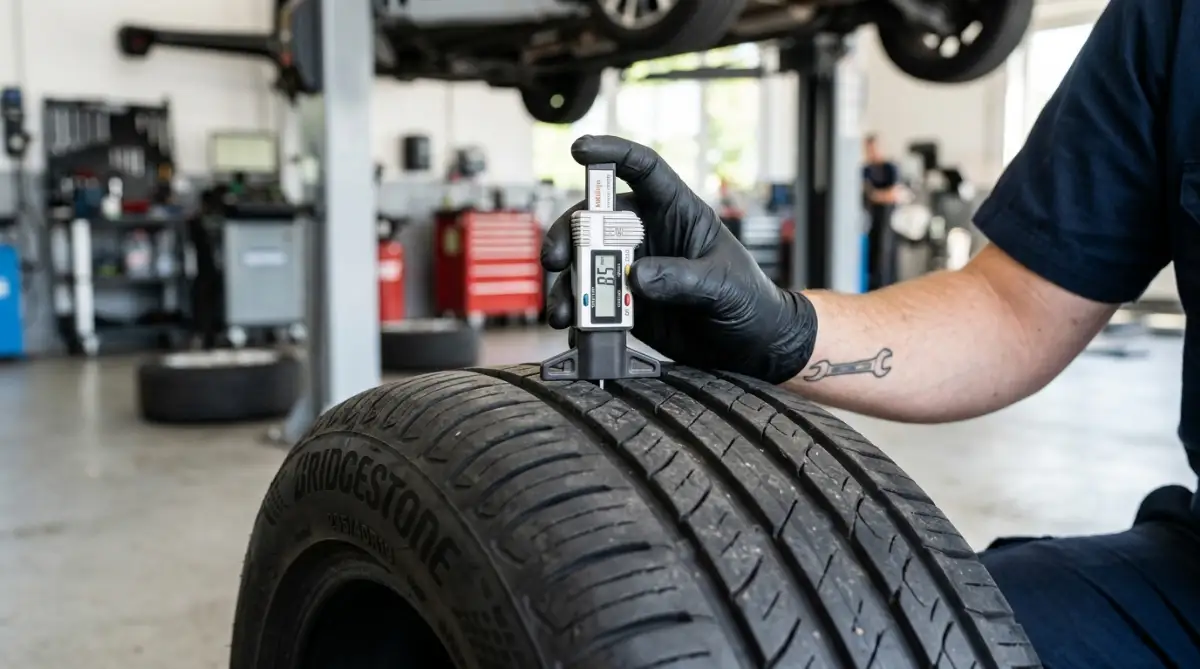
People often ignore their tires until they are bald. But tires are the most important contact point between your car and the road. A buyer or a dealer will check your tires immediately.
If your tires are worn unevenly, it signals that your alignment is bad. If the alignment is bad, it suggests the suspension might be damaged. It creates a chain reaction of doubt in the buyer's mind. Keep your tires rotated, and your alignment checked. It is a cheap way to show that you are a responsible owner.
 The Engine Bay Mystery
Most people never open their hood. But when you are selling your car, the engine bay is a huge indicator of how you treat your vehicle. It does not need to be sparkling clean like a show car.
However, if it is covered in thick oil sludge and grime, it looks like you are hiding leaks. A light cleaning of the engine bay can do wonders for the first impression. It shows you aren't afraid to show what is under the hood.
Final Thoughts on Value
Retaining your vehicle's value is not about being obsessive or miserable. It is about being smart. It is about understanding that your car is an asset that requires a little bit of respect.
By keeping your maintenance records, driving consistently, avoiding excessive modifications, and keeping the interior clean, you are doing more than just protecting your wallet. You are ensuring that when the time comes to sell, you have a solid product that someone else will be happy to buy.
Do not let your car become a liability. Treat it right, and it will treat you right when you need to move on to the next one. Start today by organizing those service records. You will be surprised at how much difference that little