The Hidden Struggle of Working Where You Live
I remember the exact moment I realized my home office was failing me. It was a Tuesday, and I had been staring at the same paragraph for three hours. My chair was uncomfortable, my desk was buried under stacks of half-finished notes, and the noise from the kitchen kept pulling my attention away. I felt tired, frustrated, and honestly, a bit defeated by my own space.
I kept thinking that if I just bought a more expensive computer, I would get more done. I was wrong. My problem wasn't my gear; it was the way my room was set up. Every time I sat down, my brain felt cluttered because my desk was cluttered. I was fighting against my environment instead of using it to help me work.
Maybe you know this feeling too. You start your day with big plans, but by noon, you are exhausted. You find yourself checking your phone, tidying up things that don’t need tidying, or just staring at the wall. You are not lazy. You are just working in a space that is pulling you in five different directions at once.
This lack of focus isn't just about losing a few hours of work. It hits your mental peace. When you cannot get things done, you feel guilty. That guilt follows you to dinner, to your bed, and into your sleep. You deserve a space that feels like a sanctuary, not a source of stress. Let’s change that, starting right now.
Rethinking Your Desk Placement for Maximum Clarity
The most common mistake I see is placing a desk in a high-traffic area. If you can see the laundry pile or the front door from your chair, your brain is always processing that movement. You need to stop viewing your desk as just a piece of furniture. It is your command center.
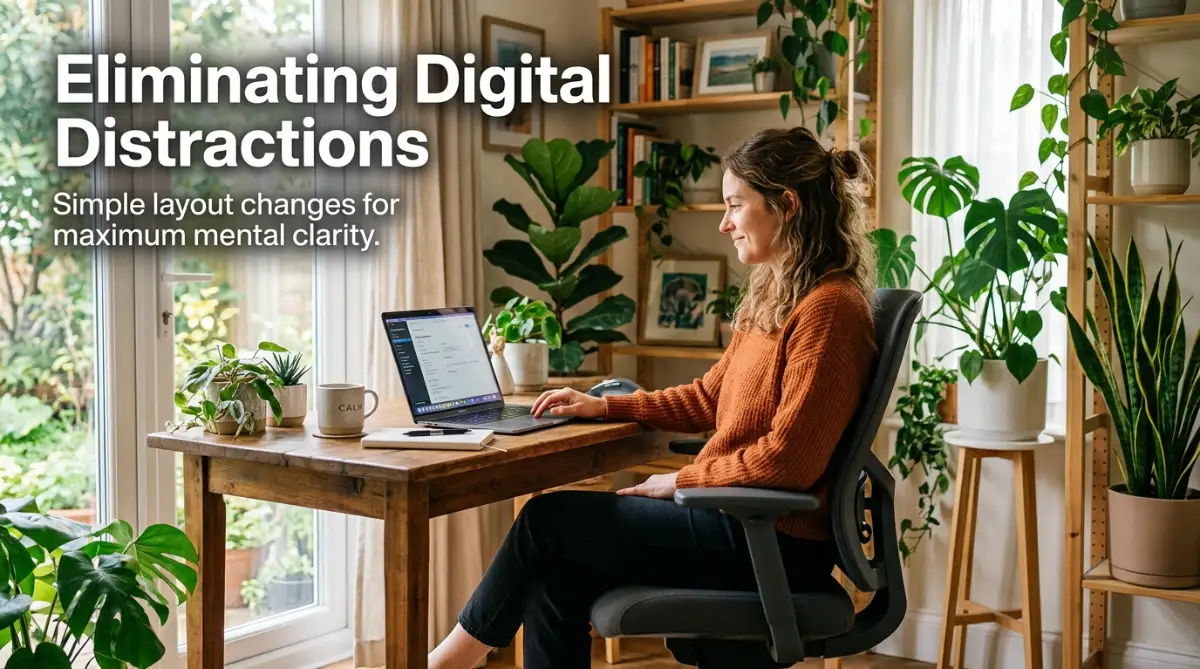
Try to position your desk so you are facing a wall or a window that does not look into a busy room. If you do not have a separate room, use a room divider or even a tall bookshelf to create a visual barrier. When you block out the chaos of the home, you give your brain permission to stop scanning for distractions.
Pro Tip: I learned this the hard way—never work from your bed or your sofa. My biggest mistake was thinking "cozy" meant "productive." My brain started to associate those areas with stress, which ruined my sleep. Keep your work zone strictly for work.
How to Optimize Your Desk for Deep Work
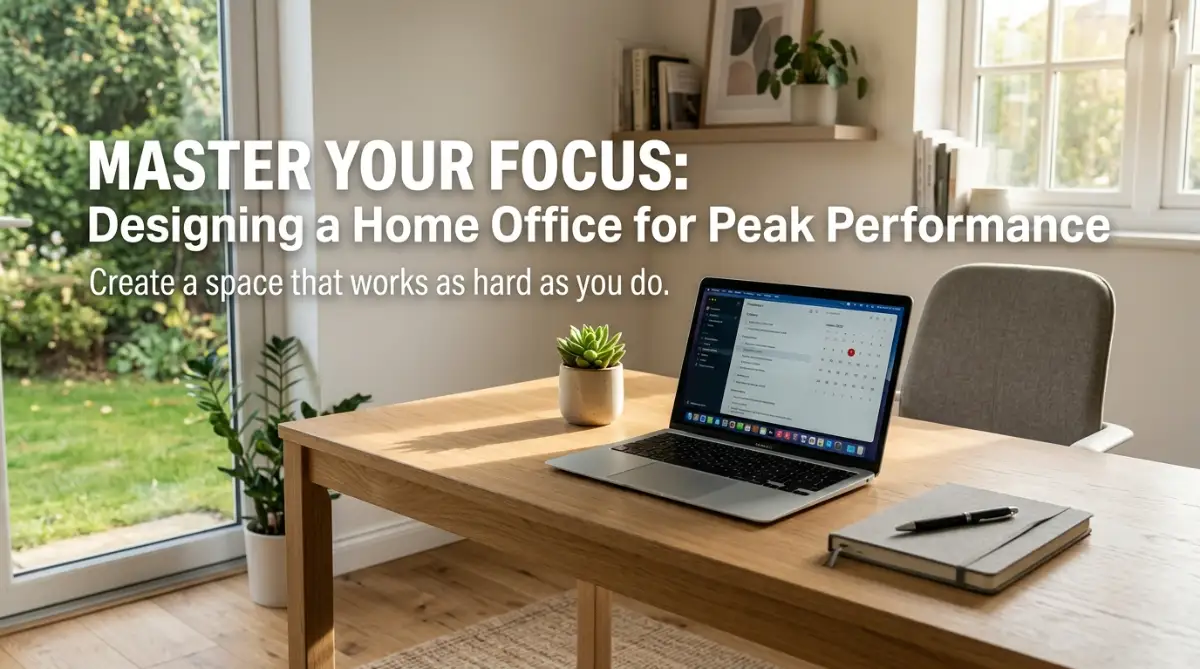
Your desk is where the magic should happen, but it often becomes a graveyard for loose papers and coffee mugs. A clean surface is the easiest way to give yourself a clean mind. Start by removing everything that you do not use at least once every hour.
If you don't use a stapler every day, move it to a drawer. Keep only your laptop, a notepad, and a single pen on top. This simple act of clearing space reduces the "visual noise" that fights for your attention. I found that when my desk is empty, my mind feels much lighter.
The Power of Light and Airflow
Natural light is a game-changer for your focus. If you are stuck in a dark corner, your body naturally wants to drift off to sleep. Try to move your workspace closer to a window, even if it is just a few feet. Sunlight helps regulate your internal clock and keeps you alert.
Do not forget about airflow, either. A stuffy room leads to headaches and a slow, foggy brain. Open a window for ten minutes every hour. Getting fresh air circulating can be the jolt of energy you need to push through a tough task.
Boost your results with this expert guide on workspace flow:
This video covers the simple changes that can turn your current desk into a high-performance zone.
Creating Your Personalized "Trigger" for Focus
Your brain loves patterns. You can use this to your advantage by creating a "work trigger." This is a specific action you take every time you start your day. It might be lighting a specific candle, putting on a certain playlist, or just clearing your mousepad with a cloth.
When you perform this ritual, you are telling your brain, "It is time to focus now." Over time, this becomes a habit that happens automatically. You will find that you enter a flow state much faster than before.
Managing Sound to Protect Your Concentration
Sound is one of the biggest silent killers of focus. Even if you think you don't hear the hum of the fridge or the neighbors talking, your brain is still processing it. Constant, low-level noise keeps your nervous system on high alert.
If you cannot work in total silence, try "brown noise" or "white noise" tracks. These sounds mask the background chaos and create a steady, calming atmosphere. I personally use noise-canceling headphones, even when I am not listening to anything, just to create a sense of personal space.
Choosing the Right Ergonomics
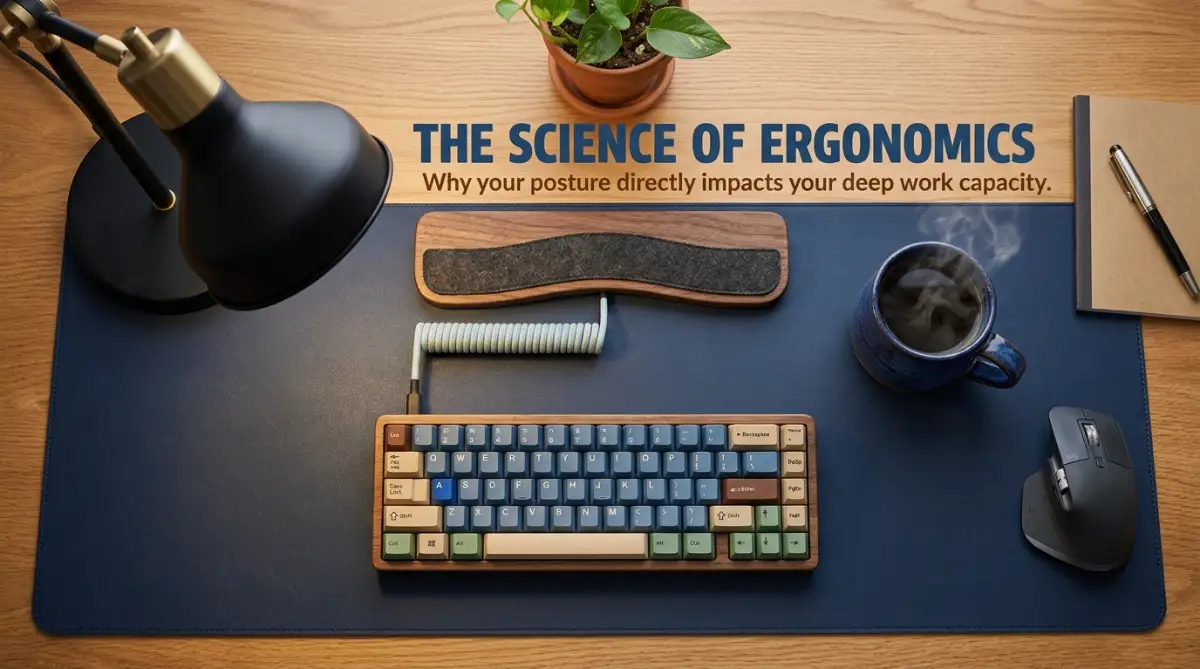
You cannot focus if your body is in pain. If your neck hurts or your back is stiff, your brain will spend 30% of its energy dealing with that discomfort. Your chair needs to be supportive, and your monitor should be at eye level.
You don't need a thousand-dollar chair to start. Use a cushion for your back or prop your laptop up on a stack of books to get the height right. Making your body comfortable allows your brain to shift its full power toward your work.
Decluttering Your Digital Workspace
Physical clutter is only half the battle. If your computer desktop is covered in a hundred random files, your focus will suffer. A messy digital space creates the same feeling of anxiety as a messy room.
Spend ten minutes at the end of every day organizing your files into folders. Rename your documents clearly so you can find them later without searching. When you start your day with a clean screen, you feel organized and ready to tackle your to-do list.
Building Consistency Through Small Wins
Do not try to change your whole office in one afternoon. You will only get overwhelmed. Pick one thing from this list—like clearing your desk or moving your chair—and do that first. Small wins build momentum.
Consistency is better than perfection. If you can keep your space tidy for just three days in a row, you will see a difference in your focus. Building a better home office is a journey of small, smart choices. You are building a space that respects your time and your talent.
By following these steps, you are not just decorating a room. You are crafting an environment that supports your goals. Keep it simple, keep it clean, and watch how your focus changes. You have the power to create a workspace that actually works for you.
Mastering Your Deep Work Environment: Secret Strategies
Designing a home office is not a one-time project. It is a living, breathing system that needs to grow with your work habits. Many people stop after buying a desk, but the real secret to staying focused lies in the fine-tuning of your environment. You need to treat your workspace like a high-performance athlete treats their training gear.
Micro-Habits for Sustained Attention
The secret to maintaining high energy all day is the reset habit. I have found that spending exactly two minutes at the end of each day to reset my desk—placing pens back, closing tabs, and wiping the surface—prevents the "clutter creep" that kills focus the next morning. If your desk starts the day clean, your brain starts the day clear. You can learn more about why traditional study habits often fail to retain complex information if you find yourself struggling to stay sharp during long tasks.
Temperature and Focus Physiology
Did you know that room temperature directly impacts your ability to process information? Research from Cornell University suggests that keeping your workspace at a comfortable, slightly warm temperature helps reduce errors and boosts output. If you are freezing, your body spends all its energy trying to stay warm rather than focusing on your screen. Keep a sweater or a small heater nearby so you never have to break your concentration because of the cold.
The "Do Not Disturb" Visual Boundary
If you share your living space with others, you need a physical signal for when you are in deep work mode. I use a simple pair of large headphones as my "do not disturb" sign. When they are on, my family knows I am in the zone. This small boundary prevents the constant interruptions that fragment your thinking and ruin your productivity flow.
Tech Hygiene for Better Output
Your digital health is just as important as your physical desk setup. If your phone is buzzing every few minutes, you cannot focus. Turn on "Focus Mode" on your phone or keep it in a drawer during your deep work blocks. Ensuring your digital space is secure is also part of staying focused; you might want to stop granting unnecessary permissions to newly installed android apps to keep your devices running smoothly and safely.
The Silent Productivity Killers to Avoid
The most common mistake people make is ignoring their own physical limits. We often push through fatigue, neck pain, or eye strain, thinking we are being productive. In reality, we are just training our brains to associate our work with discomfort and stress. If you ignore the signs of physical burnout, you will eventually face a total loss of motivation.
Another mistake is the "multi-tasking trap." We often try to work with a podcast in the background, social media tabs open, and an email inbox refreshing every minute. This is not working; this is "context switching." Every time you switch tasks, you pay a "cognitive tax" that makes it harder to get back to a deep state of focus. If you find your progress slowing down, it might not be a lack of skill, but rather an issue similar to the passive income fallacy where your online revenue is stalled because you are splitting your attention too thin.
Don't ignore the importance of mental health breaks. Sometimes the best way to solve a hard problem is to walk away for ten minutes. Remind yourself that mental health check-ups are just as essential as physical screenings for long-term success. If you don't take care of your mind, your office design won't matter.
Final Steps for Your Peak Performance Space
You have the tools and the strategies to build a workspace that works for you. Start by clearing the clutter, fixing your lighting, and setting those vital boundaries. Remember that your home office is a place for your best work, not just a place to sit. Take one step today, even if it is just moving your lamp or clearing your desktop.
I have spent years fighting against my own space, and I learned that simple is almost always better. My best work happens when I am not struggling with my environment. You are capable of creating this same balance, and it starts with the very next thing you do when you sit down.
Common Questions About Your Office Setup
Does color affect how I work?
Yes, certain colors can change your mood and energy. Soft blues and greens are generally better for long periods of calm, deep work. Avoid overly bright reds or neons that might keep your brain in an "alert" state too long.
How often should I change my desk setup?
You don't need to move things around all the time. If you find a setup that works, keep it. However, if you feel stagnant or bored, a small change—like moving a plant or changing your lighting—can give you a fresh perspective.
What is the most important piece of gear?
Your chair is the most important item. You can work on a cheap desk, but a bad chair will ruin your back and your ability to focus over time. Invest in comfort where your body touches the furniture.
Should I keep my phone near me?
It is best to keep your phone out of sight. Even seeing the phone on the desk causes your brain to use some of its power to suppress the urge to check it. Keep it in another room if possible.
Can background music help me focus?
For many people, yes, but it depends on the music. Avoid songs with lyrics, as your brain tries to process the words, which distracts from your work. Try instrumental, classical, or ambient noise instead.
Disclaimer: The information provided in this article is for educational purposes only and does not constitute professional advice. Consult with ergonomics or health experts regarding specific physical requirements for your workspace.