The Frustration of the "Already Done" Mentality
I spent six months staring at my laptop screen, paralyzed by the same thought over and over again. Every time I had a "brilliant" idea, I would search for it on the internet, only to find ten companies already doing it. I felt like I was constantly showing up to a party that was already ending.
I tried to launch a clothing brand, but the market was flooded with cheaper options. I tried to start a blog about productivity, but the top pages were already owned by massive, established names. It felt like every corner of the internet was taken.
The anxiety was real. My friends would ask me how my new project was coming along, and I would just shrug, feeling like a failure. I was working long hours, drinking too much coffee, and getting absolutely nowhere.
The worst part wasn't the work; it was the doubt. I started to believe the lie that "everything worth doing has already been done." I thought I had missed the boat and that the only people making money were the ones who got in years ago.
But looking back, my problem wasn't the market. My problem was that I was trying to compete by copying what everyone else was doing. I was a carbon copy in a world that already had the original.
This feeling of being stuck is exactly where most people give up. You look at the competition, you see their shiny websites and big marketing budgets, and you shrink back. You decide it is safer to stay in your day job than to try and fail in a crowded arena.
Rethinking the Competition and Your Place in It
The truth about saturated markets is that they are actually a signal of demand. If a market is completely empty, it usually means there is no money to be made there. When you see ten people selling the same thing, it proves there are customers willing to pay for it.
The mistake most beginners make is trying to be "better" at the exact same thing. If the competitor sells a red t-shirt, you try to sell a red t-shirt that is slightly cheaper. That is a losing battle.
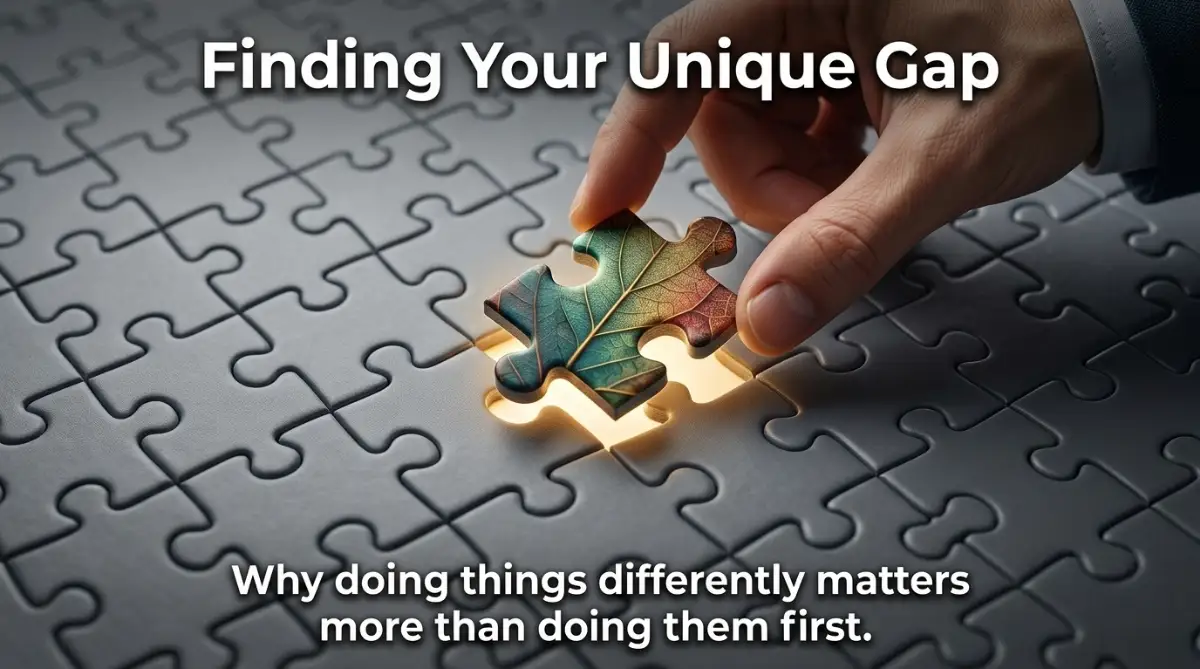
Instead, you need to look for the "fringe." This is the space where the big players are too slow or too arrogant to look. You find this by identifying the specific frustrations that the big players are ignoring.
The Power of Being Different, Not Just Better
Think about the local coffee shop in your neighborhood. There are probably massive chains on every corner, yet that small local shop is always packed. Why?
It isn't because they have cheaper coffee. It is because they offer something the big guys cannot: a personal connection and a specific vibe. They aren't trying to beat the chains at their own game.
They are playing a game the chains don't even know exists. You need to apply this same logic to your business ideas.
Identifying the "Good Enough" Gap
Large companies often aim for the middle of the road to capture the widest audience possible. This creates a gap for everyone else. They provide a "good enough" solution for the masses.
But what about the people who want more? What about the people who are tired of the "good enough" standard?
That is your target market. You look for the people who are frustrated with the current options and you build something specifically for them.
Why Data Beats Your "Gut Feeling"
You might think you have a great idea, but your intuition can be wrong. You need to prove that your idea has legs before you spend a single dollar on building a website or printing business cards.
Start by looking at reviews of your potential competitors. Don't look at the five-star reviews. Look at the two-star and three-star reviews.
What are people complaining about? What feature are they wishing for? That is your roadmap for innovation.
The Micro-Niche Strategy
If you try to serve everyone, you serve no one. In a saturated market, you must shrink your focus until it feels uncomfortable.
Instead of "Fitness Coaching," think "Fitness Coaching for Busy Accountants." Instead of "Pet Supplies," think "Organic Treats for Senior Dogs with Allergies."
When you become the go-to expert for a very small group, you don't have to compete with the giants. You are the only person who understands that specific group's needs.
Leveraging Your Unique Experiences
Often, the best business ideas are hidden in your own history. What have you learned in your past jobs? What skills do you have that other people find difficult?
I once helped a friend turn her hobby of organizing files into a business for small law firms. She didn't invent a new app; she just applied her skills to a group of people who were terrible at organization.
She didn't need to compete with big tech companies. She just needed to be the person who fixed the mess for the lawyers.
[Pro Tip: My Realization]
I used to think that a business idea had to be complex and "techy" to be profitable. I was wrong. My best success came when I simplified a messy process for a group of people who were willing to pay for clarity. Don't look for the "next big thing." Look for a boring, messy problem that you can fix with a simple, clean solution.
This video breaks down how to identify these "hidden" opportunities in any industry, no matter how crowded it seems.
The Validation Checklist
Before you commit to an idea, run it through this mental filter. Ask yourself these four questions.
- Is there a group of people who are already spending money on this problem?
- Can I explain my solution in one sentence that makes them say, "Yes, that is exactly what I need"?
- Is the current competition ignoring a specific type of customer?
- Do I have an unfair advantage, like a specific skill or a unique network?
If you can answer "yes" to these, you have the start of a sustainable idea. You don't need a patent or a million dollars. You need to solve a real problem for a specific person.
Why "Easy" Ideas Fail
Beginners love the idea of "passive income" or "get rich quick" schemes. They look for the easiest path, which usually leads to the most crowded path.
Sustainable ideas are often hard. They require you to deal with customer service, build relationships, and iterate based on feedback.
If the idea sounds too easy, everyone else is already doing it. Embrace the parts of business that others find annoying or difficult, because that is where the profit is hidden.
Building a Feedback Loop
Once you have an idea, you need to talk to potential customers. Not your mom, and not your best friend.
Find strangers who fit your target demographic. Ask them about their problems. Listen more than you talk.
If you find that three people in a row have the same complaint, you have found a market. You can then refine your offer to address that specific complaint.
Focusing on Retention Over Acquisition
In a saturated market, acquiring a new customer is expensive. Keeping an existing one is where the real money is.
Design your business idea to deliver results quickly. If your customer gets a win early on, they will stay.
If you are just selling a commodity, they will leave for the cheapest option. But if you are selling a transformation or a result, they will be loyal to you.
Creating Content That Matters
You don't need a massive marketing budget. You need to prove you are an expert.
Write, record, or speak about the problems your customers are facing. Don't just pitch your product.
Help them solve their minor problems for free. When they are ready to solve the major problem, they will come to you because you already earned their trust.
The Value of Patience
You will not become an overnight success. Most "overnight" successes took years of behind-the-scenes work.
Accept that the first version of your idea will be imperfect. You will learn, adjust, and pivot.
That is the process. It is not a failure; it is just the cost of doing business. Keep going.
When to Pivot
If you have been talking to customers and trying to sell for months with zero traction, listen to the market. It might be time to tweak your offer.
You are not married to your first idea. You are married to the goal of providing value.
Be willing to change the "how" even if you keep the "who." If the problem remains, there is always a way to solve it that people will pay for.
Simple Tools for Small Beginnings
You don't need expensive software to start. A simple spreadsheet and an email account are often enough to validate a business.
Focus on getting your first paying customer. The lessons you learn from that one person are worth more than a thousand hours of research.
One paying customer is proof that you have a business. Everything else is just scaling.
Avoiding Analysis Paralysis
It is easy to get stuck in "research mode." You read books, take courses, and listen to podcasts.
But research is not action. At some point, you have to ship.
Pick the best idea you have right now, test it, and see what happens. The market will tell you if you are on the right track much faster than any book will.
The Power of "No"
As you start to get traction, you will be tempted to add more features and serve more people. Resist this.
The best businesses in saturated markets are defined by what they don't do. Stick to your core value proposition.
If you try to do everything, you will become another generic option. Stay focused, stay small, and stay specific.
Why Your Story Matters
Even in a crowded market, there is only one "you." People buy from people they like and trust.
Share your journey. Be transparent about your struggles.
People appreciate honesty. In a world of polished, fake marketing, being real is your biggest competitive advantage.
Learning from the Giants
Look at what the big companies are doing, then do the opposite. If they are cold and impersonal, be warm and personal.
If they are slow to update, be fast. If they are expensive and bloated, be lean and affordable.
You can learn everything you need to know about the market by watching the mistakes of the leaders. Use their blind spots as your entry point.
Defining Your Own Success
Don't measure your success by what others are doing. Measure it by your own goals.
If you want a small, profitable business that gives you freedom, that is a massive success. You don't need to be a billion-dollar company to win.
Define what "enough" looks like for you and go after that. It will make your journey much more enjoyable.
Preparing for the Long Game
Business is a marathon, not a sprint. You are building something that needs to survive and adapt over time.
Focus on building systems that don't rely entirely on you. Automate the boring parts so you can focus on the creative parts.
If you build a business that is easy to manage, you will have the energy to keep it growing for years. This is the definition of sustainability.
The Final Step: Taking Action
You have the information. You know how to find the gap, how to listen to the market, and how to start small.
Now, you have to move. Stop waiting for the perfect moment.
The perfect moment is a myth. The only moment that exists is now. Grab your notebook, start listening to your potential customers, and build something that matters to them.
Secrets to Staying Ahead When the Market Feels Crowded
You have already identified that your market isn't truly "saturated"—it is just competitive. Now, you need the tactical advantages that separate the hobbyists from the true business owners.
The most successful people I know don't try to outspend the big players. They out-think them by focusing on areas where the giants are too slow to react.
The Service-First Validation Model
Before you spend a single dollar on fancy branding or complex websites, try selling your solution as a manual service. This is the fastest way to get real-world data without risking your savings.
If you want to build an automated tool for scheduling, for example, start by doing the scheduling manually for one client. You will learn more in one week of manual work than you will in three months of market research.
If you find that the manual work is overwhelming, you can look for ways to optimize your workflow by learning how to bridge the professional skill gap by mastering basic automation tools. This ensures that when you do decide to build a product, you are building it on a foundation of proven customer needs.
Building Your "Moat" Through Community
In a crowded market, features are easily copied. If you add a new button to your website, your competitor will add the same button next week.
What they cannot copy is the trust and relationship you build with your audience. This is your "moat"—it keeps your business safe from people who only care about the price.
Big companies are often cold and distant, treating customers like numbers on a spreadsheet. You can win by being the person who actually listens, responds, and cares about the outcome for your clients.
Understanding Market Dynamics Through Data
You should never rely on your gut feeling alone. You need to look at objective data to see if your ideas have any real potential.
Many successful founders use market research and competitive analysis to see where the gaps are. This helps you understand if you are entering a space where customers are already looking for better options.
If you are dealing with complex data or shifting market conditions, remember to keep your focus on the long term. Even during tough times, you can learn how to stay calm and invest wisely during market volatility to keep your business stable.
The "Boring" Business Advantage
I often see beginners chasing flashy, trend-based ideas that die as quickly as they appear. The real money is often in "boring" businesses that solve unglamorous problems.
People are always willing to pay for things that save them time, reduce their stress, or make their life easier. It doesn't matter if your business is about accounting, logistics, or home services.
If you focus on being reliable, people will choose you over the flashy competition every single time. Don't fall for the passive income fallacy and why your online revenue is stalled; focus on providing real value that people are happy to pay for.
Protecting Your Digital Foundation
As you grow, you will rely more on digital tools and platforms. Many beginners make the mistake of leaving their digital front door wide open to security threats.
It might seem like a minor detail, but why you should stop granting unnecessary permissions to newly installed android apps is a security habit you must adopt. Protecting your own data is the first step toward protecting your customers' data.
A single security breach can destroy the trust you spent years building. Treat your digital assets with the same care you treat your physical assets.
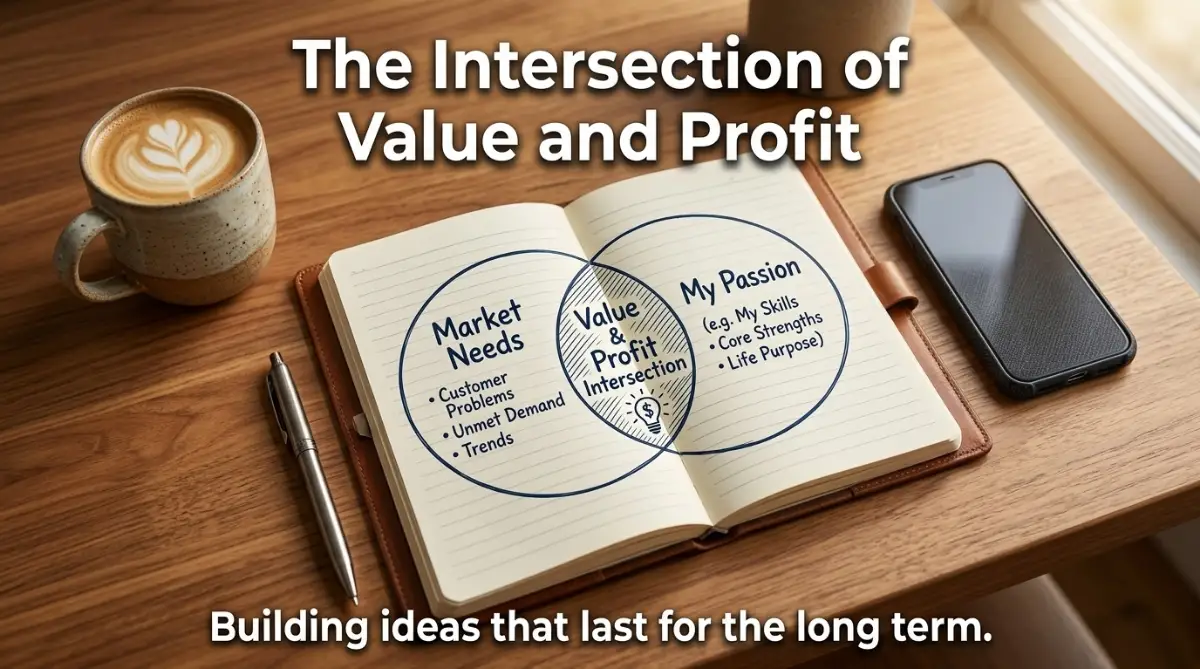
The Invisible Traps That Sink New Businesses
I have watched many talented people fail, not because they lacked intelligence, but because they fell into traps that looked like "hard work" but were actually just wasted energy.
These are the silent killers that you need to be aware of right now.
The Perfectionism Trap
You might think that your website needs to be perfect or your product needs to have every possible feature before you launch. This is a lie that keeps you on the sidelines.
Your customers do not care about a perfect website. They care about you solving their problem.
If you spend months tweaking colors and logos while ignoring sales, you are not building a business; you are just playing dress-up. Ship your product, get feedback, and improve it along the way.
Ignoring Customer Feedback
When you finally get a customer, listen to them. If they tell you that your product is confusing or that a certain feature is useless, believe them.
Too many founders get attached to their original vision and refuse to change. This is the fastest way to become irrelevant.
If the market tells you that your idea needs to change, change it. Your ego will not pay the bills; your customers will.
Scaling Too Fast
I have seen people take on debt and hire staff before they even have a single paying customer. They assume that if they "build it, they will come."
This is a dangerous assumption. You should only scale when you have proof that your business model works.
Keep your costs low until you are drowning in demand. Then, and only then, should you think about adding more complexity to your operations.
Forgetting to Learn
The moment you think you know everything about your market is the moment you start losing. The market is always changing, and your competitors are always evolving.
If why traditional study habits often fail to retain complex information is something you have experienced, realize that business learning is different. It is about applying knowledge, not just memorizing facts.
Always be ready to pivot. Be a student of your industry, and you will stay ahead of the curve.
Neglecting Your Own Well-being
I cannot stress this enough: your business is an extension of your own energy. If you are burned out, your business will feel it.
Sometimes, you need to step back to move forward. Why mental health check-ups are just as essential as physical screenings is a lesson I learned the hard way.
A healthy mind makes better decisions. Do not sacrifice your health for a business idea that is supposed to give you freedom.
Your Blueprint for Future Growth
You have the tools and the strategy. Now it is time to build.
Sustainable business is not about finding the "perfect" idea. It is about finding a problem you are willing to solve and staying with it until you get it right.
A Word from the Expert
I remember when I first started, I thought I needed a "Eureka" moment. I realized later that success is just a series of small, intentional choices made every day.
You do not need a miracle; you need consistency. You have everything you need to start right where you are.
Common Questions About Business Ideas
How do I know if an idea is sustainable?
A sustainable idea solves a real problem for a specific group of people who are willing to pay for the solution. If you cannot find people who are already spending money to fix the problem, it might not be a viable business.
Should I quit my job to start this?
No. Start on the side while you still have a steady income. This lowers your risk and allows you to test your ideas without the pressure of needing to make money immediately.
What if I don't have enough money to start?
The best businesses are often "bootstrapped," meaning they start with little to no money. Focus on service-based ideas where your only cost is your time and effort, then use the profit from that to fund your larger ideas.
How do I handle competition?
Don't worry about being the biggest; worry about being the best for your specific niche. If you serve a small group of people better than anyone else, the competition becomes irrelevant.
Disclaimer: The content provided here is for informational purposes only. It does not constitute professional business, legal, or financial advice. Every individual situation is different, and you should consult with a qualified professional before making any significant business or investment decisions.