The Hidden Anxiety of Managing Money in a Digital World
You check your banking app expecting to see your hard-earned savings, but instead, you see a transaction you never authorized. That sinking feeling is more common than you think, but you don't have to live in fear. Let’s turn your phone from a security risk into a digital fortress with a few simple, actionable shifts that will help you sleep soundly tonight.
This is the modern nightmare that thousands of people face every single day. The digital world has made banking easy, but it has also made us feel more vulnerable than ever. It is not just about the money; it is about the feeling of being violated.
You worked late nights and saved every penny for your family, your future, or your dream home. Seeing that balance drop to zero because of a stranger’s click is a pain no one should experience. It creates a sense of constant worry. You might find yourself checking your app ten times a day just to make sure your money is still there.
This struggle is real, and it affects your mental peace. You deserve to feel confident when you manage your money. You deserve a digital fortress that keeps the bad actors out while you sleep soundly.
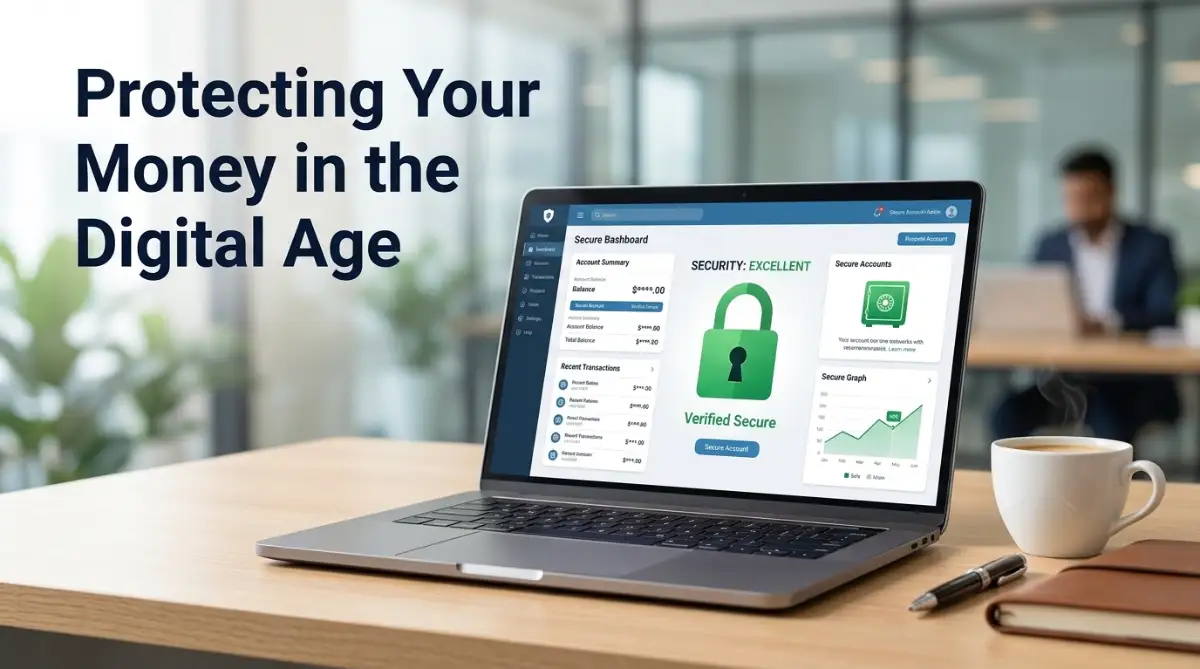
What You’ll Master in This Guide
- Hardened Passwords: Why long sentences beat complex strings every time.
- The 2FA Rule: How to use an authenticator app to stop 99% of hacks.
- Phishing Defense: How to spot a fake email in less than 5 seconds.
- Device Hygiene: Why simple software updates are your first line of defense.
Building Your Personal Shield: Practical Steps to Secure Your Assets
The good news is that you do not need to be a tech genius to stay safe. Security is more about habits than it is about software. By making a few small changes today, you can build a wall around your money that is almost impossible to break.
Create a "Secret Code" Instead of a Simple Password
Most people use passwords like "Mypassword123" or their pet’s name. This is like leaving your front door unlocked with a sign that says "Welcome." Hackers use tools that can guess these common patterns in seconds.
Instead of a password, think of a passphrase. This is a long sentence that only makes sense to you. For example, "ILoveEatingGreenApplesAt7pm!" is much harder for a computer to crack than a simple word.
| Feature | Weak Password | Strong Passphrase |
| :--- | :--- | :--- |
| Complexity | Short, predictable | Long, randomized sentence |
| Cracking Time | Seconds to minutes | Years to centuries |
| Memorability | Hard to remember | Easy to recall (e.g., a memory) |
| Security Score | Very Low | High |
Length is your best friend here. The longer the string of characters, the more time it would take for a hacker to find it. Make it unique for your bank. Never use your banking password for social media or email. If one gets hacked, you don't want the others to fall like dominoes.
The Power of the Double Lock
You probably use two-factor authentication (2FA) already, but are you using it correctly? Many people find it annoying to enter a code every time they log in. They turn it off to save five seconds.
Think of 2FA as a second security guard at your bank vault. Even if a thief steals your key (your password), they still cannot get in because the guard needs a special code from your phone.

Avoid using SMS-based codes if possible. Hackers can sometimes "swap" your SIM card to get those texts. Instead, use an authenticator app or a physical security key. This small extra step is the single most effective way to stop 99% of automated attacks.
Why Your Home Wi-Fi Might Be a Trap
We all love free Wi-Fi at coffee shops or airports. It is tempting to check your balance while waiting for your latte. However, public Wi-Fi is like a glass house. People outside can see what you are doing inside.
Hackers often set up "fake" Wi-Fi networks with names like "Free_Airport_WiFi." Once you connect, they can see every piece of data you send, including your bank login details.
Never log into your bank account on public Wi-Fi. If you must check your account while out, use your mobile data. Your cellular network is much more secure than any public hotspot. If you travel often, consider using a high-quality VPN to encrypt your connection.
The Art of Spotting a Digital Trick
Scammers are great actors. They send emails that look exactly like they came from your bank. They use the same logos, the same colors, and even the same tone of voice. This is called phishing.
Quick Check: Is This Email a Trap?
- Does it demand immediate action (e.g., "Act in 2 hours")?
- Is the sender's email address slightly "off" (e.g., @bank-support-alerts.com instead of @bank.com)?
- Does it ask for your PIN or full password? (Legitimate banks never do this).
- Are there spelling errors or strange grammar?
They usually try to create a sense of "urgency." They might say, "Your account will be closed in 2 hours unless you click here." This is a giant red flag.
Real banks will almost never ask you to click a link to "verify" your identity or provide your PIN. If you get a suspicious email, do not click anything. Open a new browser tab, type your bank's website address manually, and log in there. If there is a real problem, you will see a notification inside your secure portal.
Keeping Your "Digital Keys" Clean
Your smartphone and your laptop are the tools you use to access your wealth. If these tools are "dirty" with old software, they have holes that hackers can crawl through.
Software updates are not just for new features. Most updates include security patches that fix newly discovered vulnerabilities. When your phone asks you to update, do it immediately.
Also, take a look at the apps on your phone. If you have apps you no longer use, delete them. Some low-quality apps can track your activity or contain hidden malware. A "clean" phone is a secure phone.
The "Silent Monitor" Strategy
One of the best habits you can start today is setting up real-time alerts. Most modern banking apps allow you to get a notification for every single transaction.
If you spend $5 at a shop, your phone should buzz. If a hacker tries to take $500, your phone will buzz instantly. This allows you to call the bank immediately and freeze your account before the money is gone forever.
It might feel like a lot of notifications at first, but it provides incredible peace of mind. Knowing that you will be alerted the second anything happens allows you to stop worrying and focus on your life.
Myth vs. Reality: Banking Security
The Psychology of a Secure Mindset
Security is not a one-time event. It is a way of thinking. When you realize that you are the guardian of your financial future, you start to see things differently. Why would you give your data to a website just because it looks professional?
Take a moment to breathe. Most digital theft happens because we are in a hurry. We click fast, we type fast, and we don't look at the details. Slow down. When it comes to your money, taking an extra ten seconds to check a URL or verify a sender can save you years of regret.
A Pro Tip for the Modern Saver
Here is a secret that many security experts use: Use a dedicated device for banking. If you have an old tablet or a spare phone, wipe it completely and only install your banking apps.
Do not use this device for social media, games, or browsing the web. Keep it at home. By using a "clean" device that never visits risky websites, you virtually eliminate the chance of malware infecting your banking session.
This might seem extreme, but if you are managing significant assets, it is a very low-cost way to ensure total safety.
Why Privacy and Security are Twins
You might wonder why sharing your birthday or your mother’s maiden name on Facebook matters. Scammers collect these small pieces of your life to build a profile.
When they call your bank pretending to be you, they use this info to pass the "security questions." Check your privacy settings on social media. Limit who can see your personal details. The less a stranger knows about you, the harder it is for them to pretend to be you.
Protecting your assets is about closing every small gap. It is about making yourself a "hard target." Thieves look for easy wins. When they see a user with a complex passphrase, 2FA enabled, and cautious habits, they usually move on to someone easier.
You have the power to stay safe. Start with one habit today. Maybe change your main bank password to a long phrase. Tomorrow, set up those transaction alerts. Step by step, you are building your digital fortress. Your future self will thank you for the peace of mind you are creating right now.
Going Beyond the Basics: Mastering Your Digital Shield
Now that you have the basic locks on your doors, it is time to look at the advanced ways to keep your money safe. Hackers do not just wait for you to make a mistake. They look for tiny gaps in the systems you use every day. To stay ahead, you need to think like a professional protector of your own wealth.
One of the most powerful things you can do is use virtual card numbers. Many modern banks and apps allow you to create a "fake" card number for online shopping. This number is linked to your real account but has a different set of digits.
If a website you bought a shirt from gets hacked, the thieves only get the virtual number. You can delete that number with one click, and your main bank account stays perfectly safe. It is like using a disposable key for a hotel room instead of giving them the key to your house.
The Power of Biometric Layering
We often use our fingerprint or face to unlock our phones. But did you know you can often add this to your banking app specifically? Even if someone grabs your phone while it is already unlocked, they still cannot get into your bank without your physical presence.
This creates a multi-layered defense. You should check your app settings for something called "App Lock" or "Biometric Security." Enabling this means your phone asks for your thumbprint every single time you open the bank app. It adds just one second to your day but adds years of security to your life.
When you are building a fail-safe emergency fund, you want to know that every dollar is protected. Adding these extra layers ensures that your savings are there when you actually need them.
Isolating Your Financial Life
Think about the email address you use for everything. You use it for Facebook, for newsletters, and for your bank. This is a huge risk. If a hacker gets into your "junk" email, they might find clues about where you bank.
A pro-level secret is to have a dedicated email address just for your finances. Do not use this email for anything else. No social media, no shopping, and no talking to friends. Because this email is private, scammers will not even know it exists to send you phishing links. It is a simple way to stay "invisible" to the bad guys.
The Strategy of "Cooling Off" Your Data
Sometimes, the best security is just slowing things down. Many banks now offer a "Lock" or "Freeze" feature for your debit and credit cards. If you are not planning to spend money today, keep your card locked in the app.
If a hacker tries to use your card details at 3 AM while you are sleeping, the transaction will simply fail. You only unlock the card when you are standing at the register or about to click "buy" online. This puts you in total control of when money leaves your account.
For those who run a company, shielding your small business assets is just as important as protecting your personal cash. Using these locking features for business accounts can prevent unauthorized employees or hackers from draining your operating capital.
The Hidden Traps: Mistakes That Even Smart People Make
We often think we are too smart to be fooled. But scammers do not always attack your brain; they attack your emotions. They wait for you to be tired, stressed, or in a hurry. That is when most people make the mistakes that lead to a lost fortune.
The Danger of the "Helpful" Phone Call
One of the most dangerous traps is the fake support call. You get a call from a number that looks exactly like your bank’s official line. The person on the other end sounds professional and kind. They tell you there is a "suspicious charge" on your account and they need to "verify" your identity.
They might ask for your PIN or a code that was just sent to your phone. This is a trick. Your bank will never call you and ask for a security code. The person on the phone is actually the one trying to log in, and they need you to give them the final key.
If you ever feel unsure, just hang up. Call your bank back using the number on the back of your physical card. Never trust the person who called you first, no matter how much they seem to know about you.
Sharing Too Much on the "Social" Web
We love to share our lives online. We post photos of our pets, our new cars, or our childhood homes. But hackers look at these posts to find the answers to your security questions.
Did you post a "Happy Birthday" message to your mom? Now they know her maiden name. Did you post a photo of your first car? Now they know the answer to that common security question.
You should treat your personal history like a secret. The more you talk about your private details on public pages, the easier it is for a criminal to pretend to be you. They are not just looking for your password; they are looking for the story of your life so they can steal your identity.
Ignoring the Paper Trail
Even in a digital world, physical mail is a goldmine for thieves. Think about the bank statements or credit card offers that come to your house. If you just throw them in the trash, a "dumpster diver" can find your account numbers and full name.
This can lead to identity theft that takes months to fix. Always shred your mail before you throw it away. Better yet, sign up for paperless statements. This keeps your financial data inside the secure bank portal and away from your physical mailbox.
Sometimes, people worry so much about the big hacks that they forget about the small daily costs. Much like how deductibles and out-of-pocket limits work in insurance, small security gaps can lead to large unexpected costs if you are not careful.
The Risk of Public Charging Stations
Have you ever seen those USB charging ports at the airport or a mall? They look helpful when your battery is at 1%. But there is a risk called "juice jacking."
Criminals can modify those ports to steal data from your phone while it charges. They can install malware that records your keystrokes when you type your bank password later.
Always carry your own wall plug and use a standard power outlet. Or, use a "data blocker" cable that only allows power to flow, not information. It is a small tool that keeps your phone’s internal "brain" safe from outside snooping.
Your Roadmap to a Stress-Free Financial Future
Taking care of your money is a lifelong journey. It is not about doing one big thing; it is about doing many small things consistently. When you make security a part of your daily rhythm, the fear starts to go away. You stop worrying about every notification and start feeling like the boss of your own digital world.
Think about the peace of mind you will have knowing your "Digital Fortress" is solid. You have the long passphrases. You have the double locks. You have the secret email. You are no longer an easy target. You are a person who respects their hard work enough to protect it properly.
Your 5-Minute Weekend Security Audit
To keep your results strong over time, try this simple habit every Saturday morning:
- Check your balances: Look for any small charges you don't recognize.
- Update your apps: Make sure your phone and bank apps are on the latest version.
- Review your alerts: Ensure your phone is still set to notify you of every spend.
- Clear your history: Delete the cookies on your browser to keep things fresh.
This small routine keeps you "awake" to what is happening with your money. It ensures that no tiny hole grows into a big problem.
A Final Word on Your Safety
You have worked hard for everything you own. Whether you are saving for a house, a child's education, or your own retirement, that money represents your time and your energy. It is worth the extra effort to keep it safe.
The digital world is full of amazing tools that make life better. You don't have to be afraid of them. You just have to be smart about how you use them. By following the habits we discussed, you are putting yourself in the top 1% of secure users.
Go ahead and take the first step today. Change one password. Turn on one alert. Each action you take is a brick in the wall of your fortress. You have the power, the tools, and now the knowledge to stay safe forever.
Disclaimer: The information provided in this article is for educational purposes only. While these habits significantly improve your security, no system is 100% foolproof. Always follow the specific security guidelines provided by your financial institution and report any suspicious activity to them immediately. We do not provide financial or legal advice.
*********Thank you for reading. At Finliora*************