Why Your Current Morning Habit Is Draining You
I remember staring at my alarm clock, hitting snooze for the fourth time in a row. My heart was racing, my brain felt like it was wrapped in fog, and the thought of facing the day made me want to hide under the covers. Does this sound familiar to you? You wake up, grab your phone, start scrolling, and immediately dump a load of stress into your brain before you even brush your teeth.
I used to think that being productive meant waking up at 5:00 AM and cramming a dozen tasks into the first hour of my day. I tried drinking lemon water, doing intense workouts, reading books, and meditating all before 7:00 AM. But by noon, I was completely burned out and reaching for my third cup of coffee just to keep my eyes open.
It turns out, I was setting myself up for a crash. My energy wasn't being sustained; it was being spent all at once.
We are taught that the "perfect" morning routine is a long list of checkboxes. We compare our reality to what we see on social media—perfectly organized desks, green smoothies, and calm faces. But in the real world, life is messy. When we fail to tick every single box, we feel guilty. That guilt alone is enough to ruin our mood, which drains our energy faster than any missed workout ever could.
This constant cycle of "do more, be more" is exhausting. It doesn't leave room for the fact that some days, you are tired. Some days, you have obligations that don't fit into a rigid schedule. When your routine feels like a military drill, you aren't building energy; you are building resentment.
True energy management isn't about doing more things; it’s about doing the right things that keep your nervous system calm and your mind clear. If you find yourself needing a nap by mid-afternoon, your current routine is likely fighting against your body’s natural rhythm, not supporting it. It is time to let go of the pressure to be perfect and instead focus on what actually keeps you moving forward.
Rethinking Energy: The Real Approach to Your Morning
Let’s be honest with ourselves. You don't need a ten-step process to feel good. You need a system that works with your biology. When we look at energy, we have to think about it like a battery. You cannot drain the battery to 0% in the first hour and expect it to last until the evening.
The Myth of the Overachiever’s Morning
There is this idea that if you aren't sweating, reading, and planning your entire future before sunrise, you are failing. Please, stop listening to that. High achievers aren't successful because they suffer through a brutal morning. They are successful because they know how to manage their focus.
If your morning routine leaves you feeling rushed or stressed, it is already a failure. Energy is not just physical; it is mental and emotional. If you spend your first hour worrying about emails or social media, you are starting your day in a reactive state. This sets a tone of anxiety that stays with you until bedtime.
Step 1: Master the "No-Phone" Zone
The simplest, most effective step I ever took was removing my phone from my reach at night. When you wake up and your phone is the first thing you touch, you are handing over your attention to the world before you have even found your own feet. Notifications, news, and messages are demands on your time.
By keeping your phone away for at least the first 30 minutes, you claim that time for yourself. You allow your brain to wake up naturally. This isn't just about avoiding stress; it's about setting boundaries. When you are the one in control of when you start engaging with the world, your energy remains yours.
Step 2: Hydrate Before You Caffeinate
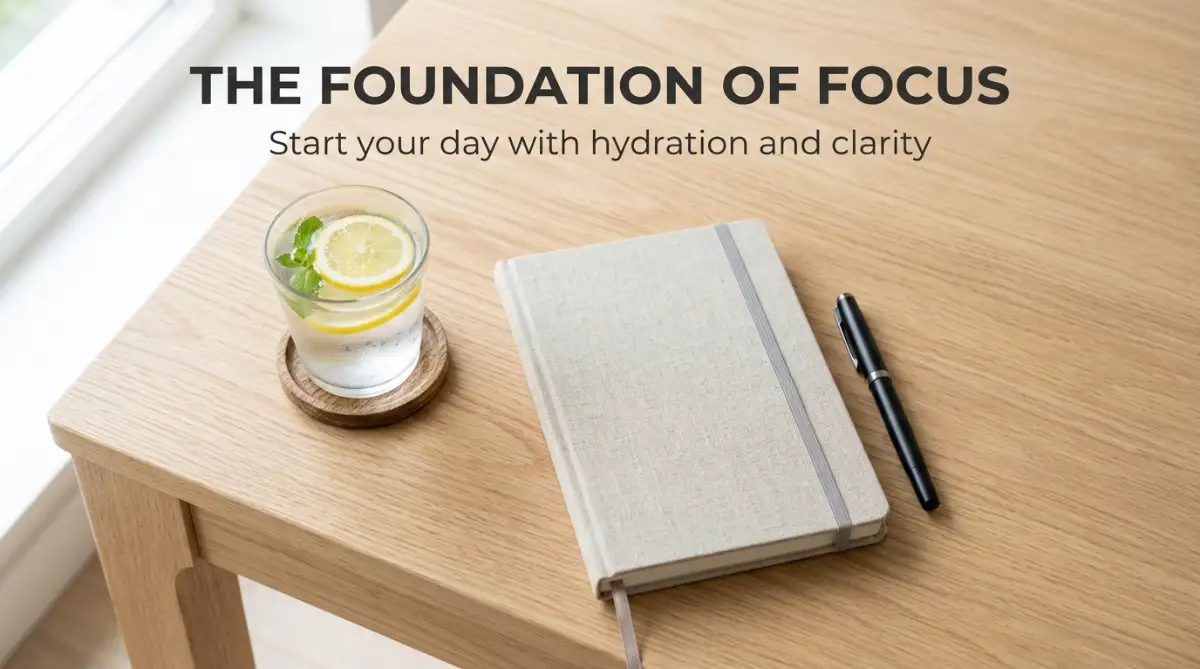
Think about your body after 7 or 8 hours of sleep. You haven't had water, so your brain and your muscles are essentially running on empty. Most people reach for coffee immediately. While caffeine is a tool, it is not a fuel source. If you don't hydrate first, you are essentially trying to drive a car with no oil, just trying to push the engine harder with caffeine.
Drink a large glass of water as soon as you wake up. It wakes up your digestive system and helps clear the grogginess. I started doing this, and within a week, I noticed my afternoon slump wasn't nearly as bad. It sounds basic, but most people skip this simple habit.
The Reality Check: My Personal Pro Tip
I used to force myself to run five miles every morning, even when I slept terribly the night before. I thought that discipline was the key. One morning, I realized I was just making myself sick. My Pro Tip is this: listen to your body. If you are exhausted, swap the hard workout for five minutes of gentle stretching. I realized that keeping the habit alive—even in a modified, gentle way—was better than quitting entirely because I couldn't handle the intensity. Consistency beats intensity every single time.
Step 3: Use Light as Your Anchor
Your body has an internal clock, and it loves light. Getting some natural sunlight in your eyes within the first hour of waking is one of the most powerful ways to signal to your brain that the day has started. This triggers a healthy rise in cortisol—which is good in the morning—and sets a timer for melatonin release at night.
You don't need to go for a run. Just standing on your balcony, opening the curtains, or having your coffee near a window works. It helps regulate your mood and boosts your alertness in a way that feels natural, not forced.
Ready to dive deeper into how small shifts can change your entire daily output? Watch this video to see how to optimize your morning environment.
Watch this quick guide to see how small environmental changes in your home can massively impact your morning energy levels and help you avoid burnout.
Step 4: The Power of Single-Tasking
Most of us try to multi-task the second we get up. We check the weather, read the news, and mentally prep for our meetings all at once. This creates "attention residue." When you switch tasks rapidly, you lose energy.
Instead, pick one anchor task. Maybe it’s making your bed, or maybe it’s spending five minutes in silence. When you do one thing well, you feel a sense of accomplishment. That small "win" creates momentum. It tells your brain, "I am capable, and I am starting this day on my own terms."
Adapting to Your Own Rhythm
Are you a night owl? Maybe waking up at 5:00 AM isn't for you. You don't need to fight your biology. If your peak energy hours are later in the day, design your routine to support that. A routine that forces you to be something you aren't will never be sustainable.
The goal is to feel steady throughout the day, not just hyper-productive for two hours. Pay attention to how you feel at 2:00 PM. If you are consistently crashing, look at your morning. Did you eat a sugary breakfast? Did you skip sunlight? Adjust one variable at a time.
What to Do When Life Happens
There will be mornings when everything goes wrong. The kids are crying, the car won't start, or you slept through your alarm. Do you throw the whole day away? Absolutely not.
When the ideal routine fails, have a "Minimum Viable Routine." For me, that is just drinking a glass of water and doing three deep breaths. That’s it. It takes one minute. It keeps the habit chain unbroken, and it stops the feeling of failure. Never underestimate the power of showing up for yourself, even for just sixty seconds.
The Role of Mindset in Your Routine
Your morning isn't just a list of chores. It is a transition period. You are moving from the state of rest into the state of action. If you view this time as a burden, you will feel tired. If you view it as a gift—a little bit of time where the world isn't asking anything of you—your perspective changes.
This shift in mindset is where sustainable energy actually comes from. It isn't just about habits. It is about how you talk to yourself before the day has even begun. Be kind to yourself. You are building a lifestyle, not winning a race.
Why Complexity Is the Enemy
We often think that if a system is complicated, it must be better. We buy the expensive supplements, the fancy journals, and the expensive equipment. Then, when we get busy, we stop doing everything because we don't have time for the complexity.
Keep it simple. If you can do it on your busiest day, it’s a good habit. If you can only do it on your days off, it’s a hobby. Focus on things that take five minutes or less. The goal is to build a rhythm that flows through your entire life, not just the mornings when you have free time.
Final Thoughts on Sustainability
Building energy is a long-term game. It is about noticing patterns and making small tweaks. Maybe this week, you focus on the phone boundary. Next week, you focus on the hydration. Don't try to change everything at once.
You have the power to define what a good morning looks like. It isn't defined by influencers or productivity gurus. It is defined by you, your needs, and your life. Listen to your body, keep your habits small, and watch how your energy levels begin to stabilize throughout the day. You don't need more time; you just need a better way to use the time you already have. Start tomorrow with one small change, and see where it takes you.
Mastering Your Internal Energy: Advanced Secrets for Consistency
You have already taken the first step by simplifying your morning. Now, let’s talk about how to keep that momentum going when life gets unpredictable. Most people think energy is just about sleep and diet, but there is a hidden layer of biological rhythm that makes a massive difference.
Syncing Your Tasks with Your Biological Clock
We all have a natural window of time where our brain performs at its absolute peak. For some, this is right after sunrise. For others, it might be later in the morning. If you spend your peak hours answering low-priority emails, you are wasting your best fuel.
Instead, track your energy for three days. Note down when you feel the most alert and when you feel the most tired. Once you identify your "power hours," protect them fiercely. Use that time for the deep, complex work that requires your full attention.
When you align your hardest tasks with your natural rhythm, you avoid the mental exhaustion that comes from pushing against the current. If you find yourself struggling to retain information or focus on complex topics, it might not be a lack of intelligence; it might be poor timing. You can learn more about how why traditional study habits often fail to retain complex information and how to fix that by optimizing when you actually do the heavy lifting.
The "Energy Budget" Strategy
Think of your daily energy like a bank account. You start the day with a certain balance. Every stressful meeting, every difficult conversation, and every decision you make withdraws from that account. If you never make a deposit, you will eventually go bankrupt.
Most people don't realize that why mental health check-ups are just as essential as physical screenings is a major factor in this account. Emotional stress is the fastest way to drain your battery. If you are constantly carrying unresolved tension, you have less energy for your actual work.
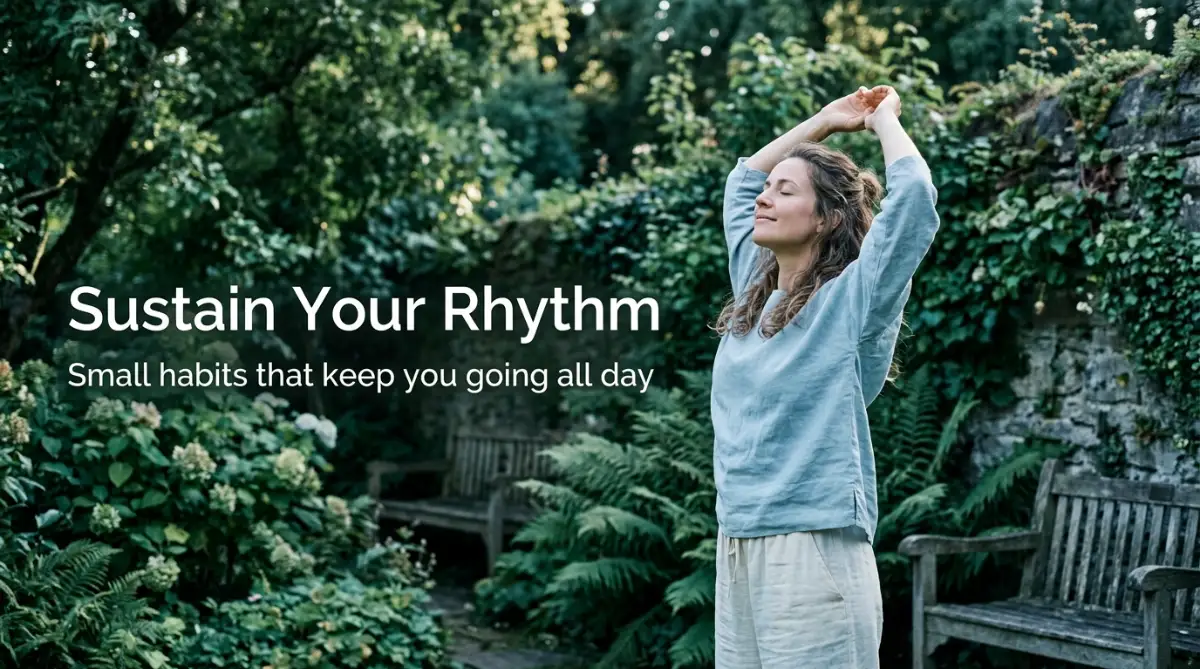
To make deposits, you need "micro-recovery" moments. These are not naps or vacations. They are sixty-second pauses where you do nothing. Step away from the screen, look at something far away, or practice slow breathing. These small pauses reset your nervous system and prevent the cumulative buildup of stress that leaves you wiped out by the evening.
Mastering the Environment for Lasting Focus
Your environment dictates your output. If you are trying to do deep work while your phone is buzzing and notifications are popping up on your screen, you are constantly breaking your flow. Research from the National Institutes of Health suggests that chronic, low-level distractions can significantly impact cognitive performance over time.
You need to create a barrier between your focus and the noise. Use tools to silence your digital space during your power hours. If you feel that your work is stalled or you aren't seeing the results you want, it might not be a lack of effort. Sometimes, the issue is that your setup is draining you faster than the work itself. Much like the passive income fallacy, why your online revenue is stalled, productivity often fails not because of the content of the work, but because of the faulty system we operate within.
Simplify Your Tools, Maximize Your Output
We often think that adding more apps, more planners, and more software will solve our energy issues. This is a trap. Complexity requires energy to manage. If you spend more time setting up your tools than actually doing the work, you are losing.
Focus on mastering the basics. For instance, how to bridge the professional skill gap by mastering basic automation tools can save you hours of repetitive effort. When you automate the small, boring parts of your day, you save your energy for the creative and important decisions.
Being an expert isn't about being busy; it is about being efficient. Find one tool that solves a repetitive problem and master it. Then, stop looking for the next "shiny object." Your goal is to simplify, not to clutter.
Pitfalls That Keep You in the Cycle of Exhaustion
Even with the best intentions, it is very easy to fall into traps that drain your energy. These habits seem harmless on the surface, but they act like slow leaks in a tire. If you don't patch them, you will never be able to maintain speed.
The Weekend Sabotage
Many of us live for the weekend to "catch up" on sleep. We stay up late and sleep in until noon on Saturday and Sunday. While it feels good in the moment, this is called "social jetlag."
You are essentially putting your body through a mini-time-zone shift every single week. When Monday rolls around, your internal clock is misaligned, and you start the week in a deficit. To avoid this, try to keep your wake-up time within an hour of your weekday schedule, even on your days off.
Emotional Eating and Blood Sugar Rollercoasters
We often reach for sugar or caffeine when we feel a slump. This gives us a spike in energy, followed by an even harder crash. According to the Sleep Foundation, what you eat directly impacts how restorative your sleep quality is.
If you rely on quick sugar fixes to get through the afternoon, you are trapping yourself in a cycle of instability. Try to pair your carbs with protein or healthy fats. This slows down the absorption of sugar and keeps your energy levels on a smooth line rather than a jagged mountain range.
The "All-or-Nothing" Mentality
This is perhaps the most dangerous mistake of all. You miss one workout, or you eat one "bad" meal, and you decide that the whole day is ruined. So, you eat poorly for the rest of the day and skip everything else.
This mindset is toxic. Energy management is about recovery, not perfection. If you slip up, just get back on track with the very next choice. You don't need to be perfect to be energetic; you just need to be consistent.
Ignoring Your Stress Response
We live in a world where stress is often worn as a badge of honor. But your body does not know the difference between a deadline and a true threat. It reacts the same way.
When you ignore the physical signs of stress—like a tight jaw, shallow breathing, or tension in your shoulders—you are inviting burnout. You must learn to how to stay calm and invest wisely during market volatility by applying that same logic to your personal stress. If you stay calm during the ups and downs of your daily life, you save the energy that would otherwise be spent on panic.
Falling for the "More is Better" Myth
We believe that if we do more, we will get more. We push ourselves to the limit because we think that is what "success" looks like. In reality, sustained high performance requires intentional rest.
If you are always running at 100% capacity, you have no buffer for emergencies. You are one bad night of sleep away from a total collapse. Learn to operate at 80% capacity most of the time. This gives you the space to handle unexpected challenges without wiping yourself out.
Your Path Forward: Building a Routine That Lasts
You now have a toolkit to transform how you start and sustain your day. It is not about turning into a different person overnight. It is about making small, deliberate choices that support your energy.
Daily Habits for Long-Term Energy
Start by focusing on one thing. If you try to fix your sleep, your diet, your movement, and your mindset all in one week, you will likely burn out. Pick one area and work on it until it feels natural.
Remember that energy is highly personal. What works for a popular influencer might not work for you. Listen to your own body. If a habit makes you feel worse, drop it.
Defining Your Own Success
True success isn't about how many hours you work or how early you wake up. It is about how you feel at the end of the day. Do you have energy left for the people you love? Can you enjoy your evening?
That is the real metric of a successful routine. If you are reaching the end of the day with enough gas in the tank to be present, you are doing it right. Keep your routine flexible, keep it simple, and keep it kind to yourself.
A Note from My Experience
When I started this journey, I failed a lot. I tried to change everything, and I quit after two weeks. My biggest realization was that I didn't need a total makeover; I just needed to respect my limits. I started walking for ten minutes a day instead of trying to run five miles, and that was the turning point. I promise you, if you start with just one small, easy change today, you will be surprised by how much better you feel in just a few weeks. Trust the process, be patient with your progress, and enjoy the feeling of finally having control over your energy again.
Common Questions About Sustaining Daily Energy
Why do I feel tired even after getting 8 hours of sleep?
Quality matters more than quantity. You might be getting enough sleep, but if your bedroom environment is too warm, too bright, or if you are checking your phone right before bed, your sleep isn't restorative. Focus on creating a dark, cool, and quiet sleep environment to improve your rest quality.
Is waking up at 5:00 AM necessary for success?
Not at all. Your productivity is dictated by your own internal clock, not by a specific time on the clock. If you are naturally more productive at night, then build your routine around that. Working with your body’s natural timing is much more effective than forcing yourself into a schedule that doesn't fit your biology.
What should I do when I have a chaotic morning?
Don't worry about the perfect routine when life happens. Just focus on your "Minimum Viable Routine," like drinking water or taking five deep breaths. Maintaining the habit chain is more important than the duration of the habit itself.
Can I really change my energy levels just by changing my morning?
Yes, because your morning sets the tone for your nervous system. By controlling the first hour of your day, you prevent your brain from going into a reactive, stress-filled state. This creates a foundation of calm that allows you to handle whatever the rest of the day throws at you without burning out.
Disclaimer: This content is provided for informational purposes only and does not constitute medical, financial, or professional advice. Always consult with a qualified professional before making significant changes to your lifestyle, diet, or exercise routines. While we strive to provide accurate and helpful information, individual results may vary.