The Moment the Door Closes: My Experience with the New Reality
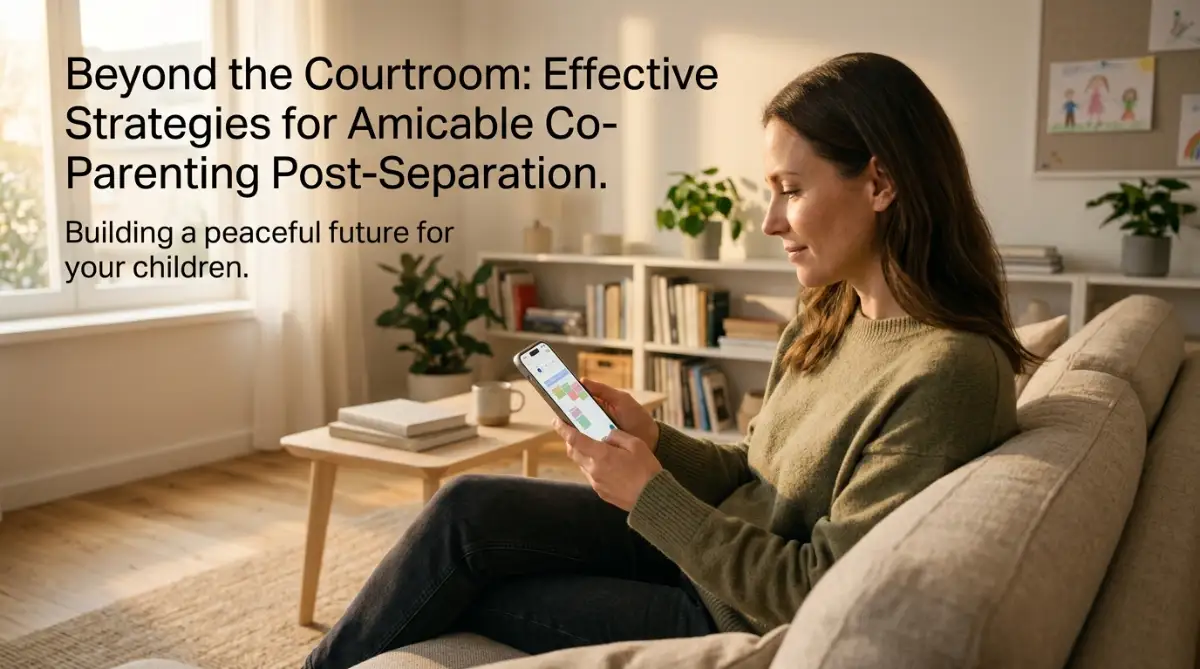
I still remember the feeling of walking into my house after that first week of living apart. The house felt too big, the silence was too loud, and the calendar on the wall looked like a puzzle I didn't know how to solve. I had spent so much energy focusing on the legal process of the separation that I forgot about the life that had to come after it. I realized then that the paperwork was just the beginning.
The real test wasn't the lawyers or the property division. It was that moment when I had to figure out how to talk to my ex-partner about who was picking up the kids from soccer practice. Every text felt loaded with history. Every phone call felt like a negotiation I was destined to lose. I felt like I was walking on eggshells in my own life.
If you are reading this, you probably know that sinking feeling in your stomach. It is the feeling of trying to keep your child’s world spinning while your own world has been turned upside down. You are tired. You are carrying a mental load that feels heavier every single day. You want peace, but you aren't sure how to build it when the foundation of your family has shifted so dramatically.
The struggle is not just about the schedule. It is about the emotional residue. When you have a disagreement, it isn't just about the current issue; it is about every argument you have had for the last five years. It makes a simple question about a doctor's appointment feel like a high-stakes debate. This cycle is exhausting. It eats away at your energy and leaves you with very little patience for the things that matter—like being the parent your child needs.
You are likely feeling like you are trapped in a loop. You want to move forward, but you are constantly pulled back by the friction of your old relationship. This is a common place to be. Many people feel exactly the same way. But here is the truth: you can change the dynamic. You can shift from a battle-focused mindset to a partnership-focused one. It starts by acknowledging that your role has changed, and that is okay.
Building a New Foundation: A Practical Guide to Partnership
We often treat separation like a game where someone has to win. But in this new chapter, if one person wins and the other loses, your child is the one who pays the price. You have to change the lens through which you view your ex-partner. They are no longer your spouse; they are your business partner in the most important project of your life: raising your child.
The Business Partnership Model for Parents
Try looking at your relationship with your ex through the lens of a professional business partnership. In a business, you don't have to like your partner personally to make the company successful. You just need to agree on the goals and follow the plan. Your "company" is your child's well-being.
When you strip away the personal history and focus on the child, the emotions start to settle. Ask yourself: "Does this decision help my child?" If the answer is yes, the personal feelings about who said what last week shouldn't matter. It is a shift in focus that requires practice, but it works wonders for lowering the tension.

Creating a Communication Protocol That Works
Communication breakdown is the biggest enemy of co-parenting. When things are heated, phone calls are often the worst way to talk. They invite interruption, tone issues, and snap reactions. Move your communication to a written platform.
Use a dedicated email address or a parenting app that tracks messages. This does two things. First, it forces you to slow down. You can type out your frustrations, delete them, and write a calm, factual response. Second, it keeps a record that prevents "he said, she said" arguments later.
Handling Drop-offs and Transitions
The transition time is the most stressful part of the week. It is when the child moves from one environment to another, and it’s when parents often feel the most defensive. Keep these transitions short, sweet, and focused on the child.
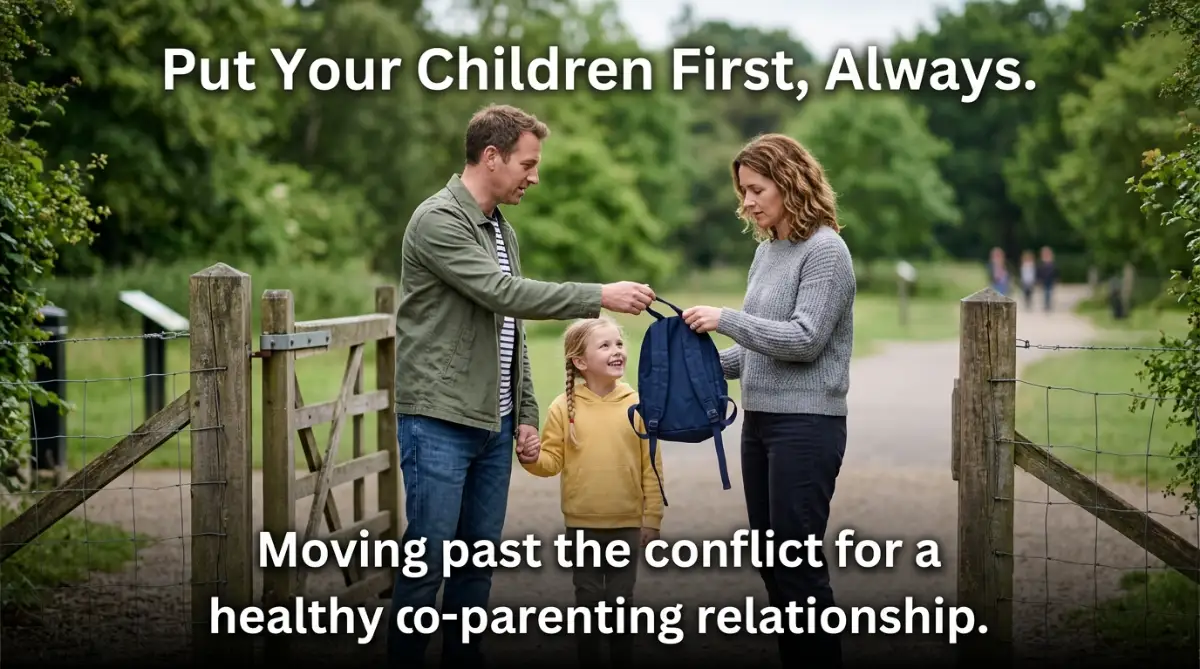
Don't use the drop-off as a time to discuss finances or schedule changes. Save those for the written platform. Smile, hand over the backpack, give your child a hug, and say goodbye. The goal is to make the transition invisible to the child. If the child doesn't see tension between you two, they won't feel the need to pick sides.
The Power of the Parenting Plan
A parenting plan shouldn't just be a legal document sitting in a drawer. It should be your roadmap. If you don't have a plan that covers everything from holidays to school events, make one. A detailed plan removes the guesswork.
When things are clearly defined, there is less room for interpretation or argument. If you know exactly who has the child on which Tuesday, you don't have to fight about it. You can focus on your time with your child instead of the administration of the schedule.
Pro Tip: My Own Experience with the "Cooling-Off" Rule
Early on, I would get a text that made me angry and I would reply instantly. That was my biggest mistake. I learned that every reply I sent in the heat of the moment just fueled the fire. The Pro Tip: I started a rule: I never reply to a non-urgent parenting text for at least one hour. This gives me space to breathe and write a response that is helpful instead of reactive. It changed everything.
Engaging Your Support System
You cannot do this alone. If you try to hold all this stress inside, you will eventually burn out. Find a therapist, a support group, or even a trusted friend who can listen without taking sides. You need a space where you can vent so you can show up to the parenting relationship with a clear head.
Are you wondering how to organize your thoughts and handle difficult conversations with your co-parent? This video explains a simple framework for keeping your discussions productive and calm.
Setting Boundaries for Your Own Peace
You are allowed to have a life outside of your co-parenting relationship. You don't have to be available 24/7 for every random question that isn't urgent. Set boundaries about when you communicate.
Let your ex know that you are generally available for parenting chats during certain hours. If there is an emergency, they can call. If it is just a schedule change for next month, it can wait until the morning. Boundaries aren't about punishment; they are about maintaining your own mental health so you can be a better parent when your child is with you.
Focusing on Your Child’s Perspective
We spend so much time worrying about our own feelings that we sometimes forget to ask: "What does my child see?" When you are struggling to be amicable, imagine you are a camera on the wall watching the scene. What do you see? Do you see a parent who is calm and loving, or a parent who is stressed and angry?
Acting with your child's perspective in mind can be a powerful motivator. It forces you to step up your game. It helps you prioritize the long-term relationship with your child over the short-term need to "win" an argument.
The Myth of the Perfect Co-Parent
Stop chasing perfection. There is no such thing as a perfect co-parent. There will be days when you get frustrated. There will be days when things don't go as planned. That doesn't mean you have failed.
It just means you are human. What matters is not that you never make a mistake, but how you handle it. If you lose your temper, apologize. Take responsibility. Show your child that even adults have to work on their relationships. This teaches them more about conflict resolution than a perfect, fake interaction ever could.
Moving Forward, One Step at a Time
This isn't a race to the finish line. It is a slow, steady march toward a new normal. Some weeks will feel easy, and others will feel like you are back at square one. Keep going. You are building something new.
You are creating a safe, stable environment for your child despite the separation. That is a massive achievement. Be proud of the small wins. Be patient with the hard days. You are doing the hard work now to protect your child's future, and that is the most important job you will ever have.
Why Consistency is Your Secret Weapon
Kids thrive on consistency. If you and your co-parent can agree on basic rules—like bedtimes, screen time limits, and homework expectations—it makes the child's transition so much easier. When the rules change entirely between houses, the child feels like they are living in two different worlds.
It doesn't have to be exact, but the more alignment you have, the less friction there will be for your child. It shows them that even though you are not together, you are still a team when it comes to their life. This is the ultimate goal.
Staying Objective During Disagreements
When you have a disagreement, take a breath and look at the facts. Strip away the story you are telling yourself. Instead of thinking, "They are trying to sabotage me," try to think, "Maybe there was a misunderstanding."
Assuming positive intent can change the trajectory of an entire conversation. It’s hard to do when you have history, but it’s a muscle you can build. Every time you choose to interpret an action neutrally, you make it easier to stay amicable.
Protecting Your Child from the Conflict
It sounds simple, but it is the hardest thing to do: never badmouth your ex-parent in front of your child. No matter how you feel about them, they are still your child's parent. When you attack the other parent, you are inadvertently attacking a part of your child.
Keep the adult problems in the adult world. If you need to vent, call a friend or write it in a journal. Do not make your child the keeper of your secrets or the witness to your anger. Their job is to be a kid, not to be a mediator.
The Long-Term Vision
Think about ten years from now. Do you want your child to look back at their childhood and remember the fighting? Or do you want them to remember that despite the divorce, their parents were always there for them?
You have the power to decide that memory today. Every choice you make to be calm, to be patient, and to be amicable is a deposit into that bank of positive memories. It is hard, but it is worth it. You are writing your family's new story, and you get to decide how it ends.
Keeping Your Personal Life Separate
It is tempting to want to know what your ex-parent is doing, who they are dating, or how they are spending their time. Don't go there. It is a trap. The more you focus on their personal life, the less you focus on your own growth.
Protect your peace by focusing on your own path. Your job is to be a great parent, not a private investigator. Let go of the need to control their life. It will free up so much mental space for you to build a happy, independent future.
You have all the tools you need. It won't happen overnight, but if you stay committed to the goal of being a calm, effective co-parent, you will get there. Remember, your child sees your effort. They see you trying. They see you growing. And that, more than anything else, is what they will remember.
Moving Beyond Basics: Advanced Tactics for a Harmonious Dynamic
Once you move past the initial shock of separation, you enter a phase where you need more than just a schedule. You need strategies that keep the peace when high-stress moments arise. The most effective approach for high-conflict situations is something called "Parallel Parenting."
Think of this as a way to parent while limiting direct contact. You are both still responsible for the child, but you manage your responsibilities separately. You don't need to attend every school event together if it only leads to a fight. You have the child, you handle the needs. Your ex-partner has the child, they handle the needs. This reduces the friction that occurs during constant coordination.
Another pro-level secret is the "Grey Rock" method. If you are dealing with an ex-partner who thrives on drama or conflict, you have to change how you react. Be as boring as a grey rock. When they try to start a fight, don't engage. Stick to the facts, be polite, and keep your responses short. When you stop providing the reaction they are looking for, the conflict often dies out.
You should also look into how you manage transitions, as explained in resources like the American Psychological Association’s guide on parenting through divorce. These professional resources offer a neutral perspective that can help you understand the long-term impact of your current actions.
If you are currently feeling lost in the legal side of this process, you might find breaking down legal separation and divorce what you must know very helpful. It provides a clearer view of how to keep your life organized without adding unnecessary stress to your parenting duties.
To keep your mental health in check throughout this transition, remember that you are not just a parent; you are an individual with needs. If you find your anxiety rising, realize that why mental health check-ups are just as essential as physical screenings applies perfectly to you. Being healthy allows you to be the calm center your child needs.
Watching Out for the Hidden Landmines
Even if you have the best parenting plan, there are subtle traps that can ruin your progress. These aren't intentional acts of malice, but rather habits that have built up over years of being together. Recognizing them is the first step toward stopping them.
The "Messenger" Trap
Never, ever use your child as a go-between. Do not ask your child, "What did your mom/dad say about the money?" or "Tell your parent that I am angry about the schedule." This forces the child to carry adult burdens that they are not equipped to handle.
It makes the child feel like a spy or a negotiator in a war they didn't start. If you have something to say, send a professional email. If the child tells you something your ex said, acknowledge the child’s feelings without attacking the other parent. Protect their childhood at all costs.
The "Emotional Dumping" Mistake
It is tempting to vent to your child about your ex-partner. You might think, "They are old enough to understand." They are not. Even if they are teenagers, your child needs to see their other parent as a good, capable person because that parent is part of them.
When you tear down the other parent, you are inadvertently making the child feel less worthy. If you need to vent, find a friend or a therapist who is outside the family circle. Save your child from the details of the conflict. Their perception of you and the other parent is the most valuable thing they own.
Ignoring Your Own Boundaries
People often think being "amicable" means being a doormat. It does not. If your ex-partner is calling you at late hours to discuss non-urgent issues, you have to say something. You can politely say, "I am not able to discuss this right now, let’s pick this up via email tomorrow morning."
If you don't set boundaries, resentment builds. Resentment is the enemy of an amicable relationship. Protect your time and your peace of mind so that when you are interacting with your co-parent, you are doing so from a place of strength, not exhaustion.
Treating Parenting Time Like a Business Deal
Sometimes parents treat their time with their child like an asset to be protected. If the other parent asks for a trade of days, the knee-jerk reaction is to say no because "it’s my time." This creates a transactional dynamic that kills trust.
Be flexible when you can. If they have a work emergency and need to switch a day, help them out. This builds up a "bank" of goodwill. Then, when you have an emergency, they will be much more likely to help you. It turns co-parenting into a mutual support system rather than a competition for time.
A Path Toward a Stable Future
Building a co-parenting relationship after a separation is an act of courage. It requires you to set aside your ego and focus entirely on the needs of your child. It is not an easy road, but it is one that leads to a much better outcome for everyone involved.
Start by being the leader in your own behavior. You cannot control what your ex-partner does, but you can control how you respond. When you choose calmness over conflict, you are showing your child how to handle the hardest parts of life.
I have seen parents transform their relationships from toxic battlegrounds to peaceful partnerships. It didn't happen overnight, and it wasn't because the ex-partner changed their personality. It happened because the parent reading this guide decided that their child’s peace was more important than winning an argument.
Your child will remember how you handled this season of life. They will remember that you chose to keep the peace. They will remember that you stayed focused on their happiness. You are doing an incredible job, and you have the strength to see this through to a beautiful future.
- Audit your routine: Look at your transition times and see if they can be made simpler.
- Update your plan: If something isn't working, talk about it in writing and propose a better way.
- Check your tone: Review your last few messages to your co-parent—are they factual, or are they emotional?
- Prioritize self-care: You cannot pour from an empty cup; ensure you are sleeping and eating well.
I know the weight of the stress you are currently carrying. It feels overwhelming, but you are not alone. I have been where you are, and I can tell you that things do get better when you stop reacting and start planning. Keep your head up, stay focused on the long game, and remember that every calm interaction is a gift to your child’s emotional development. Take that first step toward a more structured, peaceful path today.
Common Questions About Co-Parenting
How do I deal with a co-parent who refuses to communicate?
Focus on the essentials. Use a parenting app or email and keep your messages strictly about the child and the schedule. If they don't reply, keep a record of your attempts so you can show a history of your efforts to keep communication open.
What should I do if my child tells me the other parent is bad-mouthing me?
Stay neutral. Say something like, "I am sorry you heard that," or "I am sorry that you are feeling that way." Do not defend yourself or attack the other parent, as that only puts your child in the middle.
Is it possible to have a healthy relationship with an ex?
Yes, it is possible to have a professional and respectful relationship. It requires setting clear boundaries and letting go of the expectation that you will ever be "friends" in the old sense. Aim for a partnership based on respect.
How do I handle different parenting styles in different houses?
Understand that children are adaptable. Unless there is a safety issue, you don't need to control how things happen at the other house. Focus on what you can control in your own home and provide a loving environment there.
Legal Disclaimer
This blog post is for informational purposes only and does not constitute legal, financial, or medical advice. Every family situation is unique, and family law varies significantly by jurisdiction. You should consult with a qualified attorney or professional in your area to discuss the specifics of your family’s needs before taking action. The information provided here is not a substitute for professional legal counsel.