The Silence at the Dinner Table: My Struggle With the Choice
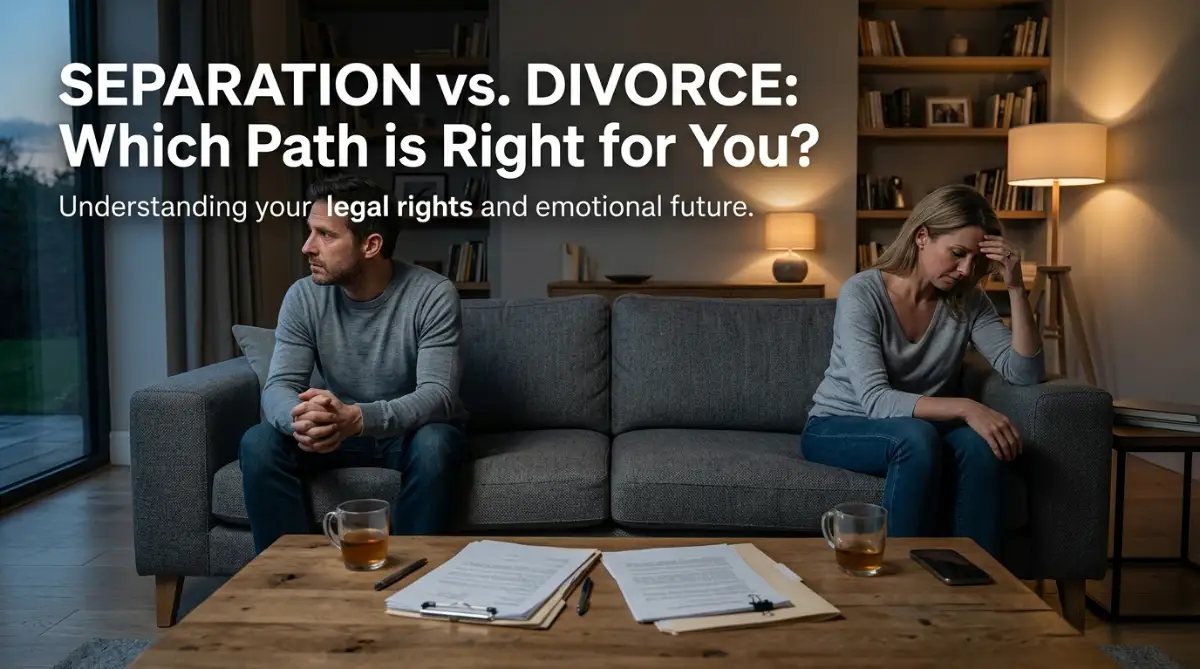
I remember sitting at my kitchen table, staring at a stack of papers that felt like a ton of bricks. The house was quiet, but the noise in my head was deafening. My partner was in the other room, and the air between us felt heavy with unspoken questions. We were at a point where staying together felt impossible, but the thought of ending everything for good terrified me. I felt stuck. I didn't know if we needed a break to breathe or if we needed to sign the papers to close this chapter forever.
My heart was racing as I searched for answers online. I found so many confusing terms that made me feel even more lost. Every article seemed to be written by a robot using complicated jargon that I couldn't understand. I just wanted to know: what is the real difference? Why does one feel like a pause button and the other like a full stop? I felt alone, confused, and desperate for a simple, honest explanation.
Most people facing this situation go through the same emotional rollercoaster. You wake up feeling hopeful, only to have a small argument ruin your entire day. You start doubting your own decisions. Your work suffers, your sleep disappears, and you find yourself zoning out in the middle of conversations. It’s not just about the paperwork; it’s about the crushing weight of uncertainty.
You might be worrying about finances, the house, or even what your friends will think. That constant "what if" loop is exhausting. It takes a toll on your mental health, making it hard to find peace in your own home. You aren't alone in this struggle. Many others have stood exactly where you are, feeling the exact same mix of fear and confusion.
The reality is that this phase of your life is messy, but it doesn't have to be a mystery. You deserve to understand your options without feeling overwhelmed by complex legal terms. Today, we are going to strip away the confusion. We are going to look at the facts so you can make a choice that brings you some much-needed clarity.
The Pause Button: What Legal Separation Really Means
Think of legal separation as hitting the "pause" button on your marriage. You are still married in the eyes of the law, but you have essentially created a new set of rules for living apart. It is a formal agreement that outlines how you will handle your life while you aren't living together. You might wonder, why would anyone choose this over a clean break?
For many, this is a time to cool off. It is a way to see if you can manage life without each other before you sign the final divorce papers. It is not always about ending the relationship; sometimes, it is about saving yourself from the constant tension. When you are legally separated, you are often still responsible for each other in specific ways.
The Financial Reality of Separation
One of the biggest questions is about money. In a legal separation, your financial situation does not immediately reset to zero. You might still be responsible for joint debts, even if you are living in different homes. This is why you must have a clear, written agreement.
You and your partner must decide who pays the mortgage, the utility bills, and the credit card debts. If you don't put this in writing, you could end up in a difficult spot. Imagine paying for a house you no longer live in, while your partner refuses to pay their share of the utility bill. That is a nightmare scenario.
Always make sure your separation agreement covers these points:
- Who pays which bills: Be specific.
- Asset management: Who gets to stay in the house?
- Spousal support: Will one person help the other financially?
Can You Remarry? (The Biggest Myth)
Here is a simple truth that often gets lost in the confusion. You cannot remarry while you are legally separated. Because you are still technically married, getting married to someone else would be illegal. This is a common point of confusion that leads to serious trouble for some people.
If your goal is to start a completely new life with a new partner, separation is not the final destination. It is a holding pattern. You are still bound by the same laws that apply to a married couple. If you want the freedom to start over legally, you eventually have to look toward divorce.
The Full Stop: Decoding Divorce
Divorce is the "stop" button. It is the permanent end of your legal marriage contract. Once the divorce is final, you are no longer legally tied to your ex-partner. You are free to move on, to marry someone else, and to manage your finances as a single individual.
This path feels final because it is. There is no going back once the judge signs that decree. Many people find this intimidating, but for others, it is the only way to find true peace. When you choose divorce, you are deciding that the chapter is closed.
Dividing Your Life for Good
Divorce requires a more permanent split of your assets. Unlike separation, where you might revisit your agreements later, divorce focuses on "equitable distribution" or "community property," depending on where you live. You have to decide who gets the furniture, the cars, the savings, and even the pets.
It can be an emotional battle. You aren't just dividing stuff; you are dividing the life you built together. This is why many people seek mediation or lawyers to keep things from getting too toxic. You want to make sure your future is protected, not just destroyed by a long, drawn-out fight.
Pro Tip: I learned this the hard way during my own life experiences. When you are going through this, keep a journal. Write down every major decision and every conversation. When emotions run high, your memory can be foggy. Having a physical record of what you agreed to helps you stay calm and prevents unnecessary arguments later. It keeps you grounded in the facts.
Why Some Choose Divorce Over Separation
Some people skip the separation phase entirely and go straight to divorce. Why? Because they know the marriage is truly over. They don't want to live in limbo. They want the closure that comes with a final judgment.
Divorce also offers a clean break for your finances. Once everything is divided, you don't have to worry about your ex-partner’s new debts or financial mistakes. You can start fresh. This sense of independence is why many people find relief after the process is finally over.
Understanding the Emotional Weight
It is important to remember that legal status doesn't change your feelings. You might be legally divorced, but still feel hurt. You might be legally separated, but still feel deeply connected. Your legal status and your emotional status are two different things.
Don't rush the legal process just because you feel overwhelmed by your emotions. Take your time. Talk to a professional if you need to. Your future is worth the effort of making the right decision for your specific circumstances.
Is This the Right Time for You?
You have to look at your own life. Are you ready for a total, permanent split? Or do you need more time to think? This isn't a race. There is no trophy for finishing your divorce the fastest.
If you are struggling with children, finances, or just the idea of being alone, take a step back. Sometimes, a temporary separation is the best way to get the clarity you need. Other times, you know in your gut that it is time to move on. Trust your instincts.
Video Breakdown: Taking the Next Steps With Confidence
The video above provides a clear breakdown of the practical steps you need to take when considering these legal paths. Watch this carefully to understand how your local laws might affect your specific situation, and then continue reading below to understand how to handle the emotional transition.
Protecting Your Future: A Practical Roadmap
Now that you understand the basic differences, let's look at how to protect yourself. Whether you choose separation or divorce, your goal should always be to secure your future. You need to be smart, calm, and prepared for whatever comes next.
Start with Documentation
Regardless of which path you pick, start gathering your documents now. You need to know exactly what you own and what you owe. Make copies of:
- Bank statements: Keep track of where your money goes.
- Tax returns: These show your financial history.
- Property deeds: Know what is in your name.
- Debt records: Don't ignore what you owe.
Having this information ready will make the process much smoother. You won't have to scramble for papers when you are already feeling stressed. It puts you in control.
Manage Your Healthcare and Benefits
This is a point many people forget. If you are on your partner's health insurance, you need to know what happens if you separate or divorce. In many cases, you might lose your coverage.
Check with your employer or a insurance provider. You might need to find your own plan. Do not wait until you are sick or need a prescription to find out you are no longer covered. This is a practical, everyday step that keeps you safe.
Focus on Your Well-being
Your mental health is just as important as your bank account. You cannot make good decisions if you are constantly angry, sad, or exhausted. Find a support system. Talk to a friend, join a support group, or just take time for yourself.
It is okay to be not okay. You are going through a major life change. Give yourself permission to rest. If you need to walk away from a heated conversation, do it. Protect your peace.
The Power of Neutrality
When talking to your partner, try to remain as neutral as possible. It is hard, but it is necessary. If you are constantly arguing, you will never get to a fair agreement. Use "I" statements. Instead of saying, "You never pay the bills," try, "I am worried about how we are going to pay the bills this month."
This small change in language can de-escalate a fight. It keeps the focus on the problem, not on the person. It makes it much easier to reach a solution that works for both of you.
Looking Ahead
Your life will go on. You will find your balance again. Whether you are in a period of separation or you have decided to divorce, you are moving toward a new chapter. Use this time to rediscover who you are outside of your marriage.
You have the power to shape your future. By understanding the legal differences and taking practical steps to protect yourself, you are building a foundation for a better tomorrow. You are resilient, and you can get through this, one step at a time.
Strategic Ways to Protect Yourself During This Transition
Moving through this period requires more than just filling out forms. You need a strategy that keeps you balanced while you handle the legal details. If you want to keep your peace of mind and protect your future, you need to think like a professional planner.
One of the best ways to keep your head clear is by focusing on how to stay calm and invest wisely during market volatility. While that advice is usually for money matters, it applies perfectly to your emotional state too. Your emotions are like a volatile market—they go up and down without warning. If you learn to steady yourself, you make better decisions.
Choosing Mediation Over Court Battles
If you can, pick mediation instead of heading straight to court. In court, a judge decides your future. In mediation, you and your partner work with a neutral third party to find a solution that works for you both.
It saves money, it saves time, and most importantly, it saves your sanity. You can check resources from the Association for Conflict Resolution to understand how mediation helps couples settle disputes without a fight. It keeps you in the driver’s seat.
The Power of Financial Transparency
Many people try to hide assets or move money around when things get tough. Please, do not do this. It will only backfire and make you look dishonest in front of a judge.
Transparency is your strongest weapon. If you are open about your finances, you show that you are serious about a fair outcome. It also makes the whole process faster. When both sides are honest, there is less reason for lawyers to argue over the small details.
Building Your Support System
Do not try to do this alone. It is easy to think you can handle the weight of everything by yourself, but that is a dangerous mindset. You need a team. This doesn't mean you need an army of lawyers. It means you need:
- A Therapist: Someone to help you process the anger and sadness so you don't take it out on your lawyer or your ex.
- A Trusted Advisor: A friend or mentor who stays neutral and gives you honest feedback.
- A Financial Planner: Someone who can help you see the long-term impact of your decisions.
Remember that why mental health check-ups are just as essential as physical screenings is a topic you should prioritize. Your health is the only thing you truly own. If you neglect it, no amount of money or legal victory will make you happy.
Managing Expectations for the Long Term
The legal system moves slowly. It is frustrating, but it is the reality. Do not expect to get a quick resolution. If you go into this thinking it will be done in a month, you are setting yourself up for disappointment.
Think of this as a marathon, not a sprint. Pace yourself. If you stay organized and keep your emotions in check, you will get to the finish line in a much better position. You want to walk away from this feeling like you made the best choices possible, not just the fastest ones.
Traps That Can Destroy Your Progress
We all make mistakes, but some mistakes during a separation or divorce are very expensive. I have seen good people lose their footing because they let their emotions take the wheel. You must avoid these common pitfalls to stay on track.
The Social Media Mistake
It is tempting to vent on social media. Maybe you feel the need to tell your side of the story. Stop. Anything you post can and will be used against you in court.
Even if your profile is set to private, screenshots exist. A lawyer for the other side can use your posts to claim that you are unstable, aggressive, or not being truthful. Keep your business private. Your life is not content for your followers.
The "Fine Print" Disaster
You might be in a hurry to get things over with. This leads to signing documents without reading them properly. Just like in why home insurance companies deny claims and how to stay protected, missing the fine print can leave you with no recourse later.
If you don't understand a clause, ask. If your lawyer explains it and you still don't get it, ask again. Do not sign anything that you haven't fully processed. Once it is signed, it is often very hard to change.
Using Children as Messengers
This is the biggest mistake you can make. Never, ever use your kids to pass messages to your partner. It puts them in the middle of a conflict they do not understand.
It scars them. It makes them feel like they have to choose sides. Even if you are angry, protect your children from the details. Keep your adult problems in the adult world. If you need to communicate with your ex, use email or a dedicated app for co-parenting.
Ignoring Your Own Financial Growth
When you are going through a split, you might stop focusing on your own goals. You might stop saving or investing because you are worried about the split. This is a trap. You still have a life to live.
You should still look at how to build wealth through smart dividend investing or other ways to secure your future. Don't let your current situation kill your dreams for the future. You will be on your own one day, and you will want to have built a solid foundation while you were waiting.
Expecting the System to Be Fair
The legal system is built on rules, not necessarily fairness in the way you feel it. Sometimes, the outcome might feel wrong to you, even if it is legally correct. If you expect the system to be a source of moral justice, you will be disappointed.
The system is a tool for dividing assets and responsibilities. Use it as a tool, not as a place to find emotional validation. If you need validation, find it in your therapist, your journal, or your friends.
Your Path Forward: A New Beginning
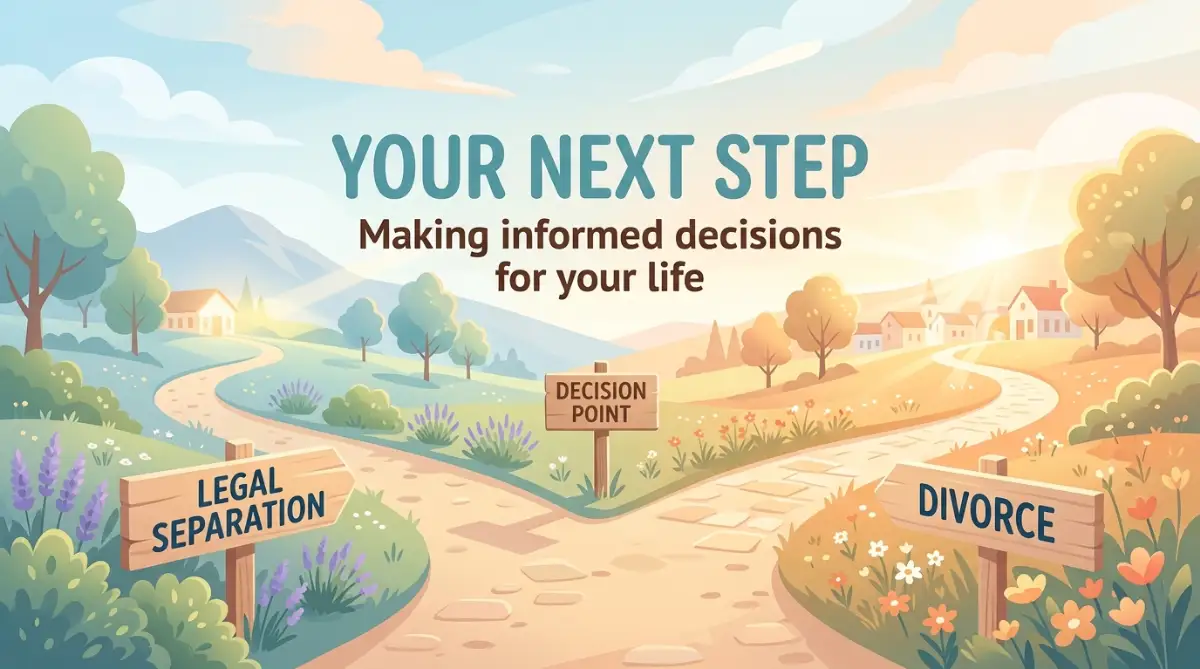
You are standing at a crossroads, but this isn't the end. It is simply a different direction. Whether you have chosen to legally separate or to file for divorce, you are taking charge of your life.
You have learned about the differences, the traps, and the strategies to keep your sanity. Now, it is time to take action. Start by gathering your documents. Take care of your mental health. Stay calm when things get heated.
Why your visa application takes time and a clear guide to the process teaches us that patience is required in legal matters. Treat this process with that same patience. You are building a new life. It deserves your best effort and your full attention.
I have been through hard changes myself. I know the feeling of waking up and wishing the world looked different. But I also know the strength you find when you stop looking back and start focusing on the next right step. You are capable, you are resilient, and you are going to get to a place where you feel at peace again. Just keep going.
Common Questions You Might Have
Can I change my mind after filing for a legal separation?
Yes, you can often reconcile and stop the process, or you can later decide to convert the separation into a divorce. It is not a permanent state unless you make it one, but always check your local rules.
Do I need a lawyer for a simple separation?
While you might not be forced to hire one, it is smart to at least have a legal professional review your agreement. Even a "simple" agreement can have long-term consequences that you might miss on your own, according to guidance from the American Bar Association.
How is child custody handled during separation?
Custody is treated with the same seriousness as it is in a divorce. The court's primary goal is the "best interests of the child," regardless of whether you are separated or divorced.
Will my spouse automatically get half of my assets?
It depends on your local laws and how you acquired your property. Some places follow "community property" rules, while others look at "equitable distribution," which does not always mean an exact 50/50 split.
Can I move out of the house during a separation?
Yes, you can move out, but be careful. Moving out without an agreement can sometimes hurt your claim to the property or influence future custody arrangements. Always talk to a legal professional before you pack your bags.
Disclaimer: This article is for informational purposes only and does not constitute legal advice. Laws regarding marriage, separation, and divorce vary significantly by location and jurisdiction. I strongly encourage you to consult with a qualified family law attorney in your area to discuss the specifics of your situation and to protect your legal rights.