
The Quiet Anxiety of Watching Your Money Stand Still
Does your bank account balance feel like it’s stuck in neutral while the cost of living keeps speeding ahead? You work hard for your paycheck, but seeing it sit idle in a savings account is frustrating. The truth is, there is a better way to make your money move. In this guide, I will show you how to stop being a spectator and start being an owner, using dividend investing to turn your idle cash into a monthly paycheck.
The stress of living paycheck to paycheck is a silent burden that many of us carry without ever speaking about it. You might feel like you are doing everything right—working hard, saving a portion of your income, and avoiding unnecessary debt. Yet, when you look at your bank balance at the end of the year, it feels almost the same. This creates a cycle of frustration and doubt. You start questioning if there is even a point to saving when your money isn't working for you. This mental exhaustion is real, and it affects your confidence in making any financial decisions.
Quick Takeaways: Your Dividend Roadmap
- Prioritize Sustainability: Look for companies that have paid and increased dividends for 10+ years.
- Check the Payout Ratio: Stick to companies paying out 30-60% of their earnings.
- Automate Everything: Use a DRIP (Dividend Reinvestment Plan) to buy more shares automatically.
- Think Long-Term: Don't panic when the market dips; use those moments to buy more shares at a discount."
The Secret Language of Cash Flow: Understanding Dividends
When we talk about dividends, we are talking about one of the most powerful tools in finance. At its simplest level, a dividend is a piece of a company’s profit that is paid out to you, the shareholder. Imagine you own a small lemonade stand. If that stand makes a profit, and you decide to split that profit among the people who helped you build the stand, that is a dividend. When you invest in a company, you are doing the same thing. You are buying a small slice of a business. When that business succeeds, they share the rewards with you.
This is fundamentally different from just hoping a stock price goes up. When you focus on price, you are gambling on what someone else might pay for that stock in the future. That is called speculation. When you focus on dividends, you are focused on the actual cash the company produces. This creates a predictable stream of income that can support you, regardless of what the stock market is doing on a daily basis. It is the closest thing to having a silent employee that works for you twenty-four hours a day.
Why Cash Flow Beats Hype
Most new investors make the mistake of chasing the "next big thing." They look for companies that promise to change the world, even if they have never made a single dollar in profit. This is a dangerous game. In contrast, dividend-paying companies are usually established, profitable, and stable. They have gone through the growing pains. They have a proven business model that works. By investing in these companies, you are aligning yourself with businesses that have stood the test of time.
You are not looking for excitement; you are looking for sustainability. You want companies that increase their payments to shareholders year after year. This creates a snowball effect. In the beginning, your payouts might be small. You might only get a few dollars a month. But if you reinvest that money, you buy more shares. More shares mean more dividends. More dividends mean you buy even more shares. This is the math of wealth building. It is boring, it is slow, and it is incredibly effective.

Building Your Dividend Engine: A Simple Roadmap
You do not need a degree in finance to start this. You just need a clear plan. Let’s break down the practical steps you can take today to build your own income stream.
Step 1: Look for Companies With a Dividend Track Record
The first thing I check is a company’s dividend history. Ideally, I look for businesses that have been paying dividends for at least ten years. A long track record can show that the company has consistently returned money to shareholders and has managed to maintain its payments through different economic conditions.
I also pay close attention to whether the company has increased its dividend over time, rather than simply maintaining the same payment. Consistent increases can help your dividend income grow and potentially keep pace with rising costs over the years.
You can usually find this information on financial websites by searching for the company’s “Dividend History” or “Dividend Growth” information.
Step 2: Check the Payout Ratio
To make this easier, here is a quick guide to reading payout ratios. Think of this as your traffic light system for picking stocks:
This is my favorite metric. The payout ratio is simply the percentage of earnings a company pays out as dividends. If a company earns $1 per share and pays out $0.50, the payout ratio is 50%. You want this number to be reasonable. If a company pays out 90% or 100% of its earnings, they are in trouble. They have no room for error. If their business hits a bad patch, they might have to cut the dividend. I generally look for payout ratios between 30% and 60%. This gives the company enough cash to grow the business while still rewarding you.
Step 3: Avoid the Yield Trap
This is a mistake I made early on. I saw a company with a massive dividend yield—say, 10%—and thought I found a gold mine. I was wrong. Often, a very high yield is a warning sign. It usually means the stock price has crashed because investors are worried about the company’s future. If the business fails, that dividend will be cut to zero. I would much rather have a solid company with a 3% or 4% yield that is safe than a "risky" company with a 10% yield that is destined to fail.
Pro Tip: The Patience Paradox
I learned the hard way that the biggest enemy of a dividend investor is their own impatience. Early in my journey, I would sell a stock the moment it had a bad quarter, only to watch it recover and pay out higher dividends later. I realized that my job is not to time the market, but to keep the stocks I own for the long haul. My best returns didn't come from quick trades; they came from holding onto great companies and letting the compounding do the heavy lifting for me. I stopped checking my portfolio every single day and started focusing on my long-term goals instead.
Step 4: The Strategy of Reinvestment
"Common Myths vs. Reality
- Myth: You need a lot of money to start investing.
- Reality: Most apps now let you buy fractional shares for as little as $5. You can start today with the price of a coffee.
- Myth: Investing is just like gambling.
- Reality: Gambling is guessing on luck. Investing in dividend companies is owning a share of a profitable business that shares its earnings with you.
- Myth: You have to pick stocks every single day.
- Reality: The best investors spend less time checking their phone and more time letting their investments grow quietly in the background."
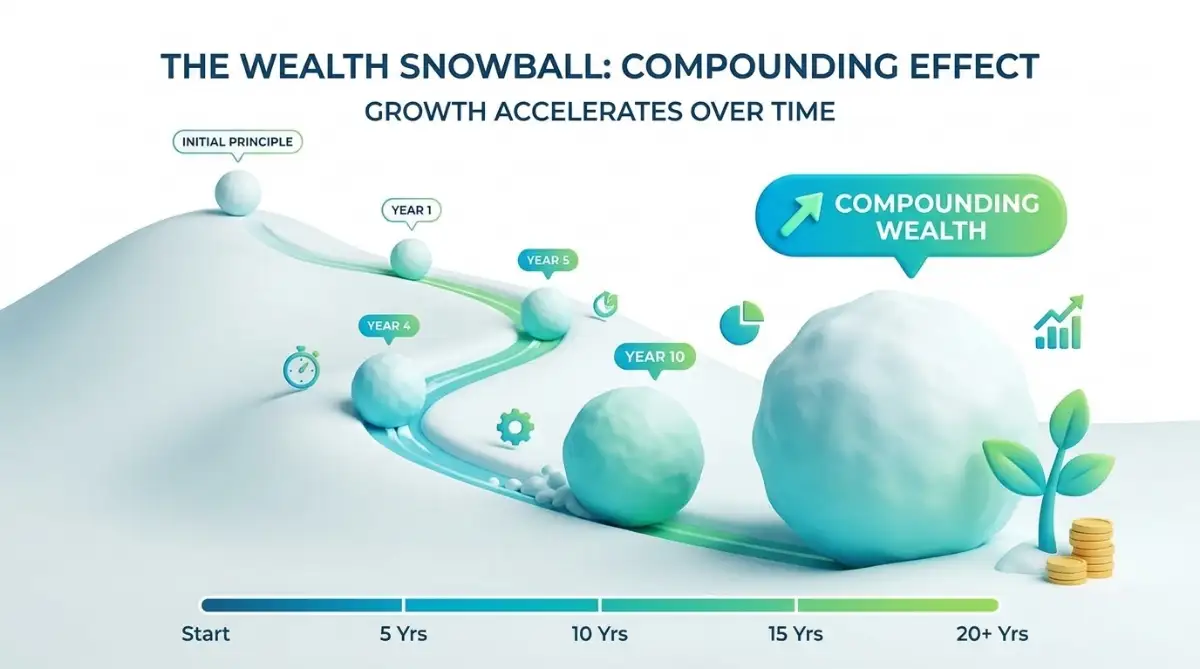
Once you start receiving dividends, you have a choice. You can spend the cash, or you can reinvest it. If you want to build true wealth, reinvesting is the key. Most brokers have a feature called a "Dividend Reinvestment Plan" (DRIP). This automatically takes your dividends and uses them to buy more shares of the company. It happens in the background, without you having to do anything. This is the "magic" of compounding. You are essentially setting your wealth on autopilot.
If you want to see how these simple mechanics work in a real-world scenario, I have found a fantastic breakdown that visualizes exactly how dividend reinvestment turns small amounts of money into significant wealth over time. Watch this guide to see the power of compounding in action:
Managing Your Portfolio Like a Pro
Once you have started, you don't need to overcomplicate things. You don't need to follow the stock market news every hour. In fact, doing so will likely lead to bad decisions. Your strategy should be simple and easy to maintain.
Don't Panic When Markets Dip
The stock market will go down. This is guaranteed. It has happened in the past and it will happen again. When the market drops, the price of your dividend stocks will also fall. This can be scary to watch. But if you have done your research and the company is still making profits, a price drop is actually a gift. It means you can buy more shares for less money. When you buy more shares at a lower price, your dividend yield actually goes up. Smart investors see market dips as a "sale" on great businesses.
Focus on Diversification
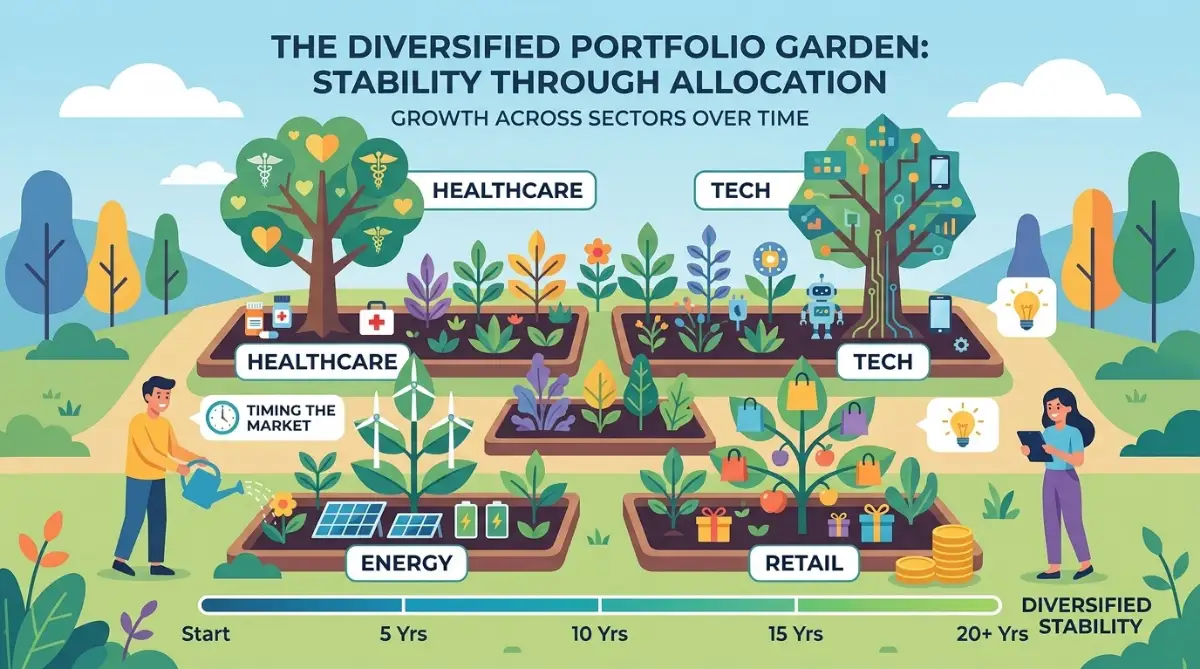
Never put all your money into one company, no matter how good it looks. You want to spread your investments across different sectors. If you have all your money in energy companies, and the price of oil crashes, your entire portfolio will suffer. But if you have stocks in consumer goods, technology, healthcare, and finance, you are protected. If one sector is down, another might be up. This creates a smooth ride for your investment journey.
Keep Costs Low
Every dollar you pay in fees is a dollar that isn't working for you. You don't need expensive financial advisors or high-fee funds to build a dividend portfolio. Today, there are many low-cost platforms where you can buy stocks for very low, or even zero, commission. Keep an eye on your expenses. The less you pay in fees, the more money stays in your account to grow through compounding.
The Power of Consistency
The most successful investors I know are not the ones who try to get rich overnight. They are the ones who are consistent. They invest a set amount of money every month, regardless of whether the market is up or down. This is called "Dollar Cost Averaging." By buying at regular intervals, you don't have to worry about buying at the "perfect" time. You simply accumulate more shares over time. This removes the emotion from investing and keeps you focused on your long-term success.
Remember, wealth is not just about the money you make; it is about the system you build to protect and grow that money. Dividends are the foundation of that system. They provide a paycheck that is not tied to your labor, but to the productivity of the world's best businesses. Start small, stay consistent, and be patient. You are building a future where your money works for you, giving you the freedom to focus on what truly matters in your life.
Taking Your Dividend Strategy to the Next Level
Now that you understand the basic mechanics of how dividend stocks work, it is time to look at how you can sharpen your approach. Investing is not just about picking a stock and forgetting it; it is about building a system that works in your favor over the long run. Many people start with enthusiasm but lose steam because they do not have a plan for the "advanced" phases. You want to make sure your portfolio is robust, safe, and aligned with your personal financial goals.
One of the best ways to keep your portfolio healthy is to look for "Dividend Aristocrats." These are companies that have not only paid dividends for decades but have increased them every single year. You can look at historical data on the SEC website to see how different companies maintain this consistency. Investing in these companies acts as a buffer against inflation. When prices go up in the real world, your income from these stocks often rises to match them.
Another secret to professional-level investing is using automation to your advantage. You can bridge the professional skill gap by setting up automatic investment transfers from your bank to your brokerage account. This forces you to save and invest consistently, regardless of how you feel on a particular day. It removes the guesswork and the urge to "time" the market. By automating your contributions, you buy more shares when prices are low and fewer when prices are high, which is a perfect way to average out your costs.
Mastering Portfolio Balance and Growth
You also need to think about how your investments relate to each other. If you only own tech stocks, a crash in the technology sector will hurt your entire portfolio. You should aim to hold a mix of different industries, such as consumer staples, energy, healthcare, and finance. This is what we call diversification. Just as you would learn about how digital assets work to diversify your knowledge, you should apply that same logic to your stock holdings.
Security is another area that most people ignore until it is too late. Since you are building a digital portfolio, you must ensure that your accounts are locked down. You should follow best practices for keeping your online bank accounts safe to prevent unauthorized access. If your brokerage account is compromised, all your hard work on dividend growth can disappear in an instant. Use strong, unique passwords and enable two-factor authentication everywhere possible.
Finally, consider your long-term roadmap. Think of your portfolio planning as choosing the right medicare plan—it requires looking ahead and anticipating your future needs. You don't want to be caught unprepared when your financial situation changes later in life. Always ask yourself: "Does this investment support the lifestyle I want to live in the future?" If the answer is no, it might be time to rethink your strategy.
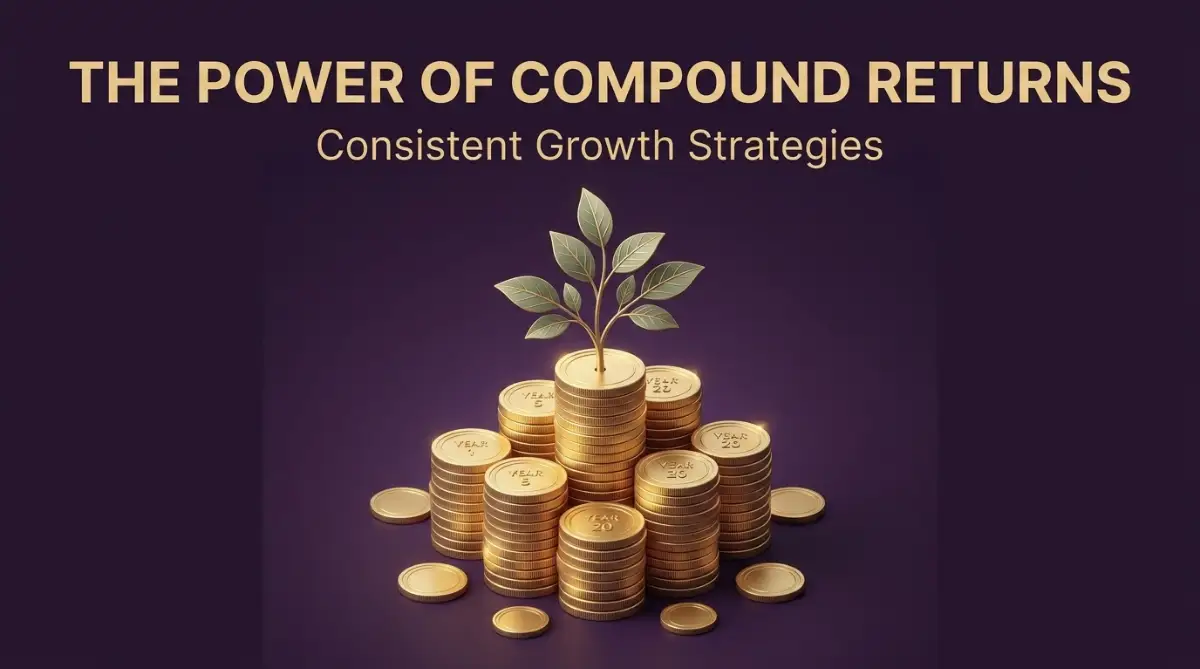
Traps That Catch Even Experienced Investors
It is easy to get overconfident after a few months of positive returns. However, the path to building long-term wealth is filled with invisible holes that can trip you up. Many people fall into these traps because they rely on emotion rather than logic. When you see a stock price drop, your instinct might be to sell. This is often the worst thing you can do.
One common mistake is chasing "high yields." You might see a company offering a 10% or 12% dividend yield and think it looks attractive. In many cases, this is a red flag. The market knows something you don't. That high yield is often a result of a falling stock price caused by a failing business. You are better off with a 3% yield from a rock-solid, growing company than a 10% yield from a business that might go bankrupt next quarter. You can find excellent resources on identifying dividend sustainability to avoid these traps.
Another pitfall is making critical mistakes in your setup that limit your long-term flexibility. Some investors lock themselves into high-fee products or accounts that are hard to move. Always check the fees. If you are paying a significant percentage of your returns to an advisor or a fund, you are literally giving away your wealth. Over time, these small fees add up to massive amounts of lost potential.
Do not ignore the power of "dividend cuts." Even the best companies can have a bad year. If a company cuts its dividend, do not take it personally. It is just a business decision. You need to evaluate if the company still has a future or if it is time to move your money elsewhere. Holding onto a "sinking ship" because you have an emotional attachment to the brand is a recipe for disaster. Be cold, be logical, and be ready to move on.
A Path Forward to Your Financial Independence
Building a dividend portfolio is a journey, not a sprint. You are creating a machine that spits out cash while you sleep, work, or spend time with your family. It requires discipline, patience, and the ability to ignore the noise of the daily news cycle. Most people fail because they quit too early, or they change their strategy every time the market shifts. If you stick to the plan—buying quality companies, reinvesting your dividends, and staying diversified—you are miles ahead of the average person.
You have the tools and the knowledge to start today. Do not wait for the perfect moment, because it will never arrive. The best time to plant a tree was twenty years ago; the second best time is right now. You are in control of your financial destiny, and every dollar you invest is a vote for your future freedom. Take that first step, keep your costs low, and stay the course.
I have walked this path myself, and I know that the hardest part is simply getting started. My own journey was not perfect, and I made plenty of mistakes along the way, but I kept pushing forward because I knew the result was worth it. You have the power to build a secure and prosperous life for yourself and your loved ones. Take action, stay consistent, and trust the process.
Common Questions About Dividend Investing
Is dividend investing safe for beginners?
Yes, it is one of the safest ways to start investing because it focuses on established, profitable companies rather than speculative ones. However, you must still do your research and ensure the companies you choose are financially healthy.
How much money do I need to start?
You can start with very little money. Many modern brokerage platforms allow you to buy fractional shares, meaning you can start investing with as little as a few dollars.
Do I have to pay taxes on dividends?
Yes, in most cases, dividends are considered taxable income. It is a good idea to check your local tax regulations or speak with a professional to understand how your dividend earnings will affect your tax bill.
How often should I check my portfolio?
You should avoid checking your portfolio every day. Checking it once a month or even once a quarter is usually enough to ensure your plan is on track without getting stressed by short-term market fluctuations.
Can I lose money with dividend stocks?
Like any investment, there is always a risk. If the company performs poorly, its stock price can drop, and it may even reduce or stop its dividend payments. This is why diversification is essential.
Disclaimer: I am not a financial advisor. The content provided here is for educational and informational purposes only. Investing involves risk, including the loss of principal. You should perform your own research and consult with a qualified professional before making any financial decisions.