The Cost of Chasing "The Next Big Thing"
I remember sitting in my room, heart racing, staring at my trading app. A friend had sent me a message about a stock that was "going to the moon." I didn't look at the company’s revenue. I didn't check their debt. I didn't even know what they actually sold. I just saw the green arrows, heard the hype, and clicked "buy." I felt like a genius for about forty-eight hours until the bubble burst.
The reality was harsh. Within a week, the value of my investment plummeted, and I was left holding a heavy bag of regret. My stomach churned every time I opened my app. I wasn't investing; I was gambling with my hard-earned savings. I had treated the market like a casino, and predictably, the house won.
That night, I realized I was tired of the anxiety. I was tired of waking up wondering if my net worth had evaporated overnight. I decided right then that I was done guessing. I wanted to know why an asset was worth owning. I wanted to understand the business behind the ticker symbol. I was ready to learn how to do the actual work.
Maybe you are in that same spot. You feel the pressure to jump on trends, but deep down, you know you are flying blind. It creates a constant hum of stress in your daily life. You aren't sleeping well because you know your financial future is built on hope rather than a solid plan.
It feels like you are trying to read a language you don't understand. But here is the thing: the "secret language" of investing isn't reserved for Wall Street elites. It is a skill you can learn, just like driving a car or cooking a meal. When you shift from guessing to analyzing, you regain your mental peace.
It is time to move away from the noise of social media rumors. It is time to start making decisions based on cold, hard facts. You are capable of this, and I am going to show you how I shifted my mindset. Let’s walk through the process of stripping away the hype and looking at what actually matters.
The Hidden Truth: What Value Really Means
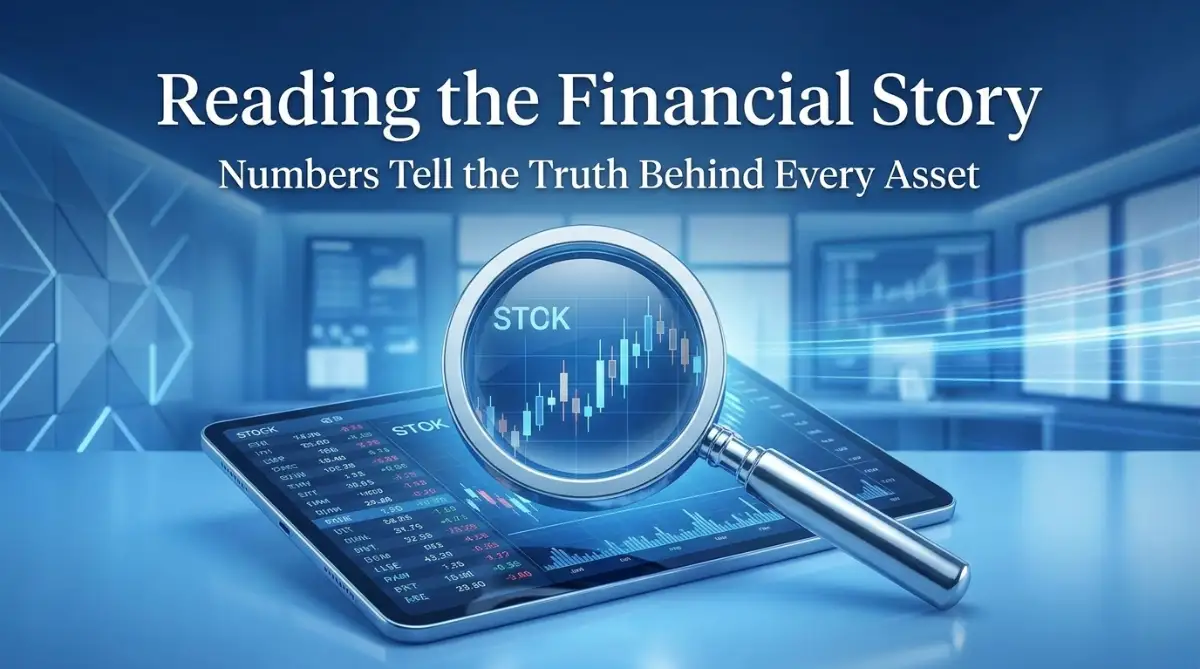
Before we dive into the math, we need to talk about mindset. Most people confuse price with value. Price is what you see on the screen. Value is what the business or asset is actually worth.
Why You Need to Stop Looking at the Chart First
When you open an app, the first thing you see is the line moving up and down. That is a trap. If you start with the price, you are already biased. You are thinking, "Oh, it's cheap," or "Wow, it's going up."
Instead, force yourself to look at the business. Ask yourself: "If the stock market closed tomorrow and didn't open for five years, would I still be happy owning this company?" If the answer is no, then the price doesn't matter.
The Two Layers of Analysis
I like to break analysis into two big buckets. You need both to get the full picture.
- Quantitative Analysis: This is the math. It is the boring, spreadsheet stuff. Earnings, revenue, debt, and cash flow. It tells you if the business is profitable.
- Qualitative Analysis: This is the story. It is the brand, the leadership, the competition, and the market. It tells you if the business has a future.
You can have a company with great numbers that is about to go bankrupt because a new competitor is eating their lunch. That is why you need the story behind the stats.
The "Common Sense" Test
I learned a pro tip from a seasoned investor years ago: "If you can't explain what the company does to a twelve-year-old, don't buy it." If a business model is too complex to describe in three sentences, stay away. Complexity is often used to hide weak fundamentals.
Pro Tip: One mistake I made early on was trusting "expert" opinions too much. I would read a bullish report and think it was a guarantee. My realization? Analysts are paid to have an opinion, but you are the one who pays the price if they are wrong. Always do your own audit of the numbers.
The Financial Audit: Looking Under the Hood
Now, let's get into the nitty-gritty. When I analyze a new asset, I start with the financial statements. You don't need a degree in accounting for this. You just need to know what to look for.
Is the Engine Running? (Revenue and Earnings)
Think of a company like a lemonade stand. Revenue is the total money they take in from selling lemonade. Earnings are what they have left after paying for lemons, sugar, and the stand itself.
- Look for growth: Is revenue higher than it was last year?
- Look for consistency: Are earnings jumping all over the place, or is there a steady trend?
- Avoid "one-time" spikes: Sometimes earnings look great, but it's only because they sold a building or a piece of land. Look at the core business performance.
Can They Pay Their Bills? (Debt and Cash Flow)
A business can be profitable on paper and still go broke. This happens when they run out of cash.
- Debt-to-Equity Ratio: This shows how much of the company is funded by loans vs. shareholder money. If the debt is massive, one bad quarter could sink them.
- Free Cash Flow: This is the real money left over to pay dividends, buy back stock, or reinvest. If a company has positive free cash flow, they have options. If they are constantly burning cash, they are reliant on the kindness of lenders.
The Efficiency Test
I always check the "Return on Equity" (ROE). This tells me how well the management team is using the money I gave them. A high ROE means they are efficient. A low ROE means they are wasting capital.
This is a critical checkpoint.
If you want to see how the pros dig into these numbers, watch this guide:
Understanding the balance sheet isn't about memorizing accounting terms, but about seeing the health of a company at a glance. This video breaks it down into simple, actionable steps.
The Qualitative Side: Why the Story Matters
Numbers are the foundation, but the story is the house you live in. You need to understand the "moat." A moat is a competitive advantage that protects a company from rivals.
Identifying the Moat
- Brand Power: Why do people pay more for a coffee with a specific logo on it? Because of the brand. That is a moat.
- High Switching Costs: If it is a nightmare to switch from a software program to a competitor's, that company has a moat. You are locked in.
- Network Effects: Think of social media. It is valuable because everyone else is there. If the users left, the value would evaporate. That is a massive moat.
Who is Driving the Bus? (Management)
You are betting on the people running the show. I look for management teams that have "skin in the game." Do they own a lot of the company stock? If they do, they feel the pain when the stock drops, just like you do.
I also read the "CEO letter" in their annual reports. If the letter is full of jargon and excuses, I get suspicious. If they talk clearly about the challenges they face and how they plan to overcome them, I take note.
The Industry Environment
Is the company operating in a shrinking industry? If you are a typewriter company in the digital age, it doesn't matter how great your balance sheet is. You are fighting a losing battle. Look for industries that have "tailwinds"—areas where the market is naturally growing.
Myth vs. Reality: The Price of "Cheap"
There is a big myth in investing: "The stock is cheap, so it's a good deal."
"Cheap" is a relative term. A stock trading at $10 can be overpriced, while a stock trading at $500 can be a steal. It all depends on what you are getting for your money.
Step-by-Step Execution: Your Analysis Workflow
Okay, we have the theory. Now, how do you actually do this? Here is the workflow I use every time I look at a potential new asset.
Phase 1: The Filtering Phase
Don't look at 1,000 stocks. Look for a sector you understand. If you know technology, start there. If you know retail, start there. Use stock screeners to filter for companies with:
- Positive earnings growth.
- Manageable debt levels.
- A history of paying dividends (optional, but a good sign of health).
Phase 2: The Deep Dive
Pick the top three companies from your list. Go to their "Investor Relations" page. Download their latest annual report. Don't read the whole thing—start with the "Management Discussion and Analysis" section. This is where they have to tell the truth about what is going right and what is going wrong.
Phase 3: The "What Could Go Wrong?" Audit
This is the part most people skip. I literally sit down and write a list of things that could destroy this business in the next five years.
- Could a regulation change hurt them?
- Could a competitor make their product obsolete?
- Is their technology being disrupted?
If I can't find a good answer for these risks, I don't buy.
Why Consistency Wins Over Intensity
You don't need to do this analysis for ten companies a day. In fact, if you find one great company a month, you are doing better than most professional fund managers.
The goal isn't to be busy; the goal is to be right. When you find an asset that passes all these tests, you can hold it with confidence. You won't panic when the price drops, because you know why you own it. You have done the homework. You aren't guessing; you are investing.
And remember, even the best analysts get it wrong sometimes. The goal of fundamental analysis is to tilt the odds in your favor, not to have a crystal ball.
You have the power to change how you invest. You have the tools to look past the hype. Start small. Pick one company you use every day, look up its financial basics, and see if it is as strong as it looks from the outside. That simple curiosity is the first step toward true financial independence.
Keep your head clear, stay curious, and always, always read the fine print. You have worked too hard for your money to let it disappear on a "hot tip." Be the investor who does the work, and you will be the one who reaps the rewards.
Common Questions About Analyzing Assets
How much time should I spend on analysis?
It varies, but a good deep dive into a company might take you a few hours spread over a weekend. If it takes longer, you might just be getting lost in the weeds. Quality over quantity is the key.
What if I find a great company, but it's too expensive?
That is a common problem. Keep it on your "Watchlist." Set a target price where you think it would be a fair value and wait. Great investors have the patience to wait for the market to give them a good deal.
Do I need paid software to do this?
Absolutely not. Everything you need—financial reports, basic screeners, and news—is available for free online. You don't need fancy tools; you need a curious mind and the discipline to read.
How do I know if the management is lying?
You don't know for sure, but you can look for patterns. If they constantly miss their own earnings targets or if their explanation for failure changes every year, that is a red flag. Trust is earned through consistent performance and clear communication.
Is fundamental analysis just for stocks?
No, it applies to almost any asset. Real estate? You analyze the rental yield and location. Bonds? You analyze the issuer's ability to pay back the loan. The core principle—understanding what you are buying—is universal.
Advanced Tactics for Professional Asset Evaluation
You have mastered the basics of reading a balance sheet. Now, it is time to look at the factors that separate the hobbyist from the serious investor. When you evaluate an asset, you are not just looking at a company’s past performance; you are trying to guess its future health. This is where advanced logic comes into play.
One of the most effective strategies is analyzing the "moat." This is a term used to describe a company's ability to maintain a competitive advantage. If a business is easily copied, it has no moat. You want companies that offer something unique, whether it is a proprietary technology, a brand name people trust blindly, or a massive network effect that locks customers in.
You can learn more about how to evaluate these business models by reading how to stay calm and invest wisely during market volatility. When the market swings, a strong moat is often what keeps a company stable. Without that structural advantage, a company is just a commodity, and commodities are at the mercy of price wars.
Another secret involves looking at the "capital allocation" of a firm. Watch what management does with the extra cash. Do they reinvest it into new projects that grow the business, or do they waste it on ill-advised acquisitions? You can gain deeper insights by checking industry standards on FINRA.org, which provides robust frameworks for understanding how companies manage their resources.
I also recommend looking at sector-specific metrics. If you are analyzing a software company, ignore the "brick and mortar" metrics like inventory turnover. Instead, look at "Churn Rate" or "Customer Acquisition Cost." These numbers tell you if the business is growing sustainably or if it is just burning through cash to fake growth.
Pro Tip: I once ignored the "customer acquisition cost" of a trendy app company. The product was great, but they were spending more money to get a single customer than that customer would ever pay them back. My realization? A great product with a broken business model is still a bad investment. Always check if the math makes sense on a per-user basis.
You should also master the art of "Scenario Analysis." Instead of guessing one outcome, imagine three. What happens if the economy grows, stays flat, or hits a recession? If an asset only performs well in one perfect scenario, it is too fragile for your portfolio. You want assets that are resilient enough to survive all three environments.
Finally, do not underestimate the power of the "Dividend History." Even if you are not a dividend investor, a company that has paid and raised dividends for twenty years has a very disciplined management team. They know how to generate cash in good times and bad. You can find more on this approach by exploring how to build wealth through smart dividend investing to understand the difference between a sustainable payout and a trap.
The Danger Zones: Mistakes That Cost Investors Their Fortune
The most painful errors usually come from our own psychology, not from bad data. We want to be right so badly that we ignore the warning signs staring us in the face. It is a human trait, but in the market, it is an expensive one.
One of the biggest mistakes is "Confirmation Bias." This is when you decide you like a stock, and then you only look for news that proves you are right. You ignore the negative reports and the warning signs from short-sellers. If you are only looking for reasons to buy, you are not analyzing; you are just seeking validation.
Another massive trap is ignoring the "Regulatory Landscape." Companies operate within a framework of laws. If that framework shifts, the business model can become illegal or impossible to scale overnight. You can see how this plays out by looking at how institutional updates impact adoption. When the rules of the game change, the players who aren't ready will lose.
Many investors also fall for the "Growth Trap." They see a company growing its revenue by 50% a year and assume that can last forever. The reality is that growth eventually slows as a company gets larger. When you pay a high price expecting infinite growth, you are setting yourself up for a brutal correction.
Do not ignore the "Hidden Debt" on the balance sheet. Some companies hide their liabilities in complex, hard-to-read footnotes. You must look at the "liabilities" section as closely as the "assets" section. If the debt is growing faster than the revenue, that is a flashing red light.
We also see people struggle with the "Shiny Object Syndrome." They feel bored with their stable, slow-growing assets and jump into highly speculative markets. If you are tempted by this, read are you wrong about bitcoin: the facts you need to know to get a balanced view before you put your money at risk. Speculation is not the same as fundamental investing.
Finally, avoid the mistake of "over-diversification." Holding 100 different stocks means you are essentially buying an index fund but doing 100 times the work. You cannot possibly keep up with the fundamental health of 100 companies. It is better to own 10 to 15 companies that you understand deeply than to own a messy basket of stocks you know nothing about.
A great resource for understanding these behavioral traps is provided by academic research on behavioral finance at CFA Institute. Understanding why we make these mistakes is the first step to stopping them.
A Strategy That Stands the Test of Time
You are now equipped with the mindset and the tools to look at assets differently. Remember that this is a journey, not a sprint. You are building a skill set that will serve you for your entire life, not just for the next trade.
Start by practicing. Pick one industry and analyze five companies within it. Don't buy anything. Just do the work. Track your thesis over six months. See what you got right and where you missed the mark. This feedback loop is the only way to become a truly great analyst.
Trust yourself. The "experts" on TV or social media are often just guessing with more confidence than the rest of us. They don't know your goals, your risk tolerance, or your financial situation. Only you do.
I have spent years doing this, and I still get it wrong sometimes. The key is that my "wrong" bets are small, and my "right" bets are well-researched and held with conviction. Keep your portfolio small enough to manage but big enough to grow.
Stay patient. The market rewards those who do the work and wait for the right opportunities. You are now the architect of your own financial future, and that is a powerful position to be in. Start today by looking at a balance sheet, and take ownership of your decisions.
Common Questions Regarding Asset Analysis
How do I find high-quality financial data for free?
You don't need expensive terminals to start. Use the "Investor Relations" page of the company you are studying. Most public companies are required by law to provide their annual and quarterly reports for free. You can also use sites like Yahoo Finance or Google Finance to get a quick summary of key ratios.
Is fundamental analysis just for picking stocks?
No, the logic applies everywhere. You can use these principles to analyze a business you want to buy, a real estate property, or even a cryptocurrency project. The goal is always the same: find the difference between the price you pay and the value you get.
How do I know when to sell an asset I have analyzed?
You should sell when your "thesis" is broken. If the reasons you bought the asset are no longer true—like if the management team changes, the moat is destroyed, or the revenue starts to decline consistently—then it is time to sell. Do not sell just because the price went down.
Should I use automated tools for analysis?
Automation is great for gathering data, but it cannot replace human judgment. You can use screeners to find a list of candidates, but you must manually read the reports and evaluate the business story. Never let a spreadsheet make the final decision for you.
Can I conduct fundamental analysis on new digital assets?
Yes, but the metrics are different. For digital assets, you look at things like tokenomics, the developer team's track record, the utility of the network, and the "total value locked." It is less about earnings and more about network adoption and scarcity. You can learn more by checking new to crypto how to safely setup your first digital wallet.
Disclaimer: This information is provided for educational purposes only and does not constitute financial, investment, or legal advice. All investing involves risk, including the loss of principal. You should always consult with a qualified financial advisor before making any decisions regarding your investment strategy.