

The Night I Almost Lost Everything
A lawsuit isn't just a legal headache—it can take your home, your savings, and your kids' college fund in one afternoon. If you’re running a business but haven't clearly separated your personal life from your company, you’re not protecting your assets; you’re leaving them wide open. Let’s look at why your business isn't a shield yet and exactly how to fix it before your next "oops" moment.
That night, I didn't sleep. I sat in the dark, thinking about my family’s savings, our home, and the college fund for my kids. I had assumed that "the business" was its own entity, separate from "me." But as I looked into the legal reality, my stomach dropped. Because I had registered as a sole proprietor and mixed my personal and business finances, there was no wall. The court didn't see a company; they saw me.
I spent the next three months in a state of absolute anxiety. Every knock at the door, every ringing phone made me jump, fearing the worst. It was a harsh wake-up call that changed the way I viewed entrepreneurship forever. I realized that being an entrepreneur isn't just about growth and profit; it’s about understanding the thin line between your venture and your life.
You might be in a similar spot right now. You are working hard, making sales, and handling the daily grind. But if you haven't taken the right steps to isolate your personal assets, you are driving a car without brakes. That constant, low-level worry in the back of your mind isn't just stress—it’s your intuition telling you that you are exposed.
It is physically draining to live with the fear that one bad day, one unhappy customer, or one failed contract could wipe out your family's future. You deserve to build your dream without the weight of potential ruin hanging over your head. Let's look at why this happens and, more importantly, how you can fix it.
The Asset Protection Cheat Sheet
Don't have time to read the full guide? Do these 4 things to stay safe:
- Separate Finances: Never use your business bank account for personal groceries.
- Formalize: If you don't have an LLC or Corp, you are personally liable for everything.
- Sign Properly: Always sign documents as an officer of the company, not as an individual.
- Insurance is Key: Use liability insurance as your first shield, and your legal structure as your second.
The Legal Reality: Why the "Business" Isn't Always a Shield
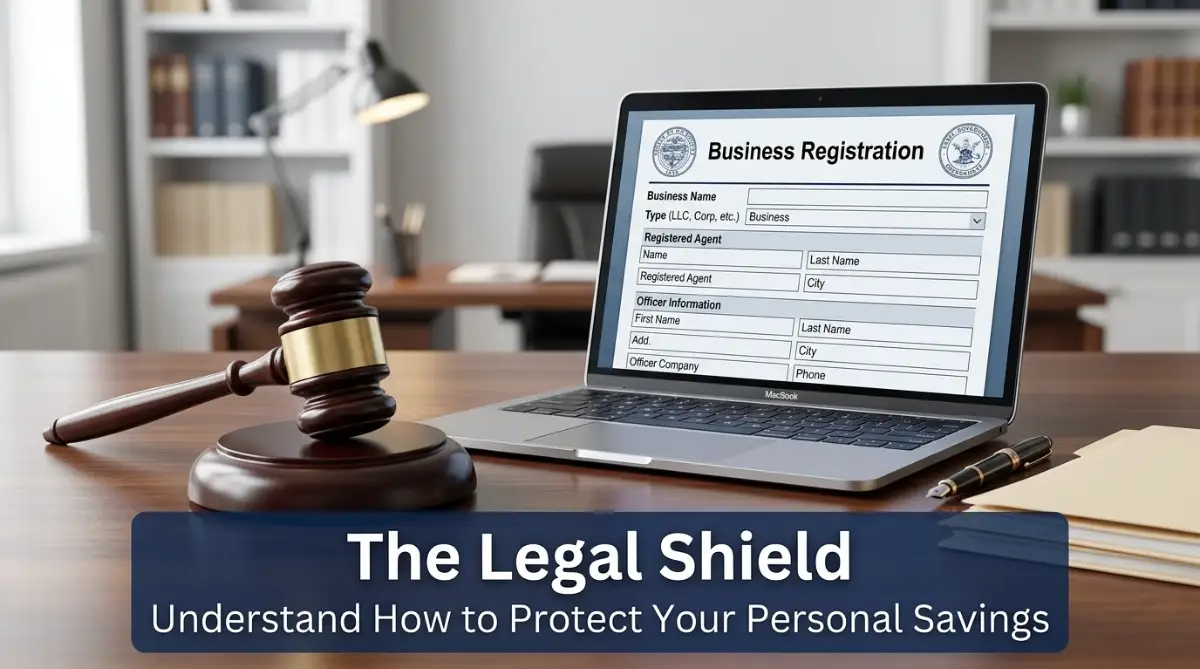
Many new entrepreneurs make the mistake of thinking that simply giving their business a name creates a separate entity. In the eyes of the law, a name is just a label. If you do not create a formal legal structure, the law views your business as an extension of yourself.
The Problem with Sole Proprietorships

If you operate as a sole proprietor, you are the business. If someone slips and falls in your shop, or if you fail to pay a supplier, you are personally responsible for the damages. Your personal bank account, your car, and even your house can be used to satisfy a judgment against your business.
There is no "corporate veil" here. The barrier between your business obligations and your personal property simply does not exist. You are carrying the entire weight of the business on your shoulders, and it is a heavy burden to bear.
The Concept of Piercing the Veil
When you form a company like an LLC or a Corporation, you are creating a new legal person. This entity can own property, sign contracts, and be sued. In theory, this protects your personal assets. However, many owners fail to maintain this protection.
This is often called "piercing the corporate veil." If you commingle funds—meaning you pay for personal groceries with your business card or deposit business income into your personal checking account—a judge can rule that the company is a sham. If that happens, the protection is stripped away, and your personal assets are back on the table.
Why Your Documentation Matters
Legal protection requires strict record-keeping. You cannot just act like a corporation; you have to run one. You need separate bank accounts, separate accounting, and clear documentation for every business decision.
If you are currently feeling lost in the legal paperwork, remember that having the right guidance is key. You can hire a lawyer and ask specific questions to avoid costly mistakes before you get stuck in a bad legal situation. Waiting until you are already in trouble is always more expensive than being proactive.
Pro Tip: What I Learned About Keeping Business and Personal Finances Separate
When I first started managing business finances, I didn't pay much attention to where I was spending the money. I might use the business account to pay for an internet bill and then use that same account to grab lunch. At the time, I figured it was fine because the money belonged to me anyway.
I later learned that mixing personal and business expenses can create serious problems. Keeping everything in one account can make it harder to track business activity and, depending on your business structure and local laws, may weaken some of the protections you expected from separating your business from yourself.
Now, I follow a much simpler rule: business money stays for legitimate business expenses, and personal spending stays separate. Keeping clean records and separate accounts may seem like a small habit, but it can make your finances much easier to manage and reduce unnecessary legal and accounting complications.
The Role of Business Insurance
Even with a well-structured business, there is still a chance that something can go wrong. Business liability insurance can provide an additional layer of financial protection when your company faces certain claims or lawsuits.
Depending on the policy, insurance may help cover legal defense costs, settlements, or other covered expenses. Without appropriate coverage, a business owner could potentially have to handle significant costs out of pocket.
That is why insurance should be viewed as part of a broader risk-management plan rather than simply another business expense. The right policy can help reduce the financial impact of unexpected events, although coverage limits, exclusions, deductibles, and legal requirements vary by policy and location.
Insurance is not a substitute for proper business structure or financial discipline—it works alongside them to provide another layer of protection.
Watch This to Understand Your Exposure
Sometimes, watching a visual breakdown of how personal and business assets are separated helps clarify the concepts. It is easy to get confused by legal jargon, but the core principle is simple.
This video guide explains exactly why your personal assets are vulnerable and how you can start building a shield around them:
Practical Steps to Build Your Legal Fortress
You do not need to be a billionaire to protect your assets. You just need to be organized and intentional. Here are the steps to separate your life from your business.

1. Choose the Right Entity
Talk to a legal professional about whether an LLC, an S-Corp, or another structure fits your goals. Each one has different rules and tax implications. Don't just pick one because a friend did; pick one that matches your specific industry risk.
2. Open Dedicated Bank Accounts
This is non-negotiable. If you don't have a separate business bank account, you don't have a business; you have a hobby with expenses. All business income must go into this account, and all business expenses must come out of it.
3. Draft an Operating Agreement
Even if you are the only owner, having an operating agreement is vital. It defines how your business operates and proves that your company is a legitimate, functioning entity. This document is your primary evidence if anyone ever tries to claim your business is just an "alter ego" of you.
4. Stay Informed and Updated
Laws change, and so does your business. What worked when you were a freelancer might not work now that you have five employees. Review your legal structure annually. If you feel like your growth is being stalled by administrative hurdles, don't ignore it. Staying on top of these things prevents you from being stuck in legal or bureaucratic limbo when you need to act fast.
Comparing Your Business Structure Options
It is easy to get confused by the different types of business entities. Here is a high-level look at how they generally treat your assets.
Common Misconceptions That Lead to Risk
Many people operate under false assumptions that cost them dearly. Let's clear the air on a few common myths.
The Myth of "I'm Too Small to be Sued"
I have heard this countless times. People think their business is too quiet to attract a lawsuit. But lawsuits aren't always about big, intentional crimes. They are often about accidents—a slip, a bad product, a misunderstanding, or a breach of contract. Anyone can be sued at any time.
The Myth of "Insurance is Enough"
Insurance is great, but it has limits. Most policies have a "cap" on how much they will pay out. If a judgment against you exceeds your insurance coverage, where do you think the rest of the money comes from? It comes from your pocket.
The Myth of "My Spouse's Assets are Safe"
If you are married, your assets might be intertwined. If your spouse’s name is on your home or your bank accounts, those assets could also be at risk depending on your state’s laws. You need to look at your family's total financial picture, not just your own.
Maintaining the Separation: The Daily Habit
Protecting your assets is not a "one-and-done" task. It is a daily habit of separation. Every time you sign a check, you are declaring who is paying. Every time you sign a contract, you are declaring who is responsible.
Sign Like a Business Owner
The "Veil Protection" Checklist:
If you want to make sure your LLC shield actually works, do these 3 things today:
- Never Mix: If you use your personal debit card for business, stop immediately.
- Proper Sign-Off: Always sign as "Name, Title, Business Name."
- Annual Record: Write a one-page summary of business goals and major decisions every year and file it away.
When you sign business documents, never sign just your name. Sign it as "Your Name, Title, Business Name." This puts everyone on notice that they are dealing with the company, not you personally. It is a small detail that holds significant legal weight.
Keep Business and Personal Communication Separate
Try to keep your business emails and personal texts distinct. If a dispute ever reaches a courtroom, you don't want a judge digging through your personal grocery lists and birthday plans looking for "evidence." Keep your business life organized and professional.
Don't Panic, Just Plan
If you have been running your business without this separation, don't panic. You can fix it. Open the bank account today. Talk to a professional. Update your sign-off style. You can change your trajectory starting right now.
Taking Control of Your Future
You started your business to create freedom, not to build a cage of worry. When you separate your personal assets from your business liability, you gain more than just legal protection. You gain the mental clarity to focus on growth.
When you know that your home and savings are safe, you can take bigger, smarter risks in your business. You can make decisions based on what is right for the company, not based on what is "safe" for your personal bank account.
This is the foundation of a real, sustainable business. Don't let fear dictate your legal strategy. Let intelligence, preparation, and structure guide you. You have worked too hard to let a single lawsuit unravel the life you are building.
Take the steps to secure your business today. It is the most important investment you will ever make in your company’s longevity. Sleep well knowing your personal life is walled off from the ups and downs of the market.
Frequently Asked Questions
Can a lawsuit take my personal house if I have an LLC?
Generally, no, as long as you have properly maintained your LLC, kept your finances separate, and not personally guaranteed the business debt. If you "pierce the corporate veil" by mixing funds, the court may disregard the LLC and hold you personally liable.
Is an LLC the only way to protect assets?
No, corporations also provide liability protection, but they come with more formal requirements like board meetings and shareholder records. An LLC is often preferred by small businesses for its flexibility and lower administrative burden.
What happens if I don't pay business taxes?
This is a major issue. If you fail to pay business taxes, the government can come after you personally, even if you have an LLC or Corporation. Liability protection does not protect you from tax authorities.
Should I get liability insurance if I already have an LLC?
Yes, absolutely. An LLC protects you from many things, but it is not a magic shield against everything. Insurance covers the costs of legal defense, which can be astronomical even if you eventually win the case.
How often should I check my legal structure?
You should review your business structure at least once a year. As your business grows, your risks change. What was enough in your first year might be insufficient by your third or fourth year.
Advanced Strategies for Hardening Your Business Shield
True asset protection is not a one-time setup; it is a mindset of constant vigilance. Once you have chosen your business structure, you must manage it with the precision of a professional. If you don't run your company like a legitimate entity, the court might decide it doesn't deserve the protections of one.
Maintaining the "corporate veil" starts with how you handle daily operations. Many owners treat their business bank account like a personal slush fund, and that is where the trouble begins. If you pay for personal groceries with a business card, you are effectively telling the court that there is no difference between "you" and "your company."
You should strictly follow the "Sole Source" rule. This means every single penny that comes in for your services goes into a dedicated business account. Then, you pay yourself a salary or draw from that account into your personal one. Never cross the streams between these two pools of money.
Documentation is your best friend when it comes to defending your assets. You should hold an annual meeting—even if you are the only employee—and document it. Write down a brief summary of what you discussed, the goals you met, and the plans for the coming term.
This habit creates a paper trail that demonstrates your business is a living, breathing entity. In the event of a legal challenge, this stack of papers is your first line of defense. It shows that you respect the formalities required by the law.
Another advanced layer of protection involves Layering Your Insurance. Do not just rely on a standard general liability policy and assume you are safe. Look into "umbrella policies" that add an extra layer of coverage if a claim exceeds your primary limit.
Think of it like building a dam. Your business entity is the first wall, and your insurance policy is the second. If the first fails, the second one keeps the floodwaters from reaching your personal house.
If you are just starting out and feeling overwhelmed by these legal necessities, it is smart to take a step back and get the basics right. You can read more about deciding if you need an LLC to see if you are over-complicating your early stages. Getting the structure right from day one is much easier than fixing a messy setup later.
Also, be very careful with personal guarantees. When you sign a lease for your office or apply for a business loan, the lender will often ask you to sign as an individual. This effectively bypasses your liability protection because you have personally promised to pay if the business fails.
Whenever possible, try to negotiate this clause. If you must sign, know exactly what you are putting on the line. You can explore more about the silent killers that cause startups to fail to understand how these financial pressures often lead to personal trouble. Being aware of these pitfalls allows you to plan your risk management much more effectively.
Finally, keep your contracts airtight. Always have a professional draft your agreements with clients and vendors. A well-written contract doesn't just outline the work; it limits your liability by defining exactly what you are—and aren't—responsible for.
If a project hits a snag, it is the contract that saves you from being dragged into a long, expensive legal fight. Sometimes, even with the best planning, legal disputes happen. If you find yourself waiting for a resolution, you might find some context on why your personal injury settlement is taking longer than expected, which applies to the patience required in most legal conflicts.
Reliable legal information can often be found through the U.S. Small Business Administration, which provides clear breakdowns on how different structures impact your personal risk. Leveraging these official resources ensures you aren't relying on guesswork when your family's futu