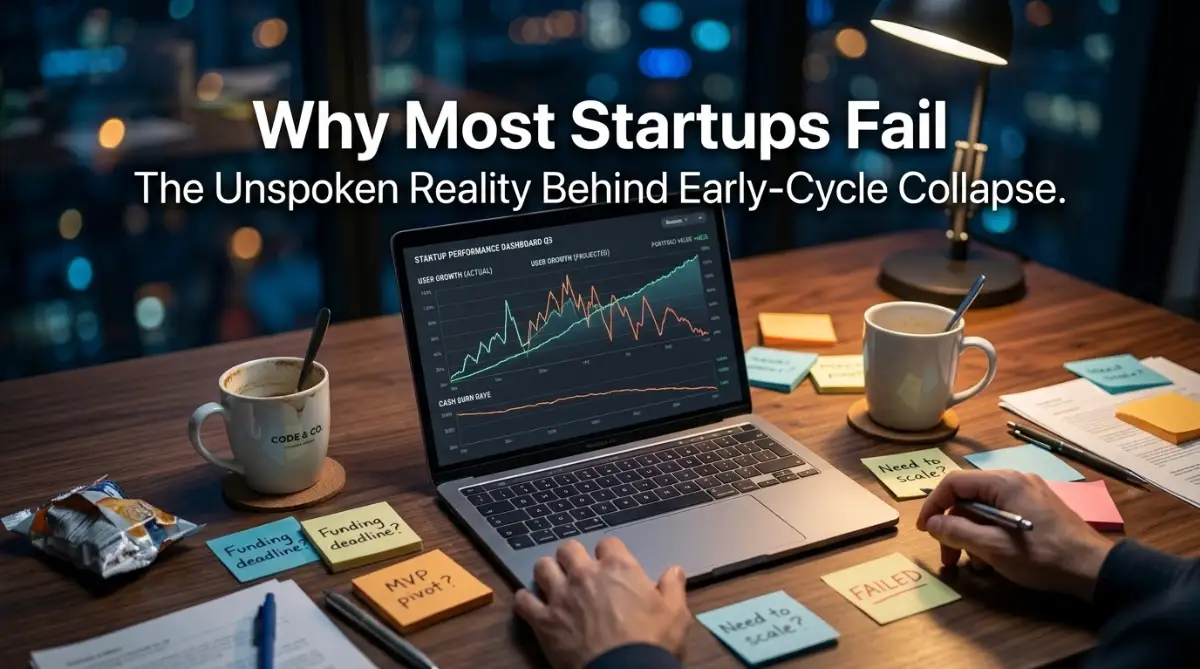
The Reality Check I Never Wanted to Face
I remember sitting in my tiny home office at 3 AM, staring at a bank balance that was shrinking by the day. My "big idea" was supposed to change the world, yet here I was, drowning in stress and endless to-do lists. I had followed every piece of advice I read online, but the results just weren't there. My partner kept asking when I would see a profit, and I had no real answer for them. The silence in that room was heavy, filled with the weight of my own self-doubt and fear of public embarrassment.
You are probably feeling that same weight right now. It is a suffocating feeling when you realize your passion project is turning into a financial burden. Your sleep becomes fragmented, your relationships feel strained, and every notification on your phone feels like a reminder of your slow progress. The mental toll of thinking you are failing is much worse than the financial loss itself. You start to question if you were ever cut out for this at all, and that uncertainty is the most dangerous thing for any founder.
I spent months blaming external factors like the market, the timing, or a lack of funding. The truth, which I finally had to accept, was much closer to home. It wasn't just bad luck; it was a series of small, ignored gaps in my strategy. Most people don't talk about these things because they are uncomfortable to admit. They prefer to post highlight reels on social media while their internal structures are crumbling. I want to be the one to tell you the truth today, because you don't have to keep repeating these mistakes.
Decoding the Hidden Saboteurs of Your Business
Many founders fail because they get obsessed with the wrong metrics. They focus on vanity numbers like website hits or social media followers instead of real revenue. If you are getting a million views but zero sales, you don't have a business; you have a hobby. You must shift your focus to your conversion rate and your customer lifetime value. Without these, your ship will sink regardless of how much buzz you create.
Ignoring the Real Pain of Your Customer
Most startups build a solution before they fully understand the problem. You might have a great piece of software or a unique product, but does it solve a deep-seated pain for someone? If people don't urgently need your product, they will not pay for it. Spend more time talking to your customers than you do writing code or designing logos. Ask them what keeps them up at night, not what they think of your feature set.
The Cash Flow Blind Spot
I fell into this trap hard: I thought revenue was the same as cash. Revenue is just a number on a page, but cash in the bank is what keeps the lights on. You must track your burn rate with absolute obsession. If you are spending money on fancy office chairs or expensive software before you have a steady stream of income, you are asking for trouble. Keep your overhead low until your profit justifies the expansion.
The "Pro Tip" Moment
Looking back, I realize my biggest mistake was trying to be "perfect" before I launched. I spent thousands on branding and design, thinking it would build trust. It didn't. What really builds trust is a working product that actually does what you promised. My advice? Launch the ugliest version of your idea that works, get it into a user's hands, and let them tell you what to fix. Perfection is just a fancy word for procrastination.
Why Your Strategy Needs a Hard Reset
If you feel like you are running in circles, it is time to stop and look at your systems. Many founders get stuck because they are too attached to their original plan. Markets change, and if you are not flexible enough to pivot, you will be left behind. Do not fall in love with your product; fall in love with the process of solving your customer's problem.
Simplifying Your Path to Market
You do not need a complex marketing funnel with ten different stages. You just need a clear, simple path for someone to find you and buy from you. If your process requires a user to click more than three times to make a purchase, you are losing them. Simplicity wins every single time. Review your user journey today and cut out every step that does not lead directly to a sale.
Leveraging Real Feedback Loops
Stop relying on your friends and family for feedback; they will just tell you what you want to hear. Find people who have no reason to be nice to you and ask for their honest criticism. Their brutal honesty is the most valuable asset you have. Use that feedback to refine your product until it becomes something people actually fight to get their hands on.
If you are struggling to maintain focus and feel like your startup is spinning out of control, this video will help you simplify your strategy and get back on the right track.
The Power of Consistent, Small Wins
Don't aim for a massive home run on day one. Focus on getting one customer, then five, then ten. These small wins build the confidence and momentum you need to survive the first cycle. When you celebrate the small progress, you keep your team motivated and your own spirits high. Remember, the marathon is won one step at a time, not by sprinting and burning out in the first mile.
Avoiding the Trap of Comparison
It is so easy to log into social media and see other founders showing off their growth. That is a dangerous game that will only lead to anxiety and bad decision-making. Focus only on your own growth and your own metrics. Your journey is completely unique, and comparing your "day one" to someone else's "year five" is a recipe for disaster. Keep your head down, keep your eyes on your own goals, and keep moving forward.
Final Thoughts on Sustainable Growth
Building a business is not about how fast you start, but how long you can stay in the game. By identifying these hidden pitfalls and making small, intentional changes, you put yourself in a much stronger position. Stop waiting for the perfect moment or the perfect tool. Start with what you have, keep your costs low, and stay obsessed with the actual value you are providing. You have the ability to turn this around, but it starts with being honest about where you are right now. Take the first step today, and don't look back.
Mastering the Art of Sustainable Startup Growth
To keep your momentum going, you need to shift from "survival mode" to "growth mode." Most founders believe they need more money to solve their problems, but usually, they just need better systems. You should start by building a personal budget for your business that separates personal expenses from professional costs. This clarity helps you see exactly where your capital is going each month.
Refining Your Internal Processes for Long-Term Success
Automation is your best friend when you are operating on a tight schedule. You do not need to spend your entire day on repetitive tasks that can be handled by simple basic automation tools. By offloading these tasks, you save mental energy for high-level decision-making. Focus your time on activities that directly increase your value proposition.
Protecting Your Digital and Financial Assets
As your business grows, so does your digital footprint. Many startups overlook the importance of security until it is too late. You must manage your digital tools with care, avoiding unnecessary permissions that could put your customer data at risk. A small security breach can destroy the reputation you have worked so hard to build.
Strategic Planning for Future Scalability
Look at your current business model and ask yourself if it can handle ten times the customers. If the answer is no, you have a bottleneck. You must build wealth by reinvesting profits into assets that generate more value. Think of every dollar spent as a seed that should grow into a larger tree, not just an expense that disappears into the void.
Staying Updated with Industry Standards
Always keep an eye on official guidelines to ensure your business remains compliant and reputable. According to research from the Small Business Administration (SBA), having a solid business plan is a top indicator of long-term survival. Use these resources to validate your strategy rather than just guessing what might work.
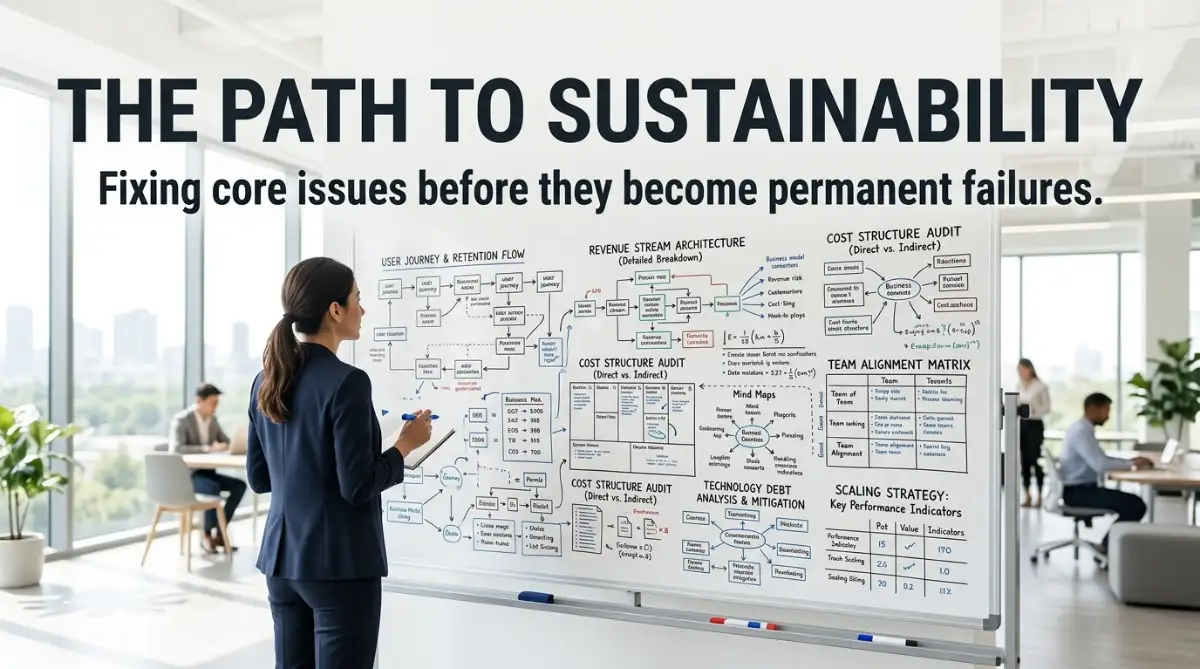
Traps That Lead Founders Down the Wrong Path
It is easy to fall for the "shiny object" syndrome. You might see a competitor launch a new feature and feel the urge to copy them immediately. That is a major mistake that dilutes your focus. Stick to your core mission and improve what you already have before you chase after new, unproven ideas.
The Danger of Ignoring Customer Data
Many founders think they know what their users want without actually checking the data. This creates a disconnect between your product and the market reality. If you are not looking at your conversion metrics regularly, you are essentially flying blind. You might be spending money on marketing channels that are not bringing in any real leads.
Underestimating the Cost of Complexity
Adding more features does not always make a better product. In fact, it often makes your product harder to use and more expensive to maintain. A study published in the Journal of Business Venturing highlights that over-engineering is a silent killer of new firms. Keep your offer simple, clean, and easy to understand for your target audience.
Falling for the "Scale Too Soon" Myth
You do not need a large office or a team of twenty people to be a successful business. Hiring too quickly increases your burn rate and puts unnecessary pressure on your cash flow. Stay lean for as long as possible until the demand for your product is clearly outpacing your ability to deliver.
Your Roadmap to Staying in the Game
Success is not a destination; it is the act of staying in the game long enough to see your ideas take root. You have the potential to turn your vision into a reality if you stay disciplined with your resources. Focus on solving one specific problem for one specific group of people better than anyone else.
Actionable Steps for Tomorrow
Start by auditing your current expenses and cutting out anything that does not drive growth. Next, pick one core feature of your product and refine it until it is perfect. Finally, talk to three potential customers and ask them for feedback on how to improve. These small actions create the momentum you need for lasting results.
A Note from My Personal Journey
I know how lonely and exhausting this path can be, but you are not alone in this struggle. Every time I wanted to give up, I remembered why I started and took one small, tangible action to move forward. You have everything you need to make this work, so just take that next small step right now.
Questions People Often Ask About Startup Survival
Why do most new businesses fail early on?
Most fail because they build products that nobody actually wants or they run out of cash. Focusing on real market demand and maintaining strict control over expenses is the best way to avoid this.
How do I know if my idea is actually viable?
The only way to know is to get it in front of real users and see if they are willing to pay for it. If they aren't, you need to pivot your approach until you find a product-market fit.
Is it better to find investors or bootstrap?
Bootstrapping allows you to keep full control of your vision, while investors provide a faster runway. For most people, starting by bootstrapping is the safest way to learn the ropes.
Should I quit my job to focus on my startup?
Only do this when your startup is generating enough income to cover your basic needs. It is much easier to make smart decisions when you are not under extreme financial pressure.
Disclaimer: This content is for informational purposes only and does not constitute professional financial or legal advice. Always perform your own research and consult with qualified professionals regarding your specific business situation.