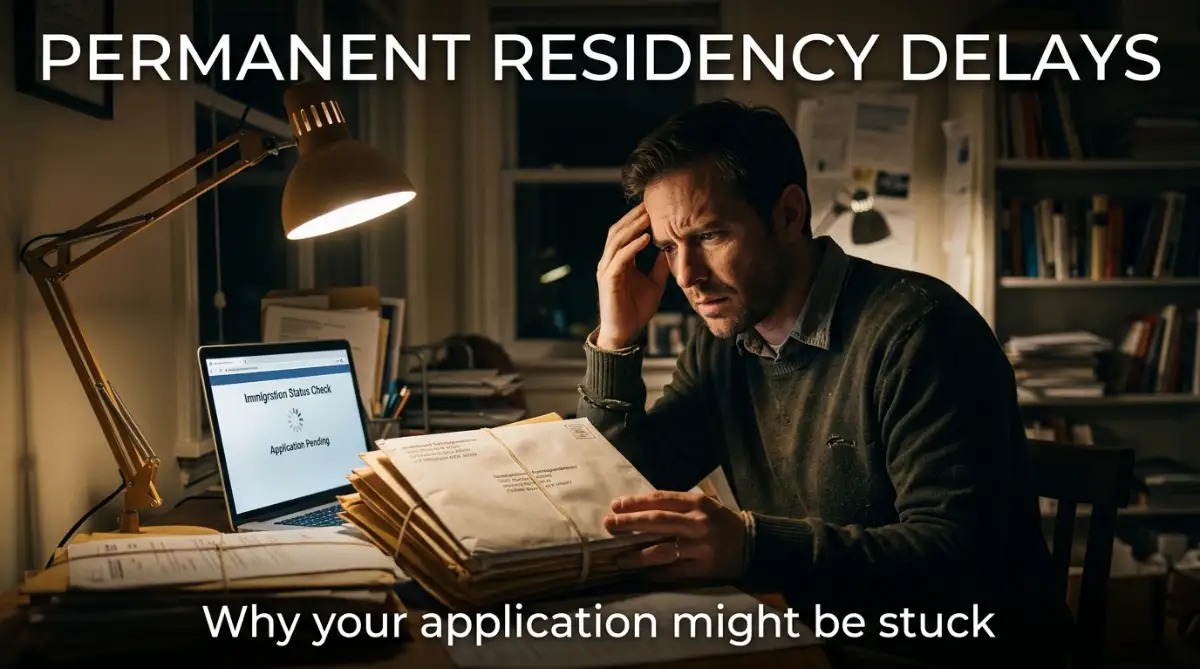
The Mailbox That Never Had the Right News
I remember the exact feeling of checking my mailbox every single day for six months. I would walk out to the curb, heart pounding, hoping to see that specific official envelope with the government seal. Each day I walked back to my front door empty-handed, that knot in my stomach grew a little tighter. It was a silent, suffocating kind of stress.
I had submitted my application with such high hopes, thinking the process was straightforward. I had paid my fees, filled out the forms, and sent everything off into the void. Then, silence. When I finally got a letter, it wasn't the approval I wanted. It was a request for more information, sent because of a clerical error I didn't even know I had made.
That moment of realization—that my future was sitting in a pile on someone’s desk because I missed a single check-box—was devastating. You don't realize how much of your life is tied to that piece of paper until it is delayed. It stops you from making travel plans, it creates anxiety about your job, and it casts a shadow over your daily peace of mind.
This isn't just about waiting; it is about the uncertainty of your own life. You feel like a guest in your own home, constantly looking over your shoulder. I know what that waiting feels like. I know the nights spent scouring forums for someone else’s timeline, looking for any sign that the system is actually working. You are not alone in this, but you can take steps to reclaim some control.
The Anatomy of an Immigration Stumble
The immigration system is a giant, complex machine. It is designed to process thousands of applications, and it relies on rigid rules. If your application doesn't fit the machine perfectly, it gets kicked back. Most people blame the system for being slow, but often, the delay starts right at the kitchen table where the application was filled out.
The Problem of Incomplete Evidence
The most common trigger for a delay is simply not providing enough proof. You might think a document is obvious, but the immigration office needs a clear, linear trail of evidence. If you are applying based on a job, you need more than just a letter. You need the full history of your employment, tax records, and proof that your position is legitimate.
If you skip one piece of evidence, they have to stop your case to ask for it. This adds weeks, sometimes months, to your timeline. It is not that they are ignoring you; it is that they literally cannot move forward without that specific piece of paper. You have to anticipate what they need before they even ask for it.
Typos and Data Mismatches
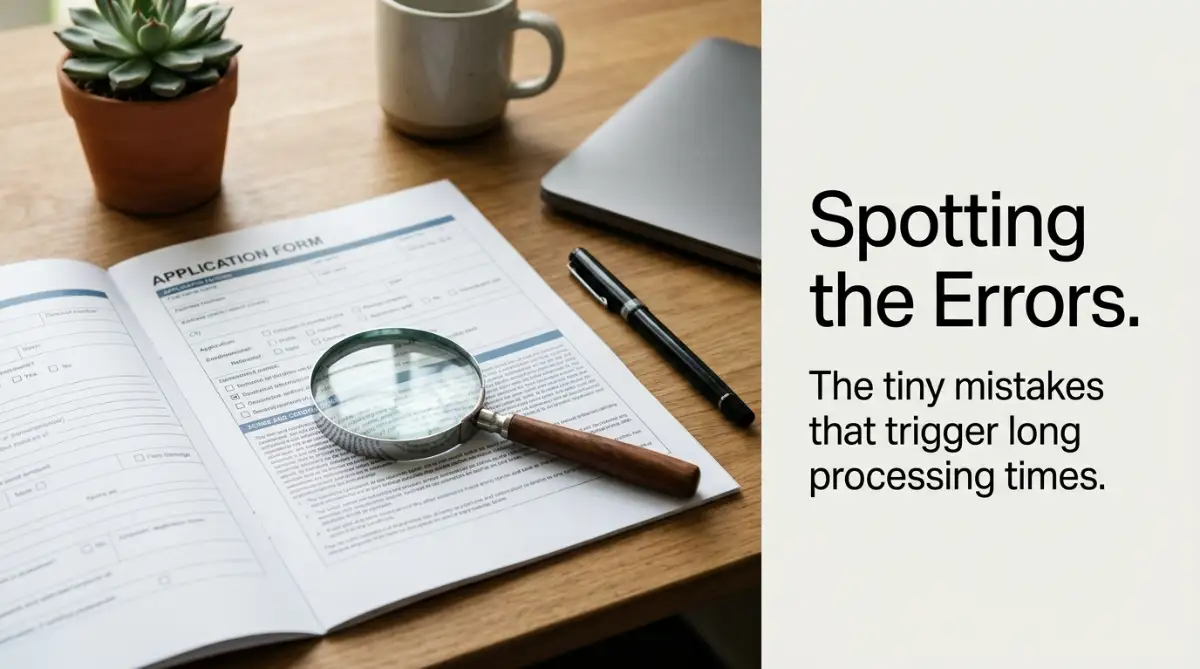
It sounds silly, but a typo in your name, your birthday, or your address can halt everything. If your passport says one thing and your application says another, the system triggers a red flag. These mismatches require a human to stop and review your file manually. That human review is where the months-long delays happen.
You must be obsessive about your data. Copy the information exactly as it appears on your legal documents. Do not guess on dates. Do not round up your numbers. Take your time to review every single line before you press submit. This one habit is the difference between a smooth ride and a complete stall.
The Biometric Mismatch
Sometimes, the issue isn't even about what you wrote down. It is about your fingerprints or your photos. If your biometrics are blurry or don't match the database, the system will ask you to come back and do them again. This is a very common reason for a sudden delay.
Before you go in for your appointment, make sure your hands are clean and clear of any lotion. When you take your photos, follow the instructions to the letter. Do not try to be "creative" with your background or your lighting. They want a standard, clear image that the computer can read instantly.
The Strategy for a Smooth Filing Process
You need to view your application as a project that requires a rigorous audit. Stop thinking of it as a form you fill out in an afternoon. Start thinking of it as a legal evidence package.
Step 1: Create a Master Document Trail
Before you start the actual forms, create a physical or digital folder for everything. I mean everything. Passport copies, birth certificates, marriage licenses, tax returns, and employment history. Organize them by date and category. When the form asks for proof, you shouldn't have to hunt for it. You should be able to reach into your folder and pull it out instantly.
Step 2: The Three-Pass Review
Never review your application just once. Do a "Pass One" for data accuracy—names, dates, and numbers. Do a "Pass Two" for document completeness—did you attach the right proof for every claim you made? Finally, do a "Pass Three" for logic—does the story you are telling in the application make sense from start to finish?
Step 3: Proactive Communication
If you know your application is missing something, don't wait for them to find it. Depending on the current rules, there are often ways to submit supplemental evidence. Keep your address current. If you move, tell the office immediately. A letter sent to your old apartment is a letter that will never reach you, and that is a disaster for your timeline.
Pro Tip: My Realization on Photocopies
I once saw someone get delayed because their photocopies were too dark. The scanner couldn't read the text. It sounds ridiculous, but it happens all the time. Use a high-quality scanner, not just a photo from your phone. Make sure the text is crisp and the seals on official documents are visible. It is a small thing, but it shows the person reviewing your file that you respect the process.
Want to see how the experts evaluate application errors? Watch this guide to prepare for your residency process.
Why Translation Errors Matter
If any of your documents are in a language other than English, you need a certified translation. Don't just use a friend who speaks the language. You need someone who is authorized to provide a certificate of accuracy. If the translation is sloppy, the immigration office will reject it and demand a new one. This happens far more often than you think.
Following the Instructions Exactly
The instructions for immigration forms can be dozens of pages long. They are boring, they are repetitive, and they are painful to read. Read every single one of them. If the instructions say "use black ink," do not use blue ink. If they say "do not staple," do not staple. These rules exist to help their scanners process your file. If you break them, you force them to handle your paper by hand, and that leads to delays.
Final Thoughts on Your Journey
Applying for residency is a test of patience, but it is also a test of attention to detail. You are not just sending a form; you are submitting a claim for a new future. Treat it with the respect it deserves. When you are meticulous, you take away the excuses for delays. You show the system that you are prepared. Stay focused, keep your records tight, and don't let the wait drain your spirit. You have come this far, and with a bit of extra care, you will get across the finish line.
Pro-Level Strategies for Application Success
Once you have established your core documentation, you might feel like your work is done. But the immigration machine is complex, and seasoned applicants know that preparation is more than just collecting forms. It is about understanding the flow of information and staying two steps ahead of the requirements. Think of it like maintaining your health; you don't just wait for an illness to start eating well. You build a lifestyle that supports your well-being.
The Strategy of Consistent Updates
Most people submit their forms and then vanish. They stop checking their mail or ignore emails because they assume the agency will reach out if there is an issue. This is a big mistake. You should set up a routine to verify your status. If you are ever unsure about why things are moving slowly, it is helpful to look at why your visa application takes time to understand the bureaucratic backlogs.
Keep a detailed log of every interaction you have. If you call, write down the time and the name of the agent. If you send a document, keep the tracking number. This creates a personal paper trail that you control. It makes it much easier to correct errors if the government system shows an outdated status.
Mastering the Art of Clarity
When you explain your situation in an application, brevity is your friend. Do not write long, rambling essays that complicate your story. Stick to the facts. If they ask for your employment history, list the dates and roles clearly.
It is a lot like decoding medical bills for patients; if the information is clear, it gets processed. If it is messy, it gets flagged for review. Use simple language. Avoid jargon that could be misinterpreted by a clerk who is looking at hundreds of files a day.
Leveraging Professional Checks
Even if you are filing on your own, consider having a professional review your packet before you send it. A fresh set of eyes often catches mistakes you have become blind to because you have looked at the pages for so long. It is a small investment for a massive increase in peace of mind.
You might want to maintain your financial health during this period, too. It is easy to let stress affect your spending. If you are working on your personal finances while waiting, learn how to stay calm and invest wisely so that your bank account remains steady regardless of the immigration timeline.
Creating a Secure Digital Archive
Store every version of your application in a cloud service. If you have to file an appeal or provide more proof later, you need to know exactly what you sent the first time. If you sent a document in February, make sure you have the exact copy in your archive.
Also, protect these digital files like you would your banking info. You don't want your sensitive residency data floating around in an unsecured way. My guide on digital fortress secrets covers how to keep sensitive files locked down, which applies perfectly to your immigration paperwork.
Anticipating the Red Flags
If you have a gap in your employment or a change in your marital status, explain it before they ask. Add a simple, one-page summary letter to the front of your application. It acts like a guide for the reviewer. If they see a potential red flag, they want to see the explanation right there. Giving them the context reduces the need for them to send you an inquiry later.
For more deep research into immigration policy and data, I often recommend looking at the Migration Policy Institute. They provide independent research that helps you understand the bigger picture of how residency policies are evolving.

Pitfalls That Keep Your Application in Limbo
I have watched so many smart people get stalled because they made assumptions. They assumed the government would "just know" their context, or they assumed that a minor detail didn't really matter. These pitfalls turn simple applications into long, painful ordeals. Avoid these common mistakes at all costs.
The Danger of Moving Without Notice
This is a classic trap. If you move to a new apartment or a different city and forget to update your address with the immigration authorities, you are in trouble. Your approval notice, or worse, your "request for evidence" letter, will go to your old address. You will never see it.
You might wait for months, wondering why your case hasn't moved, while your important documents are sitting in a stranger's mailbox. Always update your address the second you sign a new lease. If you are bad at remembering these logistics, treat it like why home insurance companies deny claims—they deny the claim because they have the wrong address on file. Don't let a simple move break your entire future.
Ignoring the "Request for Evidence"
When you get a letter asking for more info, do not put it in a drawer to deal with later. That letter has a deadline. If you miss that date by even one day, the system might automatically close your case.
Treat every letter from the government as an urgent priority. Drop everything else and get them exactly what they asked for. If you don't understand the request, call an expert immediately. Do not guess.
Providing Too Much Information
It feels like being helpful, but sending every scrap of paper you have ever owned can actually slow things down. They want specific documents that prove specific requirements. If you send a box of irrelevant papers, you make the reviewer sift through junk to find the gold. Only send exactly what they ask for, organized in a logical order.
Using Outdated Forms
Government forms change. They update the versions, the fees, and the instructions. If you download a form from a random website, you might be using a version that is three years old. Always go to the official government source to download the current PDF. If you submit the wrong version, they will reject it, and you will have to start over.
The "I'll Just Explain It Later" Mindset
Never assume you will get an interview where you can "explain" a missing document. Most applications are reviewed based on paper evidence alone. If the evidence isn't in the envelope, the answer is "no." Do not count on a face-to-face chance to fix a problem you could have solved with a photocopy.
Mixing Up Your Financials
Immigration officers want to see stability. If you send tax returns that don't match your bank statements or your employment letters, it looks like fraud. Even if it is just a simple math mistake, it creates a massive cloud of doubt. Take the time to make sure every document tells the same story.
A Path to Your Successful Residency
You are building a future where your status is secure and your life is stable. It might feel like a slow process, but every decision to calculate the risks and organize your paper trail is a step toward freedom. You are learning to be a disciplined planner, and that is a skill that will pay off for the rest of your life.
Action Plan for Tomorrow
- Audit your file: Pull your policy and residency paperwork to see if anything is missing.
- Check the rules: Verify the current document requirements on the official government website.
- Track your time: Set a recurring calendar alert to check your application status once a month.
- Stay organized: Keep your cloud drive tidy so you can access proofs at a moment's notice.
I have found that the more I take charge of my documentation, the less I worry about the "what ifs." My residency status is no longer a source of mystery; it is a goal I know how to manage. I want you to feel that same sense of control. You are doing the work that most people are too afraid to do. You are taking responsibility for your future.
Start today. Make that check or organize that folder. It might take an hour of your time, but that one hour could be the most valuable investment you ever make. You are building a home and a life, and that is a goal worth every bit of effort. Keep tracking, keep asking questions, and keep your goals in sight. You are doing a great thing by looking at this now.
My journey taught me that I am my own best advocate. When I stopped waiting for the "right" time and started preparing for the long time, my anxiety levels dropped. I took control, I made a plan, and I stayed consistent. You have that same opportunity right now. Do not wait for the system to force your hand. Take the first step and watch how your life becomes more secure.
Common Questions About Residency Delays
How long does it usually take to process an application?
There is no "usual" time because it depends on the current backlog and the specific type of application. You should check the official processing times posted by the government agency for the most accurate, up-to-date estimates.
What should I do if I think my application is lost?
First, check your online portal status. If you haven't received an update in a long time and the portal shows no movement, reach out to the customer service line. Always have your receipt number ready. Don't panic, but be persistent in asking for a status update.
Can I travel while my application is pending?
This is a risky area. Traveling can sometimes be seen as an abandonment of your application depending on the specific rules for your status. Always talk to a legal expert before you leave the country, even for a short trip, while you have a pending case.
Does hiring a lawyer make it go faster?
A lawyer cannot make the government work faster, but they can ensure your application is perfect so it doesn't get rejected or stalled for mistakes. A clean, error-free application is the fastest way to get through the process.
How do I know if I missed a request for evidence?
You should monitor your mail and your online account daily. Most agencies send requests for evidence through both channels. If you have moved, ensure your address is updated so you don't miss those critical letters.
Disclaimer: This content is for educational purposes only and does not constitute financial, legal, or immigration advice. I am not an immigration attorney. All residency decisions involve specific laws and risks, and you should perform your own research or consult with a qualified professional before making any choices based on your specific situation.