
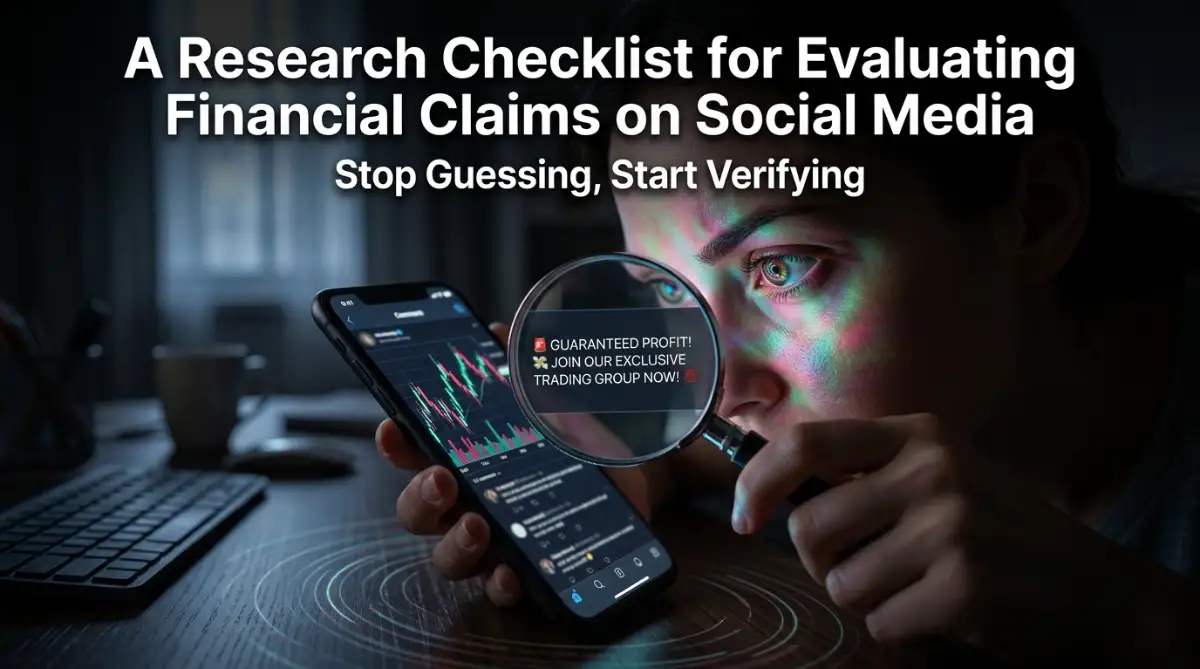
The Moment I Almost Trusted the Wrong Person
Ever felt that sick pit in your stomach after a trade went wrong? You aren’t alone. Thousands of people lose their hard-earned money every single day because they trusted a stranger's "secret tip" on TikTok or X. The algorithm doesn't care if you lose money—it only cares about your attention. Let’s stop the bleeding and learn how to actually vet a deal before you lose another cent.
I felt that familiar tug of "what if." What if this was the opportunity I had been waiting for? I didn't research the project. I didn't check the team. I just saw the engagement, the likes, and the confidence in their voice. I invested a portion of my savings right then and there, thinking I was getting ahead.
Two weeks later, the token’s value dropped by 90%. Then, the account that posted the tip vanished. My money didn't just disappear; it was stolen. I felt foolish, angry, and deeply embarrassed for letting myself be swayed by a stranger’s video.
It’s a heavy feeling when you realize you’ve been duped. It’s not just about the money; it’s about the loss of trust in your own judgment. The anxiety kept me awake for days, wondering how I could have been so blind to the red flags that seem so obvious now.
You might be feeling that same pressure right now. There is so much "expert" advice flying around social media that it’s easy to feel like you’re missing out. It creates a constant state of low-level stress, where you worry that if you don't act on the next big tip, you’ll be left behind. You deserve better than to live in fear of the next scam.
TL;DR: What You Need to Know
- Influence != Competence: Just because someone has a huge following doesn't mean they know how to invest.
- The 'Exit Liquidity' Trap: You are often the buyer for people trying to sell their bad investments.
- Research Rules: Always verify claims against official company filings, not just social media hype.
- Stop the FOMO: If an investment feels urgent, it’s usually a gamble, not a smart move.
Why Social Media Financial Advice is a Minefield
The problem with platforms like X, TikTok, or Instagram is that they reward attention, not accuracy. A post that makes a wild, exaggerated claim often gets more views than a boring, well-researched report.

The Illusion of Expertise
Just because someone has a hundred thousand followers doesn't mean they have a hundred thousand dollars of financial experience. Influence is not the same as competence. Many creators are paid to promote assets, and they don't always disclose it.
You need to treat every piece of financial content on social media with deep skepticism. Even if they sound professional, they are playing a game designed for engagement. Your goal is to separate the signal from the noise.
The Dangers of Herd Mentality
When you see hundreds of comments saying “to the moon” or “this is the one,” it can be tempting to assume that everyone else knows something you don’t. That feeling of wanting to follow the crowd is a common example of herd behavior in financial markets.
Social media enthusiasm can sometimes contribute to rapid price increases, particularly when large numbers of people begin buying an asset based on the same excitement rather than its underlying fundamentals. In some cases, coordinated hype can also be part of a pump-and-dump scheme, where early participants promote an asset to attract buyers before selling their own holdings.
Before making a trade based mainly on social-media sentiment, take a step back. The people posting confident predictions are usually strangers, and their interests may not match yours. Treat online comments as opinions—not as personalized financial advice—and do your own research before putting money at risk.
The Hidden Risk of Illiquidity
Many of these "hidden gem" tips involve assets that are incredibly hard to sell. You might be able to buy them, but when the hype dies down, you’ll find yourself stuck with an asset that no one wants. This is a massive risk.
If you are curious about why this matters, take a moment to look at why liquidity risk is the silent killer of your investment returns. It explains how you can get trapped in a position just because there is no one else to buy from you. Understanding this concept alone will put you ahead of 90% of retail traders.
The Investor’s Verification Checklist
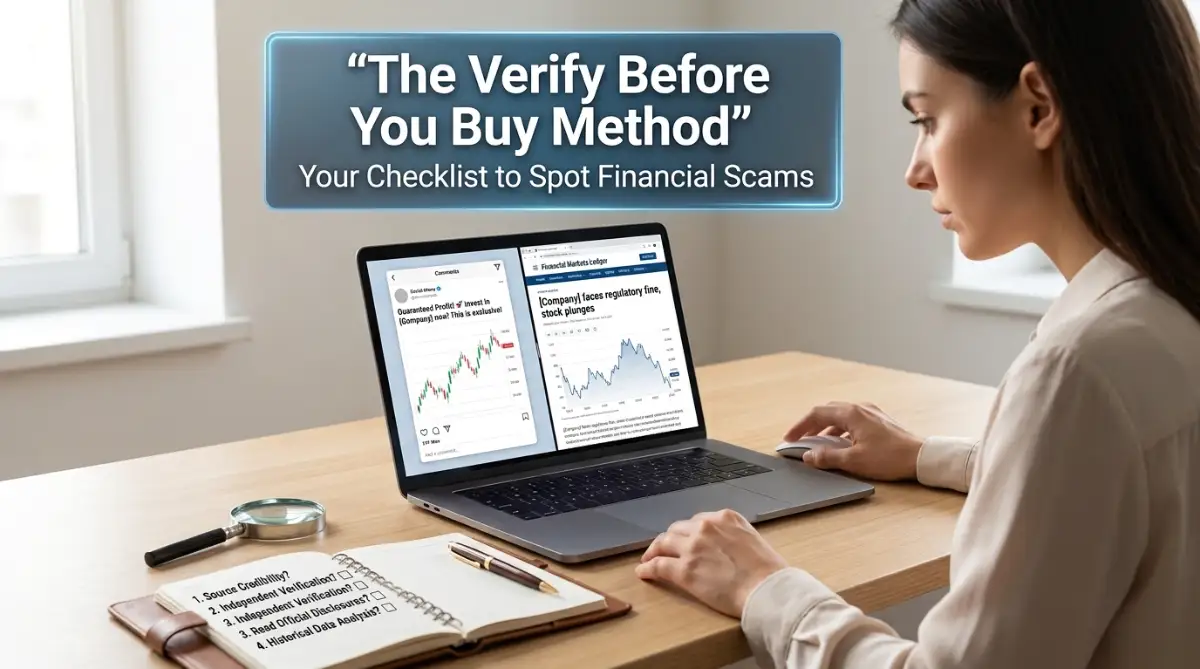
You shouldn't have to guess if a claim is real or fake. You can use a structured approach to filter out the noise. Run every piece of advice through this verification process.
Step 1: Research the Source
Quick "Red Flag" Checklist:
Before you invest a single dollar based on a post, ask yourself these three things:
- Who gains? If the person promoting it already owns the asset, they want you to buy it so the price goes up. That's a conflict of interest.
- Where is the proof? Can I find this information on a reputable news site, or only on their personal feed?
- Is it urgent? If the post makes me feel like I must act right now or I'll miss out (FOMO), it is designed to manipulate me. Close the app.
Who is the person giving the advice? Do they have a track record?
- Check their bio: Are they a registered investment advisor, or are they just an "enthusiast"?
- Look for conflicts of interest: Does the creator own the asset they are talking about? If so, they have a reason to want you to buy it.
- Search for history: Have they promoted failed projects in the past?
Step 2: Look for Independent Evidence
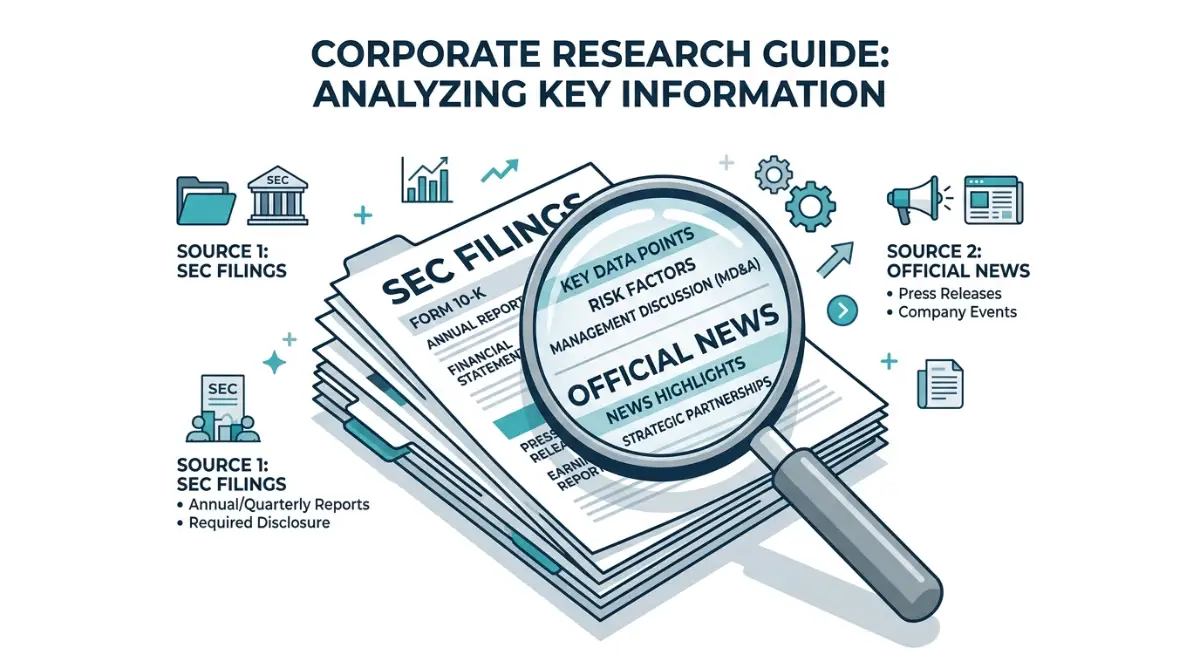
Never rely on a single source. If someone claims a company has a new technology, verify it on the company’s actual website, not in the social media post.
- Read the filing: If it is a stock, look for SEC filings.
- Search for news: Check legitimate, independent financial news outlets.
- Verify the data: If they show a chart, does it match the data on a reputable exchange?
Step 3: Question the "Too Good to be True" Claims
High returns with low risk do not exist. That is a fundamental law of finance. If an offer promises consistent, high, or "guaranteed" returns, it is almost certainly a scam.
- Ask why: Why would they share a "secret" with you? If they really had a money-printing machine, they wouldn't be posting about it on social media for free.
- Compare to reality: Does their claim make sense compared to historical market averages?
Step 4: Secure Your Assets
If you do decide to enter a new market, especially in the digital space, do not just hold your assets on the platform that suggested them. Use secure, personal storage. You can see how to safely store your crypto to ensure that even if you take a risk, you maintain control over your own property.
Pro Tip: My Realization
I learned that whenever a creator says, "This is not financial advice," they are often just protecting themselves legally while still pushing an agenda. I started ignoring the disclaimer and focusing on the call to action instead. If they are telling me to buy something, that is financial advice regardless of what the caption says. Don't let a legal loophole blind you to the intent behind the post.
Watch This Before You Invest
Sometimes, seeing the red flags in action helps you recognize them later. Financial predators use the same tricks over and over again.
This breakdown shows how to spot the common psychological tactics used to manipulate you into making bad trades:
Myth vs. Reality: Social Media Trading
It is easy to get caught up in the hype. Let's look at the difference between the reality of the market and what you see on your timeline.
Why Your Research Must Be Independent
When you rely on others for research, you lose the ability to manage your own risk. If the trade goes south, you won't know why, and you won't know when to sell. You’ll be paralyzed, waiting for the same person who gave the advice to tell you what to do next.
True investors own their decisions. If you win, you own it. If you lose, you understand why and you adjust your strategy. This is the only path to long-term wealth.
Creating Your Own "Anti-Scam" Protocol
You should have a personal rulebook for your investing. Mine is simple:
- If I can't explain the asset to a ten-year-old, I don't buy it.
- If the research takes less than one hour, it is not research—it is gambling.
- If I feel a sense of urgency (FOMO), I close the app and walk away for 24 hours.
By the time the 24 hours are up, 90% of the "opportunities" will lose their luster. The market is not going anywhere. The next opportunity will always be there.
The Psychological Burden of Information Overload
One of the easiest ways to reduce financial stress is to take control of your social media feed. If certain accounts constantly make you feel anxious, pressured, or greedy, consider unfollowing or muting them.
Instead, look for sources that focus on data, historical context, evidence, and logical analysis rather than emotional hype or promises of quick profits. A calmer, more balanced feed can make it easier to think clearly before making financial decisions.
You do not need to follow every financial trend to make smart choices. Sometimes, less information—but better information—is more useful.
Protecting Your Financial Future
Your savings represent more than just a number in a bank account. They reflect the time, effort, and decisions that helped you build them.
That is why financial advice from social media deserves careful scrutiny. A confident video, dramatic headline, or persuasive stranger does not automatically make a financial claim trustworthy.
Before acting on something you see online, slow down, check the source, verify the evidence, and consider whether the advice actually fits your situation. Protecting your money starts with refusing to make important decisions based on hype alone.
Frequently Asked Questions
How can I tell if an influencer is being paid to promote a stock?
Look for disclosures like #ad, #sponsored, or "paid partnership." However, some influencers hide these disclosures or don't use them at all. If they are talking exclusively about one asset, assume they have a bias.
Are there any "safe" social media accounts for financial advice?
"Safe" is a dangerous word in finance. Even the best analysts can be wrong. Look for accounts that cite data, show their work, and discuss risk just as much as they discuss potential rewards.
What should I do if I think I’ve been scammed?
Document everything—the screenshots, the user profile, and the transactions. Report the account to the platform. If money was involved, contact your bank or the relevant authorities immediately.
Why do people create fake "get rich quick" content?
The incentives are huge. Some make money from affiliate commissions, others from "pump and dump" schemes where they inflate the price of an asset they already own, and some just want the attention and clout.
Can I trust news shared on social media?
Only if it links to a primary source. If a post says "Company X is doing Y," but there is no link to the company's official press release or a credible news site, treat it as a rumor, not a fact.
How much time should I spend researching an investment?
There is no set number, but you should spend enough time to understand the business model, the risks, and the competition. If you can't find that information, don't invest.
Elevating Your Strategy: Advanced Approaches to Market Liquidity
Moving beyond basic definitions, seasoned investors look at assets with a different lens. They don't just ask, "Is there volume?" They ask, "What is the quality of that volume?"
High volume is great, but sometimes it is fake. Some traders use automated tools to create the appearance of activity, making an asset look more liquid than it actually is. This is known as "wash trading."
The "Hidden Iceberg" of Market Depth
Professional investors use something called the Order Book. This shows all the pending buy and sell orders at different price levels. If you look at the top few levels, you might see small orders, but deep down, there could be massive "iceberg" orders waiting.
These hidden orders represent large institutions or whales trying to buy or sell without moving the price. If you find yourself trading against these giants, you will likely get the worst end of the deal. Always check the depth of the order book rather than just the current market price.
Portfolio Allocation and the Liquidity Buffer
You should never have 100% of your wealth in assets that take weeks to sell. A balanced portfolio includes a "liquidity buffer"—a portion of your money held in cash or highly liquid government bonds. This acts as your emergency exit.
When the market hits a rough patch, you won't be forced to sell your long-term, illiquid holdings just to pay your bills. You use your liquid buffer instead. This strategy allows your other investments the time they need to recover.
If you are just getting started and want to understand how to hold your assets correctly, new to crypto? how to safely setup your first digital wallet can teach you how to manage your digital holdings. Managing your storage is part of your overall liquidity strategy.
Calculating Your True Exit Cost
Most investors calculate their profit based on the last traded price. This is a mistake. You need to calculate it based on the price you can actually get by selling your entire position at once.
This is your "exit price." If you own five percent of a small, thin market, you cannot sell your whole position without tanking the price. You must account for this "slippage" as a cost of doing business. It is a reality that many ignore until they are actually trying to cash out.
The Impact of Time Horizons
Your need for liquidity is directly tied to your goals. Are you investing for a retirement that is twenty years away, or a house deposit you need in six months?
If your goal is short-term, liquidity is non-negotiable. You cannot afford to be in an asset that might lock your money away. Understanding these nuances is essential; you can look into how your investment time horizon shapes your retirement success for more context. Aligning your assets with your timeline is one of the most powerful habits you can adopt.
Using Stop-Limit Orders
Never use a standard market order for illiquid assets. A market order says, "Buy/Sell at any price." In an illiquid market, you might end up selling for half of what you expected.
Use "limit orders" instead. This tells the exchange, "Only sell if you can get at least this price." It protects you from the sudden, wild price swings that happen in assets with low participation. It gives you control, even when the market is acting crazy.
Diversifying Your "Liquidness"
True diversification isn't just about stocks vs. bonds. It is also about mixing assets with different liquidity profiles. You might have some money in an index fund that sells instantly, some in a real estate trust that pays dividends but sells slower, and some in long-term bets.
This mix protects you. If one market freezes, you still have access to others. It is a way of ensuring that you are never entirely at the mercy of a single market's current state.
For those interested in steady returns that provide both cash flow and potential growth, how to build wealth through smart dividend investing offers a great approach. Dividends provide a form of liquidity because they put cash back into your account regularly, regardless of the asset’s sale price.
Why Data Reliability Matters
You cannot make good decisions on bad data. Use reputable sources for your market volume and order book information. For a deeper understanding of how these mechanisms work under the hood, look at resources from the Financial Industry Regulatory Authority (FINRA). They explain why transparency is the key to fair markets.

The Deadly Traps That Catch Even Smart Traders
It is painful to watch a smart person lose their savings because they ignored the reality of market access. Many of these pitfalls are emotional rather than technical. They are traps that feel like good ideas at the time but end in disaster.
Ignoring the "Exit Liquidity" Trap
Often, a new asset will be hyped on social media by people who already own it. They need "exit liquidity"—which is just a fancy way of saying they need someone to buy their shares so they can get out with a profit. You are that "someone."
The asset looks great because the price is moving, but if you look closely, you will see it is all hype and very little substance. When the promoters leave, the liquidity vanishes, and the price collapses. You are left holding a worthless asset that no one else wants to touch.
The Danger of Using Leverage on Thin Markets
Using borrowed money to trade is risky enough, but doing it in an illiquid market is a fast track to ruin. If the price moves against you, you might not be able to sell to pay back the loan.
You are at the mercy of the lender’s timeline, not the market’s. They don't care if the price will eventually recover. They want their money back. You are forced to sell, and you are forced to lose.
Overestimating Your Ability to Time the Exit
We all think we are faster than the market. We tell ourselves, "I’ll just watch the chart and sell the moment it looks like it’s topping out." But in an illiquid market, the drop happens in a flash.
By the time you see the red candle on your screen, the buyers are already gone. You might be staring at a price on your monitor that hasn't been real for ten minutes. The reality is that in thin markets, you are often the last one to know when things are turning south.
The "Sunk Cost" Fallacy
Many investors double down when they are losing. They think, "I can't sell now, I’ve lost too much." They add more money to the position, hoping to lower their average cost.
This is how small problems become bankrupting ones. If you made a mistake by buying an illiquid asset, accept the loss and move on. Don't throw good money after bad. You can learn more about separating emotion from strategy by checking out why you should stop granting unnecessary permissions to newly installed android apps — while the topic is different, the principle of identifying and removing bad, invasive influences applies perfectly to your portfolio.
The Trap of "High Yield" Promises
When someone promises a high yield on a digital asset, ask yourself: Where is the money coming from? If there is no real business activity, the money is coming from new investors paying the old ones.
This is a classic structure that eventually collapses. As soon as the influx of new money stops, the liquidity dries up instantly. The doors shut, and you can't get your money out.
Misinterpreting Volatility as Growth
Just because an asset is jumping up and down in price does not mean it is growing. It might just mean it is small and easily manipulated. Some people see this volatility and think it is an opportunity.
Instead, view it as a warning sign. You want assets that grow steadily and have enough market depth to support that growth. Stability and liquidity are the hallmarks of a healthy investment, not wild, unexplained price spikes.
<