
What You’ll Get From This Guide
- Timeline Reality: Learn why your time horizon dictates your risk level.
- The Three Buckets: How to group your investments into Short, Medium, and Long-term timelines.
- The Glide Path: How to gradually shift your strategy as you approach your goals.
- The Psychology Trap: Why your brain tries to ruin your plan and how to stay consistent.
The Moment I Realized I Was Playing the Wrong Game
We often treat our investment portfolio like a bank account, checking the balance daily and reacting to every minor dip. But the real secret to wealth isn't picking the perfect stock; it’s knowing exactly how much time you have before you need that money. If you don't align your strategy with your timeline, you’re just gambling. Let’s fix that and look at how time can actually work for you, not against you
I panicked. I convinced myself that if I didn't get out right then, I would be left with nothing. I thought I was being "smart" and "protective" of my money. But what I didn't understand then—what I was completely blind to—was that I was treating a thirty-year retirement plan like a thirty-day trading gamble. I was acting out of fear because I had lost sight of why I was investing in the first place.
I sold. And that was the biggest financial mistake of my life. The market bounced back within months, and I missed out on all the recovery because I let my short-term anxiety dictate my long-term strategy. That day taught me that your timeline matters more than the news headlines. It matters more than the latest trends. It is the compass for every decision you should make.
You might be feeling that same knot in your stomach right now. You look at your accounts and worry about the drops, or you feel pressured to chase the next big thing because everyone else seems to be doing it. It is exhausting, isn't it? The constant noise makes it hard to see the finish line.
But here is the truth: you don't need to be smarter than the market. You just need to be more patient than the market. Once I stopped looking at my daily losses and started looking at my decade-long goals, the anxiety vanished. You deserve that kind of peace, and it starts with understanding how much time you actually have.
Defining Your Timeline: The Foundation of Every Move
When you start to build your financial house, you need a blueprint. Your time horizon is that blueprint. It is the number of years between today and the moment you need to use your money. Without this number, you are just throwing darts in the dark.
| Horizon | Primary Goal | Best Strategy |
| :--- | :--- | :--- |
| 0-3 Years | Capital Preservation | High-Yield Savings, CDs |
| 3-10 Years | Balanced Growth | Diversified Bonds & ETFs |
| 10+ Years | Aggressive Wealth Building | Growth Stocks, Index Funds |

Short-Term Horizons: When You Need Money Soon
If you need cash in one to three years, you are in the "preservation" phase. Your primary goal isn't to get rich; it's to make sure that when you reach for that money, it's still there. You shouldn't be gambling with volatile assets here. Your strategy should be simple, predictable, and safe. Think high-yield savings or short-term notes.

Medium-Term Horizons: The Middle Ground
This is the three to ten-year range. Maybe you are saving for a house down payment or your kids' college funds. You have more flexibility than a short-term saver, but you still need to be careful. You can afford some risk, but you aren't ready to go "all in" on aggressive growth. This is where balance is the name of the game.
Long-Term Horizons: The Power of Patience
This is for retirement. You have ten, twenty, or thirty years ahead of you. This is where the magic of compounding really shines. Because you have time, you can afford to ride out the market’s bad moods. When you have this much time, volatility isn't an enemy—it's just a temporary hurdle.
Pro Tip: My mistake was checking my accounts every single day. It made me hyper-aware of every minor fluctuation. I realized that for my long-term goals, I didn't need to know the price of my assets on a Tuesday afternoon. Now, I only check my long-term accounts once every few months. It keeps me from making emotional moves that I would later regret.
Aligning Risk with Reality
Many investors get this backward. They pick their investments first and then decide how long to hold them. You should be doing the opposite. You must pick your time frame first, then choose the investments that fit that time frame.
The Myth of "High Risk"
People often think being aggressive is always "better." They see high returns and want a piece of that action. But if you put money you need next year into a volatile asset, you are not being an investor—you are being a gambler. Aggressive growth is only "high risk" if you don't have the time to let it recover. If you have twenty years, that same asset isn't high risk; it's a growth engine.
The Safety Trap
On the other hand, playing it too safe is also a trap. If you have thirty years until retirement and you keep all your money in a savings account because you are afraid of the market, inflation is eating your wealth alive. You are losing money just as surely as if you had made a bad investment. Your risk needs to match your timeline.
Check out this video to see how to structure your portfolio based on when you plan to retire:
This quick visual guide will show you why your age and goals change the way you should handle your portfolio, and how to spot if you are being too risky or too conservative.
Why You Need a Strategy
When you have a set strategy based on your time horizon, you remove the guesswork. If you are a long-term investor, a market crash is just a sale on assets you were going to buy anyway. If you are a short-term investor, you shouldn't be in the market to begin with. The strategy dictates the action, not your feelings.
The Power of Consistency
Time works for you only if you work with it. If you keep changing your mind, jumping from one trend to another, you aren't giving your strategy time to grow. Consistency is the secret sauce. Set your horizon, pick your allocation, and stick to the plan.
Reality Check: Ask Yourself This
- Is this money for a goal or for retirement? If it’s for a goal, you need a hard deadline.
- Can I handle a 20% drop tomorrow? If no, your time horizon is too short for aggressive assets.
- Am I saving for inflation or for growth? If you just want to beat inflation, you don't need a high-risk portfolio.
Adjusting as You Go
Your time horizon isn't a static number. As you get closer to your goal, your horizon shrinks. This means your strategy must change.
The Glide Path Strategy
Think of it like a plane landing. When the plane is high in the sky, it can be aggressive. But as it gets closer to the runway, it slows down and prepares to land. Your investment portfolio should be the same.
- Early years: Focus on growth. You can handle the bumps.
- Middle years: Start balancing growth with stability.
- Late years: Focus on preservation. You want to make sure your landing is smooth.
Don't wait until the day before you retire to change your strategy. That transition should happen gradually over years. It keeps you from having to make big, scary changes all at once.
A Final Thought on Wealth
Do not be afraid of the market. Be afraid of losing your focus. Your timeline is your greatest strength. If you respect it, if you build a plan around it, and if you have the discipline to follow it, you will get where you need to go.
I want you to leave today knowing that you have control. You don't need to predict the future. You just need to plan for your own. Take a look at your investments tonight. Ask yourself: "Does this match the time I have left?" If the answer is no, make the change. Your future self is waiting for you to get it right.
Mastering Your Path: Advanced Strategies for Long-Term Growth
You have set your timeline, but the real work starts when the market begins to move. Maintaining your strategy requires more than just picking a goal; it requires a temperament that stays calm when the news is loud. Think of your portfolio like a high-performance engine that needs regular maintenance. If you just leave it alone, parts will wear out, and the performance will drop.
One of the best secrets I have learned is the power of automated rebalancing. When your stocks do well, they start to represent a larger share of your total portfolio than you intended. If you don't adjust, you end up taking on more risk than your time horizon allows. I suggest reviewing your holdings once or twice a year to bring your balance back to your target.
You can learn more about how how to stay calm and invest wisely during market volatility by keeping a disciplined schedule rather than reacting to headlines. This keeps you focused on your percentages, not the noise. It forces you to sell high and buy low without you having to time the market perfectly.
Another advanced move is to focus on tax-efficient placement. Not all assets are equal when it comes to the tax man. If you have assets that generate high dividends, keep them in retirement accounts where the growth is sheltered. If you are exploring options, how to build wealth through smart dividend investing requires understanding which tax bucket fits your specific plan.
It is also smart to keep a portion of your money in "cash equivalents" or highly liquid assets if you are within five years of your goal. This isn't just about saving; it's about insurance against a market dip right when you need to withdraw. By keeping your "next three years" of spending in safe, liquid accounts, you prevent the need to sell stocks when they are down.
For those who are just starting, remember that the most important asset you have is your capacity to earn. Your human capital—your ability to work and increase your income—is your biggest investment in the early stages. Protecting your health is just as important as protecting your wallet. I often remind myself that why mental health check-ups are just as essential as physical screenings applies to your financial clarity, too.
Finally, always be aware of the "inflation tax." If your investments are earning 3% and inflation is 4%, you are losing purchasing power every single day. You need your assets to work harder than the cost of living. The U.S. Bureau of Labor Statistics provides great data on inflation trends that you can use to gauge if your strategy is keeping up.

Traps That Keep Investors Stuck in Neutral
The biggest mistake I see people make is falling for the "hot stock" fever. Your neighbor says they made a fortune on a random crypto coin or a speculative tech stock, and you feel like you are falling behind. This is the surest way to destroy a long-term plan. When you chase returns, you inevitably increase your risk, and you rarely hold on long enough to see the real benefit.
Another dangerous habit is ignoring the fees. Over twenty or thirty years, a 1% fee on your investment portfolio can cost you hundreds of thousands of dollars in lost growth. You might think, "Oh, it is just one percent." But compound interest works against you just as well as it works for you. Always favor low-cost funds and ETFs over actively managed high-fee vehicles.
Many people also get stuck in the "analysis paralysis" trap. They spend months researching the perfect asset allocation but never actually pull the trigger. You are better off starting with a "good enough" plan today than waiting for a "perfect" plan tomorrow. Time in the market is the engine of your wealth, not the precision of your initial choice.
Do not let yourself be tricked by are you wrong about bitcoin: the facts you need to know just because it is popular. Digital assets have a place for some investors, but they should never replace a core foundation of proven, diversified assets. If you do not understand what you own, you will not have the conviction to hold it when the price drops.
Also, be wary of the "home bias." We often put all our money into the stock market of the country we live in because we know the brands. But the world is huge. You should look for opportunities across global markets to ensure your portfolio is truly diversified.
Finally, never forget the impact of life transitions. Sometimes our finances get tangled in messy situations. For example, breaking down legal separation and divorce what you must know is something that can completely derail a long-term plan if you haven't prepared for it. Life happens, and your financial plan must be flexible enough to survive the storms.
Your Roadmap to Financial Security
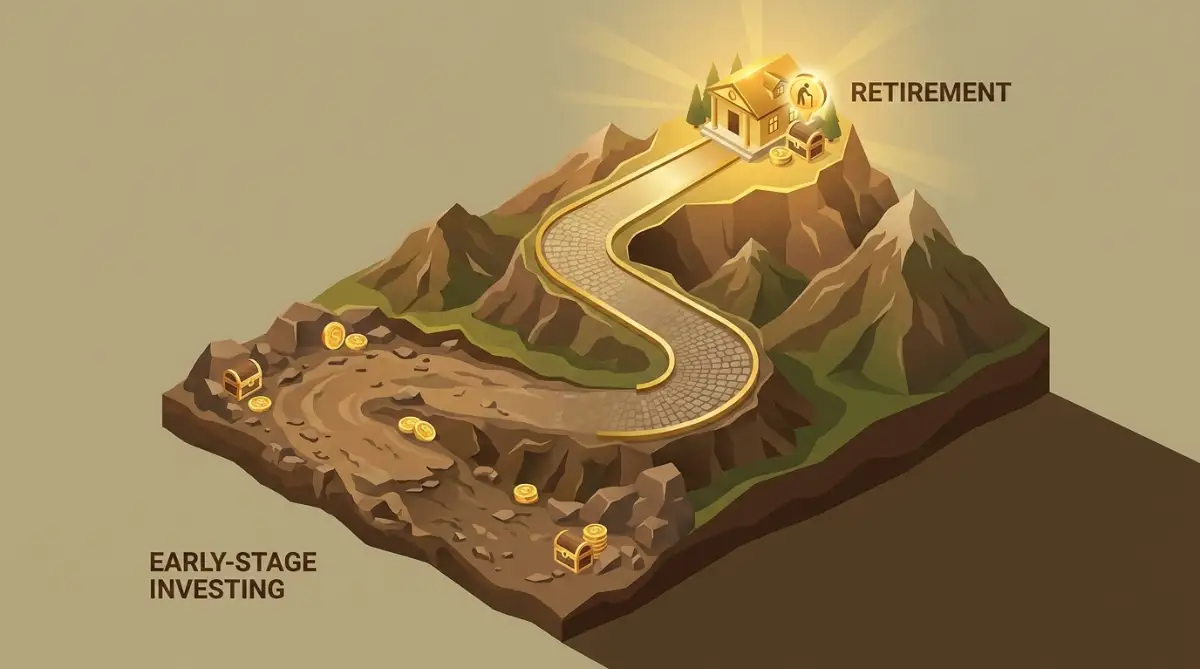
Your journey to a secure retirement is not a sprint. It is a long, steady walk. The path will have turns, and sometimes the weather will be rough. But if you have your compass—your time horizon—you will never be truly lost.
Focus on what you can control. You cannot control the stock market's daily swings. You cannot control interest rates or global events. But you can control how much you save, how long you stay invested, and how much risk you take on.
Stay committed to your plan even when others are panicking. The people who reach the finish line are not the ones who made the most noise; they are the ones who stayed quiet and consistent. You have the power to create a legacy of security for yourself and your loved ones.
Trust the process. I spent so many nights awake worrying about numbers on a screen, only to realize that the market has historically rewarded those who wait. My personal realization was that I didn't need to be lucky; I just needed to be patient. I encourage you to take that first step today, trust your horizon, and let time do the heavy lifting for you.
Common Questions About Investment Timelines
How do I know if I am being too conservative?
If your money is losing value after accounting for inflation, you are too conservative. You need your assets to grow faster than the cost of living. If your primary goal is 20 years away, having all your money in cash or low-interest bonds might actually be the riskiest choice you can make.
Is it okay to change my time horizon halfway through?
Life changes, and so do goals. If your goals shift—for example, if you decide you want to retire earlier than planned—you should adjust your horizon and your strategy accordingly. Just make sure you aren't changing your strategy simply because you are reacting to short-term market fears.
What if I have multiple goals with different time horizons?
This is very common. You might be saving for a house (short-term) and retirement (long-term) at the same time. You should treat these as separate "buckets" with different asset allocations. Don't mix your short-term house fund with your long-term aggressive growth stocks.
How often should I review my portfolio strategy?
An annual review is usually enough for most people. There is no need to look at it daily or even weekly. If your life circumstances change, such as a major salary increase or a family addition, that is a good time to re-evaluate your long-term plan.
Why does my risk tolerance change as I get older?
As you get closer to needing your money, you have less time to recover from a market crash. You want to prioritize protecting what you have already built over chasing high growth. It is a natural shift from "building" to "preserving."
Disclaimer: This information is provided for educational purposes only and does not constitute financial, investment, or legal advice. All investing involves risk, including the loss of principal. You should always consult with a qualified financial advisor before making any decisions regarding your retirement or investment strategy.