
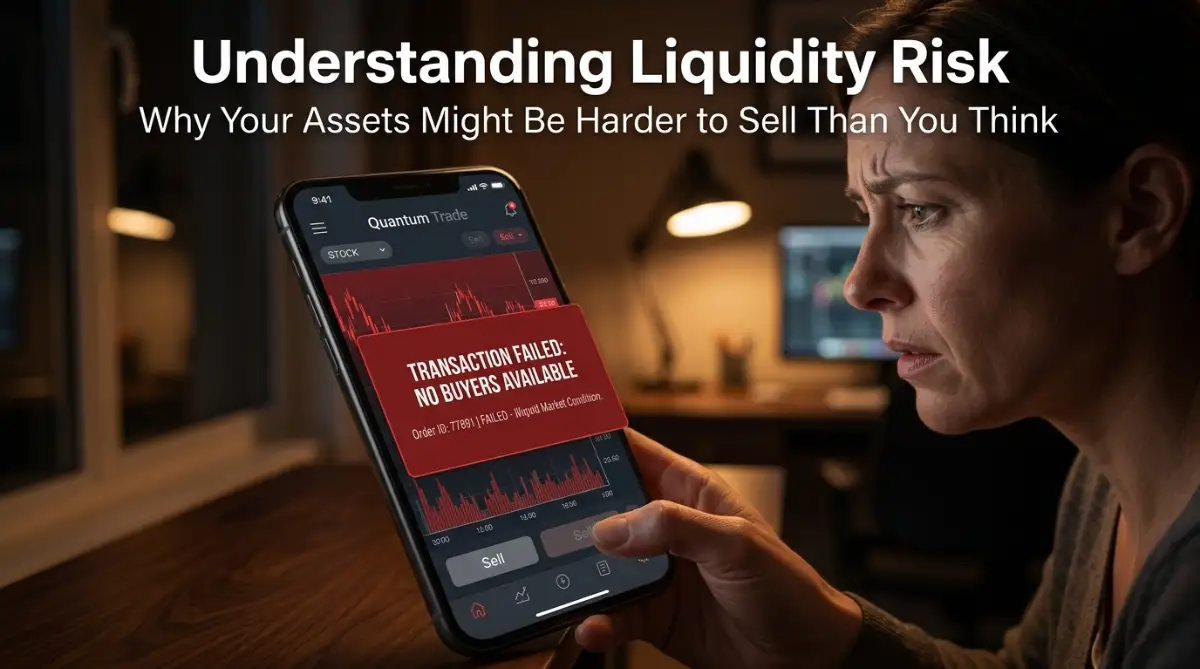
That Feeling When You Can't Get Out
You finally see that green number on your screen. You’re up 20% on a crypto token, you feel like a genius, and you hit 'sell' to cash out. But nothing happens. Your order just sits there, gathering dust, because nobody wants to buy what you have. That is liquidity risk—the invisible trap that turns your paper profits into ghost money. If you want to stop getting stuck in assets you can't sell, here is the reality check you need.
Nothing happened. Or rather, the order sat there. And sat there. I lowered the price, hoping to entice a buyer. Still nothing. The volume for this specific coin was essentially zero. My "profit" was a hallucination because there was literally no one on the other side of the trade willing to pay what I thought it was worth. It was a cold, hard lesson in something I had ignored: liquidity.
Have you ever been stuck with something you couldn't sell? Maybe it was a weird collectible, a stock in a dying company, or just an asset that suddenly lost all its market interest. It is a lonely, frustrating place to be. You feel helpless, watching your value exist on a screen but unable to touch it in the real world. Let's talk about how to stop this from happening to you.
The Smart Investor's Liquidity Cheat Sheet
Before you put money into any asset, memorize these rules:
- Liquidity is Freedom: If you can't sell it, you don't really 'own' the profit.
- Watch the Volume: If nobody else is trading it, you are gambling, not investing.
- The Spread Matters: If the buy/sell gap is wide, you are losing money instantly.
- Keep a Buffer: Never lock 100% of your money into assets that take weeks to sell.
The Invisible Wall: What is Liquidity Risk?

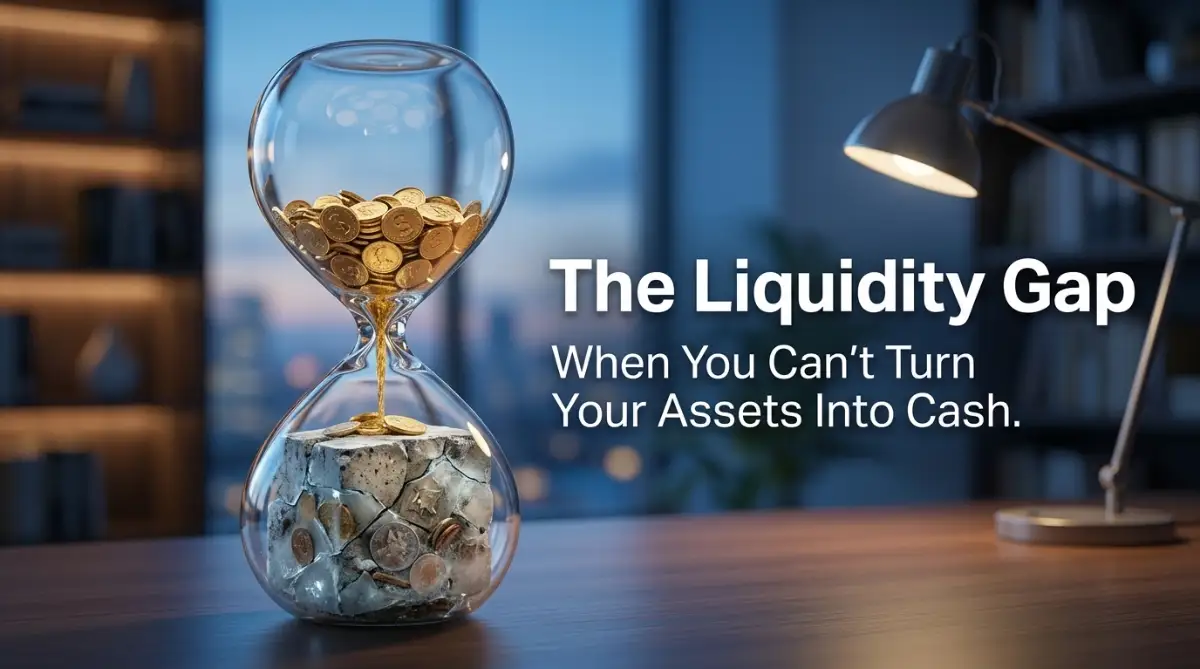
At its simplest level, liquidity risk is the possibility that you won't be able to turn your investment into cash when you need to. It happens when there aren't enough buyers for what you are selling at a fair price. You might have an asset worth a million dollars, but if no one wants to buy it, that value is just a number.
The Sandwich Shop Analogy
Imagine a popular coffee shop in a busy part of the city. It has a steady stream of customers and a business model that many buyers understand. If you owned a profitable shop like that, you might have an easier time finding interested buyers when you decide to sell. That makes the business relatively more liquid than a highly specialized company.
Now picture a business built around a machine that produces custom neon-colored shoelaces for a very small group of customers. Finding someone willing to buy that specialized business could take months or even longer because the pool of potential buyers is much smaller.
That is the basic idea behind an illiquid asset. The problem becomes more serious during an emergency. If you need cash immediately, you may have little choice but to accept a lower price simply because you cannot afford to wait for the right buyer.
Liquidity is not just about what an asset is worth—it is also about how quickly you can turn it into usable cash without taking a major loss.
Why Assets Vary in Liquidity
In the stock market, liquidity is usually high because there are thousands of traders constantly buying and selling the big names. You can sell Apple or Microsoft stock in a split second. But if you move down the ladder to "penny stocks" or very small companies, the number of traders drops significantly.
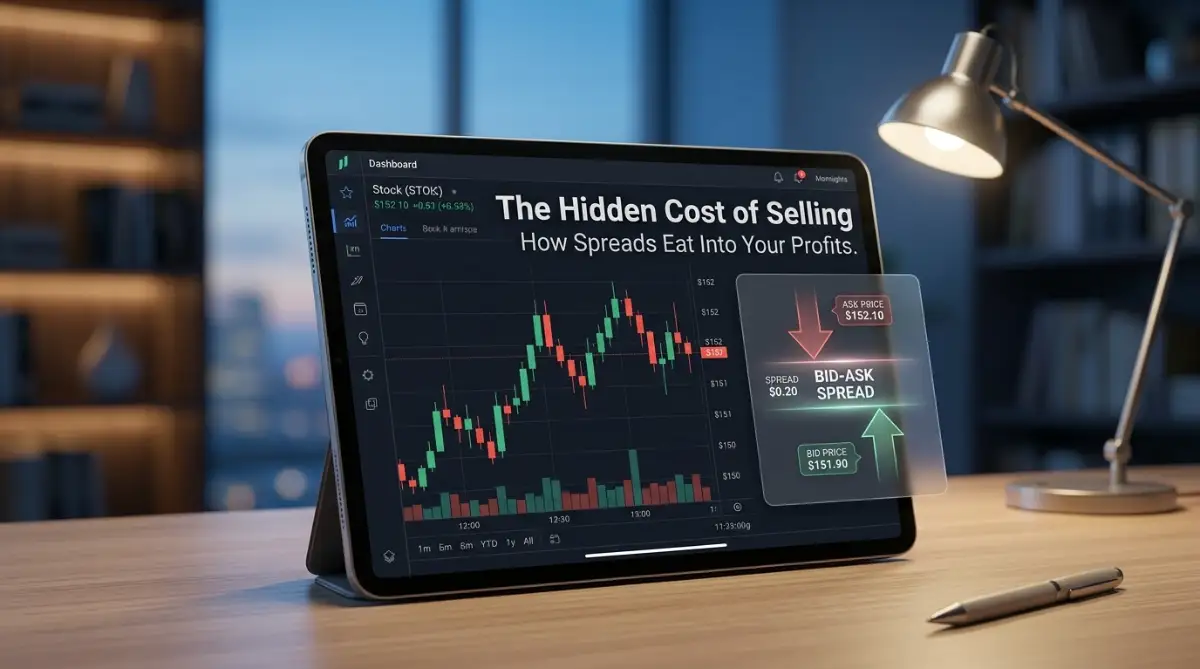
When you decide to sell, you might find that the only person willing to buy is offering you a price far lower than the "last traded" price you see on your screen. This is the spread. The wider the gap between what you want and what they offer, the higher your liquidity risk.
The Role of Market Cycles
Liquidity isn't a fixed state. It changes based on what the rest of the world is doing. In a booming market, everyone is buying, and everything feels liquid. But when a panic hits, buyers disappear.
Understanding where we are in the market cycle can save you from being caught in a trap. You can get a better handle on the current environment by learning about the lifecycle of a market cycle and how to identify phases without guesswork. Knowing the phase helps you decide if you should be holding liquid assets or if you can afford to lock money away in less liquid ventures.
Assessing Your Risk: How to Spot the Signs
You can protect yourself if you know what to look for. Before you invest, ask yourself a few simple questions. If you can't answer them, you might be walking into a liquidity trap.
My 3-Step "Liquidity Check" before you invest:
Before clicking 'Buy', run this test to avoid getting trapped:
Check the Volume: Does this asset trade thousands of dollars every day? (If not, run).
Spread Check: Is the gap between the 'Buy' and 'Sell' price huge? (If yes, stay away).
Exit Plan: Ask yourself: "If I needed this money in 24 hours, could I get it?
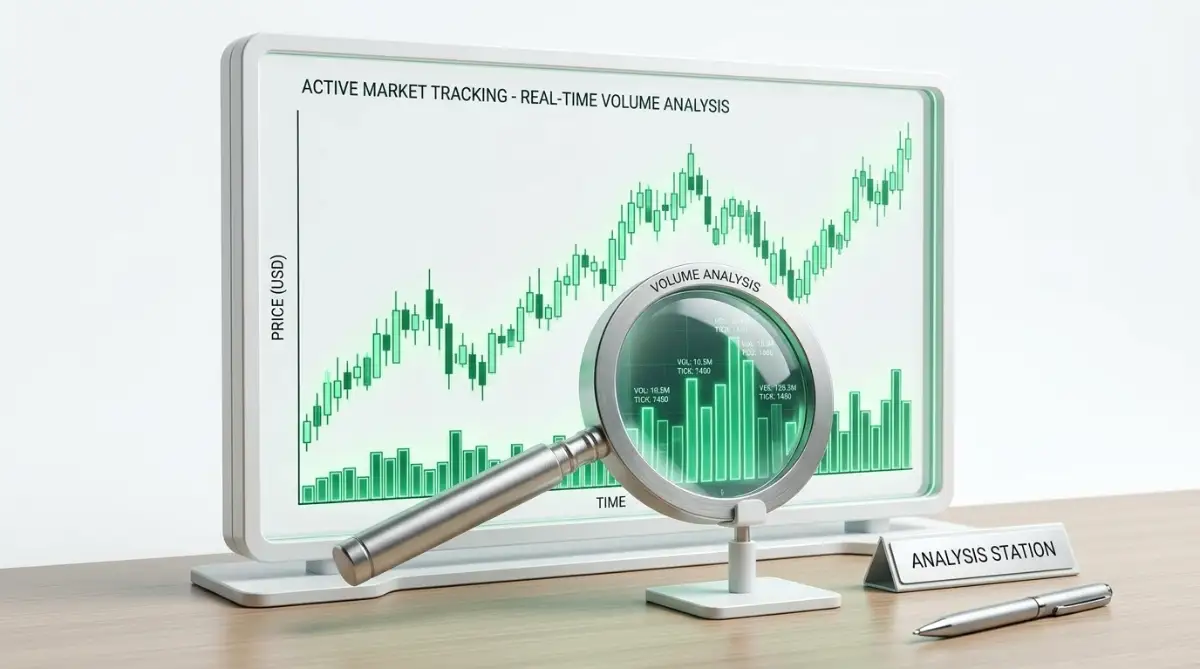
Check the Daily Volume
Look at how many shares or tokens are traded every day. If the number is low, be very careful. A low-volume asset is the easiest place to get stuck.
Look at the Bid-Ask Spread
This is the difference between the highest price a buyer is willing to pay (the bid) and the lowest price a seller is willing to accept (the ask). If that gap is massive, it means there is very little liquidity. You are essentially paying a "liquidity tax" the moment you buy.
Think About Your Time Horizon
If you might need this money for an emergency next month, don't put it into an illiquid asset. That is the golden rule. Only lock money away in assets that you don't mind owning for a very long time.
Pro Tip: My Worst Mistake
I once bought a niche asset because I thought the "potential" was huge, completely ignoring the fact that it had no daily volume. When I finally needed to sell it to pay for a surprise car repair, I had to list it at 40% below what I paid just to get a sale. I realized that my investment strategy was flawed because it didn't account for how easily I could exit. Now, before I buy anything, I look at the order book first. If I don't see a healthy list of buy orders, I move on.
The Specific Challenge of Digital Assets
Digital assets have brought a new layer to this conversation. Some coins or tokens trade on massive, global exchanges with millions of users. These are fairly liquid. But the "long tail" of crypto—the obscure, experimental tokens—can be liquidity black holes.
The Cold Storage Reality
When you hold digital assets in cold storage, you are prioritizing security over liquidity. It takes time to move your coins from a cold wallet to an exchange and then sell them. If the market is crashing, those extra minutes can feel like hours. To learn how to manage this balance safely, read up on how to safely store your crypto. It is important to know that you are trading some accessibility for that safety.
The "Slippage" Factor
Slippage happens when you place a large order, and there isn't enough supply at your target price to fill it. Your order "slips" to a worse price to get completed. In small digital assets, a single large sell order can tank the price by 10% or more instantly.
Why You Should Watch This
Liquidity is hard to visualize until you see it in a live market. This short video breaks down the concept of market depth and how it impacts your trading orders.
Check out this guide to understanding market depth and why it matters for your portfolio:
Myth vs. Reality: The Liquidity Debate
Many people hold onto dangerous beliefs about how markets work. Let's clear up a few common misunderstandings that could be costing you money.
Why Bonds Aren’t Always Safe
Bonds are often viewed as the “safe” part of an investment portfolio, but that doesn’t mean they are free from risk. Liquidity risk is one factor investors sometimes overlook.
For example, if you own a corporate bond issued by a company that runs into financial trouble, there may not be enough buyers when you want to sell it before maturity. Trading in that particular bond can become difficult, and you may have to accept a lower price to find a buyer.
In some situations, you might even prefer to hold the bond until maturity rather than sell it at an unfavorable price. That can be especially frustrating if you need access to your money sooner.
The key lesson is simple: “safe” and “liquid” are not the same thing. Before investing in a bond, consider not only the issuer’s credit risk but also how easily you could sell the investment if your circumstances change.
The Psychological Impact of Illiquidity
Being illiquid changes how you think. When you know you can't sell, you might become more emotional about the investment. You might double down on a bad trade just because you feel you have to "ride it out" since you can't get out.
This is a dangerous trap. It is better to have a small loss in a liquid asset than to be trapped in a large, unrealized loss in an illiquid one. Don't let your assets hold you hostage.
How to Build a Liquidity Buffer
You need a portion of your portfolio that is "emergency ready." This means keeping enough cash or highly liquid stocks (like large-cap index funds) to cover your life for six months.
This buffer acts as a shield. It ensures that you are never forced to sell your illiquid assets at the worst possible time. You sell when you want to, not when you have to. That is the ultimate goal of risk management.
Assessing Your Assets: A Simple Checklist
Before you commit another dollar, run your potential investment through this quick checklist:
- Is there active trading? (Check the 24-hour volume).
- Is the bid-ask spread narrow? (Anything more than 1-2% is often a warning).
- Are there many participants? (A market with only two players is a trap).
- Does this fit my exit plan? (Do you know how you would sell this if things went wrong?).
If you can't check these boxes, you aren't investing; you are speculating. There is nothing wrong with speculation, provided you are honest about the risk you are taking. But don't call it "saving" or "stable investing."
Managing Your Emotions When Liquidity Dries Up
It is easy to be calm when the market is up. It is a completely different story when your asset loses value and you can't sell it. If you ever feel that rising panic, take a step back.
Stop checking the price every five minutes. It won't bring buyers back. Instead, focus on your original thesis. If the reason you bought the asset is still valid, you can wait. If the reason has changed, you need to accept that you might have to take a larger-than-expected loss to exit.
The Bottom Line on Risk
Liquidity risk is the silent killer of portfolios. It doesn't make the headlines like a market crash does. It just quietly waits for you to need your money, and then it makes getting that money difficult.
By prioritizing liquidity, you are prioritizing your freedom. You are ensuring that you remain the boss of your own money. When you can sell, you can pivot. When you can pivot, you can survive.
Take a look at your holdings today. Be honest about which ones are easy to sell and which ones are not. If you are too heavily weighted in illiquid assets, start shifting toward more liquid options. Your future self will thank you for the flexibility.
Frequently Asked Questions
Why is liquidity so important for investors?
Liquidity allows you to convert assets to cash quickly without significantly affecting the price. Without it, you are at the mercy of the market, potentially forcing you to accept much lower prices just to find a buyer.
Can I check liquidity before I buy stocks?
Yes. Look at the "Volume" on any stock quote page. High volume generally means higher liquidity. Also, compare the bid and ask prices to see how tight the spread is.
Is crypto more liquid than stocks?
Some major cryptos are very liquid, but the vast majority of the thousands of tokens in existence have very low liquidity. Never assume a digital asset is liquid just because it is traded on an exchange.
What is a "liquidity crunch"?
This happens when market participants suddenly stop buying, often due to fear or a crisis. Even assets that are usually liquid can become impossible to sell during a crunch because everyone is trying to exit at the same time.
How do I protect myself from liquidity risk?
Diversify your portfolio. Don't put all your money into assets that are hard to sell. Keep a "liquidity buffer" of cash or highly liquid stocks, and always research the volume of any asset before buying.
Does a low bid-ask spread mean an asset is safe?
It means it is liquid, not necessarily safe. A stock can have high liquidity and still lose value if the company is failing. Liquidity is just one piece of the risk puzzle, but it is one you should never ignore.
Sharpening Your Portfolio Strategy Against Market Freezes
You might think you are safe because you only buy assets that look profitable on paper. However, professional traders operate with a different mindset. They look at "market depth" before they ever look at the potential upside.
If you want to move beyond the basics, you have to start analyzing the volume profile of your assets. Don't just look at the price action. Look at how many people are actually trading at those levels.
When a stock or a coin has high volume, it means there are buyers and sellers constantly interacting. This creates a "thick" market where you can enter or exit without your trade drastically moving the price against you. In a thin market, even a small buy or sell order causes price volatility.
The Power of Position Sizing
I learned this the hard way after watching a small, low-volume investment consume my entire portfolio strategy. If you choose to invest in illiquid assets, never let them become the core of your wealth. These should only be "satellite" positions.
Try to keep your exposure to illiquid assets below a certain percentage of your total net worth. For many, that number is five percent or less. This way, if that asset becomes impossible to sell, your standard of living remains unchanged.
Stress-Testing Your Liquidity Needs
Do you have a clear plan for what you would do if you needed cash in a hurry? Most people haven't thought this through. They assume they can just sell.
Take a few minutes to imagine the worst-case scenario. If the markets dropped by twenty percent tomorrow, could you access your cash without selling at a loss? You need to ensure your investment time horizon aligns with your liquidity needs.
Using Stop-Loss Orders Wisely
In liquid markets, stop-loss orders are a great tool to protect your downside. But be warned: in illiquid markets, they can be dangerous. If there are no buyers, your stop-loss might trigger at a much lower price than you intended.
This is a phenomenon known as "slippage." The market gap might be so wide that you end up selling for far less than you expected. Always monitor your stop-loss settings in less liquid assets to make sure you aren't leaving yourself exposed to a surprise sell-off.
Understanding Market Impact Costs
Every time you trade, there is a cost. This isn't just the broker fee. It is the "impact cost" of your order on the market.
When you buy a large amount of a low-volume asset, you push the price up. When you sell, you push it down. This is why mastering fundamental analysis is helpful, as it helps you identify value rather than just chasing momentum in assets that might be hard to exit.
The Role of Market Makers
In many markets, you aren't trading against other humans. You are trading against algorithms known as market makers. These systems provide liquidity by constantly posting buy and sell orders.
However, during times of extreme stress, these market makers can widen their spreads to protect themselves. This makes it even harder for you to trade. Understanding that liquidity is not a guarantee is a major step in learning to stay calm and invest wisely during market volatility.
Diversification Beyond Asset Classes
Most people think diversification means owning stocks, bonds, and some crypto. True diversification also means owning assets with different liquidity profiles.
You should have a mix of assets that can be sold in seconds, assets that take a few days, and assets that take months. This hierarchy ensures that you are never caught with all your money in a "locked" state. According to the CFA Institute’s research on market liquidity, understanding these nuances is what separates professional risk managers from casual investors.
Avoiding the Traps That Catch Even Seasoned Investors
There is a common trap that many investors fall into when liquidity starts to dry up. They look at their shrinking portfolio and tell themselves, "I will just wait for the price to recover."
The Sunk Cost Fallacy in Liquidity
This mindset is dangerous because it ignores the "opportunity cost" of your trapped capital. If your money is tied up in an asset that cannot be sold, you aren't just sitting on a loss. You are losing the ability to move that capital into a better, more liquid investment.
Sometimes, the best move is to take the hit and exit. It hurts to sell at a loss, but it hurts more to lose the ability to manage your financial future. Holding a bag just because you are "waiting for the price to come back" is a strategy rooted in hope, not math.
Ignoring the "Exit Liquidity" Problem
Have you ever seen a token or a stock skyrocket in price, only to watch it stay there while no one else seems to be buying? You might be looking at "exit liquidity." This is when big holders are looking for someone—anyone—to buy their shares so they can get out.
They create the hype, they generate the volume, and they wait for retail investors to pile in. Once the retail crowd is in, the big holders sell, and the liquidity disappears. Never buy an asset just because the price is moving fast.
The False Sense of Security from Paper Gains
You might feel rich when you look at your account balance. But remember, that balance is not money in your pocket. It is just an accounting entry.
The only value that matters is the price at which you can actually complete a transaction. If you can't sell, you don't have that profit. Always factor in how quickly you could actually convert those paper gains into spendable cash.
Relying on "Greater Fool" Theory
This is the belief that no matter how illiquid or overvalued an asset is, someone else will come along and pay even more for it. This is a game of musical chairs. When the music stops, you don't want to be the one holding the illiquid asset.
If you don't understand the intrinsic value of what you are buying, you are playing a dangerous game. It is much safer to focus on speculation vs. value-based investing to ensure you are actually building something substantial. Building wealth takes time