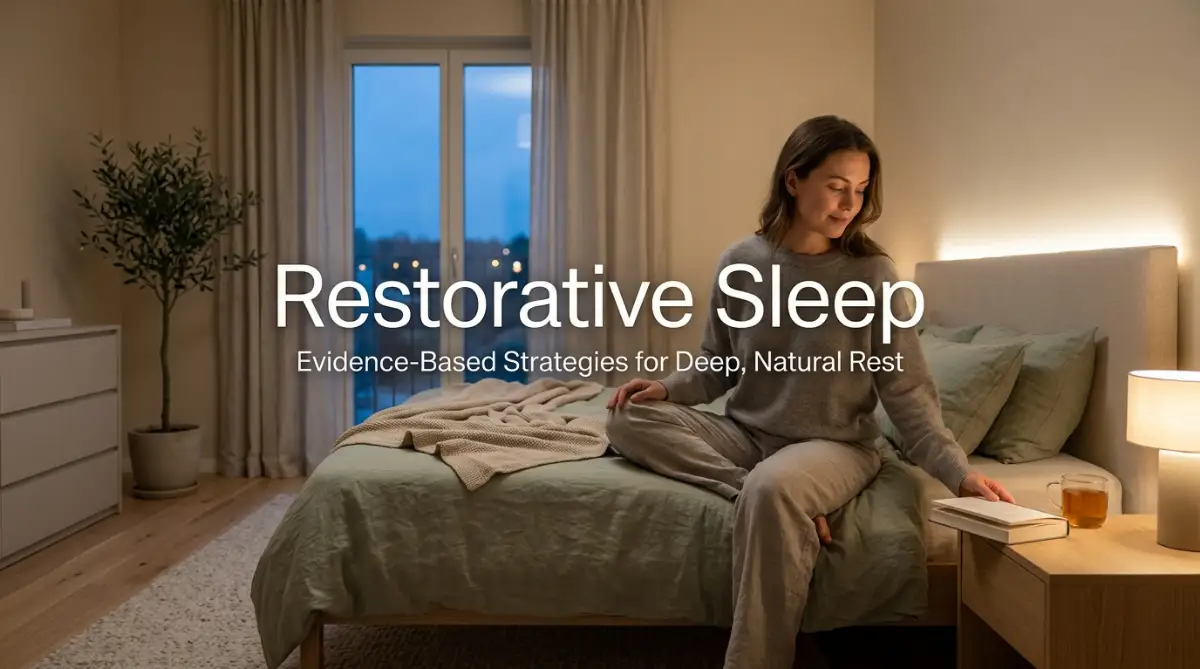
The Frustration of the Midnight Stare: My Journey to Rest
Staring at the ceiling at 3:00 AM isn't just annoying; it’s a productivity killer. If your mind won't shut off, you don't need a heavy prescription—you need a system reset. Let’s look at why your body is fighting you and how you can flip the switch for better sleep tonight without any magic gadgets.
Spoiler alert: none of that actually helped. In fact, it made things worse. I eventually realized that many of my own habits were working against the way my body naturally wanted to sleep. The more I worried about not being able to fall asleep, the more awake I seemed to become. Then the tiredness would hit the next day, which made me even more anxious about getting enough sleep the following night. It felt like a cycle I couldn’t get out of unless I took something stronger. But after reading more about sleep and experimenting with a few changes myself, I started to see things differently. Maybe I didn’t need to “fix” my body at all. I needed to change the way I approached rest and give my body a better chance to do what it already knows how to do.
If you are reading this, I want you to know that you are not alone in this struggle. It is completely normal to have nights where sleep feels out of reach, but it does not have to be your permanent reality. You have the power to change how you rest by tweaking a few small, consistent parts of your daily life. It is not about magic tricks or expensive gadgets; it is about respecting the way your body is designed to function.
Sleep Better Starting Tonight
- Morning Light: Get sunlight in your eyes within 30 minutes of waking.
- The Cut-off: Stop caffeine intake by noon.
- Cool Room: Keep your bedroom temperature between 60°F and 67°F.
- Brain Dump: Write down your to-do list before bed to stop your brain from racing.
Mastering Your Circadian Rhythm: The Foundation of Rest
The secret to better sleep is not found in a bottle; it is found in your biology. Your body operates on an internal clock, known as the circadian rhythm, which is basically an orchestra conductor for your energy levels. When this rhythm is off, your body does not get the signal that it is time to wind down. The most powerful tool you have to reset this clock is natural light.
I found that getting sunlight in my eyes within thirty minutes of waking up changed everything for me. It sounds incredibly simple, but it is a biological command. When morning light hits your eyes, it suppresses the sleep hormone, melatonin, and sets a timer for its release about fourteen to sixteen hours later. If you stay inside all day in dim light, your brain never gets that clear "start" signal, which makes it harder to get the "stop" signal at night.

The Power of "Light Hygiene"
Think of your exposure to light like a rhythm. You want bright, intense light in the morning and early afternoon. As the sun goes down, you want to mimic that sunset in your own home. If you are sitting under harsh, blue-tinted LED lights at 10:00 PM, you are tricking your brain into thinking it is noon.
- Dim your overhead lights in the evening to create a softer ambiance.
- Use warmer-toned bulbs (like amber or soft yellow) instead of cool-white options in your bedroom.
- Reduce screen brightness if you must use devices, or better yet, put them away an hour before bed.
Pro Tip: I used to think I could just scroll through social media until I felt tired. I was wrong. The blue light from the screen specifically tells my brain to stop producing melatonin. Now, I have a strict rule: the phone goes into a different room at least 45 minutes before I hit the pillow. My sleep quality improved drastically within just three days of making this switch.
Creating Your Personal Sleep Sanctuary

Your environment dictates your level of comfort. If your bedroom is messy, cluttered, or too warm, your brain will struggle to associate it with rest. The goal is to make your bedroom a "sleep-only zone." This means keeping work, high-stress conversations, and even excessive entertainment out of this space if you can.
Temperature and Air Quality
Most people keep their bedrooms far too warm. Science suggests that your body needs to drop its core temperature by a few degrees to initiate and maintain deep sleep. A room temperature between 60°F and 67°F (15°C to 19°C) is generally the sweet spot for most adults.
- Cool the room down: Try opening a window or using a fan before you get into bed.
- Dress for comfort: Wear breathable fabrics that prevent overheating.
- Invest in darkness: Use blackout curtains or an eye mask. Your skin has light-sensing receptors, and even a little light entering your eyes can disrupt your sleep cycles.
The Brain Dump: Clearing Your Mental Space
Often, we cannot sleep because our brains are holding onto a "to-do list" that we are afraid of forgetting. I used to lie there thinking, "I need to remember to pay that bill" or "Did I reply to that email?" It is impossible to relax when your brain is in "work mode."
I started keeping a notepad on my nightstand. Before I even brush my teeth, I take two minutes to write down everything that is bothering me or everything I need to do tomorrow. Once it is on paper, my brain feels like it can finally let go of that information. It sounds too easy to work, but it really does stop that spinning wheel of thoughts.
[Watch this short video to understand the science behind how your brain processes rest and why small changes in your evening routine can lead to deeper sleep.]
Nourishment and Evening Rituals
What you eat and drink during the day can influence how well you sleep at night. Caffeine is an obvious one to watch, but its effects can last longer than you might expect. Because caffeine has a relatively long half-life, a cup of coffee in the afternoon can still leave a meaningful amount in your system several hours later.
For me, I noticed a difference when I stopped having caffeine around noon or early afternoon. That doesn't mean everyone needs the same cutoff time—some people are more sensitive to caffeine than others. If you're having trouble sleeping, experimenting with an earlier caffeine cutoff may be a simple habit worth trying.
The "No-Food-Before-Bed" Rule
Eating a heavy meal right before you lie down is a recipe for disaster. Your body should be focusing on restoration, not digestion. If your stomach is working hard to break down a big meal, your core body temperature stays higher, and your sleep will be fragmented.
- Try to finish your last meal at least 2-3 hours before you plan to sleep.
- Avoid heavy, spicy, or acidic foods late at night, as they can cause indigestion.
- Stick to calming beverages, like herbal tea, if you need something warm in the evening.
Breaking the Cycle of Anxiety
Sometimes, the harder you try to fall asleep, the more difficult it becomes. You lie there thinking about how much you need to sleep, check the time again and again, and before long, bedtime starts to feel like another source of stress.
If you’ve been in bed for around 20 minutes and still feel completely awake, it can help to get up for a while instead of forcing yourself to sleep. Keep the lights dim and move to another room if possible. Do something quiet and uninteresting, such as reading a few pages of a book, folding clothes, or listening to calm instrumental music. Try not to keep checking the clock.
When you start feeling sleepy again, go back to bed. The idea is to slowly rebuild the connection between your bed and sleep rather than lying there frustrated. This approach is known as Stimulus Control Therapy, and it is commonly used as part of strategies for improving sleep habits.
Building Your Unique Routine
There is no "one size fits all" routine. You might love a warm shower, while I might prefer ten minutes of stretching. The consistency is what matters most. By doing the same things in the same order every night, you are creating a "Pavlovian response." You are training your nervous system to recognize these activities as precursors to shut-down mode.
Start small. Do not try to change your entire life tonight. Pick one thing—maybe it is the morning sunlight or the evening phone ban—and stick to it for a week. See how your energy levels change. Once you get that win, add another habit. You are not just changing a night; you are building a lifestyle that supports your health, your mood, and your future.
Quality rest is not a luxury; it is a necessity for a healthy life. Take it one night at a time, be patient with yourself, and remember that you have the tools to reclaim your sleep right now. Start tonight, and watch how much better you feel when you wake up.
Mastering Your Biology: Advanced Secrets for Deep Rest
You have already mastered the basics of light exposure and environment. Now, let’s look at the mechanics of your sleep cycles to really refine your nightly rest. The first thing you need to understand is the concept of sleep pressure.
Throughout the day, your body builds up a chemical called adenosine. Think of adenosine as a "sleep debt" that accumulates the longer you stay awake. By the time you reach the end of the day, those levels should be high enough to make you feel heavy and tired.
The Science of Cycles
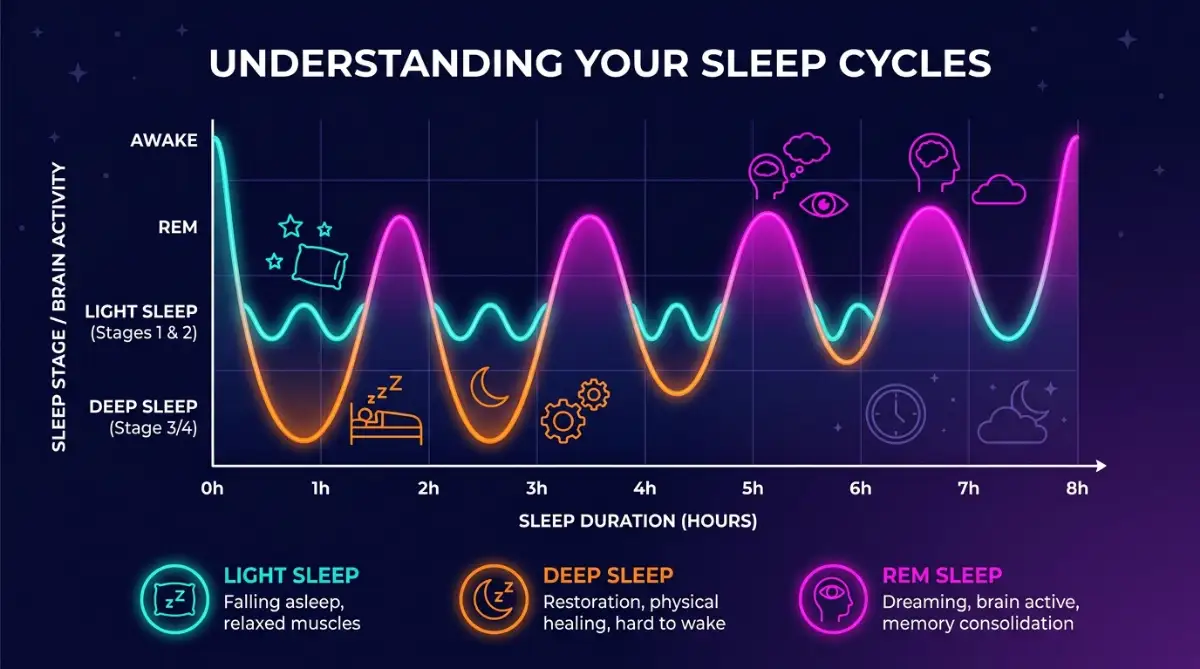
Your sleep is not just one long block of time. It happens in roughly 90-minute segments. You move from light sleep into deep sleep, and then into REM (Rapid Eye Movement) sleep.
If you wake up in the middle of a deep sleep cycle, you will feel like a zombie, even if you technically had eight hours in bed. To feel refreshed, you want to time your wake-up alarm to coincide with the end of these cycles. This is often why a 90-minute nap can sometimes feel more refreshing than a three-hour one. To understand the complex nature of these brain patterns, you can check out this helpful guide on sleep biology from the National Institute of Neurological Disorders and Stroke.
Managing Your Adenosine Levels
This is where caffeine usage becomes a major player. Caffeine works by blocking your adenosine receptors. It does not give you energy; it just masks the "tired" signal your brain is sending.
If you drink coffee or tea too late in the day, that caffeine is still sitting on those receptors at bedtime. Your brain should be feeling the pressure of a long day, but the caffeine is stopping that message from getting through. I stopped all caffeine consumption by noon, and the difference in how quickly I fell asleep at night was massive.
It is also worth noting that your daily food choices impact these chemical signals. If you are struggling with energy crashes or late-night hunger, you might want to look into how to manage chronic conditions through daily nutrition choices to stabilize your system. When your blood sugar is stable, your body doesn't need to release stress hormones like cortisol in the middle of the night.
Cognitive Offloading
I used to lie in bed and replay my entire day. I would think about the money I spent, the emails I missed, or that awkward comment I made in a meeting. This keeps your brain in "high-alert" mode.
Try "cognitive offloading." Take five minutes before you get into bed to write down your worries or your schedule for the next day. By putting these thoughts on paper, you tell your brain, "It is safe to let go of this now. I will handle it in the morning."
This is not just a productivity hack; it is a way to quiet your nervous system. If you find that your financial or personal stress is keeping you up, sometimes how to stay calm and invest wisely during market volatility can provide a perspective shift that helps lower your overall anxiety levels.
The Hidden Traps That Sabotage Your Sleep
Myth vs. Fact: Sleep Edition
- Myth: "I can catch up on sleep on the weekend."
- Fact: Your body doesn't work like a bank account. You can't bank sleep; you just confuse your system.
- Myth: "Alcohol helps me fall asleep faster."
- Fact: It might make you drowsy, but it ruins your deep sleep and prevents real recovery.
We often do things we think are "relaxing," but they are actually doing more harm than good. Let’s talk about the pitfalls that keep people stuck in a cycle of poor recovery.
The Weekend Jetlag
This is the most common mistake I see people make. They stay up late on Friday and Saturday, and then sleep in until noon on Sunday. This creates a "social jetlag" where your body clock gets confused every single week.
It is like flying across time zones every Saturday and Sunday. When Monday morning hits, your brain feels like it is Tuesday in another country. Try to wake up within an hour of your normal weekday time, even on weekends. Your body will thank you for the consistency.
Relying on Sleep Trackers
I used to obsess over my sleep score on my smartwatch. If my watch told me I had a bad night, I would feel exhausted all day—even if I actually felt fine. This is a real phenomenon called "orthosomnia," where the stress of trying to get a perfect score ruins your actual sleep quality.
If a device is making you anxious about your rest, put it away. You are the best judge of how you feel. If you are worried about your general health and need a baseline check, remember that mental health check-ups are just as essential as physical screenings for your overall well-being.
The "Bed is for Everything" Habit
Do you work on your laptop in bed? Do you eat snacks in bed? Do you watch intense movies in bed? If you do, your brain loses the association that "Bed = Sleep."
You want your brain to have a conditioned response. When your head hits the pillow, your brain should automatically say, "Oh, I know this. It is time to shut down." If you bring work stress or screen time into the bedroom, you weaken that connection.
For some, if you notice your sleep issues are part of a larger pattern of unexplained physical symptoms, you may want to look into decoding medical bills and patient guides to ensure your health management is stress-free. Financial worries are a top reason for sleepless nights, so organizing your life administratively can actually help you rest easier.
Common Questions About Restoring Sleep
Is it okay to take naps during the day?
Napping is fine, but it can be a double-edged sword. If you take a long nap in the late afternoon, you steal the "sleep pressure" you need for the night. If you must nap, keep it under 20 minutes and do it before 3:00 PM.
Why do I wake up at the same time every night?
This often happens because your body has entered a rhythm of waking up, or it might be triggered by a noise or a drop in blood sugar. Ensure your room is completely dark and quiet, and consider a light snack with protein and complex carbs before bed if you think hunger is waking you up. You can read more about common sleep disorders if you suspect there is a deeper issue like apnea.
Do I really need to stop using my phone an hour before bed?
Yes, and it is not just about the blue light. It is about the content. If you are scrolling through news, work emails, or social media, your brain is getting "dopamine hits" and staying stimulated. You need to give your brain a buffer zone to get bored before you try to sleep.
Can I catch up on sleep on the weekend?
Unfortunately, you cannot "bank" sleep. Staying in bed for twelve hours on Sunday does not undo the damage of five nights of four hours of sleep. It is better to have a steady, consistent schedule every day of the week rather than trying to pay off a sleep debt.
Your Path to Consistent, Deep Rest
You now have a clear roadmap to better sleep. It is not about buying a new mattress, a fancy supplement, or a high-tech gadget. It is about honoring the rhythm of your own body and making small, intentional choices throughout your day.
If you find yourself slipping back into old habits, do not be hard on yourself. Progress is rarely a straight line. The goal is to get back to these foundational practices as soon as you notice your energy dipping. You have the power to influence your nightly recovery through your morning sunlight, your evening routine, and how you manage your daily stress.
I have spent years struggling with this myself, and the most freeing realization I ever had was that I was not "broken." I was just living a life that was disconnected from my natural biology. Once I started listening to what my body was asking for—rest, consistency, and a calm environment—everything changed. I stopped dreading the night and started looking forward to the recharge.
You can start tonight. Turn off the bright lights, put away your phone, and give your mind the space it needs to drift off naturally. You deserve to wake up feeling ready to tackle your day, and that starts the moment you close your eyes tonight. Take that first step, and trust that your body knows exactly what to do when you provide the right conditions.
Disclaimer: The information shared in this post is for educational purposes only and does not constitute medical advice, diagnosis, or treatment. Always seek the advice of your physician or other qualified health provider with any questions you may have regarding a medical condition. Never disregard professional medical advice or delay in seeking it because of something you have read on this website.