Solar Legal Success Roadmap
- Organize First: Create a master folder for every permit, agreement, and inspection report.
- Verify Terms: Check the net metering agreement carefully before you sign.
- Ask for Clarity: If you don't understand a clause, ask your installer to explain it in plain English.
- Maintain Records: Save physical and digital copies of everything; you will need them when you sell your home.
The Moment I Realized I Was Lost in Paperwork
Signing a solar contract shouldn't feel like learning a foreign language. You are investing in your home’s energy future, but the legal paperwork is often designed to confuse the average homeowner. If you want to avoid hidden costs and long-term liabilities, you need to stop guessing and start verifying. Here is the straightforward guide to navigating the solar documentation maze without the stress.
The promise of solar power was all about freedom and clean energy. But here I was, trapped in a maze of legal jargon that felt designed to keep me from moving forward. Every form I filled out seemed to require three other forms I had never heard of. I started to worry that I had made a huge mistake by trying to do this on my own.
I think many of us start our solar journey with excitement and end it with a headache. You want to save money and help the planet, but suddenly you are acting as your own project manager and legal assistant. The frustration is real. You don't know who to call, which deadlines are hard, and which ones are just suggestions.
This process can drain your enthusiasm before the panels are even on the roof. You start to doubt if the energy savings will ever be worth the sheer effort of getting the legal side done. I know that feeling of wanting to just fold the papers up and put the panels back in the box.
But I’m here to tell you that this maze has an exit. It isn’t as scary as it looks once you break it down into manageable pieces. You don't need to be a lawyer to get your solar system approved. You just need to know how the game is played. Let’s look at how we can turn this pile of paperwork into a clear roadmap for success.
DecThree Questions You Must Ask Your Solar Installer:
- "What happens if I sell my home?" (Ask for a clear explanation of transferability clauses).
- "Are there any hidden dealer fees?" (Compare the cash price to the financed price to spot padding).
- "Who is responsible for roofing repairs?" (Get this in writing, do not rely on a verbal promise).
oding the Legal Labyrinth of Solar
You need to understand that the paperwork exists for a reason. It is not just to annoy you. The utility company needs to know that your system won't overload their grid, and the city needs to know your roof is structurally sound. Once you view the paperwork as a "safety checklist" rather than a "roadblock," the process becomes much more logical.
Identifying the Major Documents
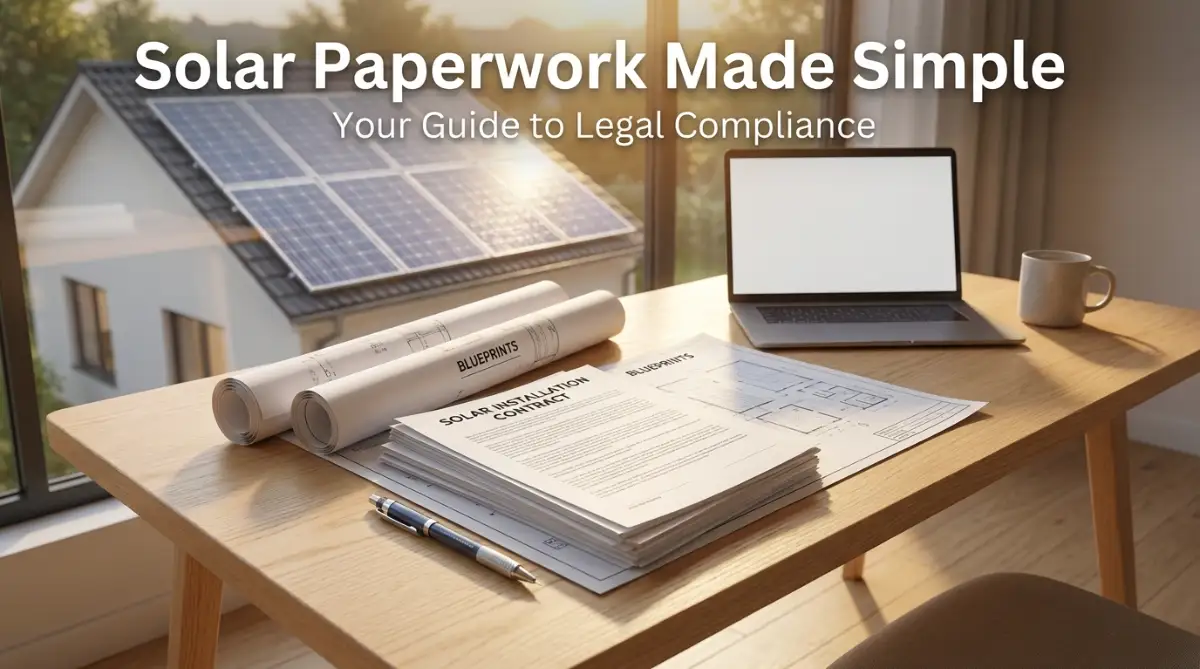
The first thing to do is separate the noise from the essential files. You are generally dealing with three big buckets of paperwork: the building permit, the interconnection agreement, and the local zoning or HOA forms. Each one serves a different purpose.
The building permit is about the safety of your roof and electrical system. The interconnection agreement is the contract with your utility company that lets you feed power back to the grid. The HOA or zoning forms are about making sure your neighbors are okay with how your house looks. Once you see them this way, they stop being a mysterious pile of documents.
Navigating the Utility Interconnection Agreement
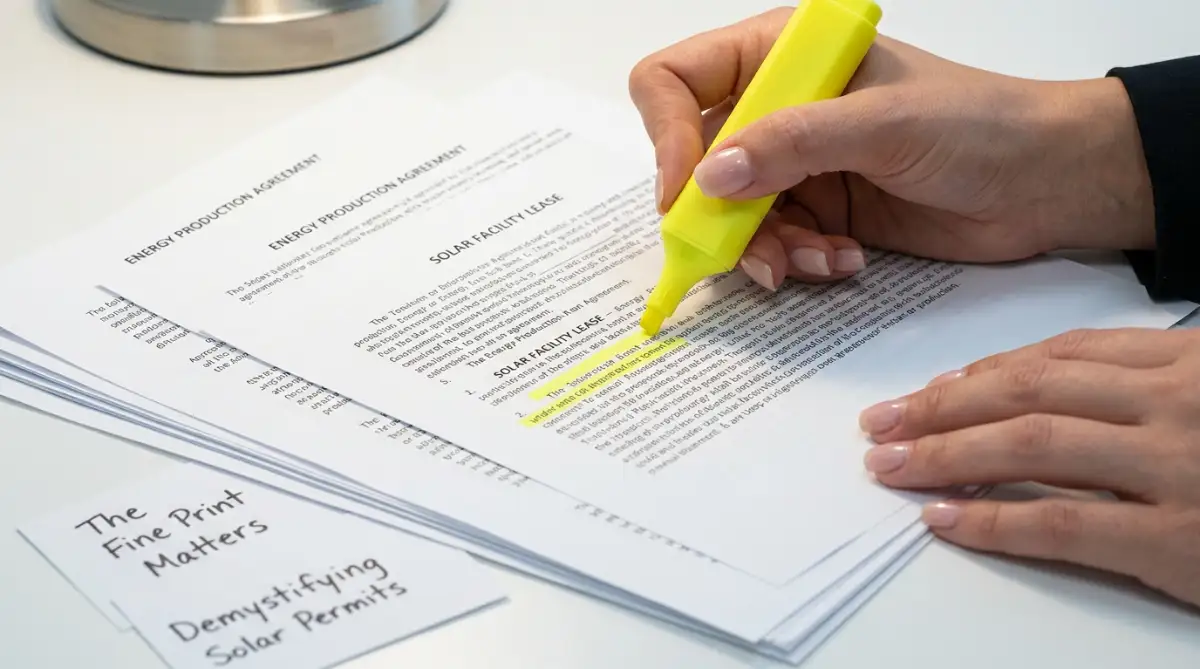
This is the document that scares most people. It is the legal bond between you and your power company. It outlines what happens when your panels produce more power than you can use. You need to be very careful here.
Read the section on "Net Metering." This is how you get paid for your extra energy. If the agreement is vague or has a clause about "deemed generation" that sounds wrong, ask for clarification. You are entering into a long-term business relationship with the utility. Treat it with the same seriousness you would a bank loan.
The Homeowners Association (HOA) Hurdle
If you live in a place with an HOA, this can be your biggest challenge. Some HOAs are still stuck in the past when it comes to solar design. Before you even buy your panels, read your association’s rules.
You need to submit a clear, professional plan. Show them exactly what the panels will look like. If you have an option to place them on a side of the house that isn't visible from the street, highlight that. Being proactive and respectful of their rules usually gets you a "yes" much faster than trying to fight them.
The Solar Paperwork Checklist
| Document Type | What It Does | Your Role |
| Interconnection Agreement | Connects you to the utility grid. | Review net metering terms. |
| Building Permit | Verifies roof safety and electrical codes. | Keep a digital copy in your files. |
| Equipment Warranty | Guarantees hardware performance. | Store separately from installation docs. |
| Tax Credit Form | Allows you to claim federal incentives. | Keep for your tax preparer. |
Mapping Your Submission Timeline
Permits do not happen overnight. You have to work backward from your installation date. If you want the panels on your roof by next month, you need to submit these forms yesterday.
Create a tracker. List each permit, the date you sent it, and the date you expect to hear back. This keeps you in control. When you know where each document is in the process, you won't feel like you are waiting in the dark. It gives you an actionable plan.
Pro Tip: My Realization
I spent three weeks waiting for a permit because I forgot to attach one specific electrical diagram. The city official didn't email me to say it was missing; they just put my file at the bottom of the pile. My pro tip for you is to call the city office a few days after you submit. Ask politely, "I just want to confirm that you have everything you need to begin the review." That simple question ensures your file doesn't get stuck in limbo. It is the best move I ever made.
Ensuring Electrical and Fire Safety Compliance
This is not optional. Your city will require that your system meets the National Electrical Code. Your installer should handle this, but you are the one responsible if the work is sub-par. Make sure the paperwork includes a clear line diagram of your electrical connections.
The city inspector will look at this diagram on the day of the inspection. If the wiring doesn't match the drawing you submitted, you will fail the inspection. Ensure your contractor provides you with a copy of these drawings so you know exactly what is being promised to the city. If you want to dive deeper into the security of your home's setup while you are at it, the home network security guide to protect your privacy at home has some great tips on keeping your digital assets safe alongside your physical hardware.
Staying Organized During the Wait
Waiting for approval is often the hardest part of the process. You have done your part, but now you have to wait for someone else to stamp the paper. Use this time to prepare your home for the installation crew.
Make sure the path to your roof is clear. Ensure the electrical panel has enough space. If you are doing any other home projects, pause them for a few days to avoid clutter. Keeping your site "ready to go" shows your installer that you are a serious customer, which often leads to a higher-quality installation.
Handling Revisions and Resubmissions
Sometimes, the city will say "no." It is not the end of the world. Maybe they want a different panel layout or a modification to the wiring plan. Ask for specific feedback.
Don't just fix it and send it back. Ask the city official, "What exact wording or change do you need to see for this to be approved?" Most of them want to help you get the system running; they just have to follow the code. If you approach them as a partner rather than an enemy, they will usually guide you to the right answer.
The Inspection Process
Once the work is done, the legal process isn't over. You need a final inspection from the city. This is the moment your solar journey becomes "official." The inspector will walk the roof and look at the wiring.
Be there for the inspection if you can. It’s a great chance to ask questions. You can learn about how your system is performing and confirm that everything is up to code. Once you have that signed document, you are legally ready to flip the switch and start saving.
Managing Your Documents Long-Term
Do not throw these papers away. I keep a physical folder and a digital backup of every permit, inspection report, and agreement related to my solar system. If I ever sell my house, the new owners will want to see that the system was legally installed and inspected.
It adds value to your home. It shows the next owner that everything is safe and up to date. Treating your solar documents like house deeds or vehicle titles is the mark of a smart homeowner. You have done the hard work, so keep the proof of your success safe.
When to Seek Professional Guidance
If your local rules are particularly complex, or if your HOA is being difficult, consider hiring a specialist. You don't have to navigate the legal world alone. Some installers offer "permitting services" as part of their package.
If you are paying for that, make sure they are actually doing the work. Ask for copies of everything they submit on your behalf. You should always know exactly what is being signed in your name. You can learn more about how different professional processes work by checking out why your visa application takes time - a clear guide to the process. While it’s a different field, the concept of a clear, managed process remains the same for almost all major legal applications. Stay informed, stay involved, and you will get through it.
The Final Step: Grid Interconnection
This is the last piece of the puzzle. Once you have your permits and inspections, the utility company needs to install a "bi-directional" meter. This meter is what allows you to spin the dial backward when you are producing more than you use.
This is often the final communication you will have with the utility. It can take a week or two. Be patient. Once that meter is in, you are officially a solar producer. Your legal journey is complete, and your energy freedom begins.
Ensuring Your System Stays Legal
Even after you are installed, you have responsibilities. If you ever upgrade your system, add battery storage, or make major changes, you need to revisit the permit process. You want your system to remain in good standing with your city and utility company.
Being a solar owner is a continuous responsibility, but it is one that pays dividends. You are contributing to a cleaner future while securing your own energy costs. The legal paperwork is just the entrance fee to that future. Once you are inside, the view is incredible.
A Quick Look at the Technology
The actual science of how your solar system communicates with the grid is quite fascinating. Here is a quick video that explains why the legal interconnection and permitting process is necessary for the safety of your home and the community grid.
Final Thoughts on Your Legal Journey
You are doing something important. Installing solar isn't just about putting panels on a roof; it's about changing your relationship with energy. The paperwork can feel like a heavy weight, but remember that it is protecting you, your home, and the grid we all share.
Stay focused on the end result. Every page you sign is a building block for your energy-independent life. You have the knowledge now to handle the process with confidence, and I know you are going to get to that final inspection day. Take it one document at a time, stay organized, and enjoy the clean power you are creating.
Mastering the Legal Nuances of Solar Ownership
Once you move past the initial hurdle of getting your permit, you are still in the game. Many people think the permit is the "finish line," but it is actually just the end of the first lap. To truly succeed, you need to understand the long-term legal landscape of your residential energy system.
Think of your solar contract like a lease on a car, but one that lasts for twenty years. There are terms tucked away in the fine print that can affect you if you decide to sell your home or if your installer goes out of business. One pro-level secret is to always ask for a "transferability clause." This ensures that if you sell your property, the new owner can easily take over the solar agreement without a legal battle. It’s a small detail, but it can make or break a home sale later on.
You should also look into how your specific utility provider handles "time-of-use" billing. Some agreements are simple, but others change the value of your solar power depending on the time of day. I highly suggest you check out solar battery storage - can you rely on your system when the sun goes away to understand how storing your energy can actually change your legal relationship with the utility company. It gives you more control and makes you less dependent on their shifting rules.

Another strategy is to get a clear copy of the equipment warranty, not just the installation contract. These are two different things. The installation contract covers the work on your roof, while the equipment warranty is from the manufacturer of the panels and the inverter. If your panels stop producing after a few years, your installer might be gone, but the manufacturer is still on the hook. Make sure you keep these documents separate and safe.
If you are thinking about the financial future of your system, you should also read solar tax credits explained - how to plan your financial future. The tax side of your solar system is just as much a legal contract as the installation agreement. You need to keep all your receipts and official documentation, because the government treats this as a financial asset. A professional who keeps their records in order is never stressed during tax season.
Finally, consider the relationship you have with your HOA. Even if you have a permit from the city, an HOA can sometimes create a separate set of rules based on local bylaws. It is always a good idea to research why professional solar placement matters more than you think before you finalize your layout. A placement that is legal but ugly might give you a headache with your neighbors, so being aware of community standards is a legal precaution of its own.
- Pro Tip: I keep a digital copy of every single document on a secure cloud drive. I don’t just save the PDF; I save the email correspondence where the city official confirmed my permit was active. When I had a question about my billing last year, having that timestamped email saved me hours of phone calls.

The Hidden Traps That Cost Solar Owners Dearly
It is incredibly easy to fall into traps because we are excited about clean energy. I see homeowners sign documents without reading them because they trust the salesperson who showed up at their door. That is a dangerous way to handle a major asset.
One of the biggest mistakes is signing an "open-ended" service agreement. This type of contract gives the solar company the right to access your property for maintenance whenever they want, for as long as they want. You should always ensure there is a clear timeline and a requirement for them to give you notice before they step foot on your roof. Otherwise, you lose control of your own home.
Another common pitfall is the "automatic lien" clause. Some contracts include a line that allows the solar company to place a lien on your property if payments are missed. This can complicate your mortgage or your ability to refinance your home. I have known homeowners who didn't even realize they had signed this away. Always ask your lawyer or a trusted advisor to flag any language related to property liens.
Do not let your excitement about energy independence cloud your judgment regarding the "fine print" of service delays. What happens if the installer doesn't finish the job on time? What if they damage your shingles? A good contract spells out exactly who is responsible for repairs and what the penalties are for missing deadlines. If your contract doesn't answer these questions, you are vulnerable.
You also have to be wary of "performance guarantees." A company might promise you will save a specific amount of money on your electric bill. But electricity rates fluctuate based on factors outside their control. If they guarantee savings, get it in writing exactly how that is calculated. If they can’t explain the math, walk away.
There is also the mistake of assuming your standard home insurance will cover your solar panels. This is rarely the case. Many policies require a specific rider or an update to your coverage because the panels change the "replacement value" of your roof. Skipping this check can leave you exposed. If you want to understand how insurers view these changes, read why home insurance companies deny claims and how to stay protected. It will help you see the world through an insurance adjuster’s eyes.
Finally, beware of "dealer fees" that are hidden in the financing of your solar loan. Sometimes, an installer adds 20% to the price of the system and hides it as a "financing fee." You end up paying interest on money you never actually received. Ask for the "cash price" of the system and compare it to the "financed price." If there is a massive gap, you need to know why.
Your Roadmap to a Secure Solar Future
You have the power to protect yourself. It starts with slowing down and treating your solar installation as a legal transaction rather than just a home improvement project. You are building a system that will be part of your house for decades, so take the time to get the foundation right.
Stay curious. Ask the hard questions before you sign, not after. Keep your records organized, and don't be afraid to walk away from a contract that feels wrong. Your gut feeling is usually a good indicator that something in the fine print needs more attention.
I have walked through these steps myself, and I can tell you that the feeling of having everything settled and secure is worth it. When you know you are legally protected and that your paperwork is in order, you can finally relax and just enjoy the clean, free energy coming down from the sun.
You are doing the right thing for your home and the planet. Just keep your eyes open, verify every detail, and move forward with the confidence of an informed owner. I am cheering you on as you make this transition toward energy independence.
Common Questions About Solar Contracts
What is a "Right to Cancel" period?
Many local laws give you a window—often three days—where you can change your mind and cancel a contract without penalty. Always check if this applies to your local solar installation contract.
Should I get an independent lawyer to review my solar contract?
If the contract is complex or involves a high-dollar financing agreement, yes. A few hundred dollars spent on a legal review now can save you thousands in future complications.
What if my solar company goes out of business?
This is why equipment warranties are key. If you have the warranty documentation directly from the manufacturer, you can usually find another service provider to handle the maintenance. Your contract should be clear on who owns the system and who is responsible for support if the original installer fails.
How do I check if my contractor is licensed?
Every state or region has a website where you can look up contractor licenses. Never hire anyone who isn't licensed, bonded, and insured. It is the first line of legal protection for your project.
Is it legal to deny my HOA's request to move my panels?
This depends on your local "Solar Rights" laws. Many states have specific laws that prevent HOAs from blocking solar installations, but there are rules about aesthetics. Research your state’s specific solar rights legislation.
Can I change my solar plan after the permit is approved?
Usually, no. Once the city approves your plan, that is what you are legally allowed to build. If you change your mind, you often have to start the permit process over, which adds time and money. Be sure about your design before you submit.
Disclaimer: This content is for educational purposes only and does not constitute professional legal or financial advice. Contract laws and solar regulations vary significantly by region. Always consult with a licensed local attorney or financial advisor before making decisions about your home energy contracts. By acting on this information, you accept responsibility for your own legal and financial decisions.