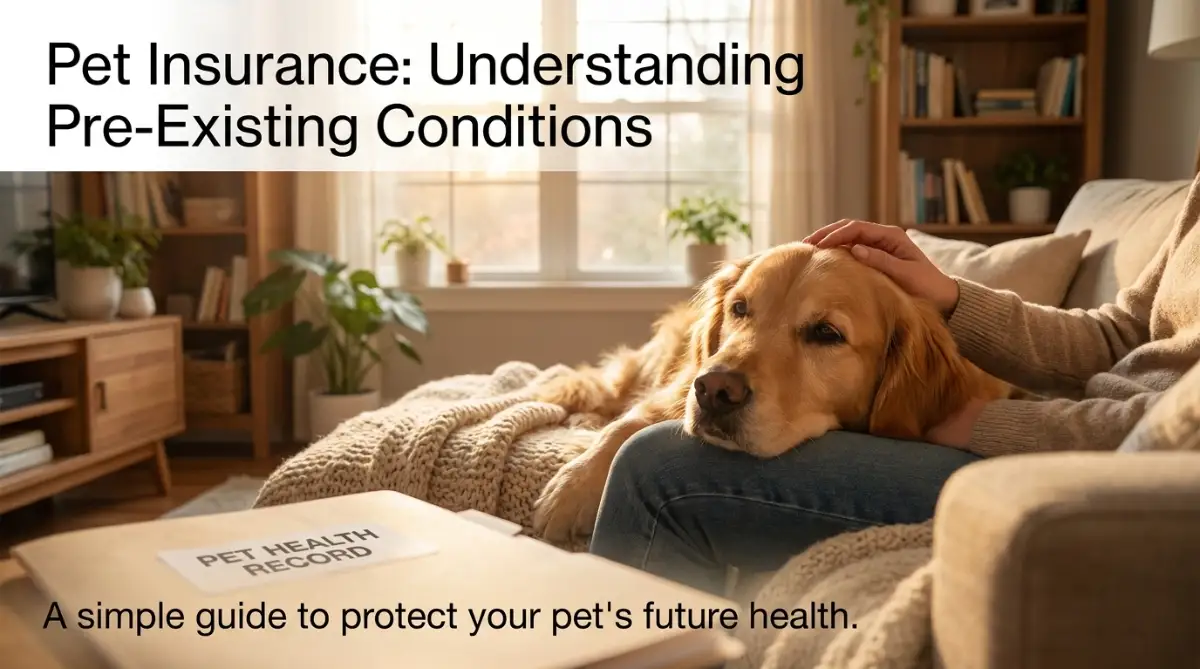
The Unexpected Vet Bill That Changed My Perspective
Most of us assume pet insurance works exactly like human health insurance, but that simple misunderstanding costs owners thousands every year. You might think you are fully covered, but one small line in your policy regarding a past vet visit can leave you paying for expensive treatments out of pocket. In this guide, I will show you how to read your policy correctly, identify hidden exclusions, and protect your bank account from surprise vet bills before they happen.
I went home, feeling confident, and submitted the claim. A week later, I got the letter. My claim was denied. The reason? "Pre-existing condition." They pointed to a minor limp Max had three years prior—a limp that resolved in two days—as proof that this new condition was related. I felt betrayed. I felt angry. I thought I had protected myself, but I hadn't read the fine print. That feeling of helplessness is something no pet owner should ever have to experience.
It’s not just about the money, although the bills pile up fast. It’s the mental exhaustion of trying to do the right thing for your pet while fighting an insurance company that hides behind technical language. You want to focus on your pet’s recovery, not on filing appeals or digging through medical records from years ago. This struggle steals the joy from owning a pet. You start to view your pet’s health through a lens of fear. "Is this covered?" "Should I go to the vet now, or wait?" It changes your relationship with the very creature you love most.
The reality is that many of us sign up for pet insurance without truly understanding what we are getting into. We see the monthly premium and the "comprehensive" label, and we assume we are safe. But the world of pet insurance is not as simple as human health insurance. There are no "universal" rules. Each company defines pre-existing conditions in their own way. That uncertainty is where the stress lives. It turns every vet visit into a gamble.
Quick Guide: What You Need to Know
- Don't Guess: Never guess if a condition is covered; call your provider and ask specifically about your pet's history.
- Check Records: Request all past vet records before you apply for insurance.
- Focus on 'Resolved': If a past condition is gone, ensure your vet notes it as "resolved" in your records.
- Consistency is Key: Avoid switching insurance plans frequently, as every new plan requires a fresh review of your pet's health history.
Defining What "Pre-Existing" Really Means
what does it mean in plain English? the term "pre-existing condition" everywhere. But In the world of pet insurance, a pre-existing condition is essentially any health issue that showed signs, symptoms, or received treatment before your policy started or during your waiting period.
This definition is much broader than you might think. It doesn't just mean a disease that was diagnosed by a vet. It can include symptoms you observed at home. If you mentioned a recurring cough to your vet on a casual visit six months ago, and now your dog is diagnosed with asthma, the insurance company might claim the cough was the beginning of the asthma. They have a history of linking dots to deny coverage.
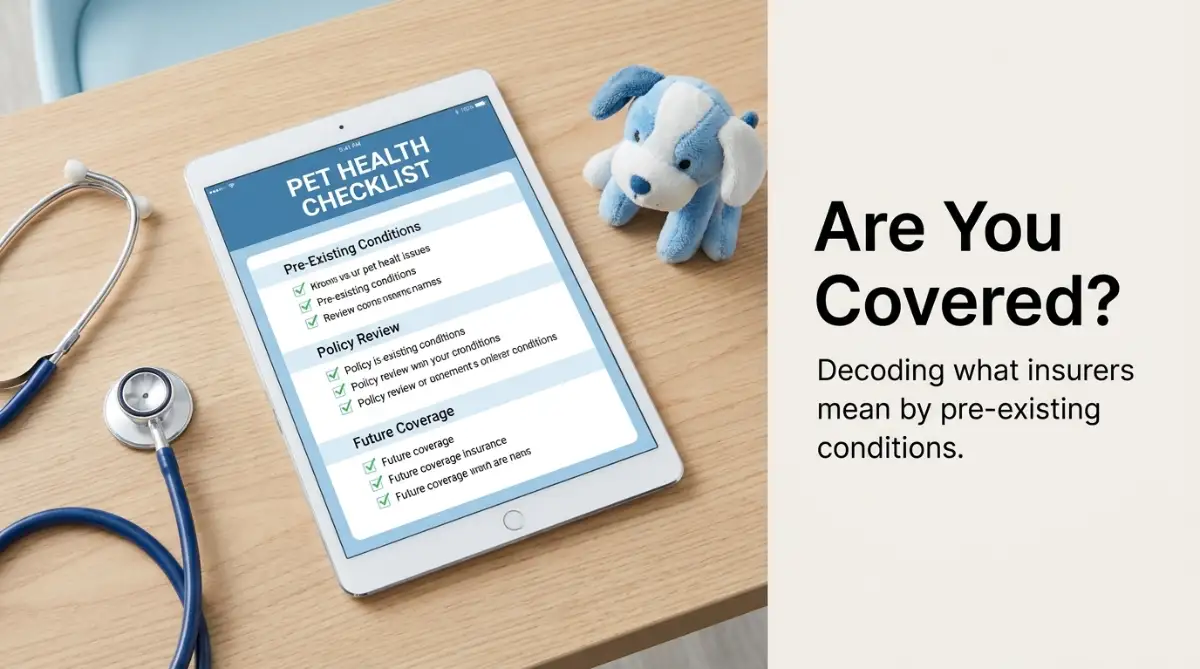
Curable vs. Incurable Conditions
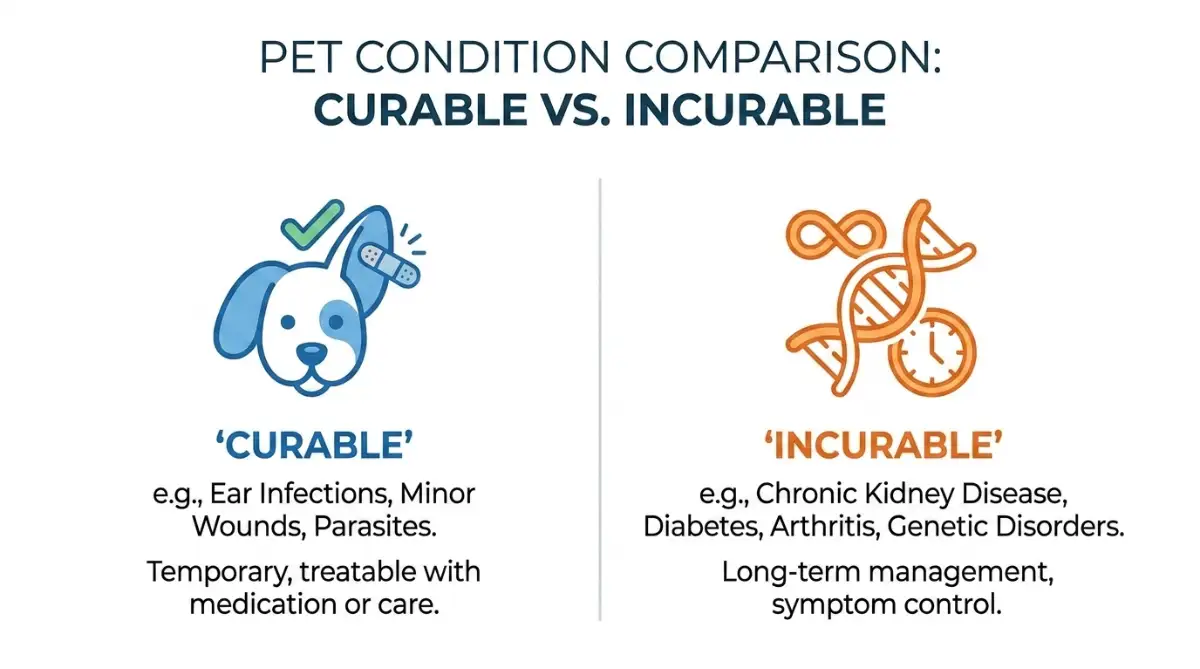
Some companies differentiate between curable and incurable conditions. An incurable condition is something like diabetes or chronic allergies. Once a pet has these, they usually have them for life. These are almost always excluded from future coverage.
Curable conditions are different. Let’s say your dog had an ear infection. That is a condition. If the infection cleared up, some insurers might agree to cover a new ear infection after a certain period of symptom-free time passes. However, you must check the policy wording carefully. Some companies have a very short list of "curable" items, while others treat almost everything as a permanent exclusion.
The Waiting Period Trap
Most insurance plans have a waiting period. This is the time between when you sign up and when your coverage actually kicks in. If your pet shows symptoms of an illness during this window, that illness is considered pre-existing. This is why it is so important to get insurance while your pet is young and healthy, not when you notice a problem.
How Insurers Assess Your Pet's History
You might wonder, "How do they know about a health issue from years ago?" The answer is simple: they ask for your pet’s complete medical records. When you file your first claim, the insurance company will reach out to every vet your pet has ever visited. They will review every note the vet scribbled down.
If there is a note that says "dog seems a bit stiff in the morning" and two years later you claim for arthritis, they will use that note to deny you. It sounds harsh, and it feels unfair, but this is how the business model works. They are in the business of managing risk. They want to cover accidents and new illnesses, not conditions that were already developing before you joined their plan.
Are There Exceptions?
While most pre-existing conditions are excluded, some companies are changing their approach. A few insurers now offer "reinstatement" for certain conditions if your pet remains symptom-free for a long enough time (often six months to a year). This is a newer trend in the industry
| Pet Insurance Record Checklist | Why It Matters |
| :--- | :--- |
| Full Medical History | Identifies past treatments for the insurer |
| Lab/Test Results | Proves if past issues were resolved |
| Vet Visit Notes | Shows if a condition was just a 'suspicion' |
| Current Meds List | Rules out related chronic conditions |
. If you are shopping for a plan, look for these specific "reinstatement" clauses. They can make a massive difference in the long run.
Myths vs. Reality
Let's clear up some common confusion. People often believe certain things about pet insurance that just aren't true.
Pro Tip: My Realization on Transparency
Early on, I made the mistake of thinking I could hide certain vet notes. I learned the hard way that insurance adjusters are trained to find these patterns. My advice? Don't hide anything. Be completely open with your insurer from day one. If you have a concern, call them and ask how they view it. I found that being proactive and asking about my dog's specific history before signing the contract saved me from paying premiums for a plan that wouldn't cover what I actually needed. It saved me a lot of grief.
Steps to Take Before You Buy
You don't have to be a victim of the fine print. Here is how you can approach this with your eyes open.
Step 1: Gather the Medical Records First
Before you even apply for a policy, request the full medical records for your pet from all your past vets. Read through them. Look for the "weak spots." Are there recurring issues? Are there vague comments about "stiffness" or "skin irritation"? Now you know what the insurer will see. You aren't guessing anymore.
Step 2: Ask the "What If" Questions
When talking to an insurance agent, don't ask, "Is it comprehensive?" Ask specific questions. "If my dog had an ear infection two years ago, is an ear infection today covered?" Get their answer in writing if possible, or at least note the name of the representative and the date of the call.
Step 3: Understand the Breed Risks
Every breed has specific health predispositions. French Bulldogs are prone to breathing issues; Golden Retrievers are prone to hip problems. Insurers know this. Even if your pet hasn't shown symptoms yet, some companies might flag breed-specific issues as "pre-existing" or exclude them entirely. Research your breed's common health issues and ask the insurer how they handle those specific conditions.
Why Proactive Care Matters
Insurance is a tool, not a cure-all. The best way to deal with pre-existing conditions is to prevent them from becoming "chronic." This means staying on top of wellness. Regular vet visits, maintaining a healthy weight for your pet, and addressing minor issues immediately can keep them from developing into lifelong problems.
Want to see how the experts handle pet health records? Watch this guide to prepare for your insurance journey.
Many owners wait until a health issue appears to start thinking about insurance. That is the exact opposite of what you should do. Insurance is designed for the "what ifs." It is meant to protect you from the unexpected. If you already know your pet has a specific condition, insurance might not be the right path for that specific health issue. You might be better off putting that money into a dedicated "pet health savings account" instead.
Navigating the Appeals Process
What happens if you do everything right, and they still deny you? It happens. Don't give up immediately. If you have proof that the denied condition is not related to a past symptom, fight it. Talk to your vet. Ask them to write a letter explaining the difference between the old symptom and the new diagnosis. Sometimes, a professional medical explanation from your vet is all it takes to overturn a denial.
The Power of Detailed Notes
Your vet's notes are the most important document in this entire process. If you notice your vet writing something inaccurate—like "possible hip dysplasia" when it was just a muscle strain—correct them. Ask them to update the record. You have the right to ensure your pet's medical history is accurate.
Final Thoughts on Protecting Your Pet
Insurance is a part of responsible pet ownership, but it is not the whole picture. Your main job is to love and care for your pet. Don't let the anxiety of insurance policies ruin that. By being informed, gathering your records, and understanding the fine print, you take the power back. You are making decisions based on facts, not fear.
And remember, every pet is different. What works for one owner might not work for you. There is no perfect insurance policy, only the one that best fits your situation and your risk tolerance. Take your time, read the documents, and choose the path that gives you the most peace of mind. Your pet depends on you, and by doing your homework, you are showing them the highest level of care.
Stay proactive. Keep those records organized. And most importantly, enjoy the time you have with your furry friend. At the end of the day, those memories are worth more than any insurance claim. You are doing the right thing by learning this now. Keep going, stay organized, and you will navigate this just fine.
Strategic Management of Your Pet’s Health Insurance Policy
Once you have your medical records sorted and you understand how your insurer views your pet’s history, the real work begins. You want to get the best value without paying for coverage that might not actually work when you need it. This requires a bit of strategy, almost like how you would approach understanding the gap between deductibles and out-of-pocket limits in other financial areas of your life.
First, consider the "renewals" trap. Many owners assume that because they have a policy, they are set for life. However, insurance companies evaluate your pet’s health status every time the policy comes up for renewal. If you have filed many claims, your premiums might hike up, or your coverage might change.
Keep a detailed log of your pet’s health updates. If your pet had a minor issue that was successfully treated and healed, make sure your vet notes that. You want those "resolved" tags on your records. This can be a game-changer if you ever need to challenge an exclusion.
You should also look into wellness plans. Many people confuse pet insurance with wellness plans. Insurance is for the big, scary, unexpected things. Wellness plans are for the routine visits, shots, and checkups. Mixing these up is a common financial mistake. It is like decoding medical bills for patients; if you don't know what you are paying for, you are likely overspending.
I recommend keeping a separate file for all your pet’s health data. Treat it like a business asset. When you need to interact with your insurance provider, you will be the most organized person in the room. This level of preparation reduces the stress of claim filing. It also helps you spot trends in your pet’s health before they become expensive problems.
If you want to know more about industry standards, the North American Pet Health Insurance Association (NAPHIA) provides great resources on how these policies are structured across the board. They don't sell insurance, but they help you understand the framework of the market. This can give you a better idea of what to expect from your specific provider.
Also, be wary of switching policies just because of a price difference. Switching can trigger a new medical record review. Any issue that arose during your previous policy could be tagged as "pre-existing" by the new insurer. It is often better to stick with one provider unless the service is truly unusable. Consistency in records is your best friend in this relationship.
The Dangers of Hiding Information and Other Common Traps
We all want the best for our pets, and sometimes that desire makes us want to "fix" the insurance situation by omitting details. I get it. You think that if you don't mention that one time your dog had a slightly upset stomach, the insurance company will cover a future GI issue. This is a massive mistake.
Insurance companies have access to vast databases. If you claim for a condition that was previously noted in a record you didn't provide, they will eventually find out. They have a right to audit your pet's entire medical history. If they find you withheld information, they can deny your claim and, in extreme cases, cancel your policy entirely. This is similar to why home insurance companies deny claims; when the facts don't match the application, the protection vanishes.
Another mistake is self-diagnosing. If you notice a lump on your pet, take them to the vet. Do not try to treat it at home with random ointments or watch-and-wait approaches. If you wait and the condition worsens, the insurer might argue that the condition became harder to treat because you delayed professional care. Always get an official record of the checkup.
"Think of it like this: If you tell your vet your dog is 'a bit sluggish' and they write it down, that’s a 'symptom' note. If you don't follow up and get a clear bill of health, that note stays on your file forever. Always ask your vet to add an 'issue resolved' note if a symptom was minor and disappeared."
Do not ignore the fine print regarding genetic or breed-specific conditions. Some policies explicitly exclude these unless you have a specific rider or an upgraded plan. If you have a French Bulldog, known for breathing issues, and you bought a basic plan that excludes respiratory conditions, you are taking a huge risk. Read that policy document once, then read it again.
Another pitfall is letting coverage lapse. Even a one-day lapse in payment can reset your waiting periods. Some companies treat a lapse as a brand-new policy start, meaning anything that happened in the past is now "pre-existing." Keep your payments on auto-pay if you can. It is one less thing to worry about.
Think about your pet’s health like why mental health check-ups are just as essential as physical screenings. You wouldn't skip a mental checkup just because you feel fine, right? Similarly, don't skip the vet visits. Skipping routine care can lead to missing early symptoms. Early detection is often the only thing that separates a covered "new" condition from an excluded "pre-existing" one.
Lastly, stop thinking of insurance as a "one-size-fits-all" product. Your friend's policy for their cat might be useless for your dog. Your breed, your location, and your pet’s specific age change the math entirely. Never buy a plan just because a friend has it. Do the math based on your pet's specific medical needs.
You can find more data on common pet health issues at the American Veterinary Medical Association (AVMA), which offers deep insights into what diseases and conditions are prevalent in different pets. This helps you anticipate risks before the insurance company flags them as inevitable.f
A Path Forward for Your Pet's Protection
Insurance is ultimately about peace of mind. It allows you to say "yes" to treatment when your pet is sick, without having to choose between your bank account and their health. The key to making this work is getting comfortable with the paperwork and being realistic about what is covered.
My journey with Max taught me that I am his biggest advocate. The insurance company is a business, and they have clear rules. My job is not to change their rules, but to understand them and navigate them. When I started keeping my own health binder, I felt much more in control.
Every time I go to the vet now, I am prepared. I know what is in his file. I know what questions to ask. If something new pops up, I document it clearly. You can do this too. It is not about becoming a vet or an insurance lawyer; it is about being an informed owner.
Take a moment this week to pull out your policy. Read it through with a cup of coffee. Don't rush. Highlight the sections on exclusions and pre-existing conditions. If you don't understand a term, call the company and ask them to explain it until you do. You are paying for a service, and you have every right to know exactly what you are getting.
I believe that when you are this prepared, you can actually enjoy your time with your pet more. You aren't constantly looking over your shoulder for the next surprise bill. You have a plan, and you have a safety net that you actually understand. That is a powerful place to be.
Take the first step today. Start that health binder. Call your vet and get your records. It might take an hour of your time, but that one hour could save you a mountain of stress later. You are doing a great thing for your pet, and they are lucky to have someone who cares this much about their long-term well-being.
Common Questions About Pet Insurance
Does pet insurance cover chronic conditions if they are diagnosed after the waiting period?
Generally, yes. If your pet is diagnosed with a chronic condition like diabetes or arthritis after your waiting period has passed, most plans will cover the ongoing treatment costs. However, you must ensure that your pet did not show any symptoms of these conditions before or during the waiting period.
Can I appeal a decision if my claim is denied?
Absolutely. You have the right to challenge a denial. If you believe the insurer has incorrectly classified a condition as pre-existing, gather your vet's notes and ask for a detailed medical explanation. Submitting a formal appeal with your vet's support can often overturn a decision.
Does the cost of my pet insurance change as my pet gets older?
Yes, premiums usually increase as your pet ages. As pets get older, the likelihood of them developing health issues rises, so insurers adjust the risk accordingly. It is a good idea to check if your current insurer has a "rate lock" option or if you are comfortable with the projected cost increases over the life of your pet.
Do I need to inform the insurance company if my pet gets a new diagnosis?
You don't usually need to "notify" them until you file a claim for that specific diagnosis. However, if your policy requires annual checkups or specific preventative care to maintain coverage, make sure you are keeping up with those requirements. Check your specific policy terms for any "duty to maintain" clauses.
Is it better to get a plan with a higher deductible?
That depends on your budget. A higher deductible usually means a lower monthly premium. This is a smart choice if you have a rainy-day fund set aside for vet bills and only want insurance for catastrophic, high-cost events. If you prefer smaller, predictable monthly costs, a lower deductible might make more sense. You can check how the deductible trade-off impacts your savings to see what fits your lifestyle best.
Disclaimer: This content is for informational purposes only and does not constitute legal, medical, or financial advice. Every pet insurance policy is unique, and coverage terms vary significantly by provider and region. Always read your specific policy documentation and consult with your veterinarian or a licensed insurance professional regarding your pet's specific health and coverage needs.