The Hidden Stress of That Single Number
That thick envelope in the mailbox usually brings bad news, but a sudden hike in your insurance premium is a special kind of stress. You pay your bills on time and drive safely, yet your costs keep creeping up as if you're being penalized for no reason. If you're tired of playing guessing games with your insurance company, it's time to stop paying blindly and start understanding how your risk profile is actually calculated.
I felt a strange mix of frustration and regret. I had been feeding my insurance company extra money every single month, money that could have been sitting in my own savings account, earning interest. It wasn't just about the cash; it was the realization that I had been letting fear drive my financial decisions instead of logic. I wasn't protected; I was just overpaying. That night, I started digging into the math, and what I found completely changed how I manage my monthly expenses.
You might be in the same spot right now. You look at your policy, see a deductible number, and feel a sense of unease. Should you raise it? Will you regret it if an accident happens tomorrow? This internal battle keeps many of us stuck in expensive, inefficient insurance plans that actually drain our long-term wealth. You don't have to live with that anxiety. Let’s look at the reality of how this one number impacts your entire financial health.
The Insurance Insider’s Quick Guide
- Deductibles as a Bet: High deductibles save you monthly cash; low deductibles save you from surprise repair bills.
- The Emergency Fund Link: A high deductible only works if you have the cash set aside to pay it if disaster strikes.
- Break-Even Math: Always calculate if the premium savings are worth the risk you are taking on.
- Annual Audits: Life changes—check your policy every year to ensure it still fits your current financial situation.
Understanding the Math of Your Insurance Strategy
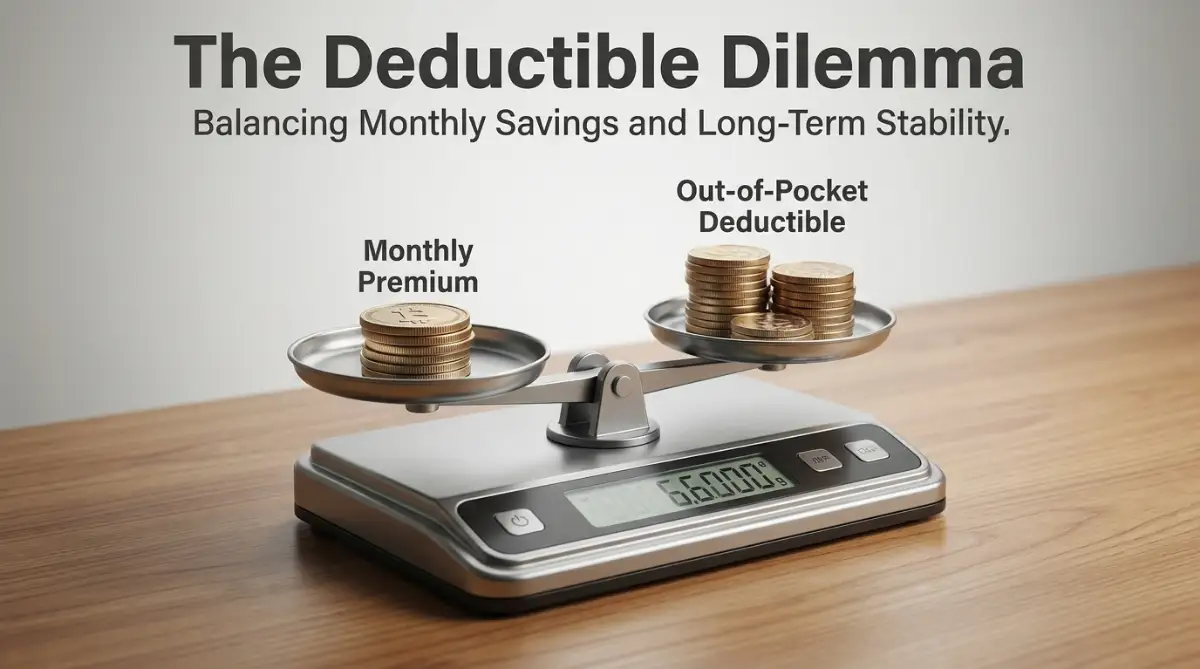
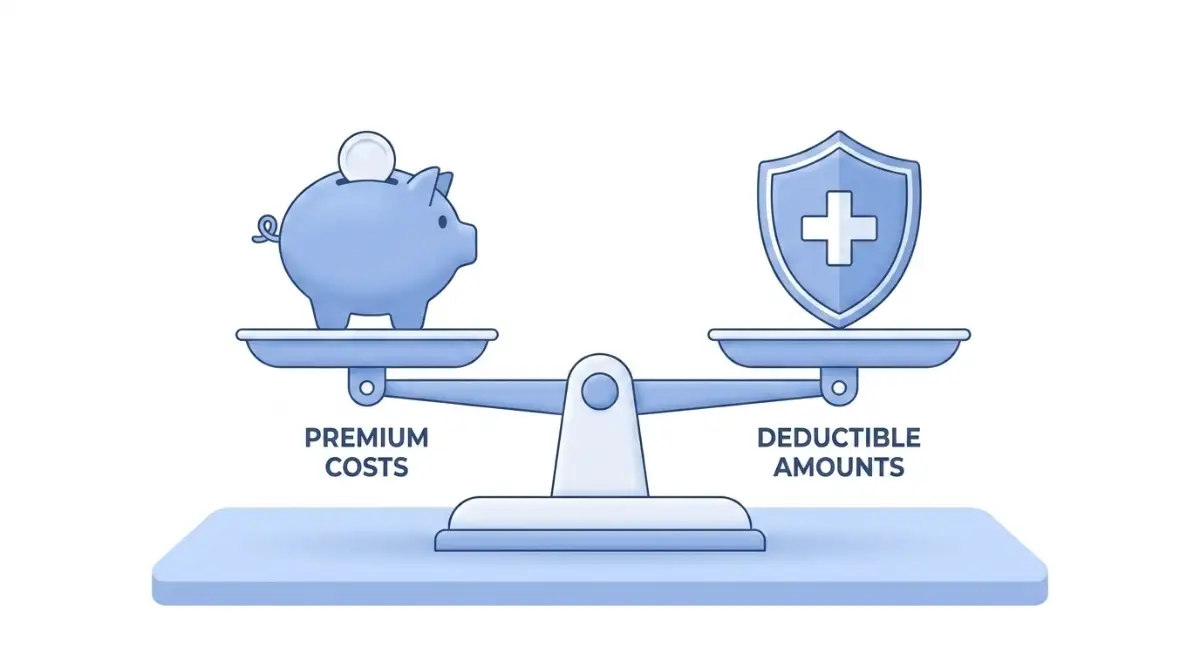
When you choose a deductible, you are basically making a bet with your insurance company. A low deductible means you are paying a higher premium to transfer the risk of a small loss to them. A high deductible means you are keeping more of that risk for yourself in exchange for lower monthly costs.
The Break-Even Analysis
You need to look at the "break-even" point of your policy. If a high deductible saves you a specific amount per year in premiums, how long does it take for those savings to cover the difference if you do have to file a claim? For many people, the answer is just a few years. If you go three or four years without an accident, you have essentially paid for that higher deductible using your own premium savings.
This is where the concept of the "Emergency Fund" comes in. If you have a solid emergency fund, you are already self-insuring for the small stuff. Why pay the insurance company to carry a risk that you can easily afford to cover yourself? By shifting your mindset from "fear of loss" to "management of risk," you gain more control over your cash flow.
How Deductibles Affect Cash Flow
Cash flow is the heartbeat of your personal finances. Every dollar you spend on an unnecessarily low insurance deductible is a dollar that cannot go into your retirement account, your debt repayment, or your children's education fund. It seems small, maybe thirty or fifty dollars a month, but that adds up over decades.
When you choose a higher deductible, you keep that money. If you invest it wisely, it grows. If you keep it in a high-yield savings account, it earns interest. Over twenty years, the difference between a high-deductible strategy and a low-deductible strategy can be thousands of dollars. You are not just choosing a policy; you are choosing an investment strategy.

The Psychology of Risk Tolerance
We have to talk about how you feel, too. Some people simply cannot sleep at night knowing they have a two-thousand-dollar deductible. That psychological cost is real. If the worry of a potential high bill will lead you to make rash financial decisions, then a higher deductible is not worth it for you.
However, many people overestimate how much a large deductible would actually hurt them. If you break down your monthly savings, you might find that you can afford a surprise bill more often than you think. Try "mocking up" the savings: if you switch to a high deductible, put that monthly savings difference into a separate account. After a year, you’ll have a mini-fund specifically to cover that higher deductible if you ever need it.
[Pro Tip: My Realization]
I realized that I was over-insuring for "minor" accidents while being under-prepared for "major" ones. My biggest mistake was thinking the deductible was about comfort. I learned that the deductible should be about protecting my assets from big losses, not about avoiding the inconvenience of a small repair bill.
Inflation and Your Deductible Choices
As the cost of repairs and parts goes up, so does the cost of insurance. This is an unavoidable part of the market. When you choose a high deductible, you are somewhat buffering yourself against these premium hikes. You are taking on the burden of the "small stuff," which is where insurance companies often have to raise rates the most to cover their administrative costs.
Staying with a very low deductible means you are more vulnerable to frequent rate increases because you are relying on the insurer to cover every little bump in the road. They have to charge you more to manage those frequent payouts. By taking on the small risks yourself, you stabilize your monthly insurance costs.
The Role of Deductibles in Wealth Building
Wealth building is about efficiency. You want your money working for you as hard as possible. When you carry an expensive insurance policy, you are paying for convenience, not just for risk coverage. Convenience is a luxury, and luxury is the enemy of fast wealth accumulation.
If you are early in your career, efficiency is your best friend. Every dollar you keep in your pocket is a dollar that can be compounded. By choosing a deductible that matches your current financial capacity, you align your insurance strategy with your broader wealth goals. It’s a small, boring adjustment that pays off in the long run.
Analyzing the "What If" Scenarios
Most people fear the "total loss" scenario. That is exactly what insurance is for. It is not for the scratched bumper; it is for the car that is written off. It is not for the leaky faucet; it is for the house that suffers fire damage. When you design your deductible, keep this in mind.
You want a policy that protects you from financial ruin, not one that keeps your bank account feeling "safe" from small fluctuations. If you have an emergency fund that can cover your deductible, you are already safe from the big stuff. Don't pay extra to be safe from the small stuff.
Watch this video to understand how your deductible choices can actually impact your monthly budget and long-term savings goals.
When a Low Deductible Actually Makes Sense
I am not saying a high deductible is the only correct answer. There are valid reasons to choose a low deductible. If you have zero savings, a low deductible is a lifeline. You cannot afford a two-thousand-dollar bill, so you pay for the insurance to cover it.
That is fine. But use that as a temporary strategy. Your goal should be to build that emergency fund as quickly as possible so that you can "graduate" to a higher deductible. Once your emergency fund is healthy, you can safely offload that risk, lower your premiums, and start saving that money for your future.
Avoiding the "Insurance Trap"
There is a trap where people stay in the same insurance plan for ten years without ever checking their deductible. Their financial situation changes, their savings grow, but their policy stays frozen in the past. This is a common way that people lose money without realizing it.
Audit your insurance every year. Ask yourself: "Does this deductible still match my bank account?" If your savings have increased, your deductible should likely increase as well. Don't be afraid to change your policy as your life changes. Your insurance should be a dynamic tool, not a static expense.
Before You Call Your Insurance Agent:
- Audit your emergency fund: Do you have enough cash to cover the higher deductible?
- Check the "Break-Even": Calculate how many months of premium savings it takes to pay for the deductible difference.
- Verify your needs: Are you paying for "extras" on an asset that isn't worth much anymore?
- Document updates: Did you install new locks or alarms? Tell them now to earn a discount.
The Link Between Credit and Deductibles
Many insurance providers check your credit history when setting your rates. A higher deductible can sometimes be viewed favorably by insurers because it shows you are managing your own risk. It is another way to signal that you are a responsible customer.
While this varies by company and location, the principle holds true: insurers want to work with customers who don't treat them like a piggy bank. If you show that you are willing to handle minor losses yourself, you are a lower-risk client. This can potentially open doors to better rates across all your insurance products.
Creating a Sustainable Strategy
Financial stability isn't about having no risk; it is about managing risk well. You cannot avoid every bad thing that happens in life. You can, however, make sure that when those things happen, they don't destroy your long-term plans.
A high deductible forces you to be disciplined with your savings. A low deductible allows you to be a bit lazy with your finances. Which one do you want to be? Discipline is the foundation of wealth. Choose the path that forces you to save and invest in your own safety net.
Final Thoughts on Your Financial Future
Your deductible is one of the few levers you can pull to directly change your financial outcome. It isn't the most exciting topic, but it is one of the most effective. Don't look at insurance as just a bill; look at it as a part of your financial portfolio.
Take control today. Call your provider, ask about your options, and look at your savings account. Do the math. You might be surprised at how much you can free up simply by taking on a little more responsibility for your own future. That, in my experience, is how you really build stability.
Refining Your Risk Management Strategy
The real secret to making deductible choices work for you isn't just about the number on the page; it is about how you manage your liquidity. If you choose a high deductible to save on premiums, you are effectively accepting the role of the insurer for that specific amount. You must be prepared to pay that amount in cash at any moment.
If you don't have that cash sitting in a liquid account, you aren't saving money—you are borrowing trouble. This is why having a robust emergency fund is the unspoken partner of high-deductible insurance policies. You can find detailed guidance on how to understand the gap between deductibles and out-of-pocket limits to ensure you aren't leaving yourself exposed to a financial shock you can't handle.
Consider keeping your "deductible cash" in a high-yield savings account that is completely separate from your daily checking account. This removes the temptation to spend it on non-emergency items. When you see that money sitting there, you treat it like an insurance reserve. If you ever have a claim, you transfer the money to pay the deductible, and then you work to rebuild that buffer over time.
Balancing Investment and Safety
Some people choose low deductibles because they feel "investing" in the insurance company is a guaranteed way to avoid bills. But true financial stability comes from investing in yourself, not just in premium payments. You should look at how to stay calm and invest wisely during market volatility to understand that your long-term stability is built by protecting your own assets and savings, not by outsourcing every single risk to an insurer.
If you are young and healthy, your risk profile for certain types of insurance might be lower than you realize. It is often a smart move to select a higher deductible and take the premium savings to fund your retirement accounts or pay down high-interest debt. The interest you save on debt or earn on investments usually far outweighs the potential cost of a slightly higher deductible over the long term.
The Importance of Regular Policy Audits
Your life changes, and your policy should change with it. A common habit of financially stable people is performing an annual review of their coverage. They look at their current savings, their debt levels, and their appetite for risk, and they adjust their deductibles accordingly.
If you have recently had a major life event—like marriage, buying a home, or changing jobs—you need to recalibrate. Your previous insurance choices might have been perfect for your past self but are now holding back your current financial potential. Take the time to sit down and audit your coverage just like you would audit your monthly expenses.
Protecting Your Mental Health
Financial stress is a silent weight that affects every part of your life. If your current insurance plan makes you worry about every small scratch or minor issue, it might be the wrong plan for you, regardless of what the math says. Financial peace of mind often comes from having a system that you understand and trust.
You might want to explore why mental health check-ups are just as essential as physical screenings to get a better handle on how your financial habits influence your overall well-being. A plan that allows you to sleep soundly at night is often worth a slightly higher premium. But do this consciously, knowing exactly what you are paying for, rather than just choosing a low deductible out of fear.
For more insights into how insurance structures are designed and managed, you can check out resources from The National Association of Insurance Commissioners, which provides excellent foundational knowledge for policyholders.
The Pitfalls That Undermine Your Financial Foundation
It is so easy to fall into the trap of picking the wrong deductible because we think about "what we want to happen" rather than "what is likely to happen." We hope for the best, so we pick the plan that feels the most comforting, often ignoring the long-term impact on our net worth. This is the first mistake: letting wishful thinking dictate your financial strategy.
The Emergency Fund Illusion
The most dangerous error is selecting a high deductible while having zero cash reserves. You are essentially gambling that nothing will go wrong, but you are also betting that if it does, you can somehow magically find the money. When disaster hits, you are often forced to put the deductible on a high-interest credit card, which can spiral into a cycle of debt that is much harder to escape than the initial accident cost.
Without that emergency fund, you are not really choosing a high-deductible plan; you are just choosing to be under-insured. You have to pair these strategies. If you cannot afford to have a few thousand dollars liquid, stick to a lower deductible until you build that safety net.
Ignoring the "Loss of Use" Factor
People often focus so much on the deductible that they ignore other parts of their policy. If you have a high deductible and you suffer a major loss, like a home fire, you also have to consider the "loss of use" coverage. This pays for your temporary housing.
If you didn't read your policy and you assumed everything was covered, you might find that your high deductible combined with poor coverage limits leaves you stranded. Don't look at the deductible in isolation. Read your entire policy declaration page to understand how the pieces fit together. Learn about why home insurance companies deny claims and how to stay protected so you aren't blindsided when you need help the most.
The Loyalty Penalty
We tend to stay with the same insurer for years because it is convenient. But the company might be slowly raising your rates or reducing the value of your coverage because they assume you won't leave. You might be paying a premium for a high-deductible plan that is no longer competitive in the current market.
Failing to shop around is a silent tax on your finances. You should compare your current rates with at least two other providers every few years. You might find that for the same deductible, you can get much better coverage or a significantly lower premium elsewhere.
Misinterpreting "Full Coverage"
Many people think that because they have "full coverage," they are protected against everything. But "full coverage" is just a marketing term; it isn't a legal one. It usually just means you have collision and comprehensive coverage, but it says nothing about your deductible levels or your coverage caps.
If you don't know exactly what your policy limits are, you are flying blind. Take thirty minutes to actually read your policy or call your agent and ask them to explain it in plain English. Do not let the terminology scare you. You are the boss of your finances, and you have a right to know what you are buying.
Moving Toward Financial Clarity
You now have a better roadmap for navigating the deductible landscape. It isn't just about saving a few dollars here or there; it is about building a system that protects your money while giving you the freedom to invest in your future.
Your Action Plan for Tomorrow
- Check Your Current Deductible: Look at your policy right now and see what it is.
- Evaluate Your Savings: Do you have enough cash in the bank to cover that amount today?
- Run the Numbers: Ask your agent for a quote with a higher deductible to see the premium savings.
- Create a Plan: If you want to raise your deductible, start a "deductible sinking fund" and direct the premium savings into it.
- Automate: Make sure your insurance premiums are paid on time to avoid unnecessary late fees or coverage lapses.
A Final Thought from My Experience
I used to stress over these choices until I realized that insurance is just one piece of the puzzle. My best advice to you is to focus on your income and your savings first, because those are your primary defense against life's surprises. I found that as my own emergency fund grew, the deductible number on my insurance policy mattered less and less. I encourage you to build your own security so that you can make these choices based on logic, not fear.
Common Questions About Deductibles
Is a high deductible always the right financial move?
Not necessarily. A high deductible is only a good move if you have the cash reserves to pay it in an emergency. If you would have to go into debt to cover it, then it is better to stick with a lower deductible until you have saved enough to switch.
How often should I increase my deductible?
You should consider increasing your deductible every time your personal savings and emergency fund grow significantly. As your financial safety net strengthens, your need for "insurance against small losses" decreases.
Can I change my deductible in the middle of a policy term?
Most insurance companies allow you to change your deductible at any time, but they may prorate the premium difference. Check with your specific provider to see if they charge any administrative fees for making changes mid-term.
What happens if I file multiple claims with a high deductible?
Filing multiple claims can lead to higher premiums or even policy cancellation, regardless of your deductible level. Deductibles help you avoid filing for small, non-essential losses, which is a great way to keep your claims history clean.
Does a higher deductible affect how an insurance company treats a claim?
No, the claims process is generally the same regardless of your deductible. The only difference is that you pay the first portion of the loss yourself before the insurance company pays the remainder of the covered amount.
Disclaimer: This article is for informational purposes only and does not constitute financial, legal, or insurance advice. Every individual's financial situation is different, and insurance policies vary by provider, state, and specific coverage terms. Always consult with a licensed insurance agent, financial advisor, or qualified professional in your local area to discuss your specific needs and ensure you have adequate protection for your assets.