
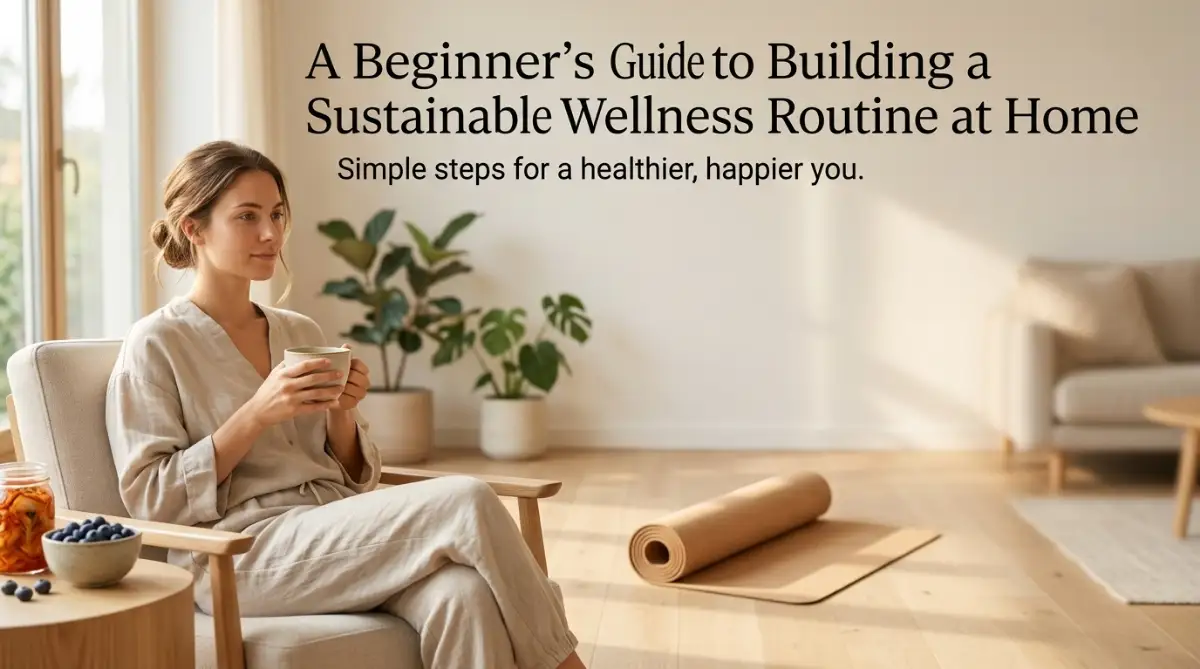
Why You Feel Like You’re Always Starting Over
Stop blaming yourself for those Tuesday night takeout orders—you aren't failing because you lack willpower, you’re failing because your routine is too heavy to carry. Real wellness isn't about massive, overnight transformations that leave you burned out by Wednesday. It’s about building a sustainable, quiet rhythm that actually fits into your messy, real life.
I was stuck in a loop of starting and stopping. Does this sound familiar? You have this burst of motivation, you change everything overnight, and two days later, life gets in the way. Then comes the guilt. You blame yourself for lacking willpower or discipline. You think that if you just tried harder, you would be one of those people who naturally enjoys waking up at 5 AM to drink kale juice.
The reality is that you aren't failing because you aren't trying hard enough. You are failing because your plan is too heavy to carry. We live in a culture that sells us "transformation" in thirty days, but real wellness isn't a race or a project. It is a slow, steady practice of caring for the person you see in the mirror. When we try to flip our entire lives upside down, we get whiplash.
The reason you are feeling drained is that you are treating your body like an appliance to be fixed, rather than a home to be lived in. My struggle lasted for years until I realized that I didn't need a "wellness program." I needed a way of living that worked with my day, not against it. It wasn't about adding more things to my list; it was about taking the pressure off.
The Sustainable Routine Rules
- Ditch Perfection: Progress is better than perfection. If you slip up, just get back to it the next time.
- Environment First: Make your healthy habits the easiest choice in your home.
- Listen, Don't Track: Focus on how your body feels rather than obsessing over app data.
- Social Matters: Wellness isn't just diet; stay connected with friends and family to lower your stress.
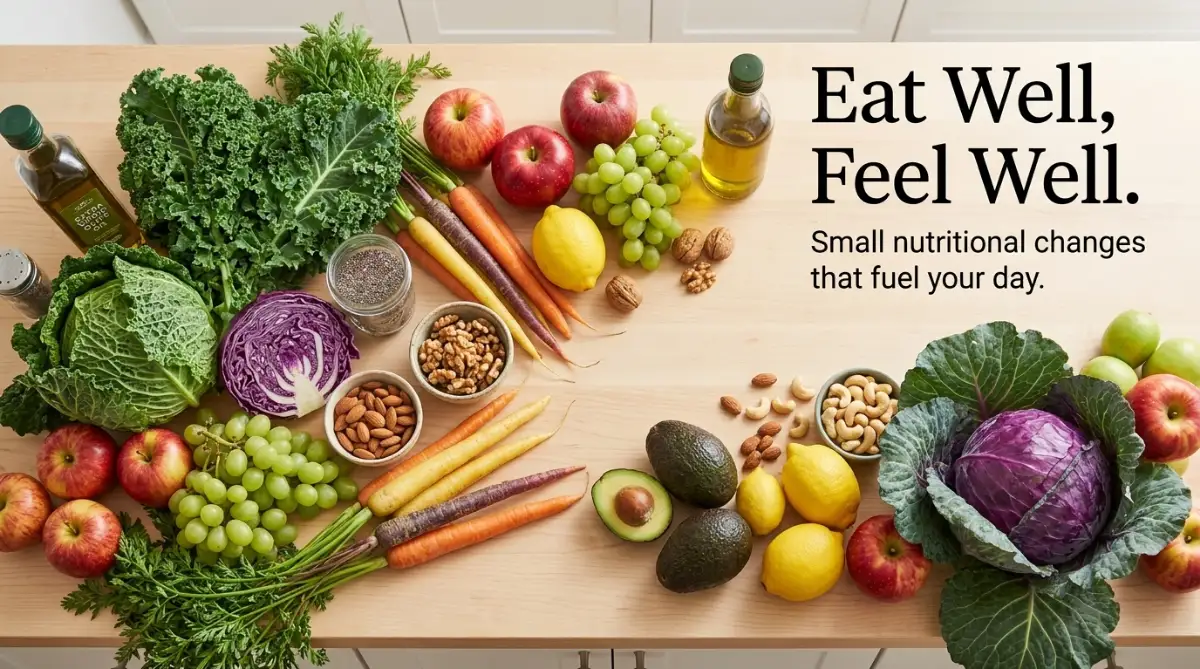
Rethinking How You Approach Your Daily Habits
To stop the cycle of exhaustion, we have to change the way we look at our day. You don't need a total overhaul. You need small, boring, reliable choices. Let's look at how to build a routine that feels like a relief instead of a second job.
The Power of "Micro-Wins" in Your Morning

Most people try to build a morning routine that lasts an hour. They want to meditate, write in a journal, stretch, and cook a gourmet breakfast. That is a beautiful dream, but for most of us, it is not reality. Instead, look for what I call "Micro-Wins."
A micro-win is anything that takes under five minutes and makes you feel more like yourself. Maybe it is drinking a glass of water before you touch your phone. Maybe it is just opening the blinds to let in some light. These small things signal to your brain that you are prioritizing yourself.
When you start your day with a micro-win, you change your narrative from "I am behind" to "I am taking care of myself." This shift is massive. You aren't aiming for a perfect morning; you are aiming for a successful start. If you do nothing else, just drink that water. It counts.
Creating a Kitchen Environment That Supports You
5-Minute "Micro-Win" Checklist
- Hydrate First: Drink a full glass of water before checking your phone.
- Clear the Desk: Spend two minutes tidying your workspace for tomorrow.
- Sunlight Check: Open your curtains or step outside for 120 seconds.
- Brain Dump: Jot down your top three tasks to stop your mind from racing.
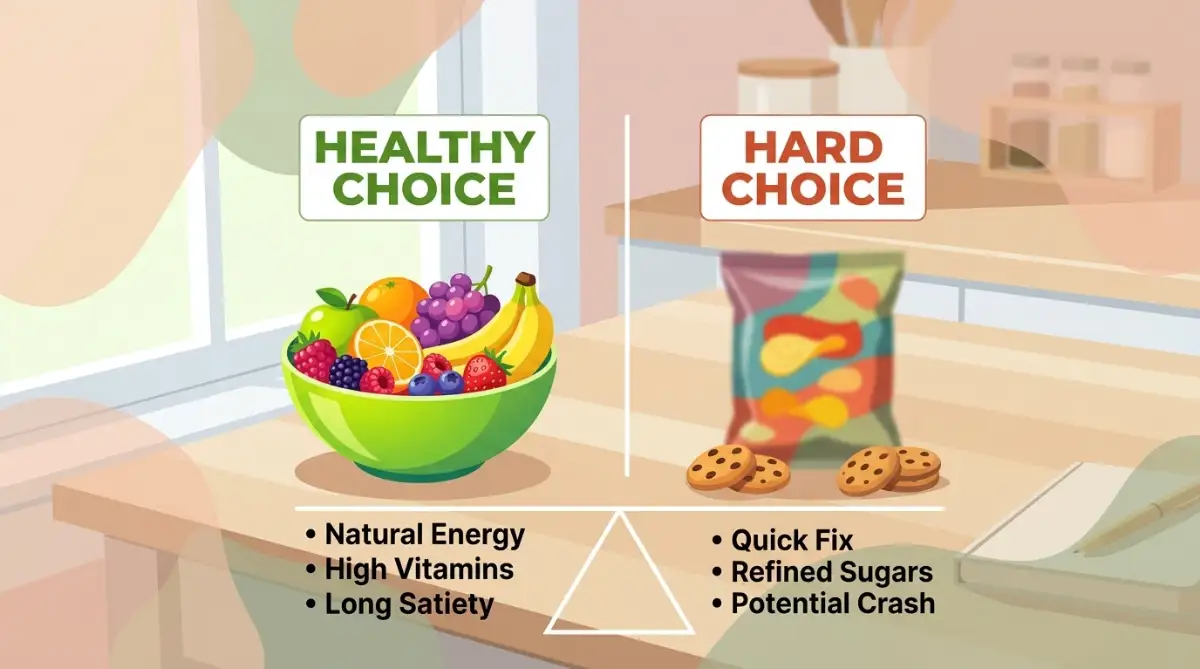
Your nutrition isn't just about willpower; it is about your environment. If you want to eat better, you have to make the healthy choice the easy choice. Stop relying on the idea that you will always "choose the salad." That is too much pressure for a tired brain.
Look at your kitchen. What is the first thing you see when you walk in? If it is a bag of chips, you will eat chips. Try keeping a bowl of fruit on the counter. Wash your veggies as soon as you get home from the store so they are ready to grab.
This isn't about being perfect. It is about removing the mental friction. When you are tired after work, you don't want to wash and chop vegetables. If they are already chopped, you will eat them. Make your home work for you, not against you.
Movement That Doesn't Feel Like Punishment
We often treat exercise like a debt we have to pay off for the food we ate. That is a miserable way to live. When movement feels like punishment, you will always look for a way to skip it. You have to find movement that makes you feel alive.
Do you hate the gym? Then don't go. Seriously. If you love dancing in your kitchen, do that. If you like walking while listening to a podcast, do that. Any movement that gets your heart rate up for ten minutes is better than the hour-long workout you skipped.
Consistency beats intensity every single time. It is better to move your body for fifteen minutes every day than to kill yourself for two hours once a week and then spend the next six days recovering. Listen to your body. If you are exhausted, stretching is exercise. If you are full of energy, go for a fast walk.
Pro Tip: The "Two-Minute Rule" for Mental Peace
I used to be terrible at keeping up with my mental wellness because I thought it required a retreat or a long meditation session. I finally realized that my brain just needed a break from the noise. I started using the "Two-Minute Rule." Whenever I feel overwhelmed, I stop. I take two minutes to just sit and breathe. I don't look at my phone, I don't check emails, I just sit. It sounds almost too simple to be effective, but it creates a buffer between the stress and my reaction. It taught me that I don't need to "fix" everything immediately; I just need to breathe.
Why Socializing is a Hidden Wellness Pillar
We often talk about food and exercise, but we ignore the fact that humans are social creatures. When you spend all your time at home trying to "fix" your health, you might be isolating yourself. Social connection is a huge part of your physical and mental balance.
Watch this video to understand why your social habits are just as important as your diet and how you can stay connected while building a wellness routine at home.
Connection releases chemicals in your brain that lower stress and improve your immune system. You don't need to go to big parties to get this. Call a friend. Have a video chat with a family member. Invite a neighbor for tea. These moments of connection remind us that we are part of a community.
Curating Your Digital Home
Just as you choose what to keep in your physical environment, it can help to be intentional about what you allow into your digital space. The accounts, posts, and conversations you regularly see can influence your mood and how you feel about yourself. If certain accounts consistently leave you feeling inadequate, anxious, or overwhelmed, consider muting or unfollowing them.
Your phone is a tool, but it can also shape your daily habits. If you spend hours scrolling through carefully curated images of people who seem to have perfect lives, it's easy to fall into unhealthy comparisons. Try replacing some of that content with accounts that make you laugh, teach you something useful, inspire you, or simply bring you a sense of calm.
Managing your digital environment can be a small but meaningful part of your overall wellness routine. You don't have to give up social media completely. Set boundaries that work for you, pay attention to how different apps make you feel, and give yourself permission to step away when you need a break.
Protecting your peace doesn't require being offline all the time. It simply means being more intentional about what deserves your attention.
Addressing the “All-or-Nothing” Mindset
Life doesn’t always go according to plan. Some days you’ll be too busy, too tired, or too stressed to stick to your usual routine. That doesn’t mean you’ve failed—it simply means you’re human. Instead of feeling guilty about it, focus on getting back to your routine when you’re able to.
Think of it like driving. If you make a wrong turn, you don’t stop the car and give up on the entire trip. You simply find another way back to the right road and continue. Your health habits work the same way. One unhealthy meal or a missed walk doesn’t erase the progress you’ve already made. What matters is getting back on track and continuing from there.
Building Resilience Through Sleep
You cannot build a sustainable wellness routine if you are constantly running on empty. Sleep is the foundation of everything. It is when your body repairs itself, when your brain processes information, and when your mood gets regulated.
If you struggle to sleep, look at your evening habits. Do you have a "buffer" between your busy day and your bed? You need a wind-down period. This could be reading a book, dimming the lights, or just putting your phone in another room.
Sleep is not a luxury; it is a biological necessity. When you protect your sleep, you protect your ability to make healthy choices the next day. If you are sleep-deprived, your brain naturally craves sugar and energy for quick fixes. Sleep more, and you will find you crave less junk.
How to Stay Consistent Without Tracking Everything
We love apps, trackers, and gadgets. But sometimes, these things add more stress than they remove. If you find yourself obsessed with your step count or your calories, stop. Those things can become a source of anxiety.
Try "intuitive wellness" instead. Ask yourself: "How does my body feel right now?" Do I need more water? Do I need to move? Do I need to rest? This helps you build a relationship with yourself rather than a relationship with a data point.
You know your body better than any app. When you stop looking at a screen to tell you if you are healthy, you start listening to your own internal cues. This is sustainable because it doesn't require a battery or an internet connection. It just requires you.
Common Wellness Myths You Should Ignore
There is so much noise in the health world. Let's clear up a few things.
- Myth: You need expensive supplements to be healthy.
- Reality: Real food will always beat a pill. Focus on basic, whole ingredients first.
- Myth: You have to suffer to see results.
- Reality: If you hate your routine, you will quit. Happiness is part of health.
- Myth: You need to detox.
- Reality: You have a liver and kidneys. They are already doing the detoxing for you. Just focus on eating fiber and drinking water.
Focusing on the basics is the most professional advice anyone can give you. Don't chase trends. Chase habits that make you feel energized and calm.
Finding Your Unique Rhythm
What works for your best friend or your favorite influencer might not work for you. And that is perfectly fine. Maybe you are a night owl, and early mornings will never feel good to you. That is okay! Build your routine around your natural energy levels.
Wellness is a personal journey. There is no right way to do it. The only "right" way is the one you can stick to for the long term. If you find yourself forcing things, take a step back and adjust.
Remember, you are the expert of your own life. You know what makes you feel heavy, and you know what makes you feel light. Follow the things that make you feel light. Do more of that.
Wrapping Up Your First Step
Building a sustainable routine is about patience. Don't try to change your whole life by Monday morning. Pick one small thing from this guide and try it for a week. See how it feels.
If it makes your life easier, keep it. If it doesn't, let it go and try something else. You are building a home for your mind and body. It doesn't have to be perfect; it just has to be a place where you feel safe and strong.
You have the power to shift your habits, one day at a time. It is not about the "big" changes; it is about the quiet, consistent choices you make when no one is watching. Start today, start small, and be kind to yourself. You are doing the hard work, and that counts for everything.
Stay curious, stay consistent, and remember that your wellness journey is yours alone. Keep going, because the version of you that feels more at peace is waiting just around the corner. You've got this.
Taking Your Daily Habits to the Next Level
Once you have your basics down, you might feel the urge to add more. Be careful here. The trap of "more" is what kills consistency. Instead of doing more things, try to make the things you are already doing work harder for you. This is where advanced habit stacking comes in.
Habit stacking is simply pairing a new, healthy habit with something you already do every single day. For example, if you want to drink more water, place your glass right next to your toothbrush. The second you finish brushing, you drink water. You don't have to "remember" to do it because it becomes part of the existing sequence.
This works because you are using an already established neural pathway. You are not asking your brain to learn something new from scratch. You are just extending a habit that is already on autopilot. It is effortless, which is exactly why it is so powerful for the long term.
Think about how you manage your budget or your work schedule. You have systems for those things, right? You should treat your health with the same level of logical planning. If you want to dive deeper into how your biology affects your daily energy, check out this guide on how to fix your sleep naturally. Good sleep is the force multiplier for every other habit you build.
The Role of Compounding Effort
We often want immediate results. If we eat one salad, we want to feel lighter. If we take one walk, we want to be more fit. When we don't see those instant changes, we get frustrated and quit. This is the exact opposite of how true health works.
Health is like compound interest. A single day of good choices does very little. But a year of good choices? That changes everything. You have to learn to love the process rather than the result. If you focus on the result, you will always be disappointed by the slow pace of biology.
If you focus on the daily action, you will eventually wake up and realize you are a completely different person. There is a great resource by the National Institutes of Health regarding physical activity and healthy aging that explains how consistent, moderate movement is much more effective than sporadic, high-intensity bursts.
Nutrition as a Tool for Mental Stability
What you eat does more than fuel your muscles; it fuels your brain. If you are struggling with brain fog or mood swings, it is time to look at your plate. Your gut and your brain are constantly talking to each other. When you eat processed, heavy foods, your gut sends signals to your brain that can result in low energy and poor focus.
If you are dealing with ongoing health struggles, you should learn how to manage chronic conditions through daily nutrition choices. This isn't about being on a restrictive diet forever; it is about finding the foods that help you feel like your best self.
Many people find that simple shifts—like adding more fiber or reducing refined sugar—make a huge difference in their mental clarity within just a few weeks. Harvard Health notes that a diet rich in fruits, vegetables, and lean proteins is linked to lower rates of depression and anxiety. This is not a coincidence; it is biology.
Creating a Fail-Safe Environment
You cannot rely on willpower. Willpower is a finite resource. If you have a long, hard day at work, your willpower will be gone by dinner time. You must design your environment so that the healthy choice is the default choice.
If you know you skip breakfast when you are rushed, prepare it the night before. If you know you doom-scroll on your phone in bed, charge your phone in the kitchen. Make the "bad" habits hard to do and the "good" habits easy to do. This is the secret to staying consistent without needing to be a hero every single day.
One personal realization I had was that I kept forgetting my vitamins. I always remembered them when I was at the office, but I never remembered them at home. I eventually just bought a second bottle for my desk. It cost a bit more, but it solved the problem completely. It was a simple adjustment that made a permanent change.
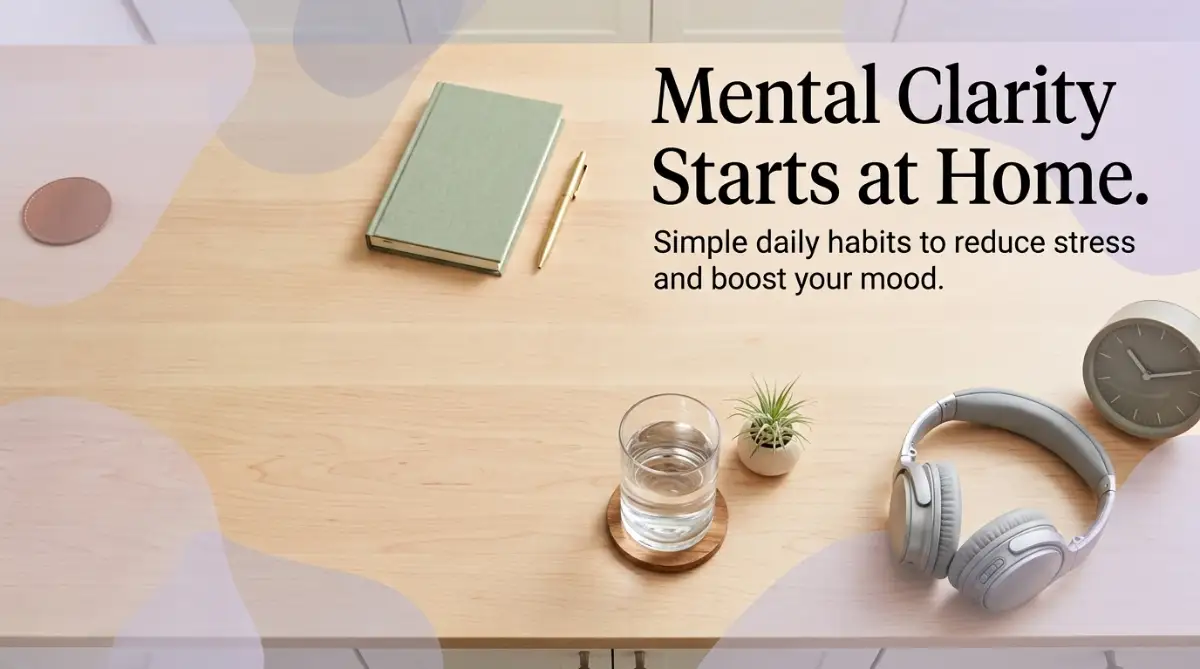
Common Roadblocks That Trip You Up
It is very common to feel like you are doing "everything right" and still not getting the results you want. Usually, this happens because of a few hidden mistakes that seem harmless but actually derail your entire system. Let’s talk about these so you can spot them before they cause trouble.
The Weekend Jetlag Trap
We love our weekends, right? We sleep in, we stay up late, we eat whatever we want. But your body does not know it is Saturday. If you wake up at 6 AM on weekdays and 11 AM on weekends, you are giving yourself "social jetlag."
This messes with your internal clock. When Monday rolls around, your body thinks you have traveled through multiple time zones. This makes Monday feel significantly harder than it needs to be. Try to keep your wake-up time within an hour of your normal schedule, even on your days off.
The "All-or-Nothing" Perfectionism
This is the biggest mistake I see. People think that if they don't follow their wellness plan perfectly, they might as well give up. This leads to the "I’ll start again on Monday" mentality.
Monday never comes, or if it does, it is followed by another Tuesday crash. You have to embrace the messy middle. If you have a bad meal, the next meal is a fresh start. You do not need to wait for a new week or a new month. Every single decision is a chance to reset.
Sometimes, we struggle because we don't understand how to learn effectively, which is why why traditional study habits often fail to retain complex information is an interesting concept to apply here; we are trying to "study" our own health but using outdated, "cramming" methods. Health isn't something you cram for.
Ignoring Your Mental Health Signs
We treat physical pain seriously—if we break an arm, we go to the doctor. But if we feel overwhelmed, anxious, or just "off," we ignore it. We tell ourselves to just work harder. This is a huge mistake.
Your mental health is a physical health marker. If you feel like you are falling apart, it is a signal, not a character flaw. It is important to know why mental health check-ups are just as essential as physical screenings. Ignoring these signals leads to burnout, which stops your wellness routine in its tracks.
According to the CDC, poor mental health can lead to chronic physical conditions. Do not wait until you are in crisis to take your well-being seriously. Your daily routine should include time to check in with yourself.
The Comparison Thief
Social media is full of people who seem to be doing "wellness" perfectly. They look perfect, they eat perfect meals, and they never seem to have a bad day. When you look at their lives and compare them to yours, you lose.
Their highlight reel is not your reality. You don't know what happens behind the scenes. You don't see their struggles. If you find yourself feeling less-than after using an app, take a break from it. You are on your own journey, and your pace is the only one that matters.
Thinking You Have to Do It Alone
We are taught to be independent, but humans are meant to be supported. Trying to build a wellness routine in a vacuum is incredibly difficult. You don't need a coach for everything, but you do need someone to talk to.
Whether it is a friend, a family member, or a professional, having someone who can listen without judgment is helpful. It allows you to vent, get perspective, and feel less alone. If you are struggling, reach out. It is a sign of strength, not weakness.
Your Path Forward: Consistency Over Perfection
Building a home wellness routine isn't about hitting a destination. It isn't about reaching a weight, a strength goal, or a level of calm. It is about building a life where you feel capable, steady, and at home in your own body.
You will have days where you don't do anything "right." That is okay. Those days are part of the process. They show you what doesn't work and what you need to adjust. They are data points, not failures.
My biggest breakthrough happened when I stopped trying to be "healthy" and started trying to be "kind" to myself. When I treated myself like a friend rather than a project, the habits stuck. I stopped forcing the gym, and I started walking. I stopped forcing the restrictive diet, and I started adding more color to my plate.
I hope you take this advice to heart. You don't need to change everything. You just need to change one thing, and then another. It adds up. Before you know it, you will look back and realize you have built a life that you don't need to escape from.
I am so proud of you for starting this journey. My own path was full of stops, starts, and confusing turns, but it led me to a place of peace that I wouldn't trade for anything. You have that same future ahead of you. Keep showing up, keep listening to your body, and most importantly, remember that you are worth the effort.
Common Questions About Your Daily Routine
How long does it really take to build a new habit?
Most people talk about a specific number of days, but that is a myth. It can take anywhere from a few weeks to several months depending on the complexity of the habit and your environment. Focus on the action, not the calendar.
What if I have a really busy schedule and no time for a "routine"?
Start with five minutes. Even the busiest people have fi