
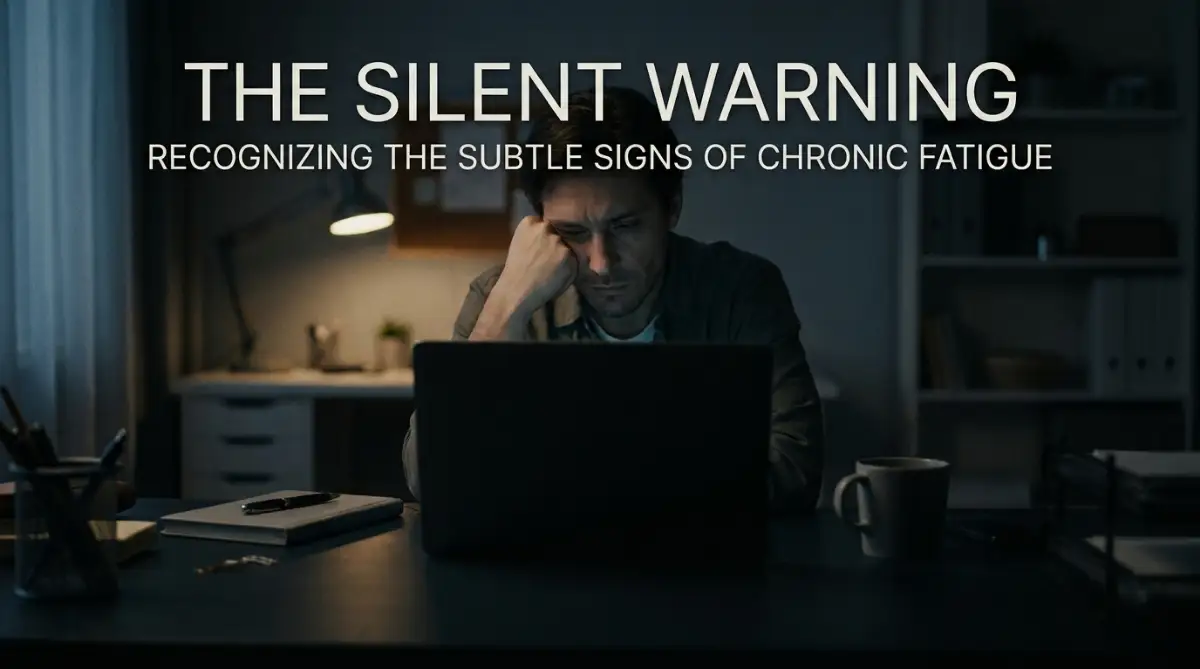
The Morning Struggle: When Rest Isn't Enough
Waking up should feel like a reset, but for many of us, it feels like starting a marathon before we’ve even opened our eyes. If you’re tired of chugging coffee just to function, listen up—this isn't just "being lazy," and it’s definitely not something you have to live with forever. Let's look at why your body is sending these alarms and how you can actually start feeling human again.
But the "fine" never came. I would stare at my computer screen, and the words would blur into one long, confusing string of text. My mood became incredibly unpredictable. I was snapping at people over tiny things, and I felt this heavy, physical weight in my limbs that no amount of sleep could lift. It wasn't just being tired after a long day; it was a deep, bone-weary exhaustion that felt like it lived in my blood.
I thought I was fixing the problem, but I was just putting tape over a crack in a dam. The real issue wasn't my schedule; it was that my body was sending out alarms that I was ignoring.
You may start wondering if you’re losing your focus, your usual energy, or even your ability to enjoy the things you once did. It can be unsettling when you can’t seem to rely on your own energy from one day to the next. But feeling this way doesn’t mean there’s something wrong with you as a person. Persistent tiredness can have many possible causes, and paying attention to what your body is telling you is a useful first step. Sometimes, simply recognizing that something has changed can help you figure out what to do next.
Many people spend years in this state of "functional exhaustion." They show up to work, they pay their bills, and they manage their social lives, but they are doing it with an empty tank. They don't realize that the subtle signals—the brain fog, the irritability, the physical aches—are actually a roadmap. If you have been feeling this way, you are not alone, and it is definitely not all in your head.
DecodingQuick Wins to Reclaim Your Energy
- Honor the Signals: Brain fog and muscle aches are data points, not flaws. Listen to them.
- Stop the Compensation: Coffee and screen time won't fix deep exhaustion; they only hide it.
- Energy Budgeting: Treat your energy like a bank account—don't overdraw it with too many high-cost tasks.
- Get Professional Help: If simple habit changes don't work, rule out medical issues with a doctor.
the Hidden Signals of Your Body
Fatigue isn't just about sleep. Real, chronic exhaustion leaves footprints in every area of your life. It starts as a whisper before it becomes a roar. Most people miss these early signs because they don't look like "illness." They look like life.
The Mystery of the "Brain Fog"
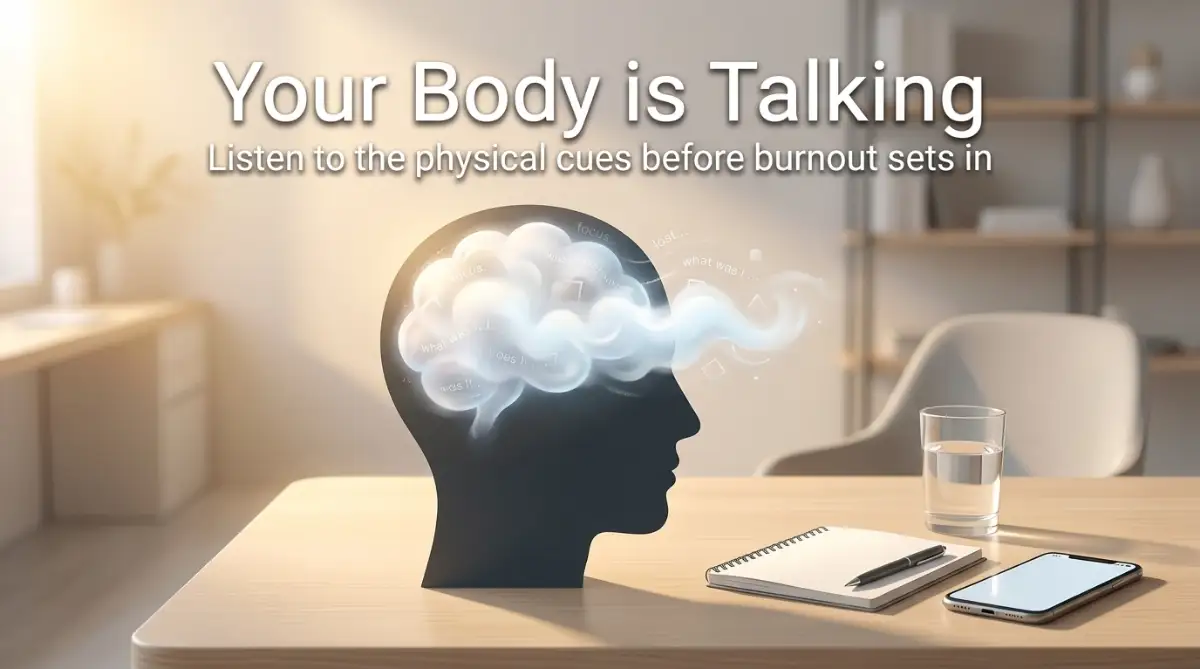
Have you noticed that you can't hold onto a thought as well as you used to? Maybe you walk into a room and forget why you went in there, or you find yourself reading the same email three times. This mental sluggishness is often the first red flag.
When your body is constantly running on low power, your brain prioritizes basic survival over complex tasks. It stops trying to be creative or sharp because it is trying to save energy. Don't just blame "stress" or a "busy week" for this. Take it seriously as a signal that your system is overloaded.
The Physical Aches That Don't Go Away
Do you feel like you have run a marathon when you haven't moved from your desk? Persistent muscle soreness or a feeling of "heaviness" in your limbs can be a major warning. It is a sign that your body is struggling to repair itself while you sleep.
If you are feeling this, it is an important time to consider your overall health. Sometimes, these symptoms are a nudge to get a professional check-up. You can learn more about why mental health check-ups are just as essential as physical screenings to ensure you aren't missing a bigger picture.
Heightened Sensitivity to Everything
When you are chronically tired, your nervous system gets "thin." Things that used to be easy—a noisy restaurant, a bright room, a slightly difficult conversation—start to feel like an assault. This is not because you have suddenly become a sensitive person.
It is because your body has no buffer left. Everything feels like "too much" because your internal resources are drained. If you find yourself needing to retreat to a dark, quiet room just to function, that is your body telling you it has reached its limit.
Pro Tip: I once thought I needed to "tough it out" at the gym when I felt this way. My realization? Pushing harder made the fatigue last three times longer. I learned that on those days, the most productive thing I could do was a gentle walk or simply resting, which actually helped me recover faster.
The Mood Swing Trap
Irritability is often mistaken for a personality trait. But if you are usually calm and suddenly find yourself snapping, crying, or feeling hopeless, look at your energy levels first. Low energy lowers your emotional control.
You have less "bandwidth" to deal with life's frustrations. It is almost impossible to be kind and patient when you are running on empty. If your friends or family have noticed you seem "different," take that feedback as a serious data point.
[Watch this short video to understand the physiological difference between normal tiredness and chronic fatigue, and how to spot the signs before they become a major health problem.]
Why We Ignore the Warnings
We live in a culture that rewards "hustle." We wear our exhaustion like a badge of honor. Admitting that you are tired feels like admitting you are weak. So, we ignore the signals.
The Cycle of Compensating for Fatigue
It’s easy to focus on getting through the day instead of asking why you feel this way in the first place. You might reach for another cup of coffee when your mind feels foggy, spend more time scrolling when you’re irritable, or rely on something to help you sleep without looking at what might be keeping you awake.
The problem is that these quick fixes can sometimes hide what your body is trying to tell you. It’s a little like turning up the radio because you don’t want to hear a strange noise coming from your car. The noise hasn’t disappeared—you’ve simply stopped noticing it. In the same way, covering up tiredness with temporary solutions can make it harder to recognize patterns that may be worth paying attention to.
Normal Tiredness vs. Chronic Fatigue
The “Functional” Myth
Being able to keep up with your responsibilities doesn't necessarily mean you're feeling your best. You might get to work on time, meet deadlines, and take care of everyday tasks while still feeling physically or emotionally drained.
That's why persistent exhaustion can be easy to overlook. When you are still managing to function, you may tell yourself that nothing is seriously wrong and simply push through another day. But constantly running on empty isn't something you have to ignore until you reach a breaking point.
Your well-being supports everything else in your life. If you have been feeling unusually exhausted, overwhelmed, or unable to recover despite getting enough rest, it may be worth paying attention to those signs and discussing persistent symptoms with a healthcare professional. You don't have to wait for a complete collapse before taking your health seriously.
The Data You Need to Watch
The 3-Minute Energy Audit
Before you hit the panic button, take 3 minutes to track these factors daily:
- The "Peak" Window: What time of day do you feel your sharpest?
- The Food Connection: Does a specific meal make you crash 30 minutes later?
- The Activity Cost: Which daily tasks drain you the fastest (e.g., long meetings, social gatherings)?
Keep a simple log. Don't overcomplicate it. For one week, just note down when you feel the most tired and what you were doing.
You might notice patterns. Maybe you are always exhausted on Tuesdays. Maybe the brain fog happens every single time you eat a specific lunch. This isn't medical advice, but it is excellent data to take to a doctor if you decide to go.
Establishing a New Standard

You get to decide what "normal" feels like. If you have accepted that you are always going to be tired, it is time to challenge that belief. You deserve to feel alert, present, and capable.
This starts by treating your energy like a limited resource. You wouldn't spend your savings account to zero without a plan, so why do that with your health? Start by noticing when you are running on fumes, and honor that feeling by slowing down.
A Balanced Approach to Recovery
Recovery isn't just about sleeping more. It is about "quality rest." You can sleep for ten hours and still wake up tired if that sleep wasn't deep or restorative.
The Environment Factor
Your bedroom needs to be a sanctuary, not a storage unit for stress. If you have work files, laundry, or screens near your bed, your brain stays in "alert" mode. Create a space that signals safety and calm to your nervous system.
If you are struggling with your environment, check out how restorative sleep can be improved with small, daily changes. It is often the small adjustments to your evening routine that make the biggest difference.
The Importance of Boundaries
Chronic fatigue often comes from saying "yes" to too many things. You are pouring water into everyone else's cup, leaving none for your own.
Learning to say "no" is a medical necessity, not a rude gesture. If a task or a social event is going to drain the last bit of your battery, you have the right to decline. You are preserving your health, which is the only way you can continue to help others in the long run.
Why Small, Consistent Habits Win
You don't need a massive, weekend-long detox. You need a Tuesday afternoon that isn't stressful. You need a lunch break where you actually step away from your desk.
Build "micro-breaks" into your day. Even five minutes of deep breathing can lower your cortisol levels. It isn't a cure, but it is a step toward telling your body that it is safe to relax.
Seeking Professional Guidance
There is a line between "feeling tired" and "experiencing medical fatigue." If you have changed your habits—slept better, managed stress, ate well—and you still feel a profound lack of energy, it is time to look at the medical side.
You might be dealing with an underlying issue that needs a doctor's attention. Do not let fear keep you from getting the answers you need. Sometimes, getting a clear picture of your health is the biggest relief you can get.
If you are worried about the cost or the process, remember that decoding medical bills and patient guides can help you navigate the system with less anxiety. You don't have to face this alone. There are resources to help you get the care you need without the added stress of confusion.
Final Reflections on Energy Management
The most important thing I learned is that my body isn't an enemy. It isn't trying to punish me by feeling tired; it is trying to protect me. It is raising a red flag because I was ignoring the limits of my own system.
You are not a machine. You are a biological being that requires maintenance, kindness, and time to repair. Start by noticing the subtle signs. Don't wait for the "big crash."
Be kind to yourself today. If you need to rest, rest. If you need to say no to something, say no. Your energy is your most precious asset. Protect it, honor it, and use it wisely. You are doing the right thing by reading this, and taking one small step toward listening to yourself is a victory.
Mastering Energy Accounting for Long-Term Wellness
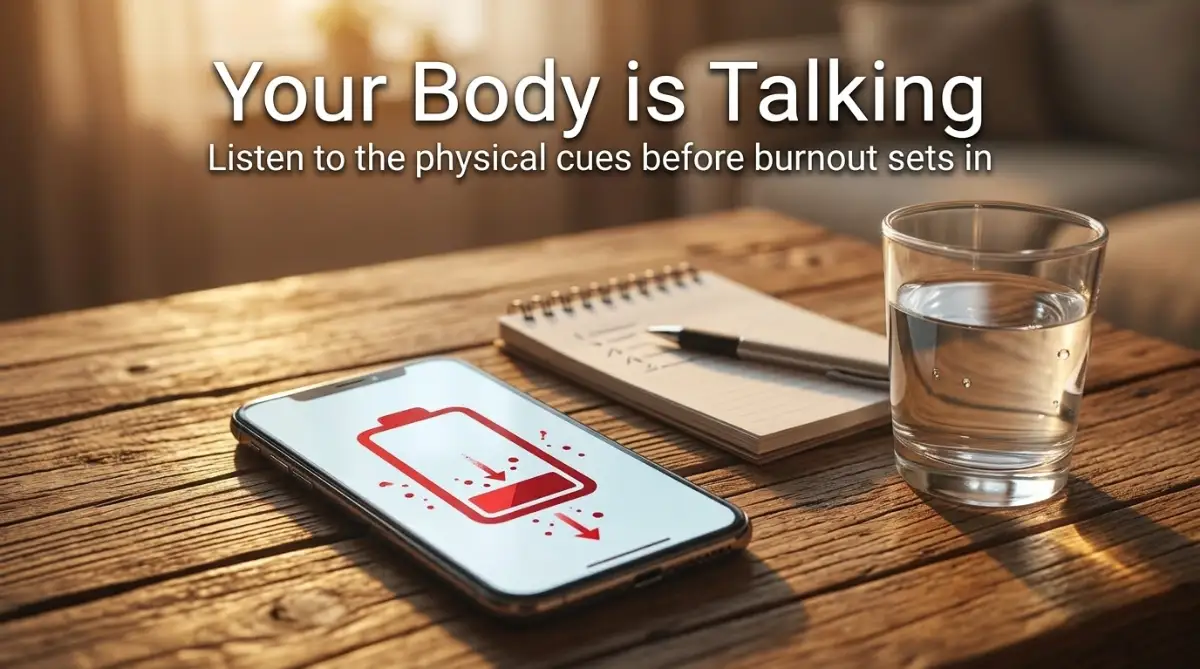
You have recognized the signs, and you are beginning to listen to what your body is saying. Now, it is time to move from "just listening" to "actively managing" your energy. Think of your energy as a bank account. Every morning, you start with a set balance, and every activity you do—from answering emails to washing dishes—makes a withdrawal.
If you consistently overdraw your account, you will face "bankruptcy," which in this case means a crash or a flare-up. The secret to long-term stability is something experts often call "pacing." Pacing is not about doing less; it is about doing things more intentionally so you do not run out of fuel before the day is over.
The Strategy of Energy Budgeting
You should start treating your energy like money. If you have a big event or a difficult project coming up, you need to "save" your energy for it in the days leading up to that moment. This might mean keeping your schedule extremely light on a Tuesday if you have a demanding meeting on Wednesday.
Many people find it helpful to categorize their daily tasks by their energy "cost." A low-energy task might be reading or light paperwork, while a high-energy task could be grocery shopping or intense problem-solving. By balancing these throughout the day, you prevent a massive depletion.
Regulating Your Nervous System
Your fatigue is often tied to a nervous system that is stuck in "fight or flight" mode. When you are constantly stressed, your body wastes energy on anxiety and tension. You can train your system to switch back to "rest and digest" mode.
One simple way to do this is through "micro-rest" periods. Every hour, set a timer for just three minutes. In those minutes, do nothing. Don't look at your phone, don't read, and don't plan. Just sit, close your eyes, and breathe.
This practice tells your brain that you are safe. It lowers your heart rate and signals your body to stop burning unnecessary fuel. You can also look into how to manage chronic conditions through daily nutrition choices to ensure that your physical body has the raw materials it needs to repair itself during these moments of rest.
Consistent Routines as an Anchor
When your energy is unpredictable, a routine is your best friend. A predictable schedule takes the "decision-making fatigue" out of your day. If you know exactly what you are doing in the morning, your brain doesn't have to waste energy figuring out your next move.
Building a routine doesn't mean being rigid. It means creating a rhythm that supports your natural flow. If you are interested in creating a system that works for you, check out this guide on wellness made simple: how to build a routine that actually sticks. This helps keep your mental energy high because you aren't constantly negotiating with yourself.
The Power of "Non-Sleep" Rest
Sometimes, you cannot get extra sleep. In those cases, you need non-sleep rest. This is not just sitting on the couch; it is intentional relaxation.
Examples include listening to instrumental music, practicing guided muscle relaxation, or even just lying in a dark, quiet room for twenty minutes. This kind of rest is scientifically proven to help the body recover from mental and physical stress. It is much more effective than scrolling through social media, which often leaves your brain more drained than before.
Knowing Your "Peak" Hours
Everyone has a time of day when they feel slightly more alert. Track your energy for a few days. Do you feel better in the morning, or does your brain clear up in the late afternoon?
Identify this window and guard it fiercely. Use your peak energy for your most important work, and leave the "low-cost" tasks for when you naturally dip. This is not about productivity for the sake of working more; it is about working smarter so you have energy left for your life outside of work.
Seeking Help Early
If your fatigue persists despite changing your habits, don't wait for it to get worse. It is smart to get a medical check-up to rule out other issues. Sometimes, fatigue is a symptom of something that requires a medical approach, such as thyroid imbalances or nutrient deficiencies.
You can learn more about how to navigate these conversations by reading about why mental health check-ups are just as essential as physical screenings. Do not be afraid to be your own advocate. You know your body better than anyone else, and if something feels wrong, you are allowed to ask for help.
The Pitfalls That Keep You Trapped
When we are desperate to feel better, we often fall into traps that actually make us feel worse. It is important to recognize these mistakes so you can stop the cycle of exhaustion.
The "Boom and Bust" Cycle
This is the most common mistake. You have a few good days, so you decide to "make up for lost time" by doing everything you missed. You clean the house, catch up on work, and run errands all at once.
The result? You completely crash, and the next few days are spent in total recovery. This "boom and bust" cycle keeps your body in a state of constant stress. It is better to have a steady, moderate pace every day than a wild swing between high activity and total collapse.
Relying on Artificial Energy
I have been there: relying on coffee, energy drinks, or sugar to "get through" the day. While these might wake you up for an hour, they don't actually give you energy. They are just borrowing it from your future self.
When the caffeine wears off, you are usually more exhausted than you started. It disrupts your natural rhythm and makes it harder to get deep, restorative sleep. If you are struggling to maintain your energy, looking at how to fix your sleep naturally: 7 evidence-based steps to rest better is a much better long-term strategy. You want to build energy, not just fake it.
Ignoring the Mind-Body Link
Many people try to treat fatigue as purely a physical problem. They change their diet and exercise but ignore the stress, anxiety, or emotional weight they are carrying. Your body and mind are not separate entities.
If you are carrying unaddressed emotional burdens, your body will stay in a state of high alert. This constant tension consumes a massive amount of energy. You must address the mental side of your life if you want the physical symptoms of fatigue to subside.
Measuring Your Worth by Productivity
We live in a culture that tells us we are only valuable if we are "doing" something. When you feel tired, you might feel guilty for not being productive. This guilt creates a stress loop that makes fatigue worse.
You are valuable even when you are resting. You are valuable even when you aren't "getting things done." Reframing this mindset is part of the healing process. If you don't give yourself permission to rest, your body will eventually take it for you in the form of a crash.
Comparing Yourself to Others
It is easy to look at friends, colleagues, or people on social media and wonder why they have so much energy. You compare your "tired" days to their "best" days. This is an unfair comparison that only breeds shame.
Everyone has a different battery capacity. You don't know what happens behind their closed doors. Focus only on your own energy data. Your only goal is to be a little more energized than you were last week.
Waiting for a "Quick Fix"
Chronic fatigue is rarely fixed by a single supplement, a new diet, or a week of vacation. It is a complex issue that requires time and patience. When you look for a magic pill, you ignore the foundational work that actually leads to healing.
It is frustrating when you want to feel better now. But if you focus on consistent, small habits, you will get there. Be patient with your progress. Real change is a marathon, not a sprint.
A Path Forward for Your Energy
Healing from chronic fatigue is a process of reclaiming your life. It is not about reaching a destination where you never get tired again, because everyone gets tired. It is about reaching a point where your energy is stable, manageable, and yours to control.
You have the tools to start this today. It is not about one massive overhaul, but about the small choices you make every single day. The choice to rest when you are tired, the choice to nourish your body, and the choice to speak kindly to yourself when things are hard.
Remember that you are human, and your energy is a precious gift. Do not waste it on things that do not matter, and do not apologize for needing to protect it. You are doing the hard work of listening to your body, and that is a massive step toward a better, more vibrant life.
T