The Tuesday Night Realization
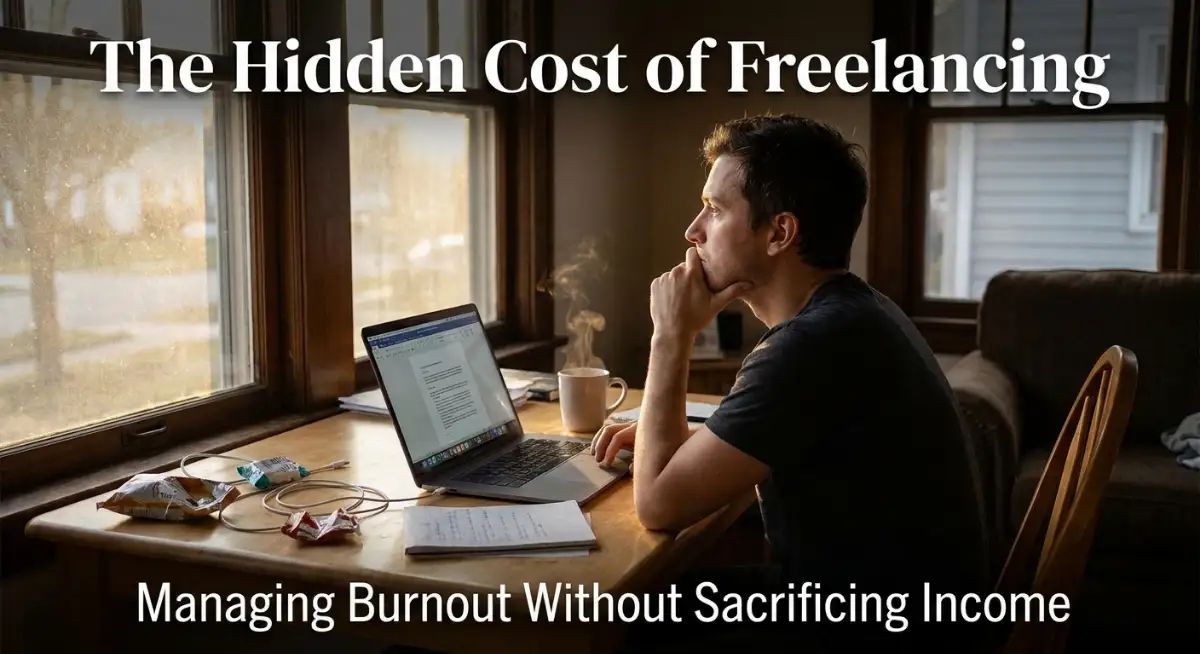
I remember the exact moment the freelance dream started to feel like a cage. It was a Tuesday night, around 11:30 PM, and I was hunched over my laptop, staring at a spreadsheet that seemed to be mocking me. My eyes were burning, my neck was stiff, and I hadn't eaten anything but a granola bar since noon. I was making money, yes, but I couldn't remember the last time I actually enjoyed a meal or watched a movie without checking my inbox every ten minutes.
I had become my own worst boss. I was demanding, unreasonable, and completely unforgiving of any downtime. I told myself that this was just "the hustle," and that if I wanted to succeed, I had to be available 24/7. My social life had withered away, replaced by the glow of my monitor and the constant hum of my server fans.
The reality was that I was running on fumes. I was selling my time for money, but I was also selling my peace of mind. Every notification sound felt like a needle prick. I wasn't excited about projects anymore; I was just relieved when they were done so I could move to the next pile of work.
Is this what freedom looks like? I asked myself. I had left a stable job to be my own boss, yet I was working harder, longer, and with more anxiety than I ever did in a corporate office. The trade-off felt uneven. I was successful on paper, but I felt like I was slowly disappearing.
This is the hidden cost of the freelance life. We talk a lot about the benefits—the flexibility, the autonomy, the potential for high earnings. We rarely talk about the isolation, the constant pressure to find the next gig, and the way our identity begins to shrink until it is just "worker." If you are feeling this, know that you are not failing. You are just experiencing the reality of a model that was never designed to be sustainable without careful intervention.
Rethinking Your Relationship With Work
You cannot sustain a high-speed engine without maintenance. If you treat yourself like a machine, you will eventually break down, and machines are expensive to fix. The first step is to shift your mindset from "how much can I do" to "how well can I work."
Quality will always beat quantity in the long run. If you are burned out, your work suffers, your relationships suffer, and your income eventually hits a ceiling. You have to learn how to step back to move forward. It is not about doing less; it is about doing what matters.
The Myth of Always-On Availability
We live in a culture that rewards being "responsive." We think if we answer an email within two minutes, we are being professional. In reality, you are training your clients to expect immediate responses. You are building a habit of reactive work, which is the death of deep focus.
Start setting clear boundaries today. Tell your clients, "I check my email at 9 AM and 4 PM." It sounds simple, but it changes the dynamic. You are a consultant, not an on-call employee. When you set boundaries, you actually signal to your clients that your time is valuable.
Pricing for Your Sanity
Many freelancers charge too little because they are afraid of losing work. This forces them to take on more clients than they can handle just to pay the bills. It is a vicious cycle. If you are constantly exhausted, your prices are likely too low.
Increase your rates to a level that allows you to work fewer hours for the same money. It is better to have three high-paying clients who respect your time than ten low-paying ones who drain your soul. Calculate how much you need to earn to live comfortably, and set your rates to hit that number with a healthy work-life balance built in.
Pro Tip: My Realization
For years, I made the mistake of charging by the hour. I thought it was the most honest way to bill. Then, I realized that the faster I worked, the less money I made. I switched to value-based pricing, and it changed everything. I stopped being punished for my efficiency and started being rewarded for my expertise. I recommend you look at your pricing structure today and see if you are really getting paid for your value.
Creating a Buffer of Rest
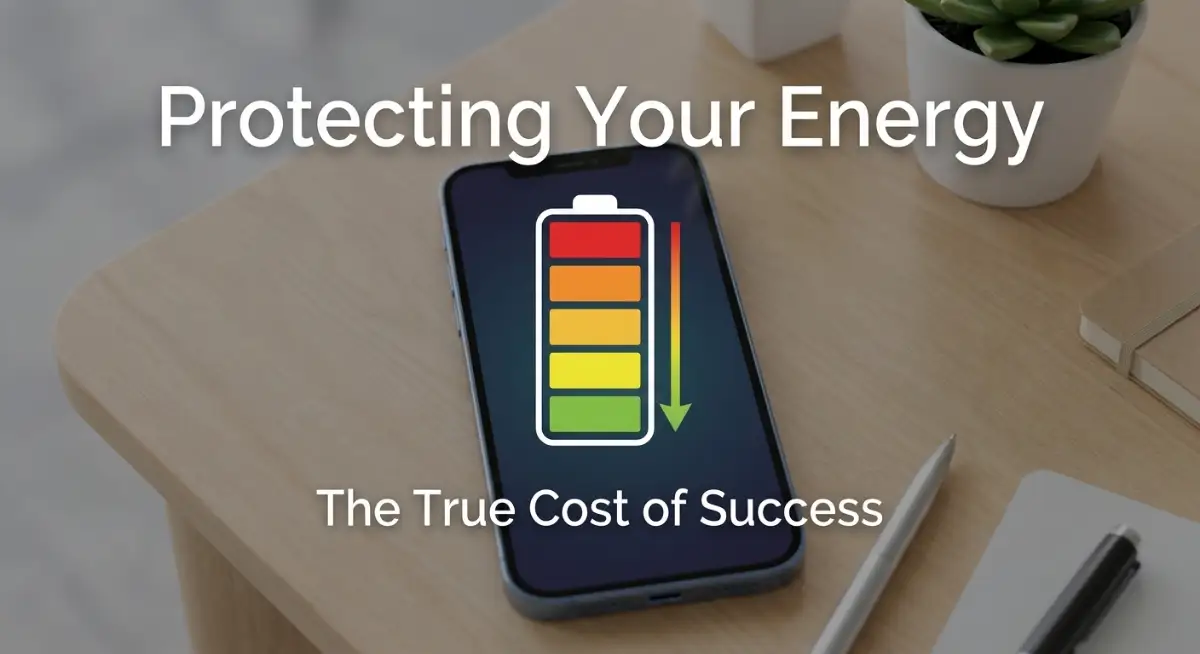
Your calendar is your kingdom. If you don't block out time for yourself, someone else will fill it for you. Start blocking out "Do Not Disturb" time in your schedule every single day. This is your time to breathe, to exercise, or just to stare at a wall.
It is not "wasted" time. It is maintenance time. Just like a professional athlete needs rest days to keep performing, you need rest to keep thinking creatively. If you don't schedule rest, you will be forced to take it when your body finally forces a shutdown.
Check out this video on how to manage your schedule so you don't end up burnt out:
This guide explains how to protect your energy while scaling your income:
After watching, you will see why it is so important to treat your time as a finite, precious asset. It makes a world of difference when you stop trying to squeeze every drop out of your day and start building a sustainable pace.
The Power of Systems and Automation
If you are doing the same task over and over again, you are wasting energy. Find a way to automate it. Whether it is a template for your contracts, a standard response for client emails, or a tool that manages your invoicing, get it off your plate.
The more you automate the administrative stuff, the more energy you have for the actual work. You aren't being lazy by using tools; you are being smart. You are using technology to do the heavy lifting so you can focus on the creative work that actually brings in the high income.
Learning to Say No
This is the hardest lesson, but it is the most vital one. You have to say no to projects that don't pay well, don't excite you, or don't fit your schedule. Every time you say yes to a "bad" client, you are saying no to a "good" client or to your own well-being.
It feels scary to turn down money, but saying no is how you clear space for the right work. If your dance card is full of mediocrity, there is no room for greatness. Be picky. Your future self will thank you for the projects you didn't take.
Investing in Your Own Growth
When you are busy, you stop learning. You just execute. This is dangerous because the market changes. You need to keep sharpening your axe. Schedule time for professional development, whether it's reading, taking a course, or just exploring new software.
When you grow your skills, you can charge more. When you can charge more, you can work less. It is a loop of success that starts with a commitment to continuous learning. Don't let your "busy" schedule keep you stagnant.
The Importance of Health as an Asset
Your health is your most important business asset. If you can't show up, you don't make money. It is that simple. If you are ignoring your sleep, your nutrition, or your physical movement, you are sabotaging your business.
Treat your health like you treat your most important client. If you have a meeting with your health, you don't cancel it. You show up. If you are interested in more professional habits for your lifestyle, you might want to look at how to stay calm and invest wisely during market volatility as a way to think about your long-term security.
Connecting with Other Humans
Freelancing can be incredibly lonely. You are in your head all day. You need to get out and connect with other people who understand what you are going through. Find a community, join a mastermind group, or just find a "work buddy."
Having someone to talk to, someone to vent to, and someone to learn from can make all the difference. It reminds you that you aren't the only one struggling. It validates your feelings and gives you new ideas to solve old problems.
Staying Consistent with Income Goals
Burnout often happens when we are stressed about money. If your income is unpredictable, it is hard to relax. Focus on building a "safety cushion" so that you aren't living paycheck to paycheck. This gives you the mental space to turn down bad work.
When you know you can pay your bills for the next three months, your attitude changes. You become more confident in negotiations. You stop being desperate. You start acting like a professional, and that confidence is what attracts the best clients.
The Trap of Comparison
Don't look at other people's highlight reels and think you are failing. That freelancer you see on Instagram posting about "working from a beach" is probably burnt out too. You don't know the full story. Focus on your path, your goals, and your definitions of success.
Comparison is the thief of joy. If you are happy, if you are profitable, and if you have time for your life, you are winning. Don't let the noise on the internet tell you otherwise.
Embracing the "Slow" Days
You are not always going to be at 100% capacity. Some days are just going to be slow. That is okay. Use those days to organize, to plan, or to do something completely unrelated to work. You don't need to be in a constant state of "doing."
If you force productivity on the days your brain isn't working, you will just produce low-quality work and feel worse. Accept the ebb and flow of the freelance life. It is part of the territory, and it is perfectly fine.
Evaluating Your Client Mix
Sometimes the problem isn't you; it's the client. Look at who you are working for. Are they respectful? Do they provide clear instructions? Or do they treat you like a vendor to be squeezed?
If you have toxic clients, fire them. It’s scary, but it’s liberating. One bad client can take up more mental energy than three good ones. You need to curate your client list just like you curate your portfolio. Surround yourself with people who value what you do.
The Future of Your Career
Think about where you want to be in a few years. Do you want to still be doing this same work? Or do you want to move toward something else, like teaching, consulting, or starting an agency? If you don't plan for the future, you will always be stuck in the present.
Your freelance career should be a bridge, not a destination. Use the income and the freedom to build toward something that fulfills you. If you keep doing the same thing forever without a plan, you will eventually burn out. Find your North Star and work toward it, day by day.
Optimizing Your Work-Life Engine for Long-Term Growth
Once you have established your boundaries, the next challenge is managing your energy. Think of yourself as a professional athlete. An athlete doesn't sprint every single day. They balance their training, their rest, and their nutrition so they can perform when the big game comes. You need the exact same strategy for your business.
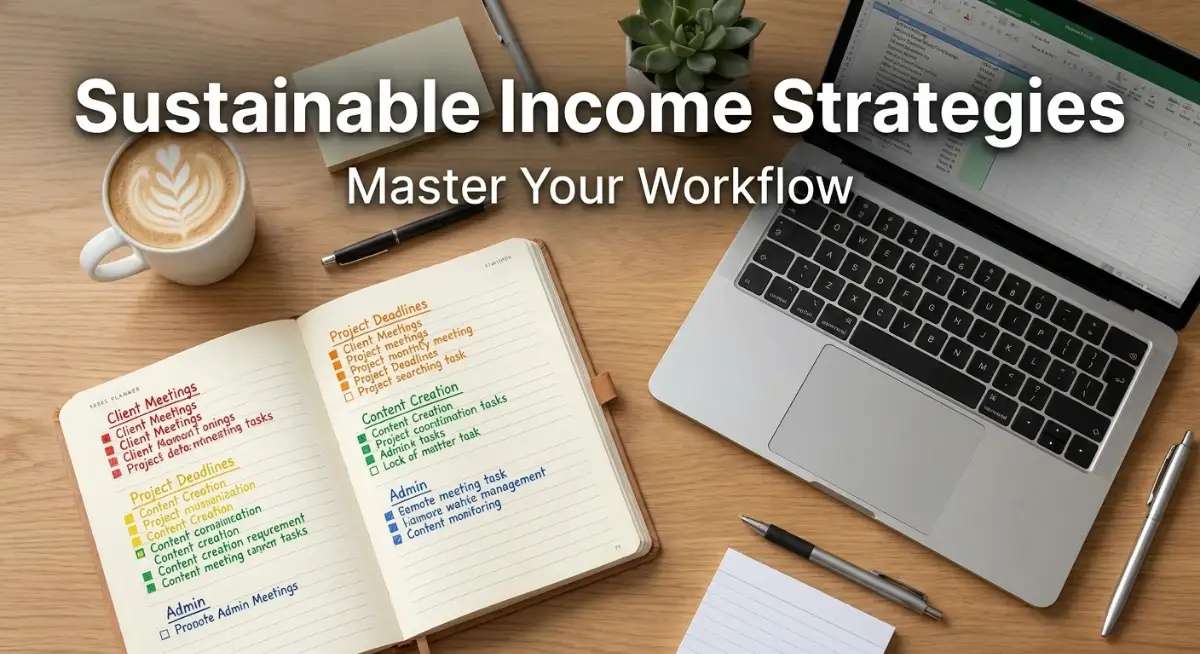
One of my top secrets for this is what I call "Theme Day Scheduling." Instead of doing every type of task every single day, I dedicate specific days to specific work modes. Mondays might be for heavy project work, while Tuesdays are for client meetings, and Wednesdays are for deep learning and admin. It prevents the mental friction of switching gears constantly.
When you don't have to switch your brain from "creative mode" to "accounting mode" ten times a day, you save a massive amount of mental fuel. You can read more about how how to bridge the professional skill gap by mastering basic automation tools to understand how automating your scheduling can take the guesswork out of your workdays. You will find that you get more done in less time, leaving you with actual freedom at the end of the day.
The Power of Strategic Rest
You might think rest is the opposite of work, but it is actually part of work. If you are constantly grinding, your brain loses its ability to solve complex problems. I find that when I take a full break—no phones, no email, no content—I come back with ideas that I would have never reached if I were staring at a screen.
Sometimes, the best thing you can do for your business is to leave your desk. A study from the Harvard Business Review suggests that high-performing individuals schedule recovery just as intentionally as they schedule their projects. It is a sign of a pro to know when to stop. If you are constantly feeling the need to "check in," it might be a sign that you need to be how to stay calm and invest wisely during market volatility in your own mental energy. Treat your rest like a high-return investment.
Managing Financial Anxiety
Let’s talk about money, because it is usually the biggest cause of burnout. If you are terrified about your next invoice, you will accept any job, no matter how bad it is. You need to build a financial foundation that allows you to say no.
This often starts with how to build wealth through smart dividend investing, even if it is just a small amount. Having a little bit of passive stability helps you breathe easier. It gives you the power to choose clients based on whether you enjoy working with them, rather than just based on whether they can pay your rent this month.
Creating a Professional Buffer
You also need to protect your professional life from your personal stressors. When things go wrong in your home life, it is hard to focus on a design project or a complex article. Set up your workspace in a way that separates these two worlds.
If you have a dedicated room, use it only for work. If you work from a kitchen table, clear everything away when you are done. Your brain needs visual cues to know that "work mode" is over. This simple act of closing the laptop and clearing the table helps your brain signal that it is time to recover.
Auditing Your Client Relationships
Periodically, you need to look at your client list and be honest. Who gives you energy? Who takes it? I realized years ago that I was spending 80% of my time with clients who drained me and only 20% with those who actually helped me grow.
I started phasing out the drainers. It was scary, but it created space for the clients I actually liked. Don't be afraid to fire clients who don't respect your time or your process. You are the CEO of your business; you get to decide who you invite into your working life.
Continuous Professional Evolution
The freelance market changes every single day. If you aren't learning, you are falling behind. But don't just consume content for the sake of it. Focus on depth. Use your time to become an expert in one specific niche rather than a generalist who does a bit of everything.
Experts are paid more. Experts are treated with more respect. Experts don't have to scramble for gigs. When you position yourself as a specialist, your work becomes more rewarding. And when you are doing work you love, the "burnout" feeling fades because you are genuinely interested in the outcome.
Your Health as a Business KPI
We check our bank accounts every day. Why don't we check our health? You should be tracking your "health metrics" alongside your revenue. How much sleep did I get? Did I move my body today? Am I eating things that fuel me?
If these numbers are in the red, your business is at risk. You can use simple tools like why mental health check-ups are just as essential as physical screenings to remember that your body and mind are your primary tools. Don't ignore them until they force you to.
The Pitfalls That Sabotage Your Freedom
We often hurt ourselves without even realizing it. The lifestyle of a freelancer is built on autonomy, but that freedom can turn into a trap if you aren't careful about how you manage your habits.
The Isolation Loop
When you work alone, it is easy to get stuck inside your own head. You start believing your negative thoughts about your work or your progress. Without someone to bounce ideas off of, you lose perspective.
You start to think that a small mistake is the end of the world. You think that one missing invoice is a sign of business failure. This isolation amplifies your stress. Reach out to others. Find a community or a mentor. You are not meant to do this alone.
The "Yes-Man" Syndrome
It feels good to say yes to every request. It feels like money, it feels like success. But every yes is a no to something else. Every time you say yes to a project that doesn't fit your goals, you are saying no to your own growth.
People will respect you more if you have standards. If you are always available, you are perceived as a commodity. If you are selective, you are perceived as a professional. Learn to say "I'm not available for that right now, but here is someone who might be able to help." It is the most professional move you can make.
Undervaluing Your Time Off
Many freelancers treat their vacation time like a "maybe." They bring their laptop to the beach. They check emails while they are supposed to be out for dinner. They never truly switch off.
If you don't give your brain a chance to fully disconnect, you will never recharge. You will be in a constant state of low-grade exhaustion. When you are on vacation, be on vacation. If a client can't handle you being gone for a week, they weren't the right client for you in the first place.
The Comparison Trap
You look at other freelancers on social media and see their wins. You see the fancy office, the new car, the "huge" client they just landed. You don't see their anxiety, their failed projects, or their 14-hour days.
This kills your motivation. You start trying to copy their path instead of building your own. Stay in your lane. Focus on what you want to achieve, not what they are showing you. Your business is yours alone.
Forgetting About Basic Protections
I see people skip the boring stuff like business insurance or solid contracts because they want to "move fast." This is a huge risk. If something goes wrong, you don't have a safety net.
If you don't have a written agreement, a simple misunderstanding can become a legal disaster. It is a lot like why home insurance companies deny claims and how to stay protected—if you don't have the documentation in place before the disaster happens, you are setting yourself up to lose. Get your legal house in order.
The Perfectionism Delay
You spend three hours polishing a slide deck that the client only looked at for two minutes. You agonize over a single email for forty minutes. You are chasing perfection when "done and good" would have been sufficient.
Perfectionism is just procrastination in a fancy suit. It keeps you from shipping your work and getting paid. Give yourself a time limit for every task. When the time is up, it is done. Move on. The best work is often just work that actually gets finished.
Your Path to a Sustainable Life
You chose freelancing because you wanted control. Do not give that control away to burnout. You can build a business that supports your life, not one that consumes it. It takes work, it takes boundaries, and it takes the courage to say no.
But you can do it. You have already taken the first step by reading this. You have acknowledged that there is a problem. Now, take the next step by changing one small thing in your daily routine.
Action Plan for Tomorrow
- Review Your Rates: Are you charging what you are worth? If not, plan your price increase.
- Block Your Time: Open your calendar and mark out your "Do Not Disturb" hours for the week.
- Audit Your Clients: Which three clients are the most draining? Think about how you can slowly move away from them.
- Set a Hard Stop: Decide on a time every evening when the laptop gets closed, and stick to it.
- Schedule Rest: Book a day where you do absolutely no work. Treat it like a client meeting.
A Word from the Expert
I have spent so many years thinking I had to sacrifice myself to make it as a freelancer. I am here to tell you that I was wrong, and I don't want you to make the same mistake. You have the skills to succeed, and you have the right to a life outside of your work. I encourage you to be brave enough to set those boundaries, even if it feels uncomfortable at first. You are the architect of your own schedule, so please, build something that lets you breathe. Start today, one small step at a time, and I know you will find that balance you are looking for.
Common Questions About Freelance Balance
How do I tell a client I am unavailable without losing the job?
Be professional and confident. Simply say, "I am currently managing my workflow to ensure the highest quality for my active projects, so I will be responding to emails during these specific hours." Most clients respect boundaries because it shows you manage your time like a pro.
Is it normal to feel guilty when I'm not working?
Yes, it is very common for freelancers. You are your own boss, so you feel like you should be producing 24/7. Remind yourself that rest is a productive activity—it is how your brain recharges to do its best work later.
What if I have to work long hours to make ends meet?
It happens. Just make sure it is a season, not a lifestyle. If you have to work long hours for a month to reach a goal, fine. But set a "return to normal" date. Do not let "temporary" become your permanent way of living.
How do I stay motivated when the work gets boring?
Remind yourself of your "why." Why did you become a freelancer? Was it for the money? The freedom? The creativity? If the work feels boring, try to pivot your niche toward something that excites you more, or take a day to work on your own side project.
When should I hire help?
When your time is worth more than the cost of a helper. If you are spending 10 hours a week on tasks that someone else could do for $15 an hour, you are losing money by not hiring them. As soon as you are consistently hitting your income goals, look for support.
Disclaimer: This article is for informational purposes only and does not constitute financial, legal, or career advice. Every freelance business is unique, and you should evaluate these strategies against your own income goals, local labor laws, and personal circumstances. Always perform your own due diligence before making significant changes to your business model or legal arrangements.