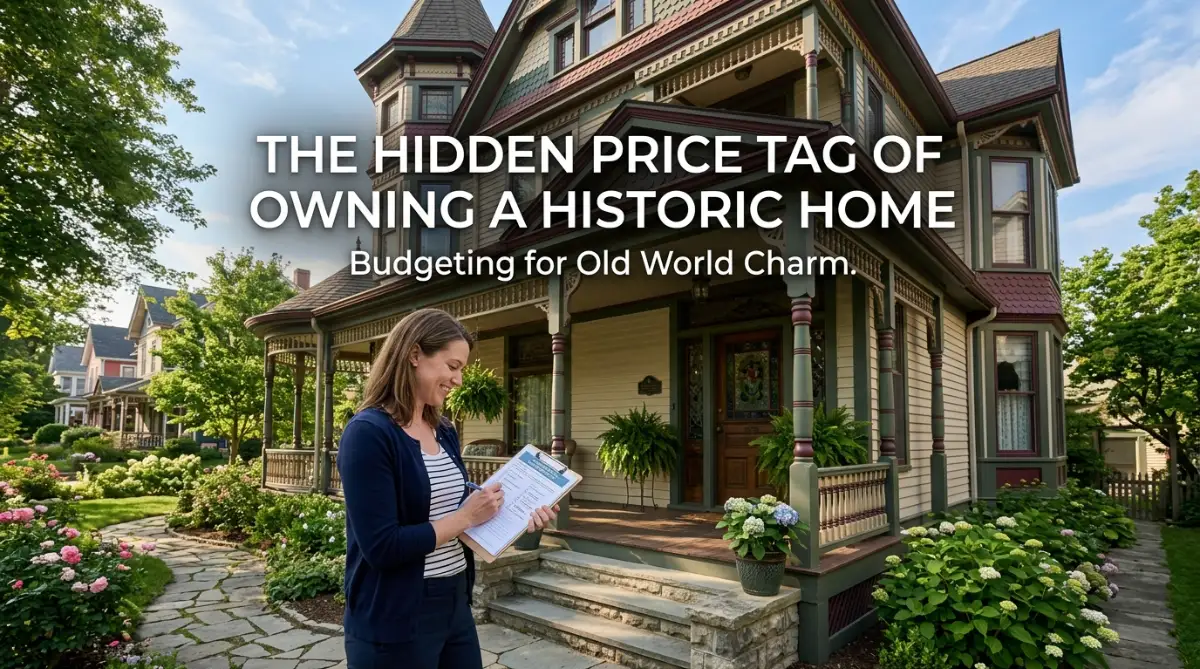
The Romance of the Old House vs. The Reality of the Checkbook
Buying an old home feels like winning the lottery until the first major repair bill hits your inbox. We fall for the high ceilings and original woodwork, forgetting that these houses were built for a world that no longer exists. If you want to keep your sanity and your savings, you have to stop viewing your home as a romantic escape and start treating it like the complex machine it is.
Three months later, I was sitting on that same floor, surrounded by drywall dust and a plumber who was telling me my "dream" had a pipe system made of cast iron that was essentially turning to rust. I thought I had bought a home; it turned out I had bought a project. The romance of the era quickly faded as the bank account started to mirror the house's age—getting thinner by the day.
This happens to so many of us. We fall in love with the look, the history, and the way the house sits on the lot, but we forget the most basic truth. These buildings were constructed for a world that doesn't exist anymore, with materials and methods that are rare, expensive, and often difficult to find.
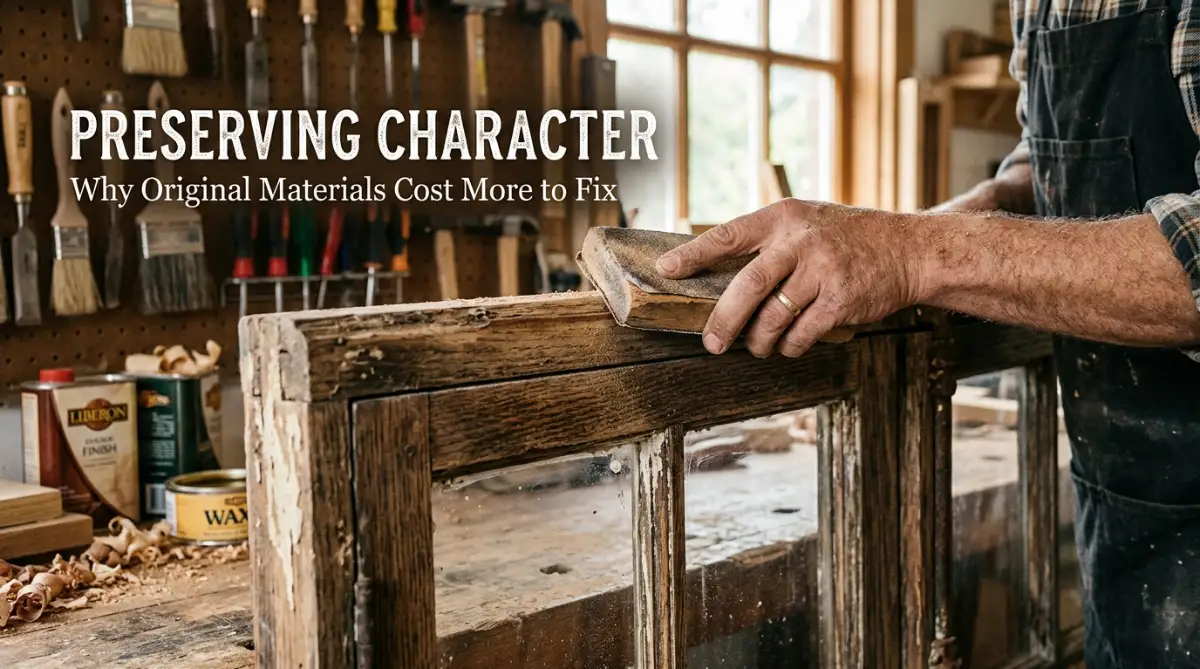
It isn't just about paying for repairs; it is about paying for the right kind of repairs. You can't just run to the big-box store, pick up a piece of modern wood, and expect it to hold up against century-old craftsmanship. If you do, you lose the very value you bought the house for in the first place.
My mistake was thinking that "good enough" would be fine. But an old house is a conversation with the past, and when you cut corners, you lose the history you paid to own. This struggle isn't just about money; it's about the time, the search for specialists, and the constant, nagging fear that a small leak will turn into a catastrophic failure.
If you are starting to feel that panic, you are not alone. It is a shared experience among those who choose to live in buildings with a pulse. But you don't have to be a victim of your own investment. You just need to change how you prepare for the surprises that are tucked behind your walls.
Quick Wins: Protecting Your Historic Investment
- Audit First: Do a yearly perimeter check to find water pooling or siding gaps.
- Don't Rush: Prioritize structural safety over cosmetic upgrades every single time.
- Seek Specialists: Avoid "generalist" contractors. Find tradespeople who specifically know how to handle your home's age.
- Build the Fund: Set aside at least 3% of your home's value annually in a dedicated repair account.
Decoding the Hidden Infrastructure of Your Period Property
When you own a structure from a bygone era, you aren't just a homeowner; you are a caretaker. The systems inside your walls—the veins and arteries of the house—are likely the biggest source of your financial stress. You have to understand that these systems don't behave like the ones in a new build.
Mapping the Aging Arteries
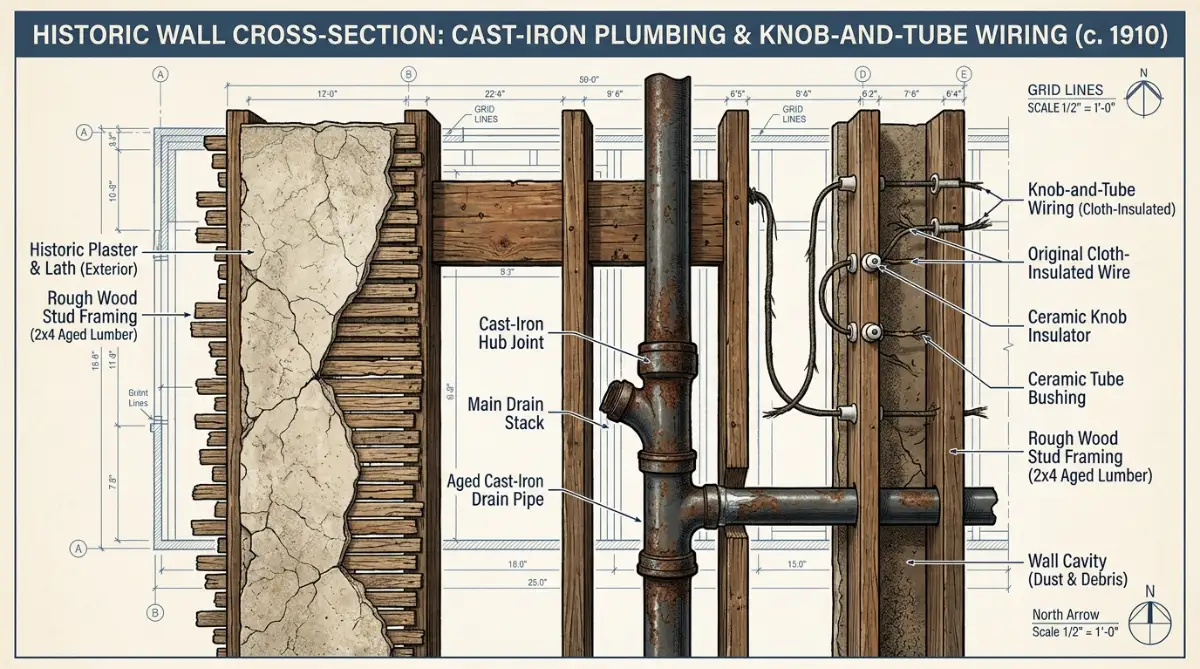
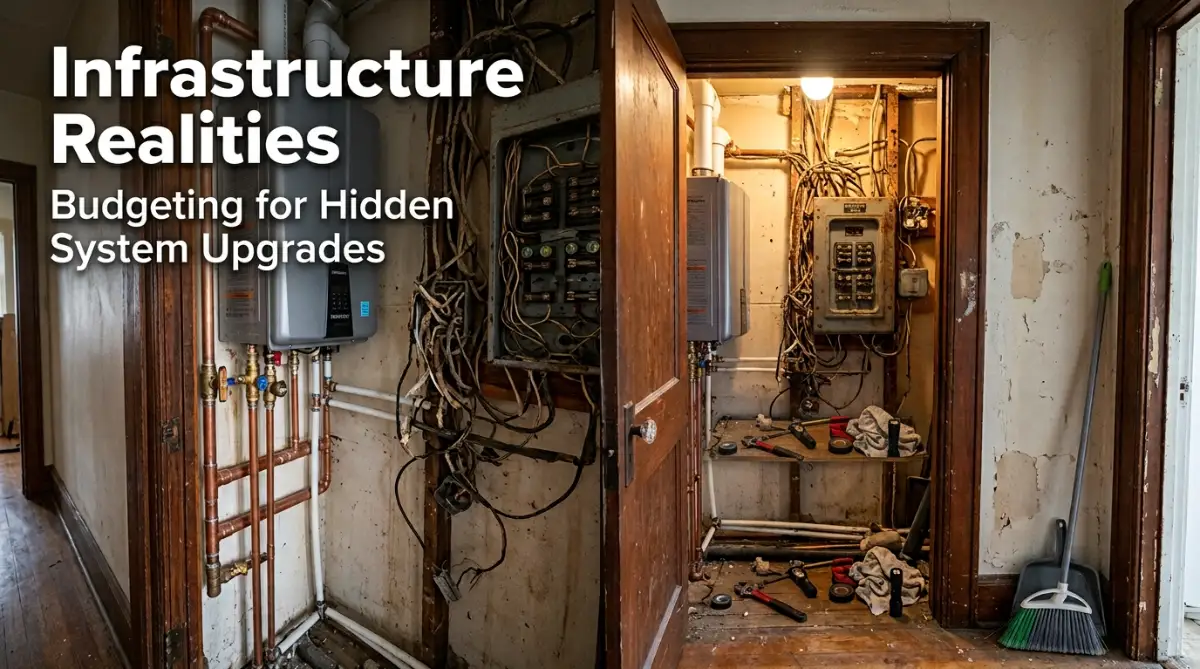
Your plumbing system is a common culprit. Many historic buildings started with galvanized steel or cast-iron pipes. Over time, these materials corrode from the inside out, restricting water flow or inviting pinhole leaks.
When these pipes fail, they rarely fail slowly. You might be dealing with a full-blown flood before you even realize there is a problem. You should have a professional scope your main sewer line and check your internal plumbing every few years.
It is much cheaper to replace a section of pipe proactively than it is to tear open a historic plaster wall to fix a leak that has been rotting the framing underneath. Treat this as an essential part of your yearly audit, not an optional upgrade.
The Wiring Puzzle
Electrical systems in older properties were designed to power a few lightbulbs and a radio, not a home office, a high-end kitchen, and an air conditioning unit. If you see cloth-wrapped wiring or knob-and-tube setups, take it seriously. This isn't just about convenience; it is about the safety of your family.
Insurance companies often balk at insuring homes with outdated electrical work. You should map out your panel and identify which circuits are overloaded. Don't wait for a flicker or the smell of burning plastic to force your hand.
Replacing outdated wiring is a big job, but it is one of the highest-value updates you can make. It protects your equity and provides you with the modern power you need to live comfortably. Think of it as a gift to your future self, ensuring your home remains a safe place to sleep at night.
The Truth About Plaster and Lath
Drywall is easy, cheap, and fast. Plaster, on the other hand, is a dying art. When you have a crack in your wall, you cannot just slap some tape over it and call it a day.
Plaster is made of lime, sand, and horsehair, and it moves with the house. If you patch it with modern gypsum-based materials, the different expansion rates will cause the patch to crack within months. You have to find someone who knows how to mix and apply historic-grade plaster.
This is expensive, and finding the right person can feel like a hunt for a treasure. But that smooth, heavy feel of real plaster is what makes a historic home stand out. If you replace it with drywall, you lose the character that makes your property special.
Maintaining the Original Exterior Envelope
The exterior of your house is its first line of defense against the elements. If you have original wood siding or detailed trim, do not paint it with modern high-gloss acrylics that don't breathe. Old houses need to "breathe," and modern coatings can trap moisture against the wood, causing it to rot from the inside.
You should be looking into mineral-based or oil-based paints that allow moisture to escape. It costs a bit more to research and source the right products, but the life of your wood depends on it. A well-maintained exterior can last for centuries if you stop fighting the material and start working with it.
The Foundation and Soil Dynamics
Historic houses often sit on rubble or brick foundations that weren't designed to support modern soil conditions or drainage. As the earth around your home shifts, your foundation may settle in ways it wasn't built to handle. Keep your gutters clean and ensure water is directed away from the house by at least ten feet.
Small changes in drainage can save you thousands in structural stabilization later. If you see cracks forming in a stair-step pattern on your foundation, bring in an engineer who specializes in older structures. They will understand the unique needs of your home better than a general contractor who only builds new boxes.
Pro Tip: My Realization
I once hired a general contractor to fix a small foundation crack, and he used standard concrete filler. It worked for two months. Then I met a restorer who told me that old brick foundations need lime-based mortar because it is soft enough to move with the house. My big lesson? Always look for someone who specializes in your house's specific age, even if it means paying a premium for their time.
Assessing Your Heating and Cooling Needs
Historic homes were built to take advantage of cross-breezes and heavy shading. If you are trying to force modern air conditioning into a house that wasn't built for it, you will have massive energy bills.
Instead of adding more massive HVAC units, look at passive ways to cool your home. Restoring original shutters can block the heat of the day, and checking your insulation in the attic can make a world of difference. You don't need to turn a historic building into a hermetically sealed modern box to be comfortable.
Quick Passive Cooling Check:
- Morning Airing: Open windows early before the sun hits to flush out heat.
- Closing the Envelope: Close blinds on south-facing windows by 10 AM.
- The Cross-Breeze: Use top-floor windows to exhaust hot air while keeping bottom windows shaded.
To better understand how to identify these risks before they turn into emergencies, watch this guide on historic home maintenance audits.
Planning for the "Impossible" Repair
When you own a historic building, you have to accept that some things will be impossible to find. You might need a specific type of floor tile, an ornate door handle, or a piece of trim that hasn't been manufactured in decades.
Build a "salvage list." Visit local architectural salvage yards and make friends with the owners. Let them know what you are looking for. When they find that perfect fireplace insert or that specific handle, you will be the first one they call.
Treat your house like an ongoing collection. Keeping a stash of period-appropriate materials in your garage or basement will save you when the inevitable repair happens. It turns a potential crisis into a simple afternoon project.
Managing the Labor Cost Gap
The biggest shock for historic homeowners is the labor cost. You aren't paying for "speed"; you are paying for "preservation." A skilled craftsman is going to work slower than a guy with a nail gun, and they should.
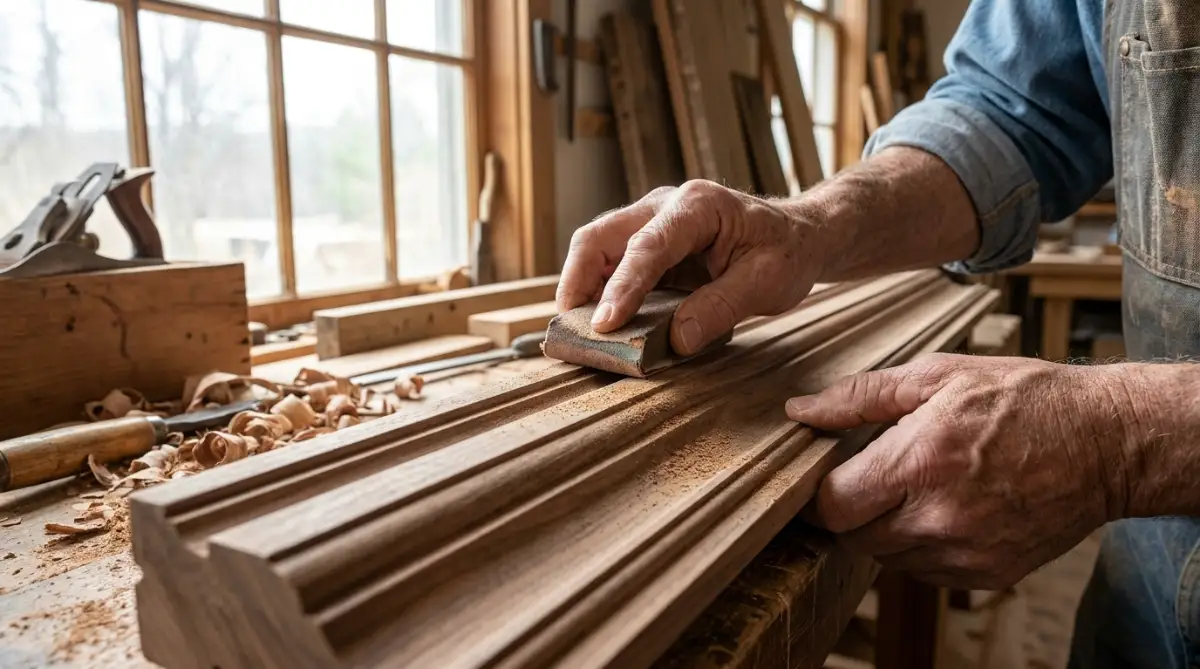
When you get quotes, don't just pick the cheapest one. Ask them to show you their previous work on similar-aged structures. If they start talking about "ripping it all out and starting over," they are the wrong person for the job. You want someone who asks, "How can we save this?"
Real preservationists love the history of the house as much as you do. They will be honest about what can be saved and what is too far gone. That honesty is worth every extra dollar you spend on their daily rate.
Advanced Strategies for Long-Term Historic Home Preservation
Owning a piece of history is rewarding, but it requires a different mindset than managing a modern property. You need to stop thinking about "quick fixes" and start thinking about "heritage management." The goal is to keep the house standing for another century while you live comfortably today.
The Annual Audit Protocol
Set aside one weekend every year to be your home's "health inspector." Walk the entire perimeter with a notepad. Look for signs of water pooling near the foundation or gaps in the siding where pests might enter.
If you catch a small issue now, you save a fortune compared to waiting until the damage spreads. For those interested in wider property management, you can learn more about is your property manager costing you money? 7 signs of trouble to see how professionals keep assets in check.
Building Your Emergency "Restoration Fund"
Old houses don't break down predictably. One day the plumbing is fine, and the next, a pipe bursts in a wall you didn't even know existed. You need a dedicated cash reserve just for the house.
Aim to keep at least three percent of your home's value in a high-yield account. This money is off-limits for anything else. If you are still figuring out how to manage your daily cash to get there, check out my guide on managing personal budget basics. It will help you carve out the space you need to be ready for the unexpected.
The "Originality" Rule for Upgrades
When you are tempted to swap out an old feature for a modern one, pause. Is it because the original is broken, or because you want a new "look"?
Often, the original materials are of much higher quality than what you can buy at a store today. Try to repair before you replace. You can often find tutorials or expert advice from organizations like the National Park Service on how to rehabilitate historic materials without destroying their value.
Prioritizing Thermal Efficiency
You don't need to rip out beautiful historic windows to save on your energy bill. Most of the heat loss in old houses happens in the attic, not through the glass.
Add high-quality insulation to your attic floor and seal the gaps around your basement rim joists. These two steps will make your home feel solid and warm without you ever having to touch your historic window frames. If you want to see how these types of improvements pay off, read about why professional solar placement matters more than you think to further optimize your energy usage.
The Traps That Drain Your Savings and Spirit
It is incredibly easy to get overwhelmed by the sheer number of things that seem to need attention. When you rush, you make bad choices. Here are the common paths that lead to wasted money and ruined character.
Ignoring the "Small" Moisture Issues
I have seen homeowners ignore a small dark spot on their ceiling because it "only leaks when it rains really hard." That spot is a slow-motion catastrophe. By the time it starts dripping, the mold and wood rot behind the wall are already deep-set.
If you see moisture, investigate the source immediately. Do not paint over it. Paint doesn't fix a leak; it just hides the evidence until the wall collapses. Always remember the lessons from why home insurance companies deny claims and how to stay protected if you suspect hidden water damage.
Hiring the Wrong "Generalist" Contractor
The most common mistake is hiring a general handyman for a specialized job. Would you ask a plumber to restore a stained-glass window? Of course not.
Your historic home needs experts, not generalists. If you hire someone who doesn't understand the specific needs of your house, you will pay them to do the work, and then you will pay someone else to fix the mess they made. Don't be afraid to ask for references of other historic homes they have worked on.
Building a Future with the Past
Owning a historic home is a long-term journey, not a short-term project. You are protecting a legacy that was here long before you and will be here long after you. It requires patience, a disciplined budget, and a willingness to learn how things were made in the past.
By taking care of the small details, you ensure that your property remains a beautiful, functional, and valuable asset. You are doing something most people are afraid to do, and that is a point of pride. Keep your records, hire the right hands, and respect the craftsmanship that built your walls.
I have found that the more I learn about my house, the less I fear the next repair. It is no longer a mystery; it is a known quantity. My hope is that you find that same confidence as you navigate your own homeownership journey. Stay focused, do the research, and take the time to do it right. You are doing a great job protecting your slice of history.
Common Questions About Historic Properties
Should I prioritize structural repairs over cosmetic ones?
Always. Cosmetic repairs can wait, but structural issues like foundation cracks or leaking roofs will only get more expensive over time. Focus your money where the house's stability is concerned.
How do I find the right experts for my specific home age?
Reach out to local historical societies or neighborhood preservation groups. They almost always have a list of trusted, vetted tradespeople who know how to work on buildings of your specific vintage.
Is it worth it to keep original windows?
In almost every case, yes. If you maintain the wood frames and add high-quality storm windows, you can achieve better energy efficiency than many modern replacements. Plus, they look so much better.
What if I cannot find replacement parts?
Don't rush to buy the first thing you see. Check online marketplaces, visit architectural salvage stores, or hire a local carpenter to replicate the missing piece. Taking your time here preserves the soul of your home.
How do I keep insurance costs down?
Be proactive with your maintenance. If you can show your insurance provider that you have upgraded the wiring or the roof, you might qualify for better rates. Check out how to stay calm and invest wisely during market volatility if you're worried about how these maintenance costs impact your overall financial health.
Disclaimer: This content is for educational purposes only and does not constitute financial, legal, or professional homeownership advice. I am not an attorney or a professional contractor. Historic preservation and property maintenance laws vary significantly by region, and you should always consult with qualified local specialists regarding your specific home.