The Silence After the Signature: My First Lease Nightmare
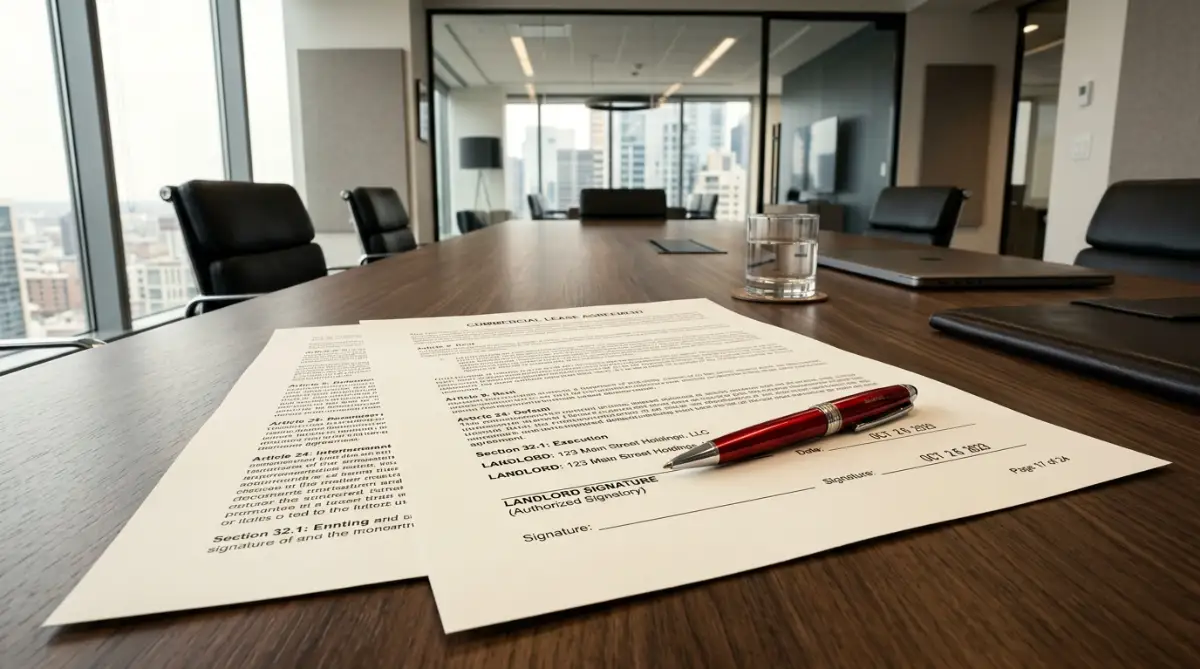
Signing a commercial lease is the moment your business either thrives or bleeds cash. Too many owners treat it like a simple paperwork hurdle, only to find themselves paying for hidden costs they never agreed to. If you want to keep your profit margins safe, stop treating the landlord's contract as final and start viewing it as a negotiation.
Six months later, my excitement turned into a cold, hard panic. I received a notice for an unexpected "CAM" charge—Common Area Maintenance—that added an extra twenty percent to my monthly overhead. I went back to the contract, and there it was, buried in paragraph fourteen, a clause that gave the landlord total control over how these costs were calculated.
I felt sick to my stomach. I had signed away my right to dispute these fees because I didn't want to seem "difficult" during the negotiation process. My business was already tight on cash, and this surprise expense was draining the money I needed for growth.
That day, I learned a lesson that has stuck with me ever since. In commercial real estate, you don't get what you deserve; you get what you negotiate. The landlord is not your friend, and they are not your partner. They are a business owner whose primary goal is to maximize their return on investment.
If you don't protect yourself, nobody else will. You might be a brilliant business operator, but if your lease terms are toxic, your business will never reach its full potential. I had to pay the price for my lack of knowledge, but you don't have to.
This happens to thousands of business owners every day. They get lured in by a low base rent, only to be crushed by fees they never saw coming. Your mental peace depends on your ability to walk into that room and demand terms that reflect a fair partnership, not a trap.
Quick Wins: Protecting Your Bottom Line
- Cap Your Costs: Never accept unlimited maintenance charges. Demand a cap on controllable expenses.
- Audit Everything: Make sure you have the legal right to check the landlord's books for "CAM" charges.
- Mind the Anchor: If your business relies on foot traffic, negotiate a "co-tenancy" clause to protect you if the main store leaves.
- Hire Experts: Never sign a commercial lease without a broker or lawyer reviewing it. It is a small cost for big protection.
Decoding the Commercial Lease Agreement
The first thing you need to understand is that commercial leases are not like residential ones. There is no standard "fair" template that protects the tenant. Every single word in that document is a negotiation point.
Beyond the Base Rent: Understanding NNN
Most commercial leases use a "Triple Net" or NNN structure. This means you pay the base rent plus the property taxes, insurance, and maintenance costs. You might see a low base rent and think you’ve got a bargain.
But when you add up the NNN costs, the total can be significantly higher than what you planned.
You need to ask for a "cap" on these expenses. If the landlord can pass on unlimited maintenance costs to you, you have no budget control.
Always demand a cap on controllable expenses. This means if the landlord decides to renovate the lobby or put in new floors, they cannot pass the entire bill to you. You are paying for your space, not their property upgrades.

Negotiating Renewal Rights
Many tenants forget to negotiate the renewal terms until the lease is almost up. By then, the landlord has all the leverage. If you have spent a fortune building out your space, you cannot afford to leave.
Negotiate your renewal rate before you sign the original lease. Try to tie the future rent increase to a specific index, like the Consumer Price Index (CPI), or set a fixed percentage increase. This prevents the landlord from hiking your rent by fifty percent just because they know you are stuck.
The Tenant Improvement Allowance
If you are moving into a "vanilla shell" space, you need to negotiate a Tenant Improvement (TI) allowance. This is money the landlord gives you to build out the space—walls, flooring, lights, etc. Do not assume the landlord will cover this.
You have to ask for it. If they want you to sign a five-year lease, they should be willing to invest in your success. If they refuse to provide a TI allowance, ask for "free rent" months instead.
This allows you to preserve your cash flow during the first six months of your business. Every dollar you don't spend on construction is a dollar you can put into marketing or inventory. Treat your cash like a precious resource, especially when you are managing personal budget basics, because business and personal finances often blur when you are an entrepreneur.
Evaluating the Hidden Costs
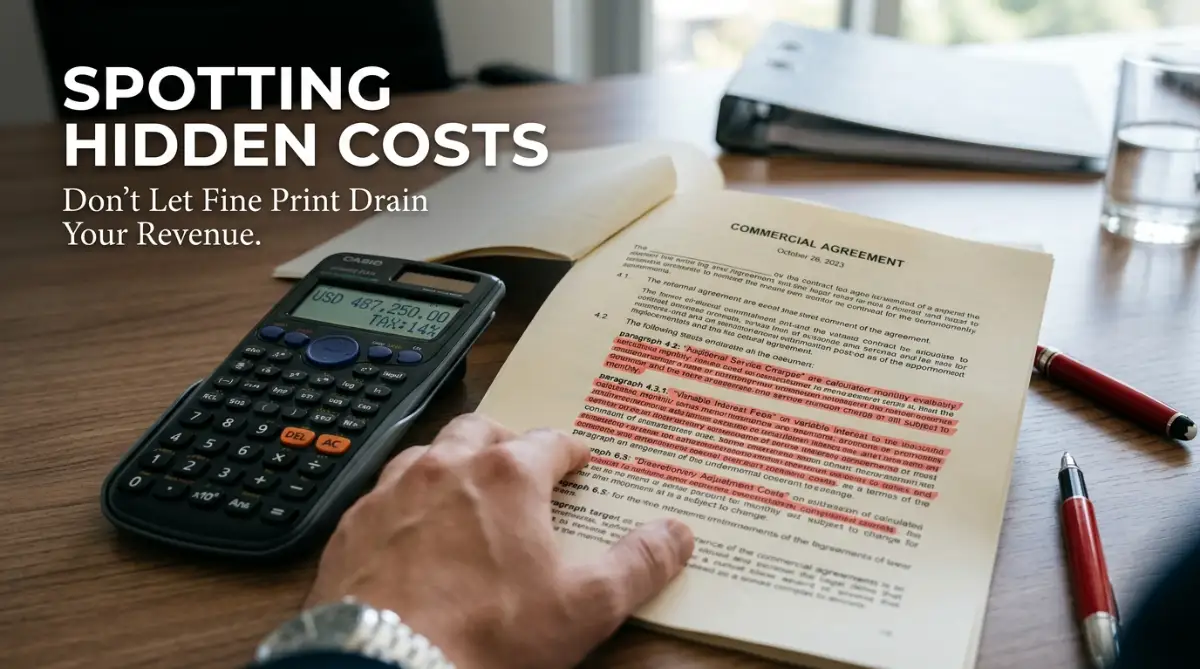
Before you sign, map out every single expense. Ask the landlord for the previous year’s utility bills and CAM charges. If they refuse, assume the worst.
Negotiation Readiness Checklist:
- The Cap Check: Do you have a "cap" on maintenance expenses?
- The Utility Review: Have you seen the last 12 months of actual utility bills?
- The Renewal Lock: Is your future rent increase capped or fixed?
- The Audit Power: Do you have the right to look at their expense books?
Smart landlords will be transparent. If they hide these numbers, they know they are high. You need to know your "all-in" cost per square foot, not just the rent.
Watch this video to understand the real math behind commercial leases and how to avoid the most common pitfalls before you commit.
Defining "Quiet Enjoyment"
This might sound like a weird term, but it is one of the most important parts of your lease. It basically guarantees that the landlord cannot unreasonably interfere with your ability to do business. If they are constantly performing loud construction or bringing people into your unit without notice, they are violating your "quiet enjoyment."
Make sure your lease includes specific language about how much notice they must give you before entering your space. Twenty-four hours is standard, but you can push for forty-eight. You have a business to run, and you cannot have strangers wandering through your office while you are with clients.
The Importance of Professional Review
Never sign a commercial lease without having an attorney or a commercial real estate broker look at it. I know it costs money, but it is an investment in your safety. A lease is a legal instrument that dictates your future.
A good broker knows exactly what clauses are "market standard" and which ones are predatory. They can spot things you would never notice, like an "assignment clause" that prevents you from selling your business or subletting your space.
If you are just starting your journey and don't know who to trust, look for brokers who specialize in tenant representation. Their entire job is to protect you, not the landlord. It is worth every penny to get an expert opinion, much like ensuring your documents are your best defense in any legal or property dispute.
Common Questions About Commercial Leases
Can I negotiate the security deposit?
Yes, absolutely. If you have great credit and a long business history, you can often negotiate the security deposit down to one or two months of rent. Don't just accept what is printed on the form.
What is a "sublease clause" and why does it matter?
This clause determines if you can rent out your space to someone else if your business fails or moves. You want a flexible clause that allows subletting with "reasonable landlord approval." If it says "at the landlord's sole discretion," they can block you for no reason.
How do I handle property taxes in the lease?
In an NNN lease, you pay taxes. However, ensure that you are only paying for your share of the taxes. If the building is half-empty, you don't want to be stuck paying the full tax bill for the whole property.
What if I need to expand?
Negotiate a "Right of First Refusal" for any adjacent office space. This gives you the first shot at renting the space next door if it becomes vacant. It allows your business to grow without having to move to a new building.
Is the "gross lease" better than "NNN"?
A gross lease includes all expenses in one flat fee. It is much easier to manage, but the landlord will often price it higher to cover their risk. It depends on your preference for stability vs. lower theoretical cost.
Mastering the Art of the Long-Term Lease Strategy
Negotiating a commercial lease is not just about the monthly rent. It is about how you handle the shifting needs of your business over the next decade. If you focus only on the price, you are missing the bigger picture. You want to build terms that allow you to adapt without feeling like you are trapped in a corner.
Leveraging Escalation Clauses and Your Growth
Many landlords want to bake in annual rent increases. This is their way of keeping up with inflation. However, you should not just accept a standard 3% increase every single year. You can often negotiate these increases to be tied to a specific metric or have them start later in the lease.
Ask the landlord for a "base year" approach where your rent stays flat for a set period. This protects your cash flow while your business is still in the setup phase. If you are worried about market changes, you can suggest tying increases to the Consumer Price Index so that the hikes only happen if the overall economy is actually growing.
Why You Need Audit Rights for Operating Expenses
This is a pro-level secret that most tenants completely overlook. You are paying a portion of the building's operating expenses, but how do you know if those numbers are accurate? You should negotiate a specific clause that gives you the right to audit the landlord's books regarding these costs.
If you don't have this right, you are basically writing a blank check. I have seen landlords who accidentally—or on purpose—charge tenants for repairs that were actually building capital improvements. Having the right to inspect their records keeps them honest. You should also check out my guide on how to build wealth through smart dividend investing to keep your mindset focused on transparency and efficiency in all your financial dealings.
The "Co-Tenancy" Safety Net
If your business relies on foot traffic, you are likely looking for a spot in a busy shopping center. But what if the anchor store—the big grocery or department store that brings in all the people—closes down? Suddenly, your space is a ghost town.
Negotiate a co-tenancy clause. This allows you to pay lower rent or even break your lease if the major anchor tenant leaves. It protects you from the landlord’s failure to keep the center attractive. Think of this like taking precautions when buying a house without an inspection; you want to know what you are getting into before you are left with the fallout.
Controlling Parking and Access
If your customers cannot park, they will not visit you. You should clarify your parking rights in the lease. Do you have reserved spots? Are your customers competing with other tenants for space?
You need to lock this down. If the landlord decides to take away some parking spaces for a new building or a redesign, your revenue could plummet. Make sure your lease defines exactly how many spots you are guaranteed. You should also understand how writing for intent in your own business can help you communicate these needs clearly to your landlord.
Your Exit Strategy: Subleasing and Assignment
Business is unpredictable. You might need to move to a larger space, or unfortunately, you might need to close your doors. You need an "out."
Look for an assignment and subletting clause that is fair. The landlord will want "reasonable approval," which is fine. But ensure they cannot unreasonably withhold that approval. If you find a perfect replacement tenant, the landlord shouldn't be able to say "no" just because they want to charge a higher rent to someone else.
The Importance of Communication Habits
Your relationship with the landlord doesn't end when the ink dries. It is a long-term partnership. I suggest checking in with your property manager quarterly, even when things are going well.
This simple habit keeps you on their radar. If you have a request later, they are much more likely to help someone they have a positive, existing relationship with. It is similar to how you manage property management trouble; being present makes all the difference in the world.

Mistakes That Can Cost Your Business Everything
When you are deep in the negotiation phase, it is easy to let emotions take over. You want the space, you are tired of searching, and you just want to get to work. That desire for "getting it done" is exactly what landlords rely on to slip in terms that hurt your bottom line.
Falling for the "Handshake Deal"
Never, ever treat a conversation as a binding contract. If the landlord promises to paint the walls or fix the lighting, get it in writing. If it isn't in the lease, it doesn't exist.
I once believed a landlord’s verbal promise to fix a leak. I waited two months, and it never happened. When I finally complained, he said he didn't remember the conversation. I had to pay for the repair out of my own pocket, and it cost me way more than I had planned.
Ignoring the Zoning Laws
You might love the space and the price, but can you actually operate your business there? Check the local zoning laws yourself. Never rely solely on what the landlord tells you.
If you are a cafe, make sure the space is zoned for food preparation. If you are a studio, ensure you are allowed to have clients on-site. If you open a shop in a zone that prohibits your specific trade, the city can shut you down in a day. That is a mistake that can ruin your business, similar to how new to crypto users get into trouble by ignoring the basic security rules before they start trading.
Over-Leveraging Your Cash Flow
It is tempting to sign a lease that consumes half of your monthly revenue. You might think, "I will grow into it." But growth is never linear.
If you have a bad month, that heavy rent will crush you. Aim for a space where your rent costs don't exceed a healthy percentage of your gross income. If the space is too expensive, keep looking or negotiate a stepped rent structure where the price is lower in the beginning.
Forgetting About Insurance Requirements
Your lease will require you to carry liability insurance. But the landlord might have specific, high requirements that are very expensive. Always read these requirements before you sign.
If you don't check this, you might sign the lease only to find out your current insurance policy is insufficient. Then you are forced to buy an expensive policy just to satisfy the lease. It is another hidden cost that can sneak up on you. You can read more about insurance disputes at resources like the Insurance Information Institute to see how specific clauses impact your wallet.
Skipping the Walkthrough
Before you take possession, walk through the space with the landlord and document everything. Take photos of every scratch, every stained ceiling tile, and every cracked floorboard. Email these photos to the landlord immediately.
If you don't do this, they will charge you for this pre-existing damage when you move out. They will claim you did it, and without your "before" photos, you have no way to fight back. Documentation is the most powerful tool you have.
Taking Charge of Your Business Home
Negotiating a commercial lease is essentially an exercise in risk management. You are looking for the right balance between a great location and a contract that doesn't put your business at risk. Take your time, get professional help, and never feel pressured to sign a document you don't fully understand.
You are the one driving your business forward. A fair lease is not a favor from the landlord; it is a fundamental requirement for your success. Stand your ground, ask the hard questions, and remember that there is always another building if the current landlord isn't willing to treat you with respect.
I have sat where you are, feeling the pressure to just "sign the deal." But I learned that a bad lease is like an anchor around your business's neck. I want you to feel confident, prepared, and ready to walk away if the terms aren't right. Take the time to audit your needs, protect your cash flow, and ensure that your next commercial lease is a foundation for growth, not a source of constant stress.
My best advice to you is to be patient. You are building something meaningful, and your office space should be a partner in that success, not a competitor for your profits. Keep your goals in front of you, keep your numbers clear, and remember that you have the power to make the deal that works for you.
Common Questions About Commercial Leases
How long should a typical commercial lease be?
There is no "correct" length, but three to five years is common for small businesses. This gives you enough time to stabilize while keeping your options open for the future.
What is a "Use Clause" and why does it matter?
A use clause defines exactly what you are allowed to do in the space. You want this to be as broad as possible. If it is too narrow, you won't be able to add new services or products to your business later without the landlord's permission.
Should I ask for a rent-free period?
Yes, always. Most landlords are willing to give you a month or two of free rent at the start. Use this time to move in and get your business operational without the pressure of rent.
Can I include an option to buy the building?
You can ask, but it is rare. It is called a "lease-option." It can be a great move if you plan to stay in the area for a long time, as it lets you lock in the price of the property now.
What happens if I am late on rent?
Your lease will have specific penalties for late payments, including interest and fees. If you foresee a problem, talk to your landlord before the due date. Most are willing to work with you if you have a track record of being reliable.
Disclaimer: This content is for educational purposes only and does not constitute financial, legal, or professional real estate advice. I am not an attorney or a licensed commercial real estate broker. Lease laws vary significantly by state and municipality, and you should always consult with a qualified professional before making any significant business commitments.