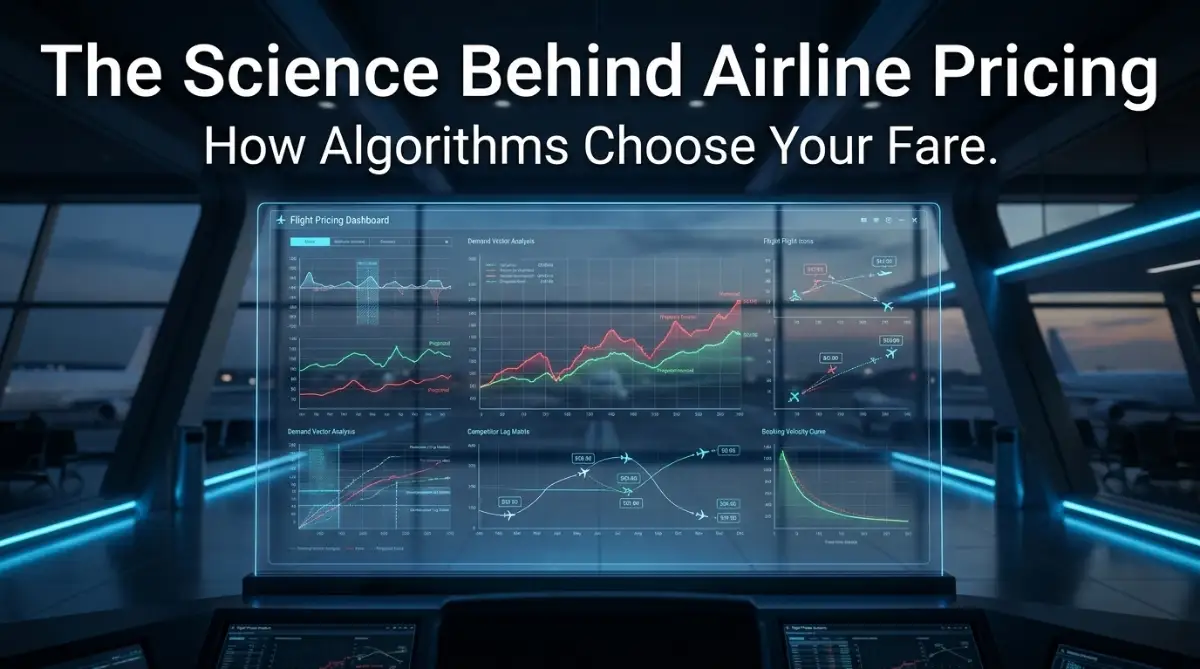
The Frustrating Game of Disappearing Flight Deals
I remember sitting in my office, triple-checking my bank balance, and finally deciding to book that dream trip to Europe. The price on my screen was exactly what I had budgeted for, sitting comfortably at a number I could manage. I walked away for ten minutes to grab a cup of coffee and double-check my vacation dates with my partner. When I came back and refreshed the page, the price had jumped by over a hundred dollars.
My heart sank. I felt like I was being punished for being responsible and checking the details. It was as if the computer knew I was ready to buy and decided to hike the price just to test my limits. I tried opening the site in an incognito window, hoping it was just a glitch, but the higher price remained.
This has happened to almost everyone who has ever tried to book a flight online. You see a low fare, you blink, and suddenly it is gone. It makes you wonder if there is some invisible person behind the screen actively working against your wallet. The reality, however, is much more mathematical, though it feels just as personal when you are the one paying the extra fee.
We live in a time where we expect instant, static pricing. We think that a seat on a plane has a fixed cost, like a gallon of milk or a loaf of bread. But flight pricing is not like a grocery store; it is more like the stock market. Every second, algorithms are crunching millions of data points to decide what you should pay.
When the price changes, it is not because the airline is watching your specific browser history to ruin your day. It is because their systems are reacting to thousands of tiny shifts in demand across the entire globe. Understanding this does not always make the bill cheaper, but it does make the process less stressful. You stop taking it personally and start seeing the game for what it really is.
How Airline Algorithms Think and Why Prices Shift
To understand why your ticket price fluctuates, you have to stop thinking of a plane as a bus with 200 fixed seats. Instead, think of an airplane as a collection of different "buckets" of inventory. Each bucket has a different price point, and the airline’s goal is to fill the plane in a way that generates the most profit.
The Secret World of Inventory Buckets
Airlines divide the seats on a single plane into various categories, which insiders call "buckets" or "fare classes." A plane might have 150 economy seats, but they are not all sold for the same amount. The airline might allocate 20 seats for a super-low price, 30 for a mid-tier price, and the rest for the highest price.
As soon as those 20 cheapest seats are sold, the algorithm closes that bucket. It automatically moves to the next bucket, which is slightly more expensive. This is why you can be looking at a flight with a friend on a different computer and see two different prices. One of you might be looking at the last seat in the "cheap" bucket, while the other is looking at the first seat in the "expensive" bucket.

Real-Time Demand Forecasting
These algorithms are incredibly sophisticated pieces of software that run twenty-four hours a day. They look at historical data to predict how many people will want to fly on a specific route on a specific day. If the algorithm sees that booking volume is higher than usual for a Tuesday in the autumn, it raises prices across the board.
It is not just about your booking; it is about the thousands of other people searching for the same route. If a major conference is announced in your destination city, the algorithm picks up on the spike in search volume. It then adjusts the pricing to ensure that those who are willing to pay the most for a seat are the ones who get it.
The Competitive Intelligence Factor
Airlines are constantly watching each other. They use automated tools to monitor the prices of their competitors on the same routes. If a rival airline lowers their price for a flight from New York to London, your preferred airline’s algorithm might automatically drop its price to stay competitive.
Conversely, if a competitor sells out their cheaper seats, your airline might raise its prices because they know you have fewer options. It is a giant game of digital chess happening in milliseconds. You are often just an observer watching the pieces move around the board.
Why Your Search History Matters (But Not in the Way You Think)
There is a popular myth that airlines track your cookies to show you higher prices because they know you want that specific flight. Most experts agree that this is not actually happening in the way people fear. It is too expensive and complex to track every user’s intent and adjust prices just for one person.
However, airlines do track broader trends. If you are searching for flights, you are contributing to the "demand signal" that the algorithm uses to predict popularity. Your search, combined with millions of others, tells the computer that a route is "hot," which can lead to a general price increase for everyone.
Pro Tip: I realized a few years ago that my obsession with refreshing flight pages was actually fueling the demand signal. Now, I use flight alert tools that track prices for me instead of constantly searching manually. If you are serious about saving money, stop doing the manual legwork and let price alerts do the heavy lifting for you, so you don't accidentally push the price up with your own searches.
Check out this guide on how to track those prices more effectively:
Understanding how to monitor these shifts can save you hundreds of dollars on your next trip.
Once you start watching the trends rather than just the price, you gain a massive advantage in the booking process.
Strategies for Navigating the Pricing Maze
Now that you know the algorithms are working based on inventory buckets and demand, you can adjust your strategy. You cannot control the computer, but you can definitely control how you interact with it.
The Power of Flexibility
The biggest weakness of airline algorithms is their need for consistency. They love predictable travel patterns because they make forecasting easier. When you fly on less popular days—like Tuesday or Wednesday—you are often booking into a "cheaper" inventory bucket that is not selling out as fast.
If you are open to shifting your travel dates by just twenty-four hours, you might find that you jump from a high-priced fare bucket to a lower one. This is one of the most reliable ways to avoid the price spikes caused by weekend demand.
Understanding the "Advance Purchase" Curve
Algorithms are programmed to reward those who book early, but not too early. If you book six months out, the airline might be holding back the cheaper seats because they want to see if the demand warrants a higher price later.
There is usually a "sweet spot" of about one to three months before domestic travel, or slightly longer for international trips. This is when the algorithm starts to adjust prices based on actual booking data rather than just forecasts.
Why Bundled Fares Can Be a Trap
Airlines often try to upsell you on bundles that include seat selection, baggage, and flexible change options. While these look convenient, they are often priced with high margins that the algorithm does not adjust.
Sometimes, buying the "Basic" fare and paying for your bags separately is cheaper than the bundled deal. Always do the quick math before you hit the "select" button. Don't let the algorithm's pre-selected packages dictate your spending.
The Reality of Hidden City Ticketing
This is a more advanced (and controversial) strategy. Sometimes, a flight from Point A to Point C with a layover at Point B is cheaper than a direct flight from Point A to Point B. Some travelers book the full trip and just get off at the layover city.
While this works, it comes with risks. If you do this, you cannot check bags (as they will go to the final destination), and the airline might cancel your return flight if you miss a leg. It is a classic example of gaming the algorithm, but it is not for the faint of heart.
Monitoring for Price Drops
Even after you book, the game is not over. In many regions, airlines offer a twenty-four-hour window where you can cancel for free. If you see a price drop on your exact flight shortly after booking, you can sometimes cancel and rebook at the lower rate.
Set up an automated alert for your specific flight number. If you get an email saying the price has dropped, you can take action immediately. It is a simple step that requires very little effort but can save you a significant amount.
Common Misconceptions About Flight Pricing
It is easy to believe rumors about how airlines set their prices. Let’s clear the air on what is real and what is just internet chatter.
- Myth: "Buying on a specific day of the week is always cheaper."
- Reality: While Tuesday is often cited as the best day to book, the algorithm updates constantly. The day of the week you book matters less than the day of the week you fly.
- Myth: "Clearing your cache makes prices go down."
- Reality: This is largely a placebo. While it might show you different results if you are on a localized version of a site, it won't force the airline to lower the base fare for the general public.
- Myth: "Last-minute deals are always better."
- Reality: This was true decades ago. Today, algorithms know that last-minute travelers are usually business people who are less price-sensitive. Therefore, last-minute tickets are almost always the most expensive.
Managing Your Expectations and Your Wallet
The science behind airline pricing is not designed to be fair; it is designed to be profitable. Airlines want to squeeze the highest possible price out of every seat on the plane.
When you accept that this is a systematic process rather than a personal slight, you feel less frustrated. You can plan your travel with a cooler head.
Use price alerts, stay flexible with your dates, and try to avoid the peak booking times. By understanding how the inventory buckets work, you effectively shift the balance of power back to yourself.
You are the consumer, and you have the right to shop around. Use the tools available to you to track trends and wait for the right moment. The algorithm is smart, but with a little bit of knowledge, you can definitely be smarter.
Safe travels are often the result of smart planning. Now that you have a look behind the curtain, you can book your next trip with the confidence of someone who knows exactly how the game is played. Good luck with your next flight search, and may you find that perfect deal.
Mastering the Art of Strategic Flight Booking
You have already learned the basics of how pricing algorithms work, but knowing the rules is only half the battle. If you want to consistently find better fares, you need to think like a revenue manager. These professionals spend their days tweaking the math that you see on your screen. You can beat them at their own game by adopting a few expert-level strategies that most casual travelers never consider.
The Strategy of Regional Website Variations
One of the most effective secrets is checking the airline’s website specifically for the country you are departing from. If you are flying from a foreign country back home, the airline’s pricing engine might show you a higher price than what is displayed to a local resident. This is often called "geo-pricing."
By changing the country setting on the airline's website or using a reliable VPN, you can sometimes trick the algorithm into showing you local inventory buckets. This can save you a significant amount, especially on international long-haul flights. It is a simple technical shift that changes how the system perceives your "market."
The "Open Jaw" Ticket Advantage
Most of us search for round-trip tickets because they feel intuitive. However, algorithms often price round-trip tickets based on a specific, unified itinerary. If you fly into one city and out of another—known as an "open jaw" ticket—you can sometimes bypass the strict pricing rules attached to a standard return flight.
This is not always cheaper, but it often opens up different fare classes. You can mix and match airlines for each leg of the trip, which gives you more control. It requires a bit more planning, but the flexibility is worth the extra time. Just like understanding the gap between deductibles and out-of-pocket limits when managing insurance, knowing these small structural gaps allows you to maximize your budget.
Tracking Trends Like an Analyst
Instead of manually checking prices every single day, use price tracking tools that monitor changes over months. These tools provide historical data that helps you understand what a "good" price actually looks like for your specific route. Without this data, you are just guessing.
When you see a price that hits a historical low for your route, do not wait for it to drop further. The algorithm rarely hits the absolute bottom twice in a short window. You can look at historical airline industry data provided by the Bureau of Transportation Statistics to get a sense of how seasonality affects your specific travel windows.
Pro-Tip: The "Wait and See" Realization
Years ago, I used to panic whenever a price jumped by fifty dollars. I would immediately book the flight out of fear, only to see the price drop by a hundred dollars three days later. I learned that airlines hold thousands of seats in reserve for "last-minute" business travelers who pay top dollar.
If the plane is still mostly empty, the airline needs to lower prices to fill those seats, regardless of what the initial algorithm suggests. I now wait for the "sweet spot" rather than rushing. My personal rule is to set a "buy price" in my head before I start searching. If the price hits that number, I buy immediately and never look at the ticket price again. This simple mental shift saves me from the regret of "what if" scenarios.
Leveraging Airline Alliances
You do not always have to book with the major carrier whose name is on the plane. If you have loyalty points or are looking for a deal, check the partner airlines within the same alliance.
Sometimes, booking a flight operated by an airline through its partner portal can result in a cheaper fare code. This is because partner sites have different agreements on how they distribute inventory. It is an obscure trick, but it is one that frequent travelers use to keep costs low.
The Psychological Approach to Travel
Booking flights can be incredibly stressful, and when you are stressed, you make bad financial decisions. High stress leads to "panic buying," which is exactly what airlines want. If you find yourself getting anxious, step away from the computer.
Remember that why mental health check-ups are just as essential as physical screenings also applies to your travel planning. If your mind is clear, you will make better choices. A calmer approach to managing your finances while dealing with market volatility helps you stay disciplined when booking travel as well. Do not let the screen pressure you into a bad deal.

Mistakes That Cost You Your Hard-Earned Money
It is easy to get caught up in the excitement of planning a trip. However, small errors in your booking process can turn a budget-friendly vacation into a financial disaster. These pitfalls are common, and avoiding them is the easiest way to keep more cash in your pocket.
Falling for the "Fear of Missing Out" Trap
Airlines are experts at displaying messages like "Only 2 seats left at this price!" on your screen. This is designed to create a sense of urgency. Often, this is not even an accurate reflection of total seat inventory; it might just be the number of seats left in that specific cheap fare bucket.
When you see these warnings, do not let your heart rate spike. Even if those seats sell out, the airline will likely open the next higher fare bucket, and the price increase might be negligible. Take a deep breath and verify the facts before committing.
Overlooking the "Hidden" Fees
The base fare is just the starting point. Many people find a great deal on a budget carrier, only to realize that they have to pay extra for carry-on bags, seat selection, and even printing a boarding pass at the airport.
You must look at the "all-in" price before you compare it to a major carrier. A cheap ticket with a budget airline can sometimes end up being more expensive than a premium ticket that includes all your bags. Always simulate the checkout process until the very last screen to see the total cost.
Neglecting the Total Trip Cost
Focusing only on the flight price is a classic mistake. If you book a cheaper flight that arrives at 2:00 AM, you might end up paying more for a taxi or an extra night in a hotel than you would have saved on the ticket.
Always calculate the total cost of the travel day. Is the cheaper flight worth the extra exhaustion and the added transportation costs? Often, a slightly more expensive flight that lands at a reasonable hour is the better financial decision.
Booking Your Connections Too Tightly
In the hunt for the cheapest route, people often book connecting flights with very little time between them. If your first flight is delayed by even thirty minutes, you might miss your connection.
This leads to a chain reaction of rebooking fees, hotel stays, and endless stress. It is a lesson similar to why your visa application takes time and requires planning; you need to allow for friction in the system. Never book a connection that is under two hours if you can avoid it.
Ignoring Airline Credit Policies
Some travelers book "Non-Refundable" tickets without considering the risks. If your plans change, that money is effectively gone.
If there is any chance you might need to change your dates, pay the extra small premium for a flexible ticket or ensure you have travel insurance that covers trip cancellation. You don't want to be in a position where you have to forfeit the entire cost of the flight. This is akin to the silent killers that cause startups to fail in cycle one; you need to account for risks from the very beginning of your planning phase.
A Better Way to Book: Your Action Plan
Now that you understand the algorithms, the traps, and the strategies, you have the power to change how you travel. You do not need to be an industry insider to find great deals. You just need to be more patient and more observant than the average passenger.
Tomorrow's Checklist for Smarter Travel
Start by clearing your mind of the old myths. Stop believing that there is a "magic day" to book. Instead, focus on tracking your specific route.
Set up your alerts today. Look at the total cost, not just the fare. Remember to check partner airlines and consider alternative airports.
If you take these steps, you will stop fighting the algorithm and start working with it. You will find yourself paying less for the same seat, leaving you with more budget to spend on your actual destination.
I want you to realize that you are in control of your travel budget. My journey to becoming a smarter traveler started when I stopped acting out of panic and started acting out of strategy. I hope you can take these insights and apply them to your next adventure. You have the ability to make your travel dreams a reality without breaking the bank. Go ahead and start planning—you have got this!
Common Questions About Airline Pricing
Why do flight prices change every time I check?
Airlines use dynamic pricing to update fares in real-time based on supply, demand, and competitor activity. This means that as seats are sold or as demand patterns shift, the system automatically recalibrates the price for the remaining inventory.
Is it really cheaper to book on a Tuesday?
Data suggests that there is no longer a "magical" day of the week that guarantees the lowest fare. Pricing is based on demand for specific dates and routes, which can change at any moment regardless of what day you visit the website.
What is the best way to monitor for a price drop?
The most efficient way is to use automated flight tracking services that send you email or push notifications. These tools monitor the exact flight route and date you want, so you don't have to manually check the site every day.
Can I book a flight and then cancel it for free?
Many airlines offer a grace period, often twenty-four hours after booking, where you can cancel for a full refund. Always verify the airline's specific policy during the checkout process before you finalize your payment.
Why are budget airlines sometimes more expensive than legacy carriers?
This usually happens because of hidden costs like baggage fees, seat selection, and airport location. When you add up the "extras," a budget ticket can quickly exceed the cost of a full-service ticket that includes those amenities.
Disclaimer: The information provided in this article is for educational purposes only and does not constitute professional travel or financial advice. Airline pricing is complex, subject to change without notice, and governed by individual airline policies. Always review the specific terms, conditions, and fare rules of any airline before booking your ticket. We are not responsible for any financial losses or issues arising from the use of the information shared here.