
The Moment the Numbers Didn't Add Up
You find the perfect personal loan. The interest rate looks great, the monthly payments fit your budget, and you’re ready to sign. But pause. That “great” loan often hides expensive fees that bleed your bank account dry before you even get your money. If you don’t learn to spot these hidden costs now, you’ll end up paying far more than you ever calculated. Here is how to see through the smoke and mirrors.
But as I scrolled down to the bottom of the long, tiny-font document, my stomach dropped. There was a section labeled "Origination Fees" that I hadn't factored into my budget at all. Then, I saw a "Processing Fee" and another mysterious charge for "Account Maintenance." Suddenly, the amount of money hitting my bank account was significantly less than what I was going to be paying back. It is a quiet, heavy burden that you carry every single day.
When you cannot trust the numbers presented to you, you lose your peace of mind. You start wondering if you should have just stayed in your current financial mess rather than trading it for a new, hidden one. It is a struggle that hits millions of people. You are not alone in this frustration, but you have to learn how to see through the smoke and mirrors to get the deal you actually deserve.
The Smart Borrower’s Cheat Sheet
Before you sign any loan agreement, check these 3 things:
- Ignore the Interest Rate: Compare based on APR—it includes the hidden fees.
- Negotiate Fees: Origination fees are often just profit boosters for lenders; ask to waive them.
- Calculate the Total: Don't look at the monthly payment; look at the total repayment amount over the life of the loan.
How Lenders Hide the Real Cost of Your Loan
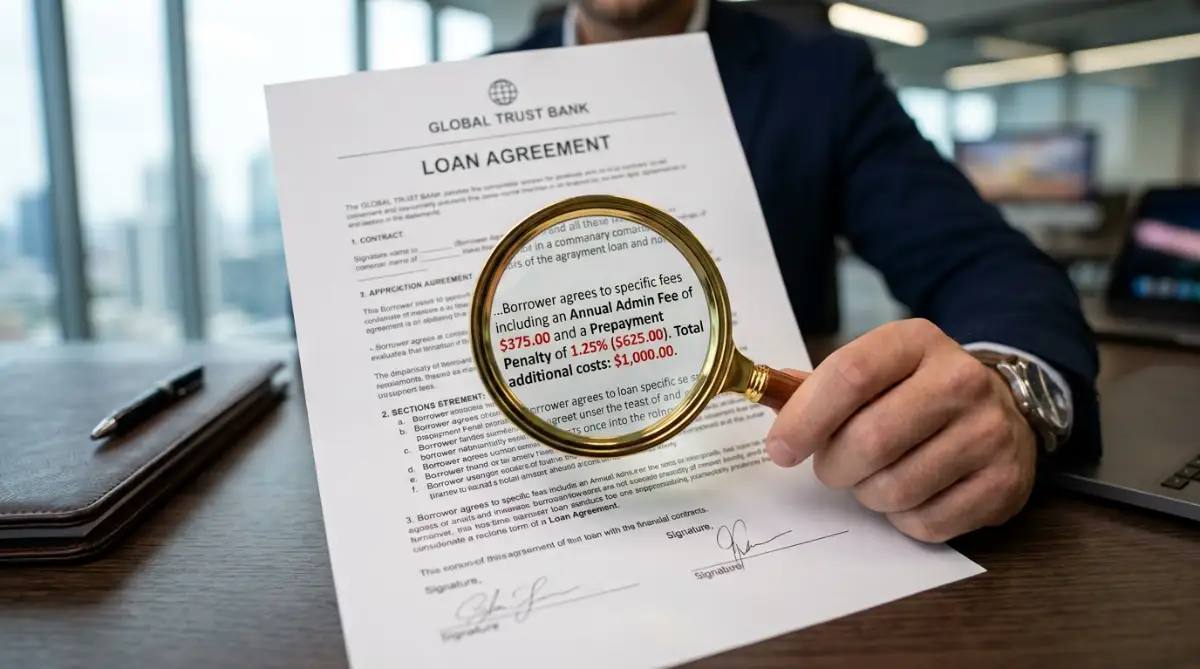
Most people look at one number when they search for a loan: the interest rate. Lenders know this, so they put that number in big, bold, friendly font at the top of their ads. But the interest rate is only one piece of the puzzle. The real story is hidden in the fine print, in the fees they don't highlight. To protect yourself, you need to understand exactly where these costs are buried.
The Origination Fee Trap
This is the most common hidden cost. Lenders often charge an "origination fee" to cover the cost of processing your loan application. This usually ranges from 1% to 8% of your total loan amount. If you borrow $10,000 and the fee is 5%, they might just take $500 out of your loan before you ever receive it. You are paying interest on that $10,000, even though you only actually got $9,500. This math matters.
Prepayment Penalties: The Cost of Getting Out Early
Sometimes, you get a lucky windfall or a bonus at work and decide to pay off your loan early to save on interest. You might think the lender would be happy about this. However, some loans come with a "prepayment penalty." They essentially charge you a fee for giving them their money back before the agreed-upon time. Before you sign anything, always check if your contract allows you to pay off the debt early without a penalty. If you are curious about how to handle debt vs. investing, you can read more at The Early Retirement Blueprint.
Late Fees and Administrative Costs
Life happens. Sometimes a payment is late by a day or two. Lenders often have strict policies on late fees that can accumulate faster than you expect. There are also smaller, annoying fees like "document delivery fees" or "monthly administrative fees." These might seem small individually—maybe $10 or $20—but they add up over the life of a loan. They effectively raise your Annual Percentage Rate (APR) without you realizing it.

Understanding Your Real APR
The APR is not the same as your interest rate. The interest rate is just the cost of borrowing the principal. The APR includes the interest rate plus all those extra fees, like origination charges. If a lender advertises an interest rate of 10% but the APR is 13%, you know that 3% difference is mostly coming from hidden fees. Always compare loans based on the APR, not the interest rate.
How to Evaluate Your Loan Offers
When you receive multiple offers, put them in a spreadsheet. List the principal amount, the monthly payment, the total number of payments, and, most importantly, the APR. Don't just look at the monthly payment amount. A lender might offer you a lower monthly payment by extending the loan term to five years instead of three. You will pay less per month, but you will pay significantly more in total interest over the long run.
The "Pro Tip" for Negotiating
I learned this the hard way after signing a contract too quickly. Now, I always ask, "Is there an origination fee, and can it be waived?" You would be surprised how often they say yes, especially if you have a good credit score.
The "Fee Waiver" Script (Use this exactly):
"I’ve reviewed the loan offer and I’m ready to proceed, but the origination fee is a concern. Since I have a strong credit history, can we waive or reduce this fee so I can move forward today?"
(Always send this via email or ask on the phone—it works more often than you think).
They want your business. Don't be afraid to ask for the "final cost of borrowing" in writing before you sign. I once saved $400 just by asking if they could remove the processing fee from my personal loan application. It never hurts to ask.
Mastering Your Debt Strategy
Choosing the right loan is only half the battle. Once you have the loan, you need a strategy to pay it off effectively. Some people prefer to attack their smallest debts first to build momentum, while others prefer to knock out the highest interest rates. For more insight on these strategies, check out Snowball or Avalanche: The Debt Strategy That Wins.
Watch This Before You Sign Any Loan
Getting a loan is a big decision, and it is easy to miss the details when you are rushing. This video breaks down exactly what you need to look for in your loan agreement so you don't fall into common traps.
Check out this guide to understanding loan contracts and avoiding common pitfalls:
Questions You Must Ask Your Lender
Before you put your signature on that dotted line, get clarity. Lenders might try to rush you, saying the offer expires soon. Do not let them pressure you. Take your time and ask these specific questions:
- "What is the total cost of the loan including all fees?"
- "Are there any penalties for paying this off early?"
- "What exactly makes up the APR in this quote?"
- "Are these fees negotiable?"
The Bottom Line on APR and Fees
Hidden fees are how many lenders boost their profits. They rely on the fact that most people are in a hurry or don't want to read a twenty-page document. When you take the time to read the fine print, you are taking control of your financial future. You are stopping the cycle of overpaying for money you borrow. It takes extra effort today, but it saves you thousands of dollars down the road.
Remember, a loan is a product. You are the customer. You have the right to shop around, compare offers, and ask questions until you fully understand what you are paying for. If a lender is unwilling to explain their fees or give you a breakdown of your APR, walk away. There is always another option that is more transparent.
Your financial peace of mind is worth more than a quick approval. Take your time, calculate the real numbers, and make a decision that protects your wallet. You deserve to be in charge of your debt, not the other way around. Keep your goals clear, watch for those sneaky fees, and stay focused on your long-term success.
Beyond the Basics: Strategies for Savvy Borrowers
Understanding the surface numbers of a loan is only the beginning. To truly master your finances, you need to look at how your loan fits into your overall life plan. When you take out a loan, you aren't just borrowing money; you are buying time or solving a current problem. This means the decision needs to be strategic, not reactive.
The Power of the Amortization Schedule
Most people look at the monthly payment and stop there. If you want to be a smarter borrower, ask your lender for an amortization schedule before you sign anything. This document shows exactly how much of your payment goes toward interest and how much goes toward your actual debt balance each month. You will often be surprised to see that, in the early years of a loan, a massive chunk of your payment is just interest.
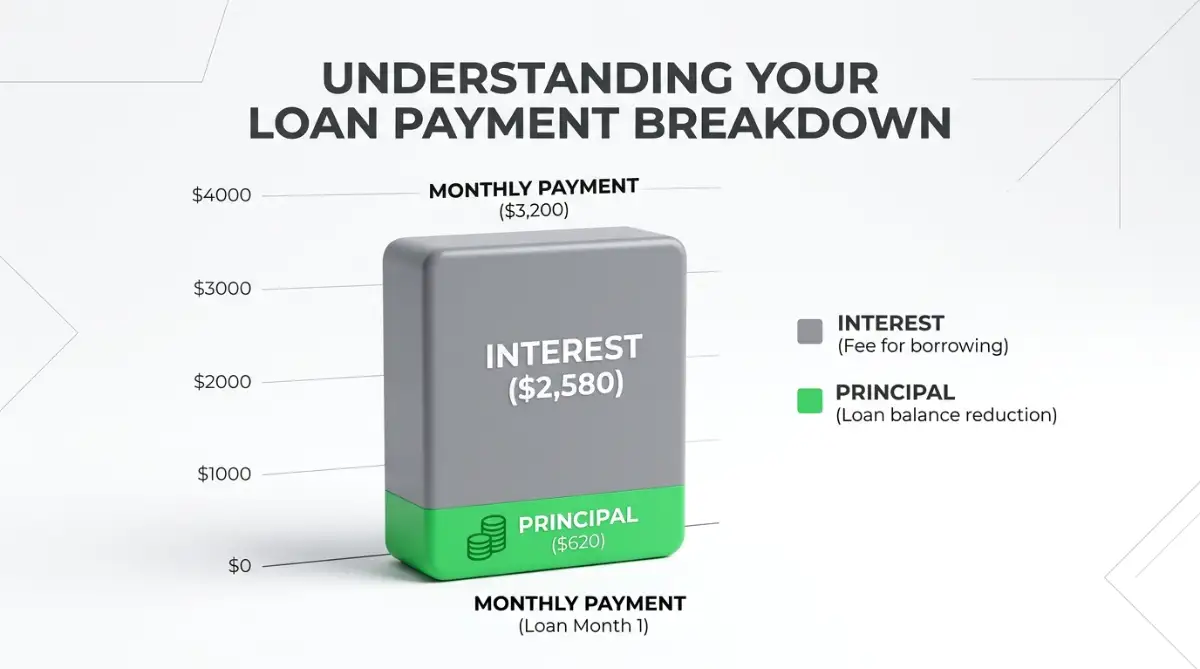
If you see that your principal balance barely moves for the first two years, you know you are paying the bank heavily for the privilege of holding their money. This is a great way to see if a shorter loan term—even with a higher monthly payment—might actually save you thousands of dollars in the long run. By paying the loan off faster, you slash the amount of interest that accrues over time.
If you are currently managing bills and trying to improve your financial standing, learning how to turn monthly bills into a higher credit score can give you more leverage for better loan rates next time. Your credit score is the primary tool lenders use to decide how much they charge you. If you can bump your score by even a few points before applying, you might qualify for "tier-one" pricing, which often eliminates those hidden, annoying origination fees entirely.
Comparing APR vs. Interest Rate
It is easy to get confused by these two terms, but the difference is where your money disappears. The Consumer Financial Protection Bureau highlights that the Annual Percentage Rate (APR) provides a broader measure of the cost of borrowing than the interest rate. When you compare loans, never use the interest rate as your benchmark.
Always look at the APR. If Loan A has a 7% interest rate with no fees, and Loan B has a 6% interest rate with high origination fees, Loan A might actually be the cheaper option. Always do the math on the total cost of the loan, including all those "upfront" charges. If the math feels overwhelming, use a basic online calculator to plug in your loan amount and the fees listed in the fine print.
Negotiating Your Loan Terms
Many borrowers think that loan terms are "take it or leave it." This is a myth. Lenders are businesses, and they want your loan as much as you want their money. If you have a good credit score and a stable income, you have bargaining power.
Ask the representative, "What is the lowest origination fee you can offer for someone with my profile?" If they say they cannot change it, ask them to waive the fee in exchange for signing the loan today. You would be surprised how often they have the authority to remove these charges to close the deal. Always get these changes in writing before you sign.
If you find yourself in a position where you need to manage multiple debts, check out your options for your financial roadmap to ensure you aren't just shifting debt around without a plan. Having a roadmap helps you see if the loan you are considering actually helps you reach your goals or just traps you in a cycle of payments.
Mistakes That Cost You More Than Money
We all want to solve our problems quickly. When we are stressed about money, we tend to grab the first "solution" that appears in our inbox. This urge is exactly what lenders count on. By acting in a rush, you often ignore the warning signs that turn a "helpful" loan into a financial burden.
The Rush to Approve
One of the biggest mistakes people make is applying for loans with three or four different companies at the same time. While you might think this helps you compare, it can actually hurt your credit score because each lender does a "hard inquiry" on your report. A sudden drop in your credit score can trigger a higher interest rate for the loan you actually want.
Take your time. Research lenders first, check their general rates, and only submit an application when you are fairly certain you want that specific loan. If you are struggling to keep your head above water, remember that how to build a fail-safe emergency fund without losing your lifestyle is a better long-term strategy than relying on quick loans. You want to avoid the "debt treadmill" where you borrow to pay off a previous loan.
Ignoring the "Total Cost" Illusion
Lenders often market loans based on the "lowest monthly payment." They achieve this by stretching the loan over a very long period, like five or six years. You might think, "I can afford $200 a month," and sign the contract. But if you pay that $200 for 72 months, you end up paying significantly more in total interest than if you had taken a shorter loan with a higher monthly payment.
Always calculate the total amount you will pay back over the life of the loan. Multiply your monthly payment by the number of months. Subtract the original loan amount. The result is the total cost of the loan. This number is the only one that truly matters.
Skipping the Fine Print
This sounds obvious, but almost nobody does it. We scroll to the bottom, click "I agree," and sign. By skipping the terms, you might miss clauses about:
- Prepayment penalties (getting charged to pay off your debt early).
- Automatic payment requirements (which might force you to use a specific bank account).
- Variable interest rate clauses (where your rate could go up after a few months).
If you are currently worried about the economy and your investments, how to stay calm and invest wisely during market volatility can provide perspective on why managing your debt costs is so meaningful. High-interest debt is essentially a guaranteed loss for you, while wise financial choices are a guaranteed gain. Don't let a bad loan contract sabotage your hard-earned progress.
Failing to Plan for Life Events
What happens if you lose your job or have a medical emergency next month? Some loans offer "payment protection" or "deferment options" in their terms. If you don't read the contract, you won't know if you have these safety nets.
If you are dealing with other major life financial changes, understanding how to choose the right medicare plan or similar benefits is just as important as managing debt. You need a full picture of your financial health. If you sign a rigid loan contract that offers no flexibility, you are setting yourself up for stress during any future financial bump in the road.
Taking Control of Your Financial Future
You have the power to change how you interact with lenders. It starts with a simple mindset shift: stop looking at loans as a favor someone is doing for you. Start looking at them as a business transaction where you are the buyer, and you have standards.
When you refuse to accept high fees, hidden charges, and predatory terms, you force the market to be more honest. Every time you ask a question about the APR, you are telling the lender that you are a smart borrower who cannot be easily tricked. This is how you reclaim your financial autonomy.
I have been exactly where you are, feeling the pressure to sign and just get the money. I promise that pausing, asking questions, and walking away from a bad deal is always better than the years of regret from a high-interest loan. You are doing the hard work by reading this and arming yourself with knowledge.
Take this knowledge and apply it to your next financial move. Review your budget, check your credit report, and be picky about who you borrow from. Your wallet, your sleep, and your future self will thank you for being so careful today.
Common Questions About Managing Loan Fees
What is the difference between an interest rate and APR?
The interest rate is the base cost of borrowing the principal amount. The APR represents the total cost of the loan, including the interest rate plus any mandatory fees and charges. You should always use the APR to compare loan offers because it gives you the "real" price you are paying.
Can I really negotiate loan fees with a lender?
Yes, you often can. Lenders are competing for your business, and they have the authority to waive origination fees, especially if you have a strong credit history. It is worth asking "Can you waive the origination fee?" before you finalize any agreement.
Why do lenders charge origination fees?
Lenders claim these fees cover the cost of processing your application, running credit checks, and setting up your account. However, these fees are also a major source of profit for them. You should treat them as an extra interest charge that increases your overall cost of borrowing.
Is it always better to take a loan with the lowest monthly payment?
Not necessarily. Lenders often lower the monthly payment by extending the time you have to pay back the loan. This usually means you end up paying significantly more in total interest over the life of the loan. Focus on the total repayment amount rather than just the monthly bill.
What should I do if a lender pressures me to sign quickly?
Walk away. Pressure is a huge red flag in the lending industry. A reputable lender will give you the time and documentation you need to review the terms carefully. If they force urgency, it is likely because they don't want you to notice the hidden fees.
Disclaimer: This content is for educational purposes only and does not constitute financial, legal, or tax advice. Borrowing money carries risks, and you should always perform your own due diligence or consult with a qualified financial professional before making significant financial decisions. Every individual's financial situation is unique, and past results do not guarantee future performance.