The Heavy Weight on My Shoulders: A Debt Story
Most people think debt repayment is a math problem. They spend hours staring at interest rates and calculators, trying to find the perfect percentage. But the truth is, debt repayment is a psychology problem. If your plan is mathematically perfect but too painful to follow, you will quit within a month. Here is how to choose the right strategy that matches your personality, not just your math.
The stress wasn't just about the money. It was the constant hum of anxiety that lived in the back of my mind. When I walked through the grocery store, I looked at prices, not options. When a friend invited me out for a coffee, I made up a fake excuse because I didn't want to admit I was worried about a five-dollar transaction. It felt like I was trading my peace of mind for things I didn't even remember buying.
I was working hard, but it felt like I was working just to pay the bank. I was trapped in a cycle of paying the minimums and watching the balances stay almost exactly the same. It was a heavy burden, and I know many of you are feeling that exact same weight. You wake up thinking about it, and you go to bed thinking about it.
It ruins your confidence. You start to think that maybe you are just bad with money, or that you are meant to live this way forever. But I want to tell you something: you are not bad with money. You are just lacking a clear direction. Once you have a map, you realize that your debt is a problem with a solution. You can move forward, and you can win this.
The Debt Strategy Cheat-Sheet
- Snowball Method: Focuses on small balances to build psychological wins.
- Avalanche Method: Focuses on high-interest rates to save money on interest.
- The Key: Your best strategy is the one you can stick with for the long haul.
- Consistency: Paying a little extra consistently beats a big payment once a year.
The Momentum Engine: Understanding the Snowball Method
When you are deep in debt, math is often not the problem. Psychology is. You need a win to keep going. This is exactly why the Snowball method works so well for many people. It treats your debt like a game you can actually win.
How It Works in Practice
With the Snowball approach, you list all your debts from the smallest balance to the largest balance. You ignore the interest rates entirely for a moment. You pay the minimum on every debt except the smallest one. You throw every extra dollar you have at that smallest balance until it is gone.
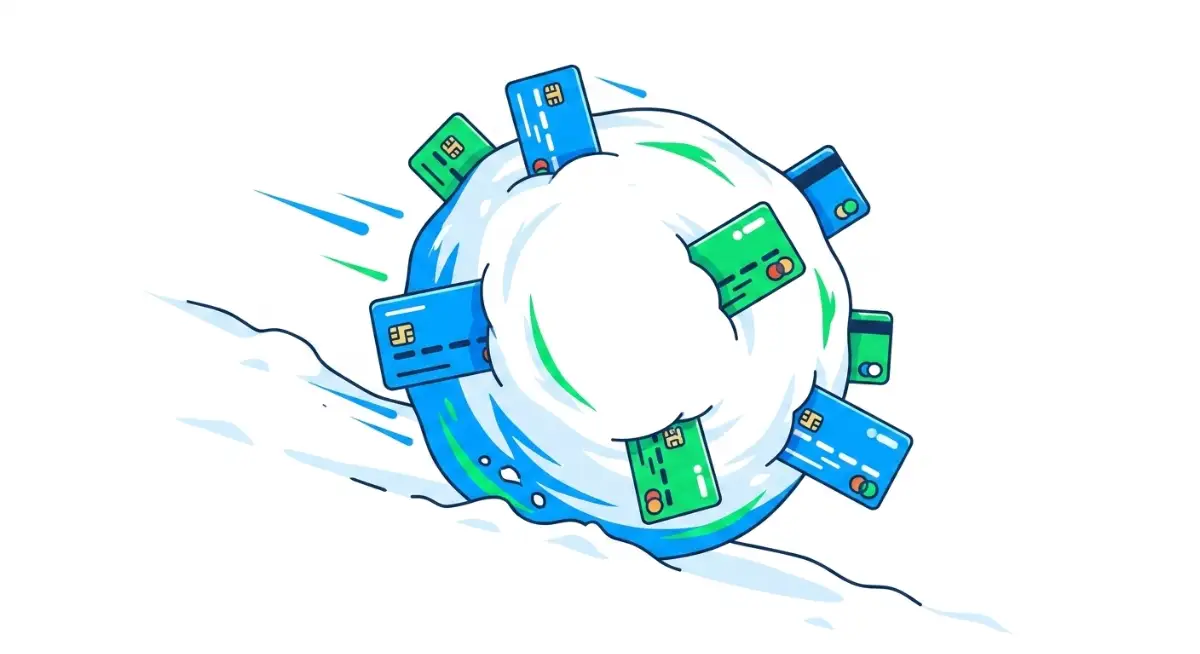
Once that small debt is paid off, you take the money you were paying toward it and add it to the minimum payment of the next smallest debt. Now, your payment on that second debt is bigger. As you keep going, that payment gets larger and larger, gaining speed and power just like a snowball rolling down a mountain. It builds momentum that carries you through to the end.

The Psychology of Small Wins
Many people quit debt plans because they don't see results fast enough. This method gives you results almost immediately.
When to Pick This Path
You should choose this method if you have struggled to stick to plans in the past. If you need to see progress to stay motivated, this is your best friend. It is not the "math-perfect" way to pay off debt, but it is the "human-perfect" way. If the plan keeps you from quitting, it is the best plan for you.
The Mathematical Sniper: Why the Avalanche Method Exists
If you are a person who loves spreadsheets and cares more about saving every possible dollar than you do about feeling good, the Avalanche method is for you. This is the logic-based approach to debt. It doesn't care about your feelings; it cares about your interest rates.
The Math Behind the Avalanche Method
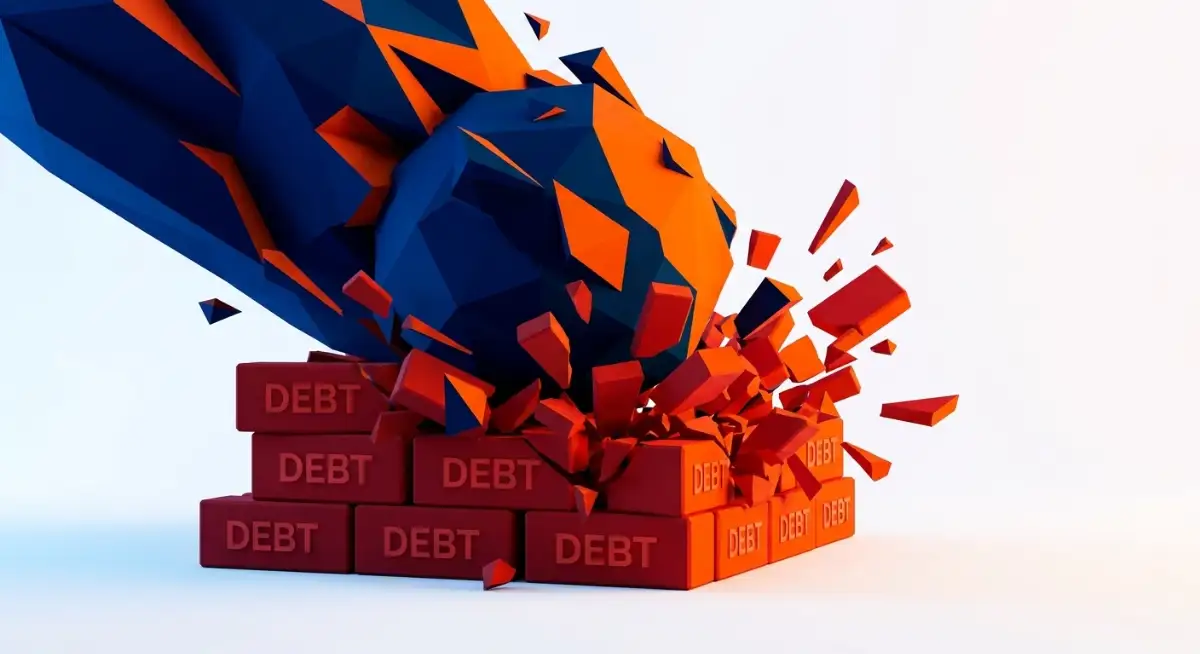
With the Avalanche method, you start by arranging your debts from the highest interest rate to the lowest. You continue making the minimum payment on every account, but any extra money you have goes toward the debt charging you the most interest.
The reason is pretty simple: high-interest debt grows faster and costs you more over time. By attacking that balance first, you reduce the amount of interest that can build up and keep more of your money in your own pocket.
From a purely mathematical perspective, the Avalanche method can be one of the most cost-efficient ways to become debt-free. If you stick with the plan, you may pay less interest overall and potentially finish sooner than you would by focusing on smaller balances first.
That doesn't mean the Avalanche method is automatically best for everyone. Your interest rates, debt balances, income, and ability to stay motivated all matter when choosing a payoff strategy.
The Trade-off You Must Accept
The trade-off here is that your highest-interest debt might also be a large balance. If that is the case, it might take you a long time to see that first "win." You have to be disciplined. You have to be willing to work for months without the satisfaction of crossing an account off your list. It takes a different kind of mental toughness.
Choosing Your Strategy
The right way to choose is to ask yourself a simple question: "What is more likely to make me quit?" If you hate not seeing progress, go with the Snowball. If you hate wasting money on interest and have the patience to stick with a long plan, go with the Avalanche. Both plans work if you work them. The best plan is the one that you actually finish.
Designing Your Own Repayment Roadmap
You don't need a fancy app to start. A simple sheet of paper or a spreadsheet will do. The goal is to see your debt as an enemy you are slowly surrounding.
Step 1: List Every Single Debt
You cannot fight what you don't see. Gather every single statement. Write down the name of the lender, the total balance, the minimum payment, and the interest rate. Do not hold back. Write it all down, even the debts that embarrass you.
Step 2: Choose Your Weapon
Based on what we just discussed, decide on your method. Are you a Snowballer or an Avalanche seeker? Be honest with yourself. If you are an Avalanche person but you struggle with motivation, maybe meet in the middle and do the Snowball for the first few months to get some quick wins under your belt.
Step 3: Find the "Missing" Money
You need to find extra cash to make the plan work. Look at your recurring subscriptions. Look at your food budget. Small changes can add up to huge monthly payments. This is about being intentional with your spending for a short period of time so you can be free for the rest of your life.
Step 4: Automate the Minimums
Set all your minimum payments to automatic withdrawal if you can. This protects you from late fees and keeps your credit score safe while you focus on the "extra" payments. You want to make sure your baseline is always covered without you having to think about it.
Step 5: The Monthly Check-In
Sit down once a month and update your numbers. Watch the balances drop. It is the most satisfying part of the process. If a balance drops by five hundred dollars, take a moment to be proud of that. You are taking your life back, one dollar at a time.
Want to see how the experts handle debt repayment? Watch this guide to prepare for your journey.
Pro Tip: My Realization on Momentum
I remember being stuck in the middle of my own repayment plan. I had paid off two small cards, but I still had a massive chunk left. I felt like I was stalling. I realized I was focusing too much on the total remaining amount and not enough on how much I had already knocked out. I started looking at the percentages instead of the dollars. "I am forty percent done!" I told myself. That shift in perspective gave me the second wind I needed to sprint toward the finish line. Don't look at the mountain; look at how high you have already climbed.
Managing your debt is a huge part of your overall financial health. It is not just about the numbers; it is about the freedom you gain when you no longer owe your income to anyone else. Keep going, stay focused, and trust that the work you are doing today will change your future. You are building a life you won't need to escape from. That is worth every bit of effort.
Smarter Ways to Accelerate Your Repayment
Once you have picked your path—whether it is the quick-win snowball or the math-focused avalanche—you need to shift your attention to how you manage the cash flow. It is not just about paying the minimums; it is about finding creative ways to shave months off your timeline. You want to make your money work as hard as possible, just like you would when managing personal budget goals for the long term.
The Power of Micro-Payments
Most people wait for the end of the month to make a big payment. That is a mistake. Try to make payments as soon as you have extra cash. If you get a small tax refund or a random fifty-dollar gift, put it directly toward your target debt that same day. This reduces the average daily balance, which in turn lowers the interest that accumulates.
Think of it like a snowball rolling downhill; every little bit of weight helps it gain speed. By making smaller, more frequent payments, you stop the interest from compounding as aggressively. It also keeps the goal in front of your face. You feel a small win every single week, which helps you stay motivated. It is a psychological hack that makes the process feel much less like a burden.
Reviewing Your High-Interest Obligations
You need to be aggressive with your lenders. If you are struggling to manage several high-interest cards, you should look into the mathematical reality of debt consolidation to see if you can roll those into one lower-rate payment. Consolidation is not a free pass, but if the math checks out, it gives you a clean slate and a lower interest burden. Just be sure you don't run the cards back up once they are clear.
"Ask yourself these 3 questions to choose:
- Do I need to see a balance reach $0 quickly to stay motivated? (Choose Snowball)
- Does it physically hurt to pay high interest to a bank? (Choose Avalanche)
- Am I stressed by having 5+ different accounts open? (Snowball is usually safer)"
For a broader perspective on how banking systems handle interest charges, the Federal Reserve provides resources that can help you understand the framework of the market. They don't sell loans, but they help you understand the landscape of consumer credit. This can give you a better idea of what to expect from your specific bank.
Automating the "Why Not" Fund
We often talk about saving for emergencies, but you should also save for your debt. If you set up a "debt-crushing fund" that you contribute to automatically every time you get paid, you take the emotion out of it. It becomes like any other utility bill. If you find yourself needing a little extra buffer, check out how to build a fail-safe emergency fund so you aren't forced to use credit cards when life happens.
Leveraging Your Credit Score
While you are paying down debt, you can also be improving your credit profile. Many people don't realize that how consistent utility and rent payments influence your financial profile can be a hidden way to boost your score. When your score goes up, you can sometimes qualify for better terms on the loans you are currently paying off. It is an advanced move, but it is one that pays off.
The Salary Bump Rule
Whenever you get a raise or a bonus at work, pretend it never happened. Keep your spending exactly where it is and take the entire "new" amount and push it toward your debt. This is the fastest way to accelerate your progress without feeling a change in your daily life. You get to keep your current lifestyle while your debt disappears at double the speed.
The Consumer Financial Protection Bureau offers excellent tools regarding your rights when dealing with debt collectors. Knowing your legal boundaries can save you from a lot of stress if you ever fall behind. You are the captain of this ship, and the more you know about the rules of the sea, the better you will navigate.
Stay Consistent with Your Tracking
Don't hide from your balance. Use a spreadsheet or a simple notebook to track your progress every month. Watching the total number go down is the best drug you will ever find. It makes the sacrifice worth it. If you are using digital tools, make sure you stop granting unnecessary permissions to newly installed android apps so your tracking tools remain safe and private.

The Psychological Landmines That Halt Your Progress
It is so easy to start a debt journey with high energy, only to trip over a hidden obstacle a few months later. I have seen so many people fail because they didn't see the traps coming. You need to be aware of these common pitfalls so you don't fall into the same cycle.
The "I Deserve This" Spending Spree
This is the most common reason people fail. You pay off one credit card, and suddenly you feel "rich." You go out to a fancy dinner or buy new gear to celebrate your hard work. You have just undid all your progress. You have to wait until you are fully debt-free to celebrate properly. Don't reward yourself with more debt.
Ignoring the "Lifestyle Creep"
As you start to pay off debt, you might feel a bit of financial breathing room. The temptation is to fill that space with new subscriptions, a better car, or higher rent. If you allow your spending to rise just because you are making progress, you will stay in the debt trap forever. Keep your spending modest until the debt is gone.
Avoiding the Hard Conversations
Don't try to hide your debt from your partner or family. If you share finances, you need to be on the same page. If you are struggling, reach out for help. People often feel ashamed, but everyone has faced financial hurdles. If you are in a situation where you don't know where to start, maybe you need to look at decoding medical bills for patients to see if you can negotiate some of those surprise charges down.
The "Minimum Payment" Illusion
Paying only the minimum is a recipe for a twenty-year sentence. You are paying for the privilege of staying in debt. If you are doing this, you are not actually making progress; you are just keeping the bank happy. You must find ways to add extra money, even if it is just twenty dollars a month. It changes the math completely.
Giving Up After a Bad Month
Life will throw you a curveball. You will have a month where your car breaks down or you lose your job. You might have to skip your extra debt payment. That is okay. Do not take it as a sign to quit. Pick yourself back up and get back on the plan as soon as you can. A bad month does not mean a bad year.
Trying to Time the Market
Don't worry about trying to invest and pay off debt at the same time if your debt interest is high. Paying off a fifteen percent credit card is a guaranteed fifteen percent return on your money. You can't get that in the stock market. Focus on the debt first, then worry about the fancy investments later.
Forgetting the Total Picture
When you focus entirely on the debt, you sometimes forget about your total financial health. You might find yourself in a situation where you have paid off debt but have zero savings. If a disaster strikes, you will have to borrow again. This is similar to why home insurance companies deny claims; if you don't understand the policy terms, you might be stuck without support when you need it most.
The U.S. Department of Education provides clear data on student loan repayment options, which is a great place to verify facts if your debt includes student loans. Avoid relying on random forum advice. Always go to the source to understand your repayment reality.
Your Roadmap to a Debt-Free Horizon
You are building a future where your money is your servant, not your master. Every extra dollar you pay toward your debt is a vote for your future self. You are choosing freedom over the temporary comfort of things you don't really need.
Taking Charge of Your Story
I know how hard it is to change your habits. It feels like you are swimming against the current every single day. But I also know the feeling of the final payment. It is a weight lifting off your shoulders that you didn't even realize you were carrying.
My journey out of debt didn't happen overnight. It was a long road of small, boring choices that finally added up to something huge. My best advice to you is to stay patient with yourself. You are doing the work that most people are too afraid to start.
I want you to take one action today. Whether it is paying an extra five dollars to a card or finally listing your debts on a sheet of paper, just do something. My life changed when I stopped thinking about paying off debt and started acting on it. I hope you find that same power in your own choices starting now.
Common Questions About Managing Debt
Should I pay off all debts before investing for retirement?
If your debt has high interest, like a credit card, you should prioritize that over investing. However, if your employer offers a match on your retirement account, you should take that match because it is free money. Beyond that match, focus on your high-interest debt first.
Does paying off a loan early hurt my credit score?
Technically, closing an account can slightly lower your score because it reduces the length of your credit history or the total amount of available credit. But don't let this stop you. Your financial health is more important than a temporary dip in your score. The score will recover as you continue to manage your money responsibly.
What if I have multiple debts with the same interest rate?
In that case, it doesn't matter much which one you tackle first mathematically. You can pick the smallest balance to get a quick psychological win. Or you can pick the one with the highest monthly payment to free up cash flow. Either way, you are winning.
How do I stay motivated when the end feels so far away?
Celebrate the milestones. Every time you pay off one card, take yourself out for a free treat, like a walk in the park or a movie night at home. You need to keep the reward center of your brain happy while you do the hard work.
Should I use my savings to pay off debt?
It depends on how much savings you have. If you have an emergency fund, keep that separate. You don't want to use your emergency savings to pay off debt, only to end up back in debt when an actual emergency happens. Pay off debt with your extra income, not your survival money.
Disclaimer: This content is for educational purposes only and does not constitute financial, legal, or tax advice. I am not a financial advisor. All financial decisions involve risk, and you should perform your own research or consult with a qualified professional before making any investment or loan choices based on your specific situation.