
The Long Night at the Keyboard
I remember the exact moment I realized my writing process was broken. I was staring at a blank document at 2 AM, drinking my third cup of lukewarm coffee, trying to force out an article that just wasn't happening. My back hurt, my eyes were burning, and I felt like I was running on a hamster wheel that never stopped.
I spent hours researching, then hours drafting, then hours editing, only to produce one decent piece of content. I looked around at my peers and felt like I was falling behind. They were putting out high-quality work, consistently, while I was buried under deadlines and creative fatigue. I felt trapped by my own manual labor.
My biggest fear wasn't failing; it was being forgotten because I simply couldn't keep up the pace. I wondered if the problem was me. Was I not smart enough? Was I not fast enough? It felt like my life was consumed by the grind of typing every single word from scratch, even when I knew the information was repetitive.
You have likely felt this heavy weight too. You start with excitement, but eventually, the sheer volume of content needed to stay relevant wears you down. You lose your passion because you are tired, not because you lack talent. It eats into your family time, your rest, and your ability to plan for the future.
But here is what I discovered: the grind is optional. You do not have to break your back to create great things. You just need to change how you do the work. When I started looking at AI as a partner rather than a replacement, everything shifted. I stopped being a typist and started being a director.
Rethinking Your Content Pipeline
The key to fixing your workflow isn't just picking a tool; it is about how you organize the process. Most people use AI the wrong way. They ask it to "write an article" and then get frustrated when the result feels robotic or off-base. That isn't a workflow; that’s just hoping for a miracle.
Instead, you need to break your production process into small, manageable pieces. You are the architect, and the AI is your builder. Your goal is to guide the building process so the final structure matches your vision perfectly. You need to keep your own voice, your own research, and your own personality in the driver’s seat.

Building Your Blueprint First
Before you open any AI tool, spend ten minutes with a notepad. Write down your main goal. Who is this for? What problem are they trying to solve? What is the one thing they should take away from this? If you can answer these, you have a plan.
Without a plan, AI tools tend to ramble. They are designed to predict the next word, not to understand your long-term content strategy. By giving them a clear outline, you save yourself hours of editing later. You tell the tool, "This is what we are building, and these are the pillars we need to hit."
Leveraging AI for Research and Outlining
I use AI to handle the "boring" heavy lifting. I feed it topics and ask for a list of common questions people have about them. This is like having a research assistant available at all times. It doesn't write the final product, but it shows me where the gaps are.
I ask it to brainstorm angles I haven't considered. Sometimes, it throws out ideas that are silly, but sometimes, it hits on something brilliant. This saves me the mental energy of brainstorming in a vacuum. It keeps the momentum going when I’m feeling stuck.
The Art of Human-AI Editing
This is where the magic happens. You never take the first draft. Ever. You take the draft the AI provides, and you treat it like a rough sketch. You go in with your own voice. You change the sentences that sound too stiff. You add the stories that only you know.
You verify every fact. I cannot stress this enough. Never trust an AI to get dates, laws, or specific data points right without checking them yourself. Think of the AI's output as a draft created by an intern who needs a senior editor to review it. That editor is you.
Pro Tip: My Realization
I learned the hard way that assuming the AI knows the truth is a dangerous path. I once published an article where the tool made up a statistic that sounded very real. I only caught it because I fact-checked at the last second. Now, my rule is simple: if the tool says a fact, I look it up on a trusted source before the words go live on my site.
Formatting for Readable Results
A huge piece of the puzzle is how you present the information. The AI can write long, blocky paragraphs that nobody wants to read on a mobile phone. Your job is to format that content so it breathes. Use bold text, keep your sentences short, and add bullet points.
I often ask my AI to "rewrite this paragraph using short sentences and a friendly tone." It is excellent at this. It helps me focus on the flow of the information rather than the mechanics of typing it out. It transforms a dense wall of text into something that a person can actually scan while on their morning commute.
If you want to see how this human-in-the-loop workflow looks when you are actually building a page, watch this guide:
This video breaks down how to balance tool speed with human quality so your site stays authoritative:
After watching, you will see why it is so important to keep your hand on the wheel. It makes your content look unique and professional, and it keeps your audience engaged from the first sentence to the last.
The Strategy for Long-Term Success
So, how do you keep this going without getting burned out? You build a system. You don't try to change everything overnight. Start by automating the part of your work that you hate the most. For some, it is the research. For others, it is the initial draft.
Pick one thing and improve it. Then, move to the next. You want to create a rhythm. A rhythm is what allows you to produce content for weeks or months without feeling like you are about to hit a wall. It is the secret to staying consistent, which is the only way to grow an audience.
Staying Within the Rules
Since you are running a site, you have to be smart about Google's policies. They don't hate AI, but they hate spam. If you pump out a thousand low-quality articles, you will get penalized. They want content that is helpful, original, and written for people, not for search bots.
When you use your AI tools, always ask, "Would a human actually find this helpful?" If the answer is no, throw it away. Do not publish it. Your reputation is built on trust, and one bad article is easier to remember than ten good ones. Stay focused on quality over quantity, always.
Creating Your Own Knowledge Library
I keep a file of all the "prompts" that work well for me. When I find a way to ask the AI for an outline that gets a great result, I save it. Over time, you build a library of these instructions. This makes your workflow faster each time you use it.
You become more efficient because you aren't reinventing the wheel. You are using a proven system that you built yourself. It turns the complex task of content production into a predictable, high-quality manufacturing process. And that is how you actually scale your income.
Balancing Time and Effort
The end goal is to give yourself back your time. If you use AI to spend less time typing, you should use that time to talk to your audience, learn new skills, or just take a real break. Don't use the time you saved just to do more work.
The goal of technology should be to simplify your life, not just make you faster at the grind. Use your extra hours to improve the things that only a human can do—connecting, strategizing, and building relationships. That is where the real value lies.
Scaling Without Losing Your Soul
Scaling content often leads to losing the human spark that made people read you in the first place. Guard that spark. Your personal stories, your unique mistakes, and your specific perspective are the reasons people visit your blog.
If you let the AI replace your voice entirely, you become a commodity. If you use the AI to support your voice, you become an authority. The choice is yours. Keep your writing "human-first" and your tools "assistant-second." That is the golden rule.
Action Plan for Your Next Step
- Audit Your Workflow: Write down every step you take from the moment you get an idea to the moment you hit publish.
- Identify the Bottleneck: Where do you spend the most time? Research? Drafting? Formatting? That is your first target.
- Test One Tool: Find one AI assistant that helps with that specific bottleneck and spend a week using it.
- Refine Your Process: Tweak your approach based on what worked and what felt "off."
- Keep Your Voice: Review every single piece of content you produce to ensure it still sounds like you.
A Word from the Expert
I know it feels like there is a lot of pressure to be "AI-perfect," but don't let the tools scare you. They are just extensions of your own potential. I’ve found that the most successful content creators aren't the ones with the most expensive software, but the ones who know how to keep their human touch in every single piece they create. You have a unique perspective that no machine can truly replicate. Take the time to refine your workflow, be patient with your own learning curve, and always put your audience’s needs above the desire for speed. You are building something meaningful, and I know you can do it well. Stay focused on your purpose, and you will see the results you want.
Elevating Your Production with Expert-Level Tactics
Once you have the basics down, you stop thinking about "using AI" and start thinking about "scaling your presence." The real secret to a high-output workflow is not finding more tools, but refining how you handle the input. You want your content to feel like it came from a human who has walked the walk, not a machine that read about it on the internet.
The Three-Pass Editing Method
I rarely settle for a second draft. My workflow involves what I call the "Three-Pass Method." On the first pass, I look for the logic. Does the argument hold water? Are there holes in the narrative? I ignore the grammar and focus entirely on whether the flow is satisfying.
The second pass is for the "human pulse." This is where I replace robotic phrasing with my own personal anecdotes or specific examples that I know will resonate with my audience. If I find a generic sentence, I rewrite it to include a detail about my own struggles or a realization I had. You can look at writing for intent to understand how this alignment makes a massive difference in how people engage with your work.
The final pass is the polish. This is where I check the tone, the rhythm, and the brevity. I cut out anything that feels like fluff. If a sentence doesn't serve the reader, it goes. This rigorous process is what keeps my site from looking like everyone else's AI-generated content farm.
Building Custom System Prompts for Consistency
The biggest mistake is treating AI like a random chat window. Instead, create "System Prompts." A system prompt is a set of instructions you give the AI before you ask it to do anything. It acts as the "rulebook" for how you want your brand to sound.
For example, I have a saved prompt that tells my AI: "Always use a conversational tone, keep paragraphs under three sentences, and prioritize specific examples over broad generalizations." When I use this prompt, I don't have to correct the tone every single time. It saves me tons of time and keeps my brand voice identical across every single post I publish.
If you are just getting started with complex workflows, check out how to bridge the professional skill gap by mastering basic automation tools. Automating your prompt library is the first step toward true efficiency. It turns a manual chore into a "one-click" operation.
Data Security and Privacy in Your Workflow
As you scale, you will be tempted to feed everything into your AI tools. Please, be careful. Never share sensitive customer data, private business strategies, or proprietary information with public AI models. Assume that everything you input could eventually become part of the training data.
Protect your business assets with the same diligence you use for your network. Just as you prioritize the home network security guide, you must prioritize your data privacy. If you are dealing with proprietary workflows, use local AI models or paid enterprise versions that offer better data protections.
Keeping Your Content Original
Google is getting very good at detecting content that adds no value. If you just copy and paste, you are destined for a penalty. My strategy is to use AI for the structure and the research, but use my own brain for the synthesis.
Think about how traditional study habits often fail to retain complex information. The same logic applies to writing. If you aren't mentally engaging with the content—if you aren't "studying" it as you write—your reader will sense it. Make sure you are the one putting the final "why" and "so what" into the piece.
For broader insights on how technology impacts human communication standards, you might find research from the Stanford Institute for Human-Centered AI useful. They offer great perspective on keeping a human focus in an automated world.
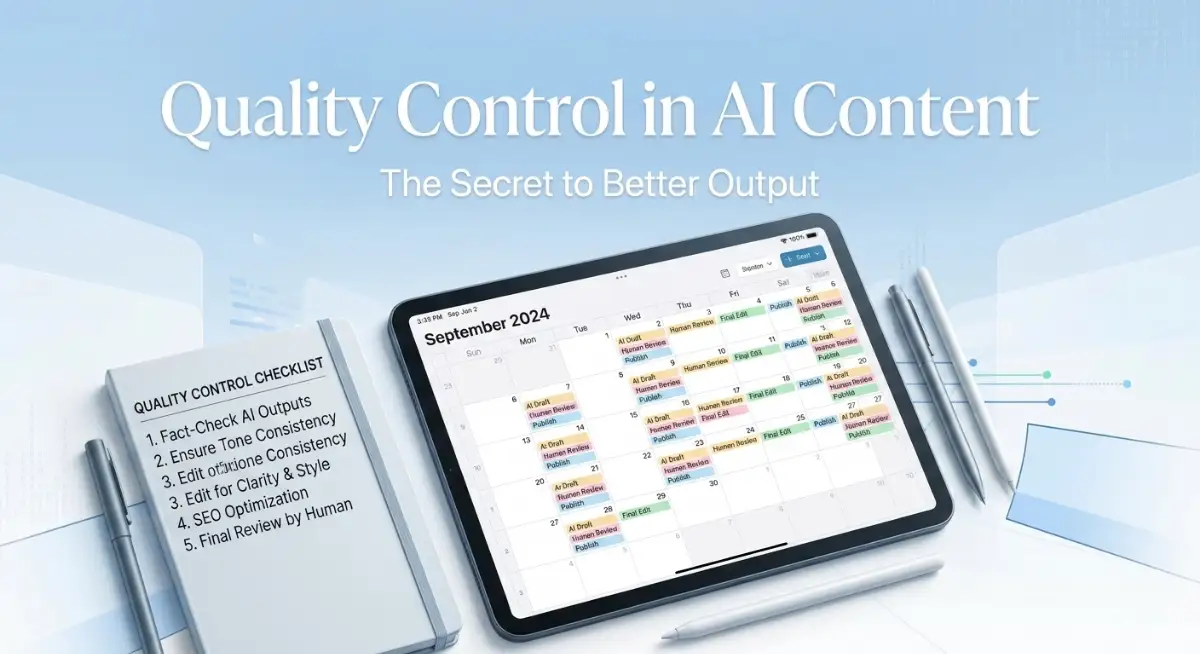
The Invisible Landmines You Must Avoid
It is surprisingly easy to lose your way when the tools seem so powerful. Most creators start with good intentions but eventually fall into patterns that hurt their brand, their traffic, and their sanity. Pay attention to these common pitfalls.
Falling for the "Robot Voice"
There is a distinct, soulless rhythm to unedited AI writing. It uses too many "filler" words. It loves transition words that sound like they belong in a middle school essay. When you see your draft filled with words like "furthermore," "tapestry," or "unleash," you are looking at a red flag.
If you let this stuff through, your readers will leave. People want to connect with a person, not a database. If your content sounds like a sterile manual, you are losing the battle for their attention. Go through and ruthlessly slash those "AI-isms" from your text until it sounds like a conversation you would have with a friend.
Neglecting the "Human Truth"
AI doesn't have a life. It hasn't had its heart broken, it hasn't started a business, and it hasn't felt the sting of a failure. When you remove personal experience, you remove the truth. A post that talks about "the benefits of saving money" is boring. A post that talks about "how I saved my first thousand dollars by skipping my morning coffee" is compelling.
Never let the AI write your stories. It can draft the facts, but you must provide the soul. If you treat your content like a data entry task, don't be surprised when your traffic stays flat. Real growth comes from showing your humanity.
Ignoring the "Fact-Check" Phase
I have seen people lose their entire site's reputation because they trusted an AI's hallucination. The tool might confidently state a fact about tax law or medical history that is completely wrong. If a reader catches you in a lie—even if it was an "accidental" AI lie—they won't trust you again.
You are the final line of defense. If you aren't checking your facts, you aren't doing the job. If you feel overwhelmed by the task of managing this, read up on why your personal injury settlement is taking longer than expected to see how small errors can lead to major, long-term legal headaches. Treat your content with that same level of care.
Blindly Scaling without Intent
There is a temptation to produce ten articles a day because the tools make it easy. But what are you actually achieving? If those ten articles don't solve a problem, don't teach a lesson, or don't entertain, you are just filling the internet with noise.
You are hurting your SEO because you are diluting your site’s quality. Google wants the best content, not the most content. Focus on one piece of truly great work rather than five pieces of mediocre work. It is the quality that drives income, not the quantity of your drafts.
Losing Control of Your Backup Systems
As you integrate these tools into your site, the complexity of your site grows. You are adding plugins, managing new flows, and perhaps changing how your site talks to other APIs. If you don't have a plan, a simple update could wipe your work.
Always have a backup strategy. Relying on an automated tool to "just work" is a mistake. The truth about data loss and how automatic backups save your business is a lesson every site owner learns eventually. Don't wait to learn it the hard way.
Your Path Toward Content Mastery
You have the tools and you have the plan. The transition from a manual, exhausting workflow to a smart, AI-assisted workflow is not just a tactical change. It is an evolution in how you define your work.
You are no longer a factory worker. You are a content curator. You are the editor-in-chief of your own brand. This is a powerful shift. It allows you to produce more, but more importantly, it allows you to produce better.
Action Plan for Tomorrow
- Audit Your Drafts: Go through your last three articles. Count how many "robotic" filler words you find and cut them out.
- Fix Your "System Prompt": Spend time refining the instructions you give your AI tools to better reflect your specific voice.
- Fact-Check Audit: Review your top five most popular pages. Are the facts in them still accurate, or were they outdated?
- Human-Story Integration: Pick your next topic and commit to including at least one personal story or real-life example in the draft.
A Final Thought from the Expert
I know that all of this feels like a big shift, but you are more than capable of mastering it. I have been exactly where you are, feeling like the workload was too heavy and the tools were too new to trust. But once I learned to control the output rather than just letting it run wild, my business and my stress levels changed forever. I trust that you will use these tools not just to move faster, but to move smarter. You have a unique voice that matters, and now you have the right engine to help it reach more people. Keep refining your process, keep staying true to your values, and don't worry about being perfect—just focus on being better than you were yesterday.
Common Questions About AI Content
Is using AI for content considered "cheating"?
No, as long as you are providing value. If you use AI to create helpful, accurate, and original content, you are just working smarter. If you use it to spam the internet with junk, then it is a problem. The focus should always be on the reader, not the method.
How do I stop my content from sounding like a robot?
The trick is to remove the "fluff." AI loves to use complex, abstract words to sound smart. Remove them. Use active voice, keep sentences short, and inject your own personal experiences. When you inject your humanity into the draft, the robot voice disappears.
Do I need to be a tech expert to use these workflows?
Not at all. If you can use a word processor, you can learn these workflows. Start with one simple task, like outlining, and build from there. You don't have to be a developer to leverage the power of these tools.
What should I do if the AI gets a fact wrong?
Correct it immediately and report it if you can. If you see a hallucination, treat it as a warning sign. It is your job to be the filter. Never publish a fact unless you have verified it with a secondary, human-trustworthy source.
Can AI really help me earn more?
Yes, but indirectly. By saving you time, AI allows you to focus on high-value tasks like strategy, networking, and product development. It increases your throughput so you can build more assets, which is the foundation of long-term income.
Disclaimer: This article is for informational and educational purposes only and does not constitute technical, legal, or financial advice. All AI tools produce varying results, and users are responsible for verifying the accuracy of all content generated. Always review AI-generated drafts for compliance, factual accuracy, and alignment with your own brand voice before publishing.